

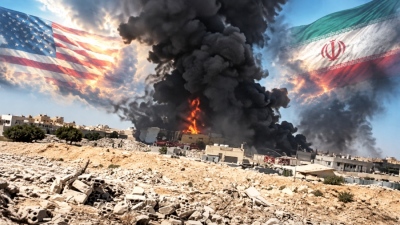
The escalation in the Persian Gulf is a daily phenomenon, with an increase in the intensity of bombardments on both sides between the American military and Iranian forces. In the early hours of July 13, the American military attacked southern Iran again, centering on cities, ports, and islands, including Bandar Abbas, Jask, Qeshm, Sirik, Ahvaz, and Dezful, striking over 150 targets in areas near the Strait of Hormuz, which remains closed. In the city of Bandar Abbas, more than 10 explosions were heard, making it one of the primary targets of the Americans in the new strikes against Iran. At the same time, the American command reports that it is also planning a landing to capture an Iranian island in the Strait of Hormuz.
Meanwhile, the retaliation from the Iranians was immediate. Iranian missiles struck the Prince Hasan air base in Jordan and Mofaq al-Sulti or "Muwaffaq Salti," while powerful explosions also occurred in Bahrain and Kuwait, where the Iranians destroyed a Patriot system. It is worth noting that on July 12, 2026, Iranian forces killed six American soldiers and wounded dozens in an attack in Kuwait at Al-Shuaiba, which is a protected American logistics base. American military personnel who survived the Iranian drone raid on the US base at the port of Al-Shuaiba in Kuwait accused their generals of treason and ignoring warnings of a potential attack, the Washington Post reported. The Iranian attack on the port of Al-Shuaiba in Kuwait killed six American soldiers and injured dozens of others. However, contrary to American reports, the Strait of Hormuz is closed and will remain closed until American attacks cease, stated the IRGC, the Islamic Revolutionary Guard Corps of Iran.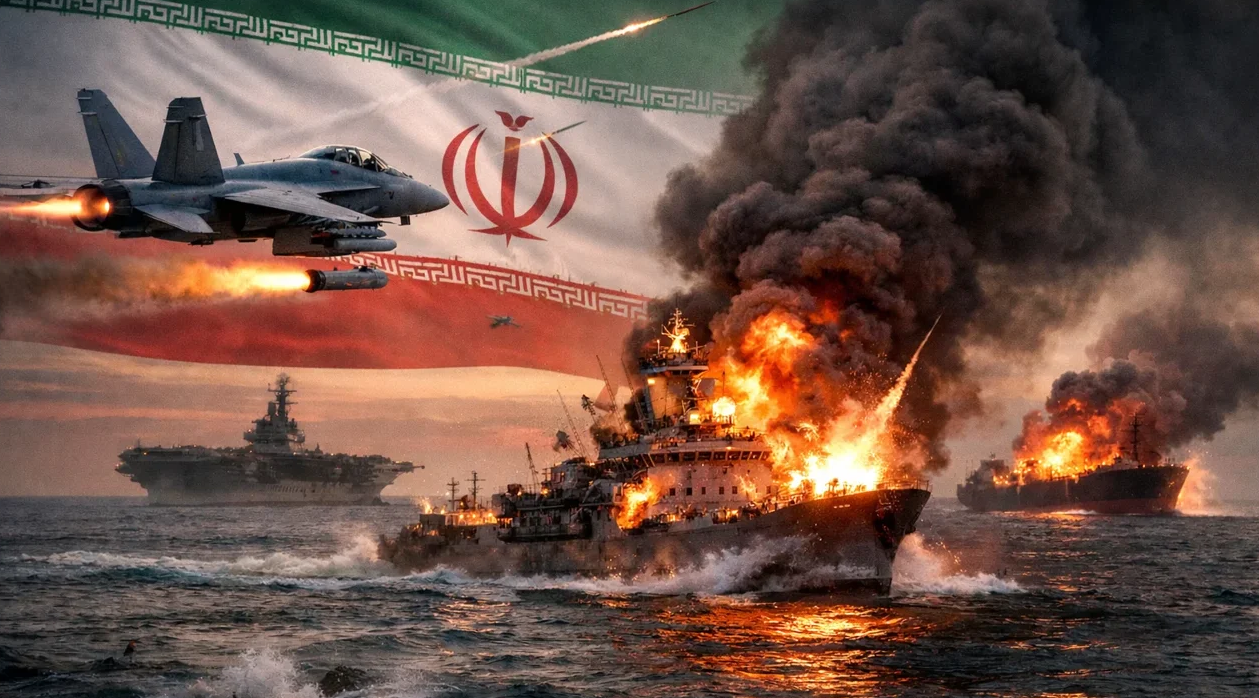
CENTCOM: New attack on Iran initiated, explosions at Iranian ports – Over 150 targets hit
In the early hours of July 13, 2026, the American military attacked southern Iran again, focusing on cities, ports, and islands, including Bandar Abbas, Jask, Qeshm, Sirik, Ahvaz, and Dezful, hitting over 150 targets in areas near the Strait of Hormuz, which remains closed. Some news sources claimed that certain American missiles fired against Iran originated from Kuwait. Following the American attacks on the Al-Amadiyah airport in Khuzestan, an aircraft hangar caught fire. Additionally, the Baqeri camp in Dezful, Khuzestan, caught fire following the attacks by American forces. An explosion was heard in Khormoj, in the Bushehr province. A US attack was launched against the Aghajari airport in the city of Omidieh, Khuzestan.
CENTCOM: If we want, we can capture a strategic island in the Strait of Hormuz via an amphibious landing
If we want, we can capture a strategic island in the Strait of Hormuz via a ground landing, emphasized the head of the US Central Command. We can certainly manage the Strait of Hormuz and indeed occupy a strategic island. US Central Command (CENTCOM) announced new attacks on Iran. The order for the attack was given by President Trump. According to the Iranian news agency Mehr, American strikes occurred in various regions of Iran, including the provinces of Khuzestan, Hormozgan, Bushehr, Sistan and Baluchestan, and Markazi. According to local authorities, areas near the cities of Ahvaz, Behbahan, Dezful, Omidiyeh, Mahshahr, and Andimeshk were hit. The agency reports that an irrigation pumping station guard in Mahshahr was killed, and four other people were injured.
Meanwhile, local media speak of explosions in the areas of Bandar Abbas, Bandar Sirik, Bushehr, Kangan, and Chabahar. On Sunday evening, July 12, 2026, the Islamic Republic announced the closure of the Strait of Hormuz until the United States stops its intervention in the region. Subsequently, IRGC forces struck two commercial vessels that violated transit rules. In response, the American military began attacking targets inside Iran. There were also reports concerning the destruction of the American Al Udeid air base in Qatar, logistics centers and aircraft carrier replenishment platforms at the port of Duqm in Oman, as well as communication and radar hubs in Bahrain.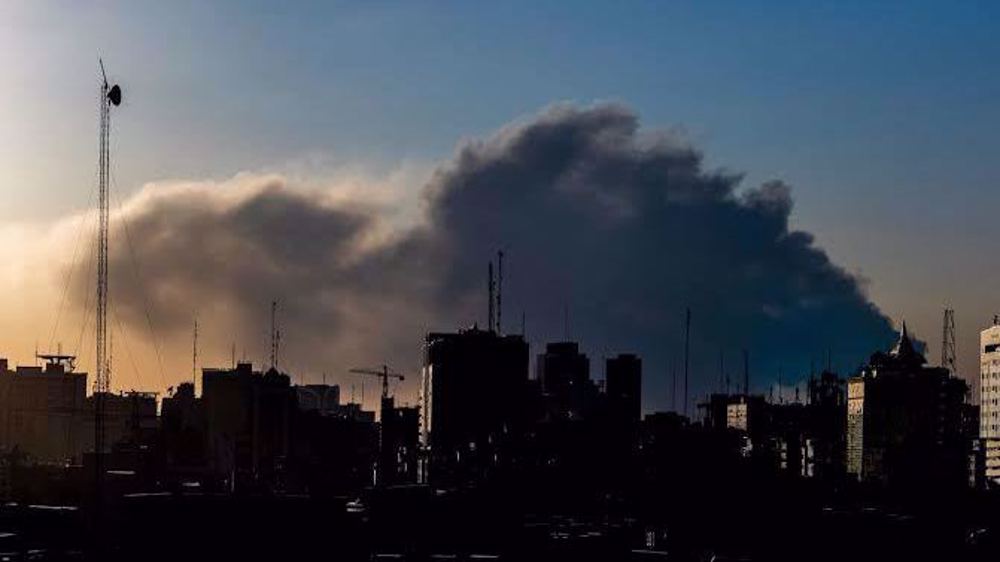
Hell at the US Mofaq al-Sulti or Muwaffaq Salti air base in Jordan and the Prince Hasan base – Missile barrage against Bahrain
In response to the US attacks, Iran launched massive missile and drone attacks from launch bases in various parts of the western and central country against American military positions and vessels in the region. Reports indicate that powerful explosions were heard in Jordan, especially at the Mofaq al-Sulti air base. The Prince Hasan base in Jordan was also hit. Alarm sirens were heard in Bahrain. Some sources report that an alarm siren sounded following a missile attack on targets in Bahrain. In fact, numerous missiles were fired in this wave of attacks against Bahrain. Iran launched extensive drone and missile attacks against military positions, bases, and US vessels in the region.
IRGC: We struck the Prince Hasan air base in Jordan, Patriot destroyed in Kuwait
The IRGC, Iran's Islamic Revolutionary Guard Corps, announced that it attacked and destroyed targets at the Prince Hasan air base in Jordan. The targets included fuel and ammunition depots, and explosions occurred due to the attack. The Prince Hasan air base in Jordan serves as a critical hub for American forces. At the same time, the IRGC announced that it dismantled the American Patriot system in Kuwait as well as a radar in Bahrain. The IRGC also stated that the first phase of the retaliatory attack included missile and drone strikes on several large missile depots at a base in Jordan. Attacks were also launched against helicopter repair facilities, aircraft hangars, and a drone command center at an American base in Bahrain. According to Iran, the American bases of Ali al-Salem and Ahmad al-Jaber in Kuwait were also targeted. A Patriot air defense system and an FPS radar were destroyed there.
Mehr: The Revolutionary Guards attacked American bases in Jordan, Bahrain, Kuwait, and Oman
A few hours after the airstrikes carried out by American forces against targets in southern and central Iran, the Iranian military and the Aerospace Force of the Revolutionary Guards (IRGC) launched attacks against American bases in the region. According to the Iranian news agency Mehr, the IRGC Aerospace Force conducted three consecutive operations, striking strategic American bases in Jordan, Bahrain, and Kuwait. Mehr reports that the chain of events began when the IRGC Navy intercepted two ships which—according to Iranian claims—had deactivated their identification systems (AIS) and were moving illegally in the Strait of Hormuz, endangering international navigation. According to the report, US Central Command (CENTCOM) responded with airstrikes against coastal military facilities in Iran, characterizing them as a defensive action to counter threats against the freedom of navigation. Tehran, however, maintains that it reacted with a multi-layered military operation.
The three phases
First phase – Prince Hassan air base in Jordan According to Mehr, ballistic missiles and drones struck ammunition depots, fuel tanks, and runways at the Prince Hassan base. The report claims that operations at Amman International Airport were temporarily suspended.
Second phase – Sheikh Isa base in Bahrain The agency reports that military helicopter maintenance facilities, hangars for P-8 Poseidon electronic warfare aircraft, and a drone command center were hit. According to its claims, the explosions caused sirens to activate across Bahrain.
Third phase – Ali Al Salem and Ahmad Al Jaber bases in Kuwait According to Mehr, the attacks targeted fuel tanks, Patriot anti-aircraft defense systems at the Ali Al Salem base, and a strategic FPS radar at the Ahmad Al Jaber base. In a statement, the IRGC noted: "The Strait of Hormuz is our territory, and we will not allow the aggressive and child-killing American military to continue its illegal interventions from the other side of the ocean. The operations of the brave children of Iran continue and will not stop until the aggressors are fully punished."
Two strategic radars turned to ash in Oman
In a newer announcement, the IRGC claimed it destroyed US military facilities in Bahrain, as well as two strategic radars in Oman. The announcement states that units of the IRGC Navy struck US military facilities in the Juffair area of Bahrain, while long-range FPS radars and maritime traffic surveillance radars in Oman were destroyed by missile and drone attacks. The IRGC also maintains that the reopening of the Strait of Hormuz presupposes the termination of the American military presence and interventions in the region, warning that their continuation will have severe consequences for the global oil and gas market.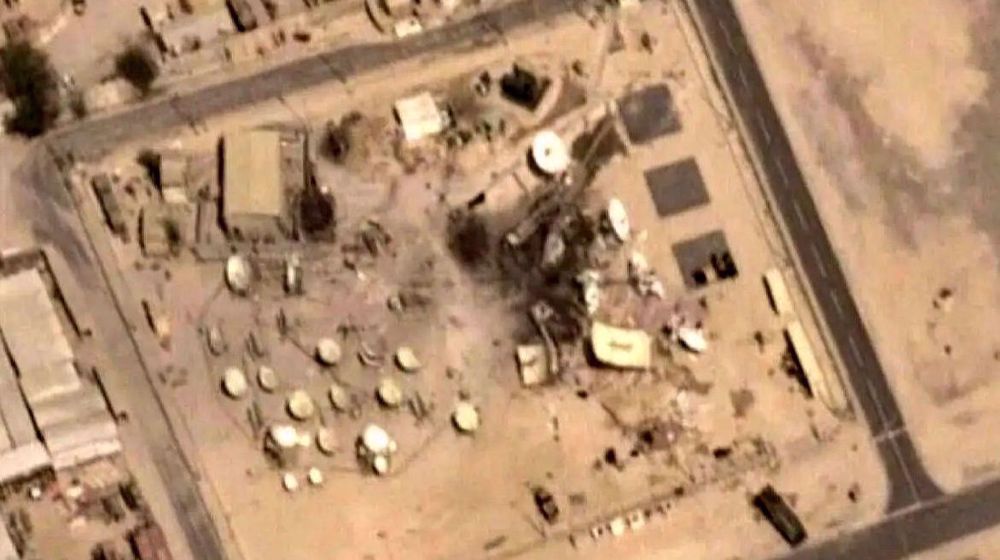
Iran dismantled the US military base in Kuwait with 3 ballistic missiles, leaving 6 dead
Iran fired three ballistic missiles against an American military base in Kuwait on Sunday afternoon (7/12/2026), according to Tasnim. According to the publication, powerful explosions were heard in the area, while columns of smoke were visible from the border zone between Kuwait and Iraq. At the same time, the Israeli media outlet Walla reported that smoke rose from a port facility in Kuwait, without, however, clarifying whether the incident is linked to reports of a missile attack. Meanwhile, Kuwait announced that three border centers and one offshore oil drilling platform came under attack, resulting in material damage and the injury of one worker. In a statement, the country's Ministry of Defense said that three land border centers in northern Kuwait were hit in a "criminal attack." Concurrently, a drone struck an offshore drilling platform operated by the Kuwait Oil Company within the country's territorial waters. One worker was injured in the attack, while authorities confirmed that material damage was caused to the facilities. The Islamic Republic of Iran allegedly launched a surprise attack against ATACMS missile systems in Kuwait, a development that, if confirmed, marks a new phase in the escalation of tension in the region. This specific development is considered particularly significant for two reasons. First, it is the first alleged offensive action by Iran after the cessation of the cycle of mutual retaliation (tit-for-tat), a fact that could indicate a change in Tehran's strategy. Second, according to the same information, the ATACMS systems that were targeted had been used by American forces in the attacks against Iran carried out the previous day.
Iran: We shot down an American drone in Bandar Abbas
The Iranian military announced that it shot down an American suicide drone in Bandar Abbas. As reported by the Tasnim agency, it was a LUCAS-type suicide drone which, as stated, "was detected with precision and shot down."
Washington Post: American soldiers at the Al-Shuaiba base in Kuwait accuse US generals of treason
American military personnel who survived an Iranian drone raid on an American base at the port of Al-Shuaiba in Kuwait accused their generals of treason and ignoring warnings of a potential attack, the Washington Post reported, citing sources familiar with the internal investigation. The Washington Post revealed that the attack by Iranian forces killed six American soldiers from the US Army's 103rd Sustainment Command and injured dozens more. The attack was characterized as one of the deadliest for US troops during the conflict. Military personnel questioned by the newspaper stated that commanders ignored intelligence indicating that the port of Al-Shuaiba in Kuwait was a likely target for Iranian attacks. They stated that stationing personnel at the base was not recommended due to its inadequate protection against drones. Some of the newspaper's sources specifically criticized the actions of General Clint Barnes during the attack. They believe he left the building after the attack and sought cover, while many soldiers remained inside. Ultimately, other officers and soldiers took it upon themselves to rescue the wounded. The US Army refused to comment on these specific claims from the military. It characterized the decisions and actions of the generals as justified. An internal investigation into the incident will be completed soon and, according to its preliminary findings, no disciplinary prosecution or liability for the incident is foreseen for the commanders.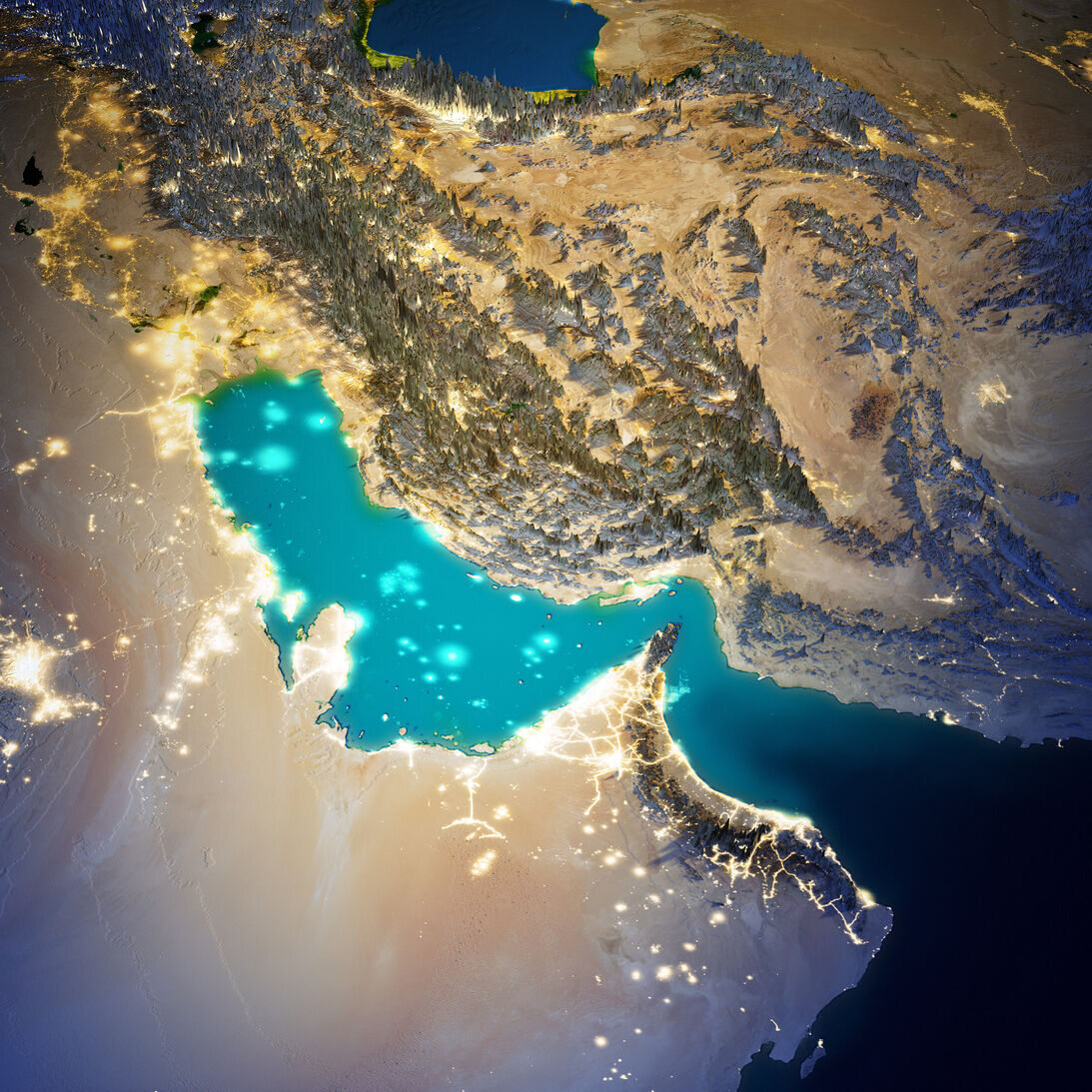
Trita Parsi (analyst): A prolonged war is unattractive… due to depleted oil stocks
Depleted oil stocks make a prolonged US-Iran war "very unattractive," argues Trita Parsi, executive vice president of the Quincy Institute for Responsible Statecraft. As he stated, although confidence in diplomacy remains low in both Tehran and Washington, "there is even greater certainty that neither side can afford another prolonged war." As a result, he added, "this factor will prevent the two sides from being driven to a completely uncontrollable level of escalation." Parsi pointed out that depleted oil stocks are a key factor that "makes a prolonged war extremely unattractive." "Stocks have not yet been replenished. Globally they are at much lower levels, while the strategic petroleum reserves of the US are also significantly reduced," he stated. "The Iranians also have less oil at sea compared to February. This means that the time window until a potential oil crisis evolves into a serious problem is much shorter than it was then," emphasized Parsi, who added that, provided the necessary time is given, the US can weaken Iran's ability to disrupt navigation in the Strait of Hormuz. However, as he noted, "the question is how much time this will require and how much the oil market will be harmed in the meantime, so that the situation eventually evolves into a political disaster and a nightmare for the Trump administration." "That is precisely where I believe the problem lies for the US," Trita Parsi concluded.
www.bankingnews.gr









Readers’ Comments