

With the war in Ukraine constantly escalating and becoming increasingly dangerous, the core question is what the West ultimately wants to achieve against Russia. The objective of the US, Europe, and NATO to inflict a strategic defeat on Russia is essentially unachievable. Because, quite simply, a nuclear power cannot suffer a strategic defeat, since its nuclear arsenal ensures that in such a case, it will drag its adversaries and the entire planet down with it. This is also pointed out by Russian billionaire industrialist Andrey Melnichenko, who calls on western elites to abandon the plan to weaken and dismantle Russia, as such an outcome would bring even greater global instability. And to strengthen his arguments, he presents 4 terror scenarios.
The warning
Russian industrialist Andrey Melnichenko, who is under western sanctions, warns in an article in the British magazine The Economist that the dissolution of Russia after the end of the war in Ukraine would constitute a threat to the entire system of international security. In his view, a sustainable peace is impossible without the sovereignty of both sides of the conflict, while efforts to deprive Russia of its autonomy merely push the prospect of a settlement further away. Why will victory over Russia not bring stability to the world? Which scenarios for the post-war order are being discussed in the West and why are they considered dangerous? Why is predictability more important than sympathies in foreign policy? Melnichenko attempts to provide the answers.
The front line
As Melnichenko states, great wars do not begin where the first shots are fired. The front line is simply the point at which accumulated pressure finally pierces the surface. By that moment, the foundations have already crumbled: the language of mutual security, trust in commitments, the shared understanding of what is acceptable, and the capacity to treat the other side as part of a common system rather than as a threat to be eliminated. When these bonds fracture, it is no longer politics that drives events; it is events that drive politics.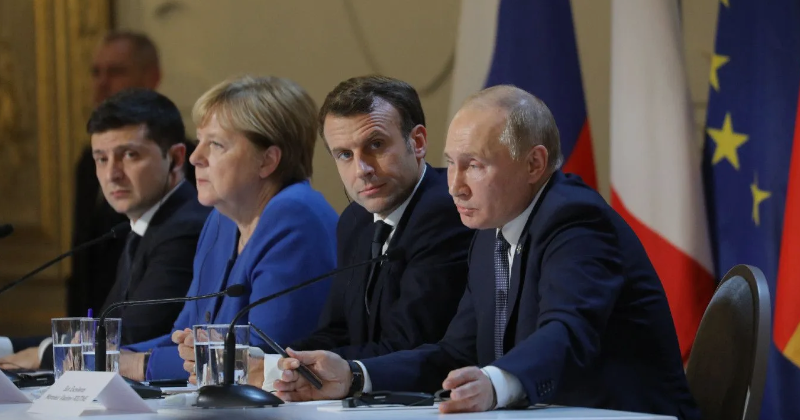
The war in Ukraine
The war in Ukraine constitutes precisely such a case. It comprises multiple layers: the tragedy of peoples who for centuries lived in the same historical space; the conflict between Russia and the West—a dispute over territory, alliances, historical memory, and the future of the global order. However, at the root of all this lies a deeper dysfunction: the modern world has lost the mechanism that once allowed great powers to coexist within a single security system, without questioning each other's status. When this mechanism ceases to function, moral declarations begin to substitute for security architecture, and punishment is mistaken for strategy.
The reality
I am neither a politician nor an ideologue, the Russian billionaire industrialist points out. Politicians are guided by will, ideologues by faith. My own world is the world of complex material systems: the flows of natural resources, their conversion into fertilizers and electricity, the supply chain that organizes these flows, and long-term perspectives. Such systems are indifferent to declarations. They function as long as critical connections are maintained and collapse when basic support structures are disrupted. A flow resembles a river: it cannot be abolished. It can be diverted, but it does not disappear. I am trying to describe the world as a physicist would: as it actually is and not as we would wish it to be.
Chernobyl
The experience that shaped me was the Chernobyl disaster in 1986, which occurred near the town where I was born. It stands as proof that a complex system containing a vast amount of energy does not forgive mistakes or arrogance. A sequence of seemingly insignificant events can escalate into a catastrophe before anyone even realizes what is happening. This experience does not allow me to treat the nuclear factor as an abstract concept; it constitutes the absolute limit, beyond which the question itself loses meaning. When consequences are physically irreversible, this approach is the only acceptable form of responsibility.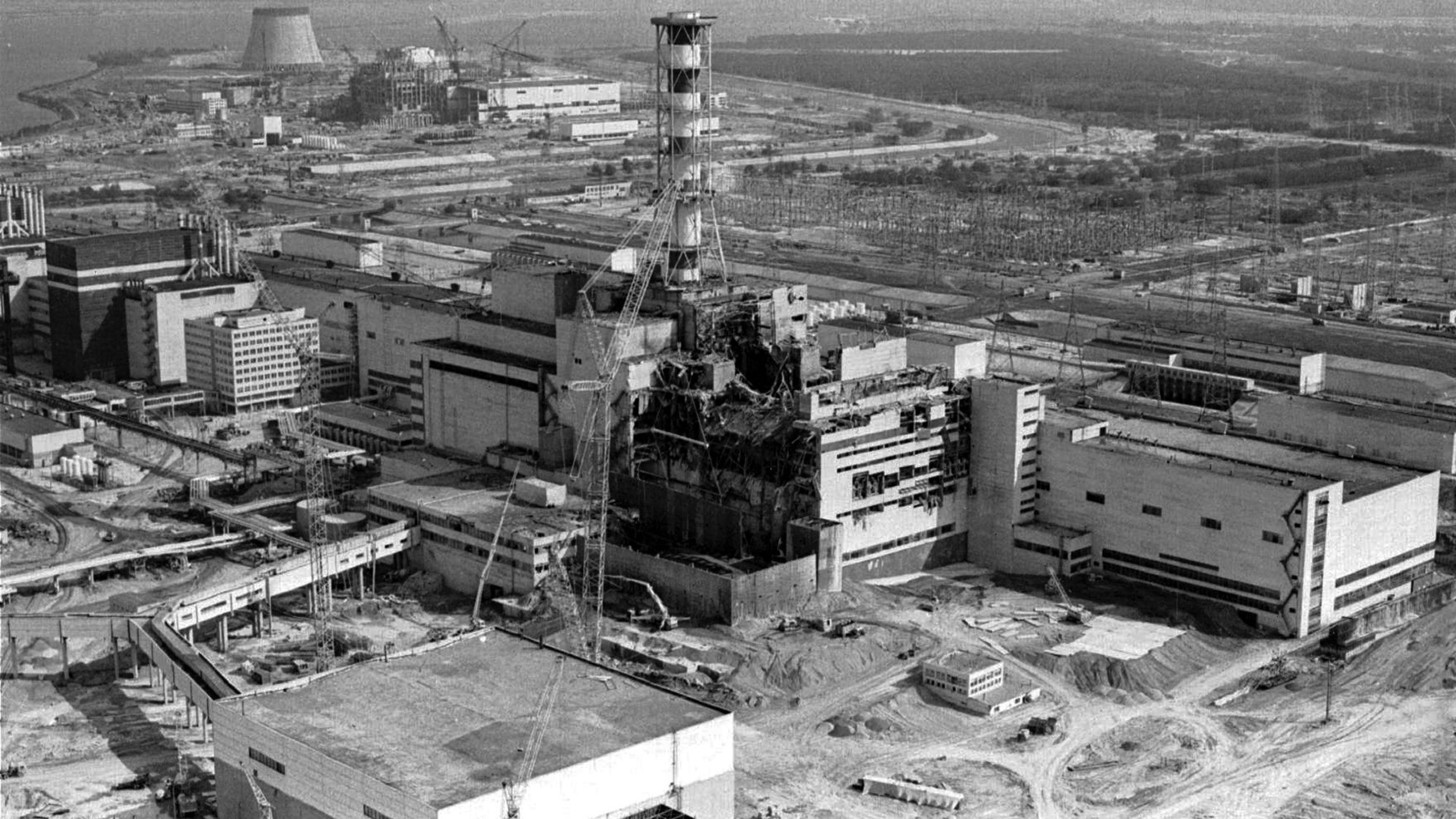
When sovereignty becomes a problem
The core paradox of the current juncture is this: the need for international security has never been greater, yet the institutional infrastructure created to ensure it—the rules, the exercise of powers, and the shared framework of legitimacy—has never been so weak. In such an environment, the temptation arises to view the sovereignty of adversaries as a source of instability. This essay argues the opposite: the destruction of sovereignty does not solve the security problem; it eliminates the only mechanism through which the problem can be resolved.
Not just a battlefield
Ukraine is not merely a battlefield between Russia and the West. It is a state, a society, and a political will that have paid a horrific price. The sovereignty of Ukraine is real. However, Ukraine's security, when built upon the permanent denial of Russia's sovereign influence, is equally unstable. A neighbor with known interests and a predictable price for its commitments offers a different quality of security than a neighbor defined by revanchism or a siege mentality.
Sustainable peace
A sustainable peace requires the sovereignty of both sides, not because they must like each other, but because only sovereign subjects can enter into agreements that hold real power. Today, Russia possesses sovereignty: it made and continues to make its decisions independently. This is not a value judgment but a descriptive statement. Russia has defined its vital interests, possesses the material basis to defend them, and bears the responsibility for the consequences of its own decisions.
They want the elimination of Russia
The current western discussion about post-war Russia, despite its different political variations, converges on a common goal: the elimination or drastic restriction of this sovereignty. The logic is understandable. If Russian sovereignty is viewed as a threat, then its elimination appears, at first glance, to solve the problem. This logic is reinforced by examples from modern history.
It will not bring permanent peace
The integration of post-war Germany and Japan into the western world for a long period led to the elimination of revanchism in the defeated powers. The analogy is not perfect—Russia is not a defeated state whose government has collapsed—yet the core hope remains the same: that a country deprived of its strategic autonomy will eventually accept the rules of those who deprived it of it. Such an approach is deeply flawed. Sovereignty constitutes a necessary condition for any stable architecture of global security. This does not mean that sovereignty guarantees stability; the actions of a sovereign state can affect the security of others. Without it, however, such an architecture is impossible. A lasting peace cannot be concluded with a petitioner, because a petitioner does not actually bear responsibility for their decisions. Any agreement reached under such conditions will not lead to a permanent peace, but only to a temporary pause between phases of conflict.
Four scenarios
In the West, they are discussing four scenarios for post-war Russia. Despite their political differences, all lead to the loss or restriction of sovereignty and, consequently, destroy the only mechanism through which responsible behavior is possible.
1. The humiliated Russia
The first scenario foresees a humiliated Russia that will remain on the periphery of the West. In the long run, this would breed an aggressive revanchism. The Treaty of Versailles did not establish order; it accumulated deferred energy. Russia is not the Weimar Republic, and the modern world does not replicate the 1920s word for word, but the structural logic remains: when the sovereignty of a large historical nation is violated, it rarely disappears. It returns in an even more dangerous form.
2. Russia in China's sphere of influence
In the second scenario, Russia enters China's sphere of influence. At first glance, the Chinese option appears to be a straightforward replacement of the western one: Russia integrates into Chinese supply chains and gains access to markets, technology, and finance, while in return offering raw materials, geographical position, and strategic depth. In the short term, this looks like a logical compromise. In the long term, however, it simply changes the address of dependency. Ostensibly, Russia would retain the characteristics of a great power, but in reality, it would turn into the outer perimeter of Chinese strategy: a market for Chinese products, a source of raw materials, a transit corridor, and a security buffer zone that would absorb pressure directed toward Beijing. Russia would risk occupying a position structurally similar to the one Ukraine holds today for the West: a contested zone where larger players advance their own interests. This does not mean the two countries are equivalent; it concerns the logic of utilizing a border space for the benefit of another center of power. However, a dependent Russia would be of doubtful value even to China. The obvious asymmetry of such a relationship would be detrimental: an anti-Chinese alliance could easily be assembled upon it, China's neighbors would grow more anxious, and within Russia, the need to de-escalate from the position of a vassal would eventually emerge. The behavior of China itself already shows that it understands this. It willingly exploits its comparative advantage but does not seek to turn it into a formal vassal relationship. Furthermore, the recent painful experience of technological dependence on the West means that Russia would not voluntarily accept a similar status toward China.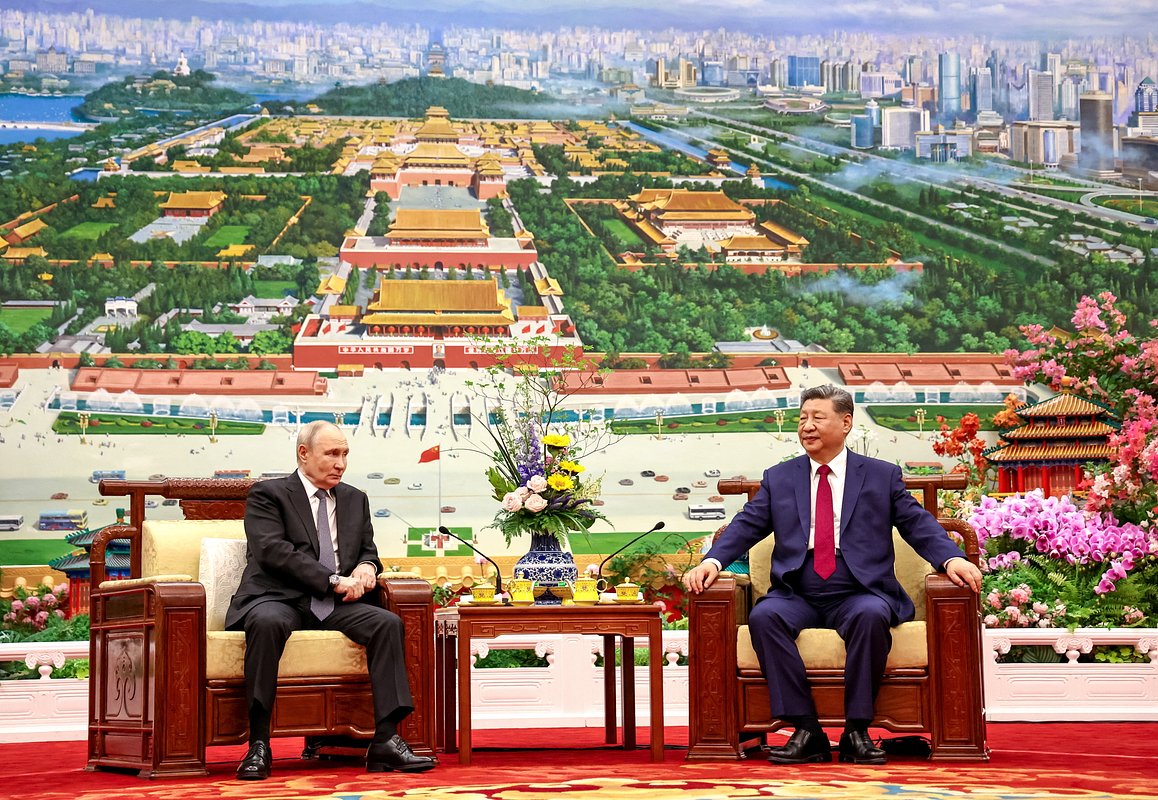
3. Fragmentation of Russia
The third scenario is the fragmentation of Russia, which would rapidly evolve into an uncontrollable situation. A struggle would erupt for control over the nuclear arsenal, natural resources, borders, and historical heritage. This scenario would destroy the cohesion that makes nuclear deterrence functional. The price paid in post-Soviet conflicts, including the tragedy in Ukraine, makes, in my view, such a development unthinkable.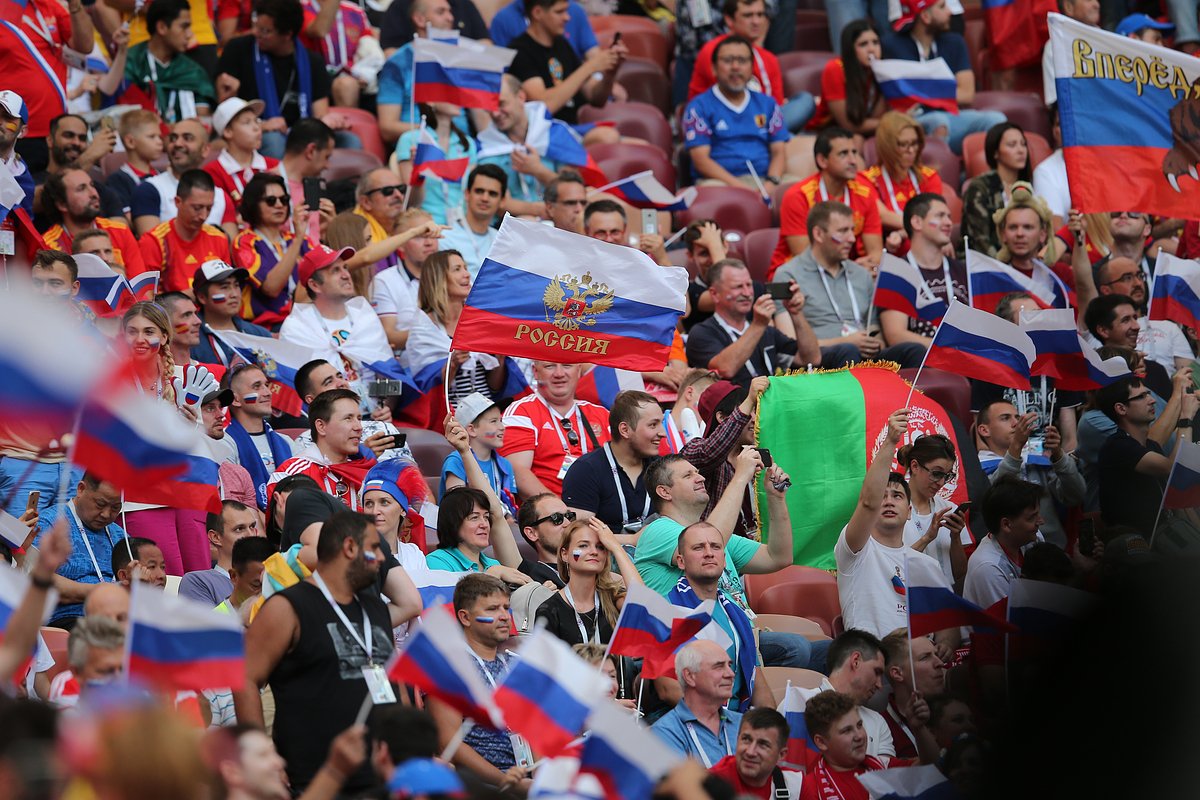
4. The fortress
The final possibility for Russia is to transform into a fortress: closed, permanently mobilized, and in a constant state of siege. Technology, science, capital, and citizen trust do not thrive under a regime of permanent emergency. Such an order of things does not terminate the war; it transforms the conflict from an event into a way of organizing the state. The forms differ. The systemic outcome is the same.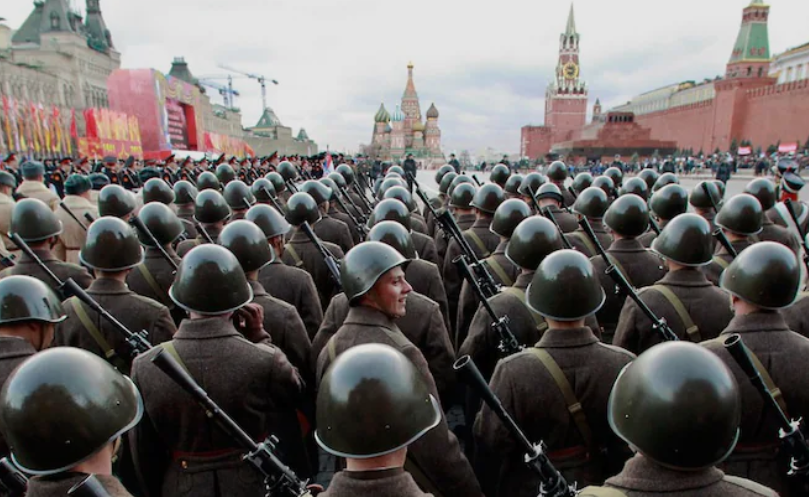
The end of diplomacy
Negotiations work when both sides believe that the other is capable and willing to defend its position to the end. When one side concludes that the other is bluffing or simply not in a position to go all the way, it ceases to look for a solution at the negotiating table. This does not constitute a justification for any specific use of force. It is a description of how diplomacy fails in practice: not only due to bad faith, but also due to the loss of confidence on both sides. Understanding this mechanism does not equate to accepting its consequences.
What Russia sees
In Russia's eyes, the war in Ukraine is a war against the West as a whole, conducted with western money, western weapons, and western technology. This perception guides every decision that Moscow takes. The roots of the conflict lie partly in the structural imbalance maintained in Europe after the end of the Cold War: Moscow's security concerns were heard but never truly examined with seriousness. Following the political upheavals in Ukraine in 2014, Russia concluded that diplomacy had exhausted its margins and began to act—initially in Crimea and, eight years later, in four eastern and southern regions of Ukraine. Initially, Moscow's goals were not achieved quickly.
Strategy realignment
As the war dragged on, Russia revised what it considered an acceptable outcome. Its publicly stated terms were reduced to three: recognition of the territories that Russia now claims as part of its domain according to its Constitution, legal protection of the Russian-speaking population, and an official commitment by Ukraine to neutrality. Meanwhile, the West reshaped its own goal.
They want the attrition of Russia
The discussion on the future security architecture of Europe, which essentially never took place, was replaced by an operational objective: the attrition of Russia. The exact meaning of this term differs from capital to capital: some speak of reducing Russia's military capabilities, others of deterring revanchism, and others of sending a message to potential aggressors in other regions of the world. In practice, the war turned into a tool of prolonged pressure toward Moscow.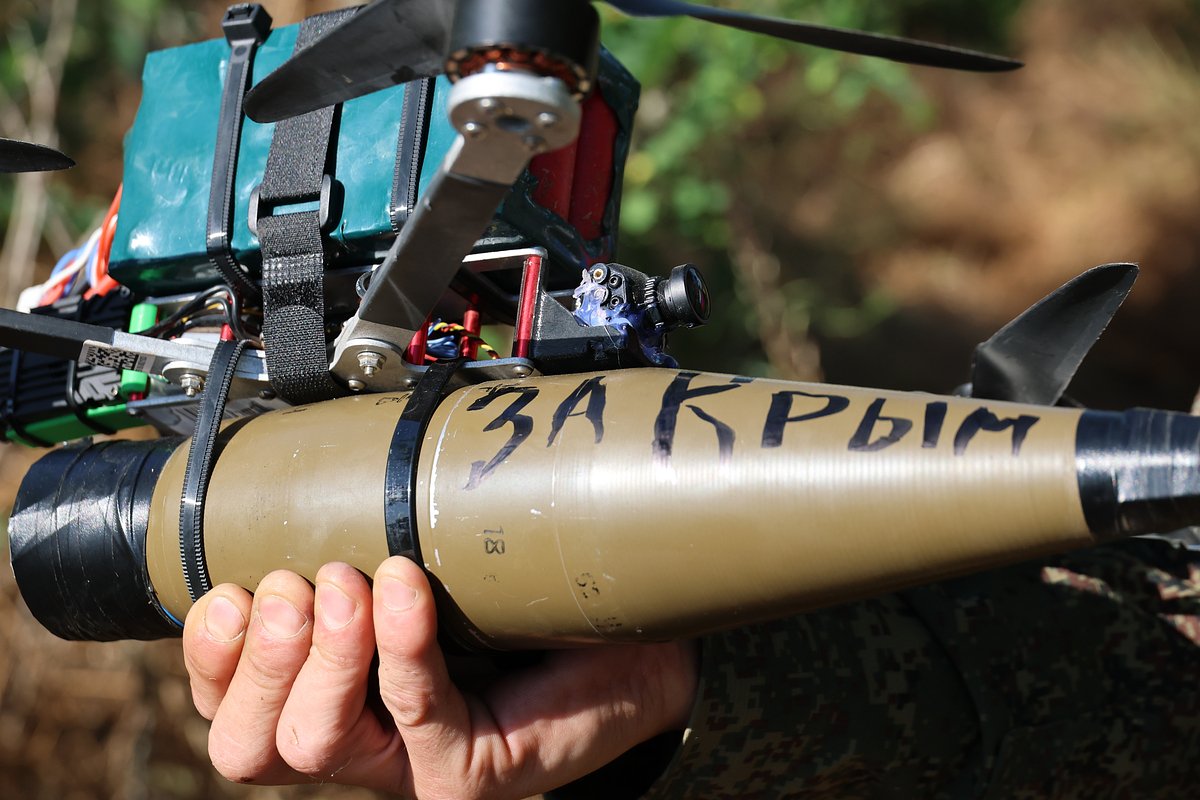
Which security architecture
The formula "we support Ukraine for as long as it takes" is convenient because it defers to the future the difficult question: what security architecture must ultimately be formed in Europe and what position will Russia have in it? Geographically, military operations are carried out on Ukrainian soil; formally, those fighting are the Ukrainians. This serves the West: the heaviest human and economic losses are borne by Ukraine and Russia, while the impacts on western economies, though real, are considered manageable. However, this approach has a strategic drawback, which is rarely brought to the center.
The conclusion
Moscow's conclusion is clear: under current conditions, Russia's initial goal—the creation of a new European security order in which Russia participates as an equal factor and not as an object of management—is unachievable. Battles can be won or lost; a war of attrition, however, cannot by itself lead to a solution. Instead of resolving the problem, it perpetuates it.
The current situation cannot continue
The current situation cannot continue indefinitely. An alliance that is economically and technologically superior, supporting the military of its adversary while restricting its own direct involvement, sooner or later will be led to something different: either to another, more direct form of confrontation or to a political settlement. The question is not whether this transition will happen, but when and under what terms.
Nuclear weapons make this issue existential
Deterrence functions not because nuclear weapons exist, but because rational decision-making centers, open communication channels, and a mutual understanding of limits exist. When trust collapses and emotion displaces logic, nuclear weapons cease to be the ultimate means of deterrence and transform into a permanent source of danger. Any strategy that treats nuclear escalation as a controlled expansion of conventional pressure is based on the false assumption that a complex system can be driven to the brink and stopped exactly where it is politically convenient. Real systems do not function that way. The existence of sovereignty and the mutual recognition of the need for an agreement do not guarantee that the agreement will be reached.
Only Russia can decide on its path
Equally important is the direction in which sovereignty is exercised. Whether it strengthens or weakens the shared security framework is determined, primarily, by the internal politics of each country. That is why the question of Russia's internal path cannot be resolved by external factors. The way Russia conducts its own political process and the goals toward which it directs its sovereignty are matters that can be decided only within Russia itself, without taking external preferences into account. Any attempt to externally guide this process is not only doomed to fail but is also counterproductive: it destroys the very prerequisite—sovereignty—without which a sustainable peace is practically impossible. This must be accepted not out of sympathy toward Russia, but from the understanding that there is no alternative to this recognition.
The new Russia
I have reason to believe that there will eventually be a reckoning, and these reasons can be understood only if it is explained why it did not come sooner. Those who built the new Russia—entrepreneurs, scientists, artists, athletes, and professionals who created its economy, its significance, and its reputation in the world—for the most part considered themselves internationalists. This was neither a sign of weakness nor of naivety. It was the obvious choice in a world where global integration seemed irreversible.
Science operated according to international standards, technology came from the best available sources, rights and obligations were regulated by western legislation and western courts, children studied at the world's best universities, and capital was placed where it was safe. This choice meant, consciously or unconsciously, that a significant part of sovereignty was transferred to external systems. Not because they desired it, but because the rules seemed neutral and access open to everyone. For many years, the Russian authorities warned that this was a mistake. Proponents of global integration viewed these warnings as a remnant of the Soviet mentality. Time proved they were wrong, not because globalization did not exist, but because it was never truly neutral.
Sanctions demonstrated it clearly
Sanctions were shaped by some for the benefit of some and can, by political decision, be revised in favor of others. My own experience with western sanctions matters not as personal bitterness, but as proof that the infrastructure of globalization depends on political decisions. Assets can be frozen; rights once considered inviolable can be lost in a moment, with a single political decision. The systemic effect of sanctions proved broader than their initial target. The cutoff from global systems—financial, technological, legal, and educational—placed the Russian creative class before a choice it did not expect: either complete emigration with a permanent severance of all ties, or a return to the question it had avoided for three decades: how can a world of its own be built inside Russia, with its own rules and standards.
The global world no longer exists
This process is neither fast nor easy. It is, however, inevitable, because the global world as we knew it no longer exists. Those who have the capacity to create are no longer called upon to choose between Russia and the global space, but between Russia and a fragmented world where each block establishes its own rules. Under these conditions, the logic of creation turns inward: to build something that will be attractive to those who left many years ago after the dissolution of the Soviet Union, to those who left recently, and to the Russian-speaking world as a whole.
Strict restrictions—military pressure, economic sanctions, and information warfare—require efficiency. And efficiency can exist only when all layers of society cooperate. In each of them, there are enough people with judgment to recognize that the minimum common interest—the preservation of sovereignty—is shared. Everything else can be resolved among them.
Sovereignty
Sovereignty does not concern only the state. It is the most important issue for everyone who lives and works in a country: for citizens, businesses, and institutions. For citizens, the greatness of a country is not measured by the strength of its slogans, but by how well it protects the interests of its people. People vote with their feet and with the life strategies they choose. If a country lacks sovereignty, sooner or later it loses those who can be a source of strength rather than a burden.
Businesses operating internationally have an equally great need for sovereignty. Complex corporate structures can be created and contracts drafted in the most intricate jurisdictions. However, in the final analysis, the best protection of contracts and investments is provided by a strong state standing behind them. Businesses that are neither American nor Chinese are faced with unpleasant choices: either to offer major players resources and markets in exchange for protection, or to accept the role of a local actor constantly exposed to decisions taken outside its borders.
The only choice
The sovereign alternative—aligning strategy with a state that treats large businesses as part of its strategic potential—is the only choice that does not require abandoning the future. In the 21st century, state sovereignty has a direct economic dimension: the capacity to create added value within its own jurisdiction and channel it into strengthening its own sovereignty rather than the sovereignty of someone else. The Russian business community consists of people who are capable not only of surviving within existing rules, but also of altering the environment itself: designing and creating new markets, new industries, and new systems of governance. In recent decades, their choice was made not on ideological criteria, but through competition, crises, and restructuring—those who can calculate consequences, understand the interests of others, and find acceptable compromises were selected. Their role in the discussion on the direction of Russian sovereignty is not political but creative; the question is not who governs, but what is being built. Large Russian businesses investing in a sovereign Russia will, over time, become an integral part of it. The same will happen with other important institutions. As a result, Russia itself will be transformed. If we pursue a form of sovereignty that creates unity between citizens and institutions, I hope that over time we will also correct all the internal imbalances, for which we also bear responsibility, because we once gladly accepted the absence of ourselves.
The attractiveness of predictability
A sovereign Russia will not satisfy any country. However, on a long-term basis, it will be preferable to all other alternatives. External factors are not called upon to choose between a friendly and a hostile Russia. The real choice is between a Russia whose behavior is predictable and a Russia whose course is unknown. In the world taking shape today, predictability is more important than sympathies. The internal debate over what Russia should be is inevitable. But this debate will take place after the war and inside the country. The world is not faced with a choice between love and hatred toward Russia, nor between punishment and forgiveness, nor between moral purity and political cynicism. We stand between two versions of the future: in one, the great powers will learn once again to respect one another's sovereignty; in the other, each will attempt to transform the rest into objects of management. The second path has already led us to the current situation. The most important thing is to move away from the cliff. Only then will we be able to ask ourselves how we got here and how the world can change. This task belongs to the next generation. Our duty is to ensure that it will have something to work on.
www.bankingnews.gr













Readers’ Comments