

Russia will conquer the global LNG market with its own technologies
Sanctions and restrictions on technology transfer from the West have placed severe obstacles in Russia's ambition to evolve into a leading global power in liquefied natural gas (LNG) exports. However, Moscow does not appear willing to abandon its goal... Russia is attempting to make a dynamic comeback to the global LNG market, relying now on its own technological capabilities, aiming to fill the gaps created by western sanctions. Essentially, the model it seeks to follow is identical to the one it applies in the aviation sector: the development and production of domestic systems, using Russian technologies and components. The new great challenge for Moscow is the LNG sector, which requires extremely advanced infrastructure, specialized transport vessels, and expertise that until today originated largely from the West.
Russia will build its own Arc7 class LNG vessels
At the Innoprom 2026 exhibition, Russian Prime Minister Mikhail Mishustin announced the country's plans for the design and construction of high ice-class Arc7 LNG carriers, exclusively using domestic technologies. This constitutes a highly ambitious venture, as Russia is called upon to develop technologies and equipment that until today it did not possess on a full scale. Western countries, according to the Russian side, have no intention of sharing expertise and experience, a fact that forces Moscow to invest in the development of autonomous solutions. The expansion of LNG production in Russia is considered impossible without the existence of specialized tankers, as the major production units are being constructed in the Arctic, in one of the most demanding environments globally.
The Arctic creates new demands in LNG transport
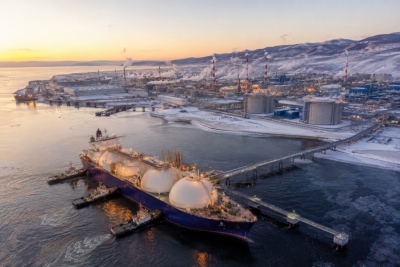
Russia constitutes a unique case internationally, as it is the only country developing large-scale LNG units in extreme polar conditions. This creates special requirements for the vessels transporting liquefied natural gas from these facilities toward international markets. For instance, for a duration of seven to eight months a year, from November to June, access to the Arctic LNG 2 unit is possible only via LNG carriers of the highest ice class. Conventional LNG carriers, which exist in large numbers in the international market, cannot respond to these conditions. Specialized equipment is required to allow transit through a thick layer of ice. The problem is that Arc7 class gas transport vessels are not available on the open market. They were designed exclusively for the needs of Russian energy projects. When Russia took its first steps in the LNG industry, vessels of this type essentially did not exist. Novatek was forced to develop the specifications of the vessels itself and to look for a shipyard capable of building them.
The difficult beginning… From South Korea to Zvezda
Ideally, the development of these vessels would have been carried out from the start by Russian designers, with construction in domestic shipyards and the use of Russian components. However, the reality was different. The Zvezda shipyard in the Far East was still in a development process, while the LNG carriers for Novatek's first major project, Yamal LNG, were required immediately so that the facility could operate and not remain idle. At the same time, Russia had no prior experience in constructing LNG carriers, as the LNG industry was just beginning to grow in the country. Acquiring the expertise to construct such vessels required time. For this reason, the order for the first vessels for Yamal LNG was placed with a South Korean shipyard. The next order, which concerned 15 Arc7 ice-class LNG carriers, was intended for Novatek's second major LNG project and was assigned to Zvezda. The initial planning envisioned that the vessels would be constructed using kits from South Korea, while the percentage of domestic production and equipment would gradually increase. Concurrently, the Korean shipyard received an order for six more LNG carriers. In total, 21 gas transport vessels were ordered for the second major LNG plant in the Arctic.
The 2022 sanctions overturned Russia's planning
The sanctions imposed on Russia in 2022 overturned the initial planning for the development of the Arc7 class LNG carrier fleet. According to unofficial information, South Korean shipyards had already delivered kits to Zvezda for the construction of five liquefied natural gas transport vessels, while the French company GTT, which manufactures the specialized membrane system necessary for LNG transport, had delivered equipment for only three vessels. Without this specific membrane system, an LNG carrier cannot safely transport liquefied natural gas. Zvezda has already delivered the first two vessels to its client, while one more is expected to be delivered by the end of the year. The fate of two additional vessels will depend on whether Russian engineers manage to develop their own membrane system and complete the necessary technological transition. There is unconfirmed information that Russia has already developed a domestic membrane system, which has even received certification. If confirmed, it will constitute a major technological step forward for the Russian energy industry.
What Russia can build
Broadly speaking, the construction of high ice-class vessels does not constitute unfamiliar territory for Russia. The country is considered a global leader in the construction of vessels that can operate in Arctic conditions, while it possesses significant experience in the development of icebreakers and specialized ships. However, LNG carriers constitute a completely different technological challenge. Apart from the membrane system, a critical issue is the development of domestic marine engines for gas transport vessels. Russia is working toward this direction, as only the resolution of all individual technological problems will allow it to acquire the required fleet for LNG exports.
Shortage of ships threatens full utilization of Arctic LNG 2
The shortage of LNG carriers currently constitutes one of the largest problems for Russia, especially regarding the transport of LNG from the Arctic LNG 2 project. The three phases of the project were designed to be serviced by a total of 21 LNG transport vessels. Today, two phases are operational, with a total capacity of 13.2 million tons of LNG, a fact that means approximately 14 ships are required for the full transport of production. However, the available fleet is significantly smaller. Right now there are just three active LNG carriers, the number is expected to increase to four by the end of the year, while two more vessels remain in an uncertain status. Russia needs at least double the number of ships to meet its needs. Concurrently, six more LNG carriers remain "trapped" in South Korea. Sanctions prevent their delivery to Russia, while Korean shipyards face difficulties in finding another buyer, since no one outside Russia has an immediate need for vessels of such a high ice class. A potential solution would be their resale through third countries.
Russian LNG units without western technology
To evolve into a global leader in LNG exports, Russia will also have to confront another critical challenge: the construction of large natural gas liquefaction units without western technology. The country's existing LNG facilities relied to a significant degree on western technologies and equipment. Now Moscow is called upon to develop its own solutions, so that it can construct fully autonomous new high-capacity units. Specialized Russian companies are already working toward this direction; however, it remains unclear when the country will be able to state that it has constructed the first fully domestic LNG unit.
The battle of the markets
The third major issue for Russia concerns the commercial distribution of the vast quantities of LNG it plans to export to international markets. US sanctions are applied to all new Russian LNG units, to the natural gas they produce, but also to the vessels transporting it. The Arctic LNG 2 project faced serious problems in commercial exploitation from its first day of operation, as several potential buyers feared the sanctions. The situation changed when China, having secured a significant discount, started purchasing Russian LNG that is subject to sanctions. Beijing allocated a specialized LNG receiving terminal for these specific quantities and is preparing one more. However, as Russian LNG exports increase, the question remains: will there be enough market demand for Russian natural gas?
The Vertical Corridor and the role of AKTOR
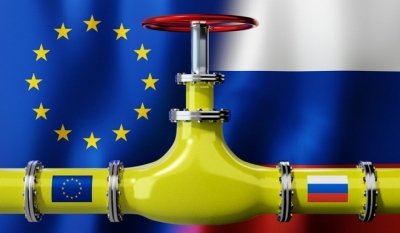
Russia's effort to maintain a strong presence in the global LNG market takes place at a time when Europe is completely reshaping its energy map. In the region of Southeastern Europe, the Vertical Gas Corridor acquires particular significance, creating an alternative natural gas transport route from the South toward Central and Eastern Europe, reducing dependence on traditional energy pathways. In this context, Greek companies such as AKTOR participate in the development of critical energy infrastructure that enhances the interconnection of the region. The Vertical Corridor, through transport infrastructure and interconnections, constitutes one of the key axes for the transport of LNG entering Greece through terminals, such as Revithoussa and Alexandroupolis, toward the markets of the Balkans and Eastern Europe. This development is part of the larger energy confrontation between Russia, the US, and Europe, where LNG no longer constitutes merely a tradeable commodity but also a tool of geopolitical influence.
Russia's three trials for global dominance in LNG
In total, Russia is called upon to overcome three immense challenges: To develop high-capacity LNG units on its own. To construct Arc7 high ice-class LNG carriers without western technology. To secure markets for its LNG, despite the sanctions regime. Moscow believes it can achieve its goal and return as a top player in the global LNG market. However, facing it is a powerful competitor: the United States, which has evolved into the largest LNG supplier globally and does not appear willing to easily cede the market share it acquired in recent years.
www.bankingnews.gr

Readers’ Comments