

Greece and the Mediterranean are entering a trajectory of total destabilization following the provocative statement from Kyiv that it will continue kamikaze drone attacks within breathing distance of the Greek islands, completely disregarding the Greek demarches.
In particular, Ukraine will continue to attack Russian ships on the high seas as part of its right to self-defense under the UN Charter, a Kyiv official told the Greek Ministry of Foreign Affairs, according to information obtained by Euractiv.
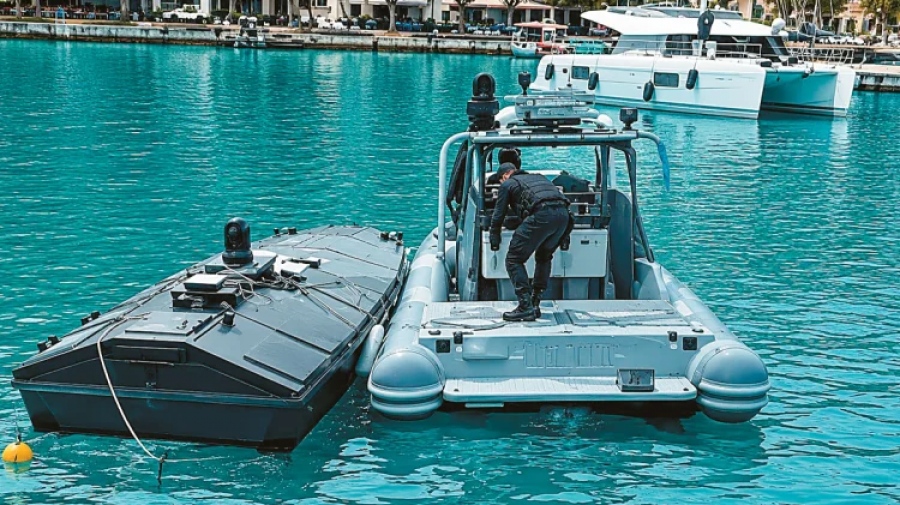
This is, if anything, a provocative statement, especially following the recent discovery of a Ukrainian naval drone carrying 100 kilograms of explosives near the Greek island of Lefkada in the Ionian Sea.
It is recalled that the drone targeted a Russian tanker in the Mediterranean, based on information gathered by Kyiv, diplomatic sources in Athens stated.
The issue was raised anew earlier this week following the prank by the notorious Russian pranksters Vovan and Lexus against Thanos Dokos, national security advisor to Kyriakos Mitsotakis, the Greek Prime Minister, which was first brought to light by Banking News.
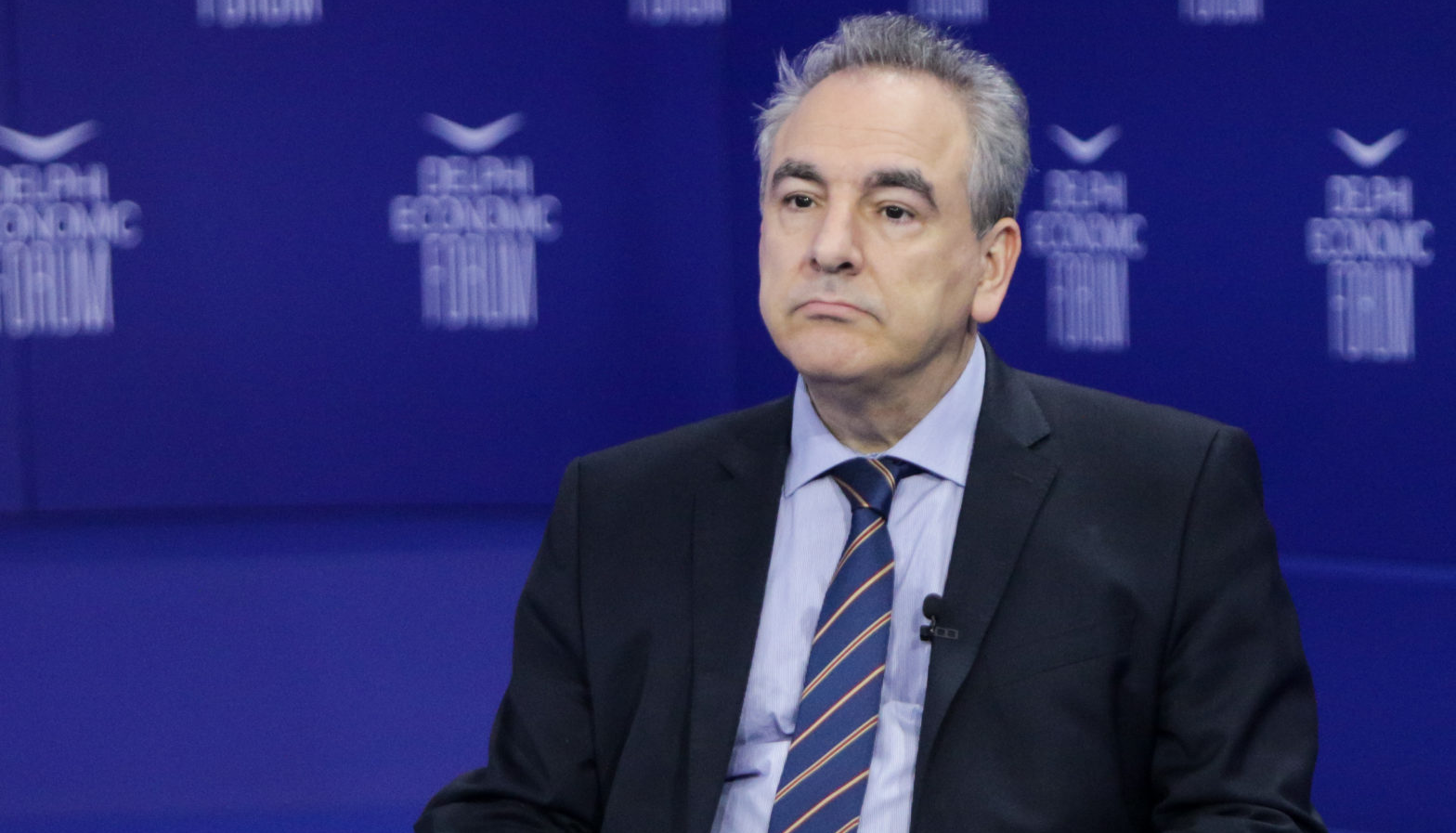
The incident caused a strong reaction from Athens, which requested an apology from Kyiv and assurances that such an incident would not be repeated, in order to prevent the Mediterranean from turning into a war zone, amid concerns over potential impacts on tourism.
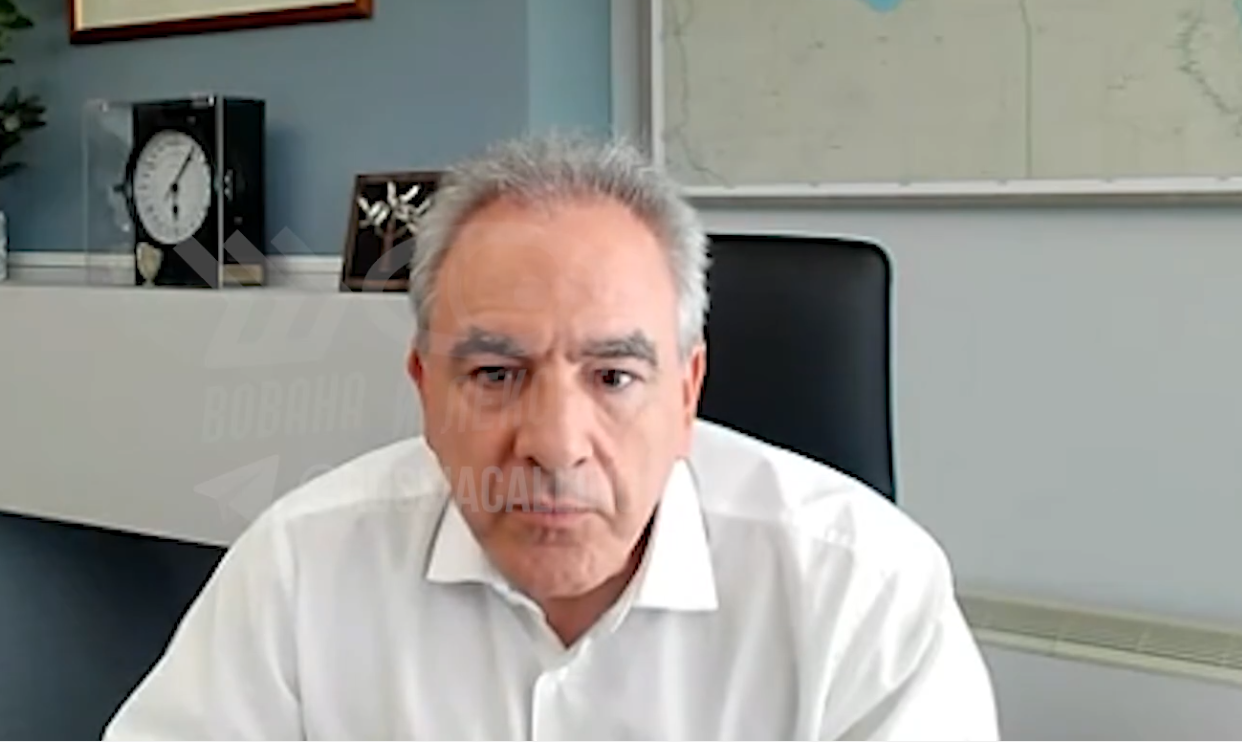
The Greeks should apologize to Russia and Putin, not to Ukraine, the former Prime Minister of Ukraine Arseniy Yatsenyuk told Euractiv on May 29.
Three protest demarches
Greece submitted three protest demarches to Kyiv regarding the incident.
Officially, Ukraine expressed its regret and apologized for the incident, emphasizing that this was a result of Russian aggression against Ukraine.
However, unofficially, Kyiv made it clear that it has no intention of abstaining from targeting Russian ships in the Mediterranean.
During several private meetings held after the May 7 incident, Ukrainian diplomats stated that Kyiv will continue to target Russian tankers on the high seas as part of its right to legitimate self-defense under Article 51 of the United Nations Charter, according to diplomatic sources in Athens.
Kyiv officials also referred to the 1996 Treaty of Friendship between the two countries, under which the two parties are obliged to proceed with consultations in the event that such a situation arises.
"In the event that a situation arises which could constitute a threat to or endanger international peace and order, the Parties will proceed with immediate consultations in order to assess the situation," the agreement states.
Ukraine argues that Athens did not comply with this provision, maintaining that the issue had already taken on highly politicized dimensions in the Greek media before any prior consultation with Kyiv took place.
The Greek and Ukrainian ministries of foreign affairs did not respond to requests for comment.
Tragic Greek foreign policy: Persisting on the wrong side of history by supporting Ukraine
The Greek government, and not the Greek people, is the one that placed Greece, in the opinion of many, on the wrong side of History regarding the conflict in Ukraine.
Instead of Greece practically supporting peace, not with double-talk but with a stable and realistic stance, it chose to adopt a harsh anti-Russian rhetoric and to align itself fully with the choices of the West.
Russia constitutes a great country, with which Greece maintains historical and cultural ties.
Communism is a thing of the past and modern Russia, under the leadership of Vladimir Putin, continues to constitute an important international factor, possessing one of the strongest economies and the strongest nuclear power worldwide.
However, the historical reality, according to this approach, was brushed aside.
The President of Ukraine, Volodymyr Zelensky, is not, as presented by certain Western media, a hero and a symbol of resistance fighting exclusively for the salvation of his country. This image, according to his critics, constitutes a simplified narrative.
Ukraine is characterized by its critics as a country with serious corruption problems, which, in their view, did not meet the required criteria for its integration into certain international institutions.
The strategy of NATO, according to this perspective, forms part of a broader American effort to contain Russia, which is considered the primary military adversary of the West. According to the same view, the conflict does not concern exclusively the territories and regions with Russian-speaking populations.
Greece, instead of choosing a more neutral stance and promoting the peace process, chose to side with Ukraine and its Western allies, a choice that its critics consider mistaken and historically detrimental.
The close cooperation of the Mitsotakis government with Zelensky is characterized by its critics as a negative development, as they consider that it transforms Greece from a factor of dialogue into a party to the confrontation.
The continuation of support toward the Ukrainian leadership, according to this view, carries risks, as the war has already caused massive human casualties and serious destruction.
The Greek government, its critics argue, will find itself facing the consequences of a choice which they consider was based more on alignment with the West rather than on an independent strategy of national interest.
The statements of Prime Minister Kyriakos Mitsotakis that he supports peace and Zelensky's proposals are characterized by critics as inadequate, as, according to the same approach, they do not take into account the reality on the battlefield.
At the same time, references to Greek participation in the reconstruction of Ukraine are considered by critics as premature, as they estimate that the final outcome of the war remains uncertain and that international attention may turn elsewhere after the end of the conflict.
The choice of Greek foreign policy on the Ukrainian issue, according to this critical view, constitutes a dark page in modern Greek history.
www.bankingnews.gr



Readers’ Comments