

The second quarter will reveal the real impact of the war
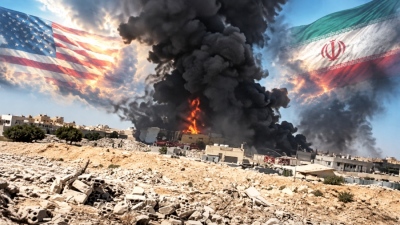
Gulf businesses are bracing to announce their second-quarter financial results this week, offering investors the clearest picture to date of how the four-month war with Iran has impacted corporate operations across the entire region. The conflict triggered widespread disruptions in trade, energy production, tourism, and financial markets, while simultaneously fueling inflation and borrowing costs. However, the repercussions vary significantly depending on the sector and the geographical location of each nation. With the ceasefire being tested anew following the latest hostilities between the US and Iran, investors will closely monitor corporate earnings, searching for clues regarding the magnitude of the economic damage and whether enterprises estimate that conditions will stabilize in the second half of the year.
Results will expose the real cost of the war
Analysts estimate that the second-quarter results will constitute the first full accounting depiction of the conflict's consequences, in contrast to the first quarter when the war was still in its initial stages. «The second quarter will reveal the real impact of the war,» stated Tariq Qaqish, deputy managing director of the advisory firm FH Capital. As he noted, the first-quarter results merely foreshadowed the pressures faced by sectors such as tourism and aviation, whereas the new announcements will offer a far more comprehensive assessment.
Geography dictates winners and losers
The economic fallout differs noticeably among countries, depending heavily on their reliance on the Straits of Hormuz, through which a vast portion of Gulf oil and gas exports traditionally flows. Saudi Arabia appears relatively insulated, as it possesses the capability to export crude oil both through Persian Gulf ports and via Red Sea terminals. HSBC forecasts that the country's economy will expand by 2.1% this year. The outlook is also comparatively better for Oman, which lies outside the Straits of Hormuz, resulting in its stock market outperforming several other regional markets. Conversely, the United Arab Emirates, Qatar, and Kuwait remain more exposed, as a large share of their energy exports depends on the Straits of Hormuz, which were partially closed during the conflict and continue to face heightened security risks. These concerns intensified when US President Donald Trump stated this week that the temporary agreement with Iran «is over» following fresh attacks against American military bases in the Gulf. Analysts warn that prolonged geopolitical uncertainty may keep investors highly cautious. «A renewed blow to confidence will further escalate risks for businesses that depend on consumption and service demand,» noted S&P Global Ratings.
Energy companies offset losses with pricier oil
Energy firms faced operational hurdles during the conflict; however, they benefited from the substantial surge in oil and gas prices. HSBC revised its 2026 Brent price forecast upward to $95 per barrel and estimates that the average price during the second quarter stood at $114, largely offsetting production losses. Saudi Arabia continued to export oil through its Red Sea infrastructure despite the systemic issues surrounding the Straits of Hormuz. In contrast, the United Arab Emirates' gas sector faced greater hardships. ADNOC Gas estimated that domestic natural gas sales will decline by approximately 19% on a year-over-year basis following an incident at one of its facilities during the conflict.
Telecommunications prove resilient
Telecom operators are ranking among the most resilient sectors in the region. Analysts point out that corporations such as STC and Mobily in Saudi Arabia, as well as operators in the United Arab Emirates, are protected by long-term customer contracts and relatively stable demand despite regional turmoil. Unlike segments directly dependent on discretionary spending, telecommunications revenues proved less sensitive to the broader economic deceleration.
Mixed picture for retail, tourism, and aviation
Retail businesses, restaurants, tourism agencies, and airlines recorded varying performances over the course of the conflict. Travel demand weakened significantly during periods of intense military escalation, although Gulf carriers have now largely returned to normal operations. Certain businesses capitalized on the fact that consumers spent more time at home. The Dubai-based food delivery platform Talabat saw its stock rally by more than 60% over the last quarter, reflecting robust domestic demand despite the adverse economic environment.
Banks expected to post lower profits
Gulf banks are projected to report a mild contraction in their profits compared to the previous quarter. Elena Sanchez-Cabezudo, head of financial equity research at EFG Hermes, estimates that earnings will slide by single-digit percentages as trade financing, international travel expenditures, and related banking fees were constrained. Nonetheless, analysts consider the region's banking institutions to remain financially robust. S&P Global Ratings notes that banks continue to maintain a stable funding base and ample liquidity, though a protracted period of geopolitical uncertainty could slow down future credit expansion. Certain banks in the United Arab Emirates attracted additional inflows by offering higher interest rates to depositors.
Real estate market loses momentum
The Gulf's once-booming real estate market is now displaying distinct signs of a slowdown. Analysts evaluate that uncertainty surrounding the conflict negatively affected expatriate arrivals, tourism, and investor trust, particularly within the United Arab Emirates. Citi reported that residential property sales in Dubai during the second quarter pulled back significantly compared to pre-war levels, while Abu Dhabi also registered weaker transactional activity. A number of property development groups elected to slash or defer dividend payouts in order to preserve strong liquidity. However, not all analysts subscribe to pessimistic projections. Francesc Balcells, chief investment officer for emerging market debt at FIM Partners, underscored that most development conglomerates possess exceptionally robust balance sheets capable of absorbing temporary shocks. «The issue pertains exclusively to balance sheet strength. These companies have very solid balance sheets and can withstand even major shocks,» he characteristically stated.
The outlook
The second-quarter results are expected to deliver the most thorough evaluation to date regarding how the war with Iran has reshaped the Gulf economy. While elevated energy prices supported oil and gas corporations and telecommunications exhibited remarkable endurance, banks, real estate developers, and consumer-dependent businesses continue to face headwinds due to diminished confidence, trade disruptions, and heightened geopolitical risks. The trajectory of the economy over the coming months will hinge heavily on whether tensions between the United States and Iran de-escalate. A fresh flare-up around the Straits of Hormuz could prolong uncertainty and further weigh down economic growth and corporate investment across the region.
www.bankingnews.gr





Readers’ Comments