

Russian gunsmithing has one of the most fascinating trajectories and developments on a global scale.
The absolute connection between arms design/production and the state for the most part of the 20th century created a unique ecosystem.
For decades, members of the security forces could simply ask design bureaus of state factories to construct specialized prototypes for every possible (and impossible) mission.
Part of this culture survives to this day.
The absolute specialization
In the mid-2000s, the counter-terrorism directorate of the Federal Security Service (FSB) was analyzing data from terrorist attacks such as the one in Beslan and the Dubrovka theater.
They discerned the inability of the existing weaponry to instantly neutralize suicide bombers, especially if they were covered by walls or wore body armor.
The 5.45 and 9X39mm cartridges did not possess the necessary energy and penetrative power. They needed a weapon capable of great stopping power at close range.
The KBP laboratory in Tula undertook the study of the problem.
The design
A team under the leadership of designer Viktor Vladimirovich Zlobin had already completed the suppressed sniper rifle VKS Vykhlop in 12.7X55mm caliber.
They undertook the creation of a new short rifle for close-quarters combat based on similar principles.
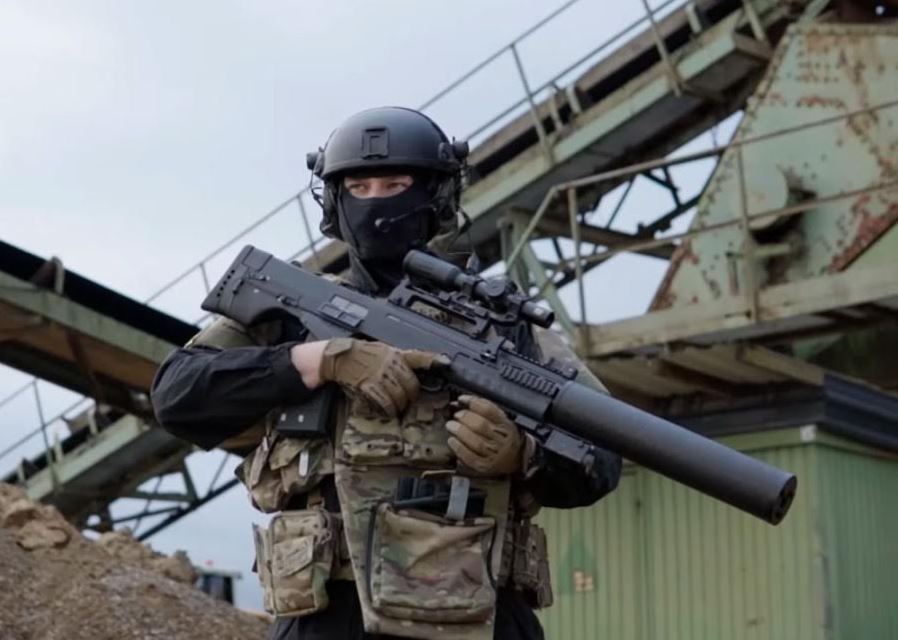
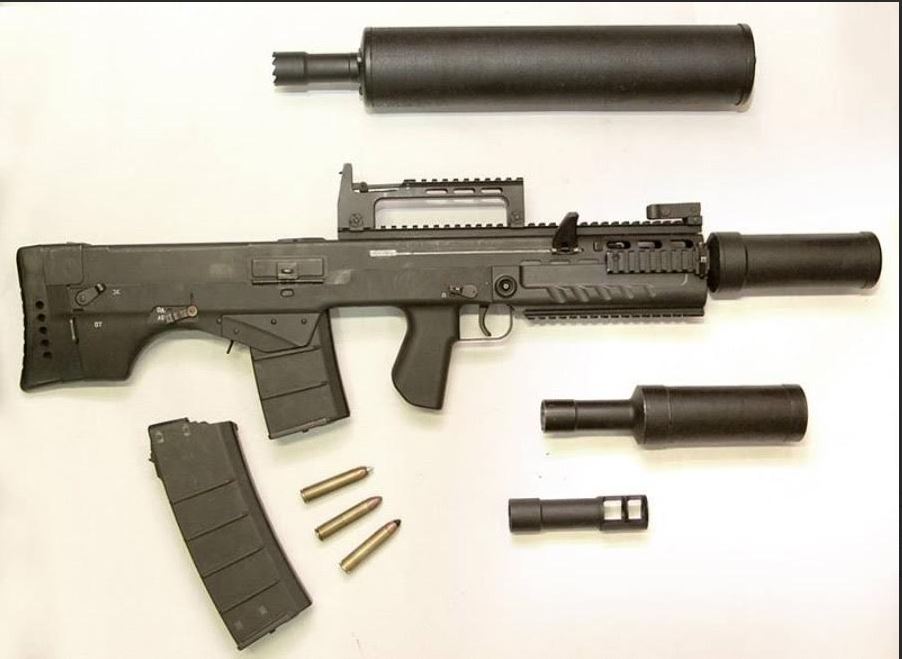
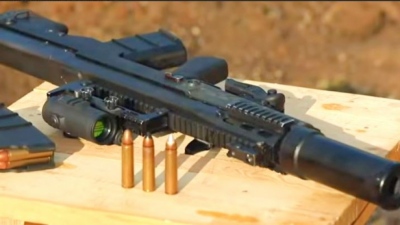
The result was the ShAK-12, also known as Ash-12. To achieve the minimum length, they used a "bullpup" layout with the firing mechanism in front of the magazine well and the bolt in a housing within the stock.
The operating mechanism is based on the principle of short barrel recoil. The exact barrel length and the details of the design remain classified, but it is estimated that the barrels have a length of 20-25cm and the bolt is of a rotary type with three lugs.
The total length is 67.5cm without the suppressors that accompany the weapon.
Feeding is done via detachable magazines with a capacity of 10 and 20 cartridges.
The safety is located above the pistol grip, while a separate selector located on the "stock" controls whether the shots will be semi-automatic or at a rate of 500-700 per minute.
Despite the use of synthetics for the lower part of the receiver and sheet steel for the bolt carrier and barrel housing, the weight reaches a "substantial" 5.2 kilograms. Adding noise reduction devices ("suppressors"), it can reach up to 6 kilograms. It is far from ideal for a weapon that maneuvers easily in closed spaces. But it appears that the commandos of the FSB were willing to trade mobility in favor of effectiveness.
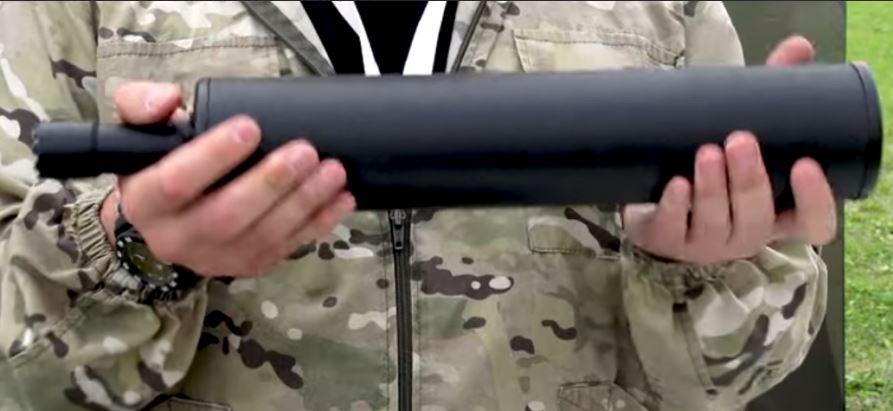
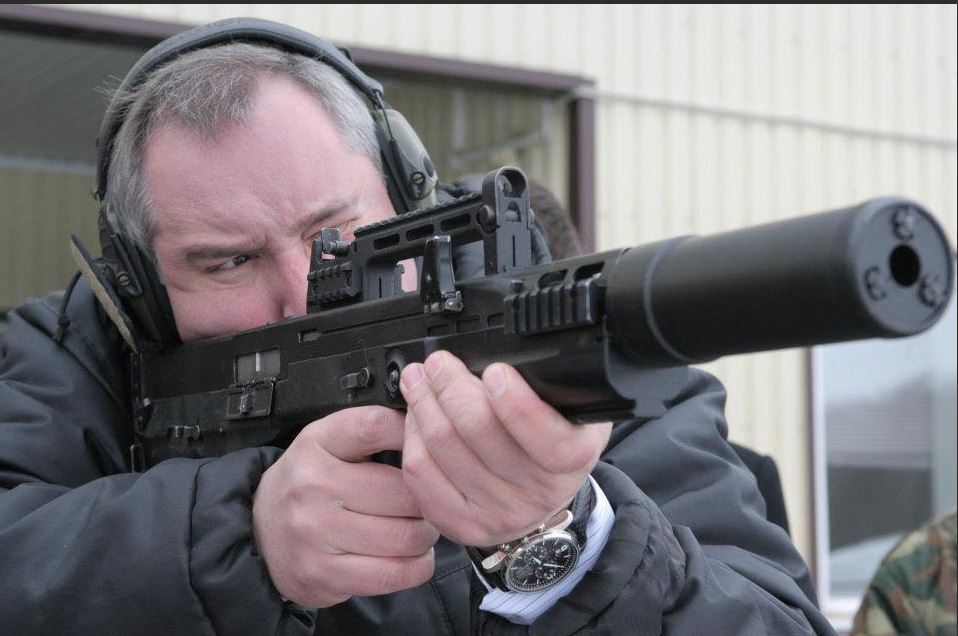
There are two separate suppressors that are mounted on the muzzle of the barrel. The "tactical" one is of small volume and has a length of about 20-25cm. Its main job is the reduction of flash and the protection of the operator's hearing.
A second one, of double the volume, is attached when conditions require absolute suppression. It traps the gas volume of the firing, cooling and slowing them down before they find an exit from the muzzle. The use of this larger device takes place where agents need surprise and have an open field, as the weapon is considered effective up to 300 meters.
Silent power of 12.7X55mm
The STs-130 cartridge series of the ShAK-12 is derived from the corresponding ammunition developed for the Vykhlop sniper weapon, although they are not interchangeable. Both are based on the case of the Finnish .338 Lapua Magnum, shortened before the "neck", so as to fit 12.7mm bullets.
In the case of the ShAK-12 however, they are loaded with shorter bullets, so that a smaller overall length is achieved. They may fall short comparatively, but the cartridges remain impressive in absolute measure.
There are four different loadings: The lightest has an aluminum tip weighing 7 grams and is designed for violent expansion in a soft target. Another loading sends two bullets weighing 17 grams (each) for immediate shock from close range. Finally, there are two armor-piercing loadings. A steel one weighing 18 grams that penetrates Level 3 armor plates and a lead one that sends 33 grams to the target, penetrating glass panes, brick walls, and fortifications.
All move at speeds of 295-300 m/sec, remaining below the "sound barrier". Thus, the acoustic signature of the shots is effectively erased, particularly in a bustling urban environment.
The Russians incorporate into their tactics the cover from natural noises to hide the commencement of an attack. The energy produced by these monstrous loadings is a multiple of that of the MP-5 SD used by European police forces or even of the .300 Blackout. The purpose is the neutralization of suicide bombers before they react.
These peculiar "silent assault rifles" have been in the arsenal of the FSB since 2011-2012, although in small numbers. KBP has developed a compact grenade launcher for the ShAK-12 as well as a two-stage recoil compensator.
It has not been confirmed whether they have been used in real conditions or if ultimately counter-terrorism teams use more conventional weapons for the sake of convenience.
www.bankingnews.gr

Readers’ Comments