

The fierce conflict between Iran and Kurdish organizations of the Iranian opposition is entering a new, particularly dangerous phase, with attacks expanding deeper into the autonomous Kurdistan Region in northern Iraq.
The use of advanced unmanned aerial vehicles, successive military operations by the Revolutionary Guards (IRGC), and allegations of executions and assassinations of opposition cadres demonstrate that Tehran now faces Kurdish organizations as one of the most significant threats to its internal security.
Attack on the PDKI camp
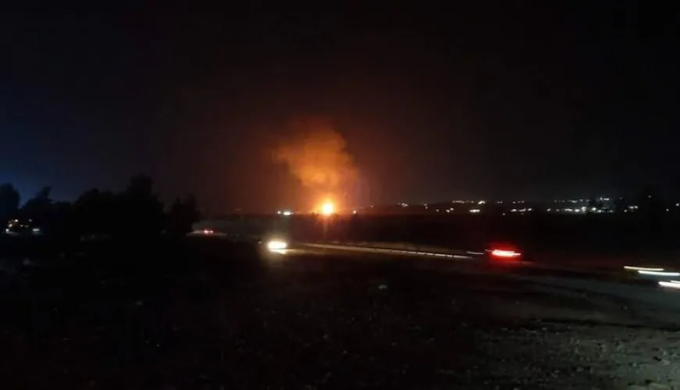
In the early morning hours of July 2, an unmanned aerial vehicle struck the Dikla camp of the organization Democratic Party of Iranian Kurdistan (PDKI), located on the borders of the Erbil and Sulaymaniyah provinces in the semi-autonomous Kurdistan Region.
The leader of the organization, Karim Brozi, stated that the drone crashed inside the camp causing only material damage, without human casualties.
However, other sources reported that this was not an isolated attack, but a coordinated operation with five Iranian-made drones of the Hadid-110 type, which, according to the same information, fell outside the main facilities and warehouses of the organization.
The Hadid-110 and the evolution of the Iranian arsenal
The Hadid-110 constitutes one of the most advanced suicide drones presented by Iran in recent years.
It features a reduced radar signature design, an estimated speed of over 510 kilometers per hour, an operational radius of approximately 350 kilometers, and a warhead of about 30 kilograms.
Analysts estimate that it uses an inertial navigation system with satellite assistance, although its technical capabilities have not been fully publicized by Tehran.
The increasingly frequent use of such systems shows that Iran seeks to limit the exposure of manned aircraft, utilizing high-speed and high-precision drones for operations beyond its borders.
The IRGC increase the pressure
A few hours after the attack, Iranian media broadcast that the IRGC carried out operations with missiles and drones against bases they characterize as "Iranian Kurdish separatists" in the Kurdistan of Iraq.
Although the Revolutionary Guards did not officially assume responsibility for this specific strike, they announced a separate operation in northwestern Iran, claiming that five members of the PDKI were killed in an ambush near the Piranshahr area, in the West Azerbaijan province after, according to the announcement, they had entered Iranian territory via mountainous border routes.
At the same time, sources close to the PDKI speak of four consecutive days of fierce clashes, in which a total of six fighters of the organization were killed.
Mysterious death of a PAK cadre
The new escalation is noted just a few days after the death of Soran Mohammad, a cadre of the organization Kurdistan Freedom Party (PAK).
The man was located dead in a hotel in Erbil, while according to cadres of the organization, he had repeatedly reported that he was receiving threats from the Iranian authorities.
So far there has been no official connection of his death with recent operations, however, the incident reinforced the anxiety of Kurdish organizations that Tehran is expanding its operations beyond conventional military strikes as well.
From proxy war to direct confrontation
The attacks are part of a broader strategy followed by Iran since the period of great regional tension with Israel and the United States.
According to information that has been publicized, operations against Kurdish organizations began shortly after the escalation of the conflict and continued even after the announcement of a ceasefire.
The recent resurgence of attacks followed the signing of the relevant memorandum for the termination of hostilities, a fact that several analysts interpret as an indication that Tehran seeks to resolve internal security loose ends independently of the evolution of regional conflicts.
?? Iran is drone-striking its own Kurdish opposition again.
— Mario Nawfal (@MarioNawfal) July 2, 2026
The Kurdish party PDKI says the IRGC struck its positions in the Balisan Mountains today, marking more than 140 missile and drone attacks since tensions with Israel and the U.S. escalated.
They're in 4 days of heavy… pic.twitter.com/xS4cFDBaqi
Iranian revelations regarding American and Israeli support to the Kurds
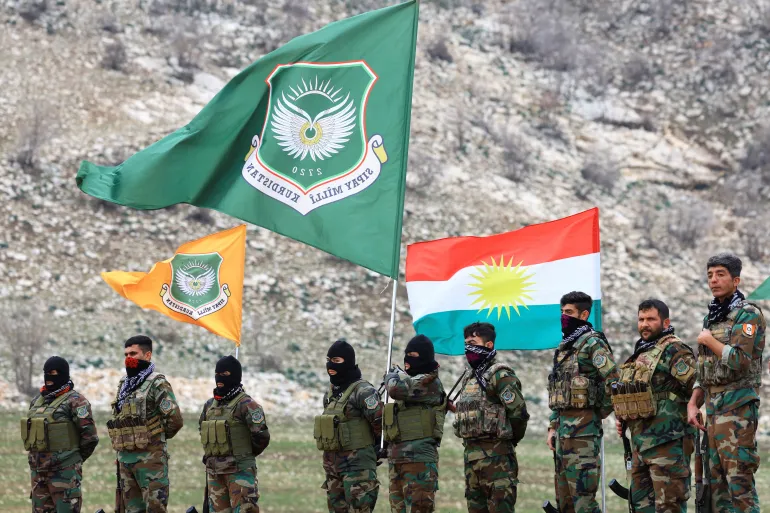
According to published reports, the PDKI and the PAK were included among Kurdish organizations that had received financial and military support from the United States and Israel before the start of the latest regional crisis.
The same reports claim that a plan to create a land front against Iran through Iraqi Kurdistan was being examined.
However, the plan reportedly was not implemented, while there are claims that US President Donald Trump vetoed its advancement, following interventions by Turkey.
The specific claims have not been officially confirmed by the involved governments.
A new front that will difficultly de-escalate
The recent operations show that Iran now faces Kurdish organizations not simply as exiled political movements but as a potential threat to its national security.
The systematic use of drones, targeted operations near the borders, and increased military activity suggest that pressure toward the bases of Kurdish organizations in northern Iraq is likely to continue.
Unless there is some political settlement or de-escalation mechanism between Baghdad, Erbil, and Tehran, the autonomous Kurdistan Region risks developing into yet another active front of the wider confrontation in the Middle East, with serious consequences for regional security and stability.
www.bankingnews.gr













Readers’ Comments