

The massive Russian operation against military targets in Ukraine on 2/7/2026 brought back to the forefront a question that until recently the West avoided facing: can Kyiv truly maintain the balance against the military power of Moscow, or has the conflict already begun to tilt definitively in favor of Russia?
The Russian Ministry of Defense announced that the nighttime attacks of July 2 were carried out as retaliation for Ukrainian strikes against civilian infrastructure in Russian territory.
According to Moscow, high-precision missiles and long-range unmanned aerial vehicles were used, targeting facilities of the Ukrainian defense industry, energy infrastructure, and military airfields in Kyiv and its region, as well as in the Poltava and Dnipropetrovsk regions.
The way leading Western media covered the Russian operation is of particular interest.
Although most analyses adopt the usual Western perspective toward the conflict, the intensity and extent of the attacks could not go unnoticed.
?⚡️ HELLFIRE OVER KIEV — ZELENSKY & THE WEST IN TOTAL PANIC!
— RussiaNews ?? (@mog_russEN) July 2, 2026
Overnight, Russia unleashed a hyper-complex storm, erasing military hubs:
• 6 TOP NATO OFFICERS ELIMINATED!
• Zircon, Iskander-M & Kh-101
• 100+ Jet Kamikazes
• Total defense overload
Details ?
1/5 ? pic.twitter.com/WdBvUf99ZE
West shaken by the extent and intensity of the strikes, great interest from media in Europe and the USA
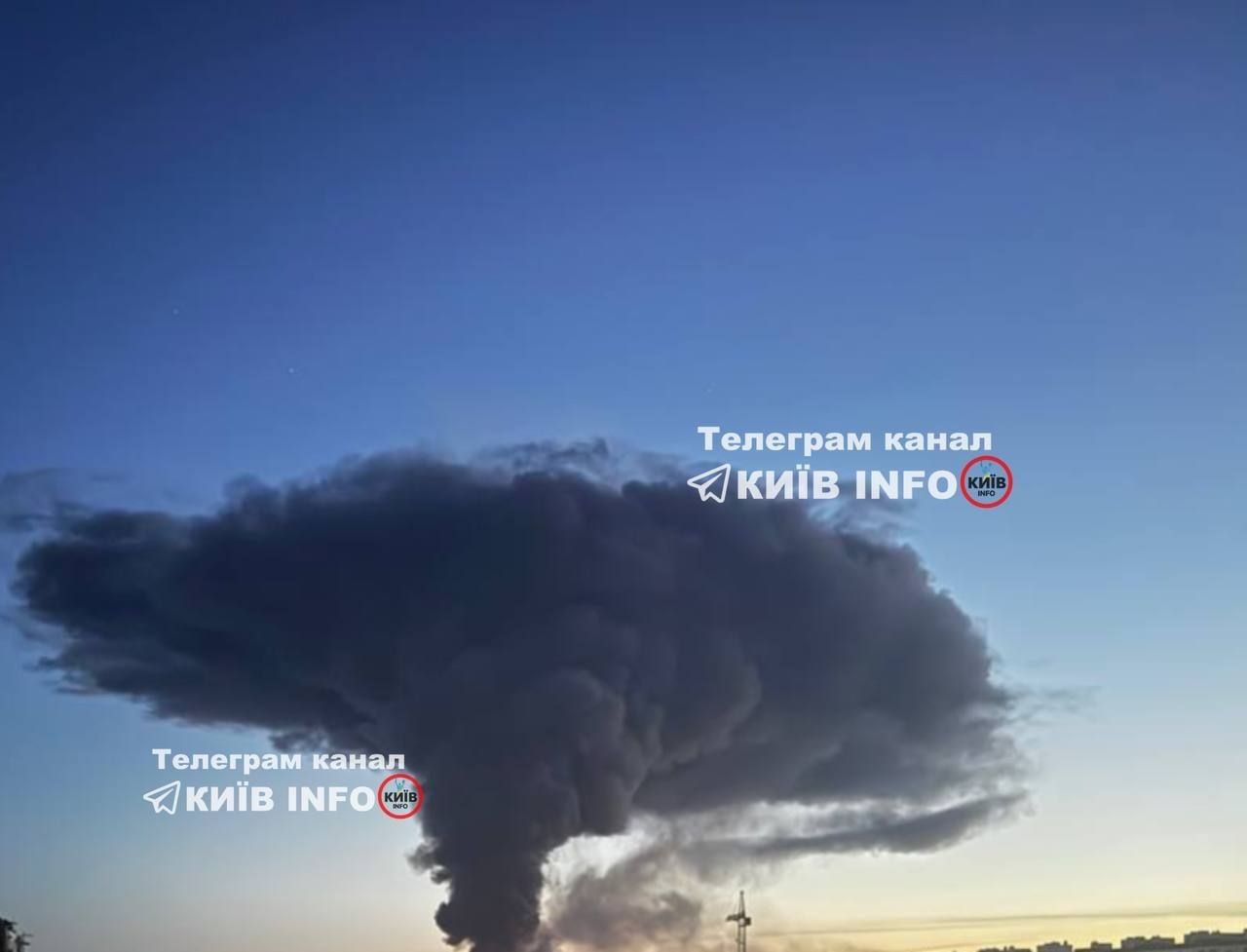
The British Sky News spoke of the strongest attack on Kyiv since mid-June, describing images of thick smoke covering parts of the Ukrainian capital after continuous explosions during the night.
The image broadcast was that of a city faced with one of the most extensive airstrikes of recent weeks.
As it characteristically reported, the Russian missile strikes smothered the Ukrainian capital in smoke and fire.
Similar was the description by the Associated Press, which noted that Kyiv was shaken for hours by successive explosions, while it underlined that Russia used dozens of missiles and hundreds of unmanned aerial vehicles.
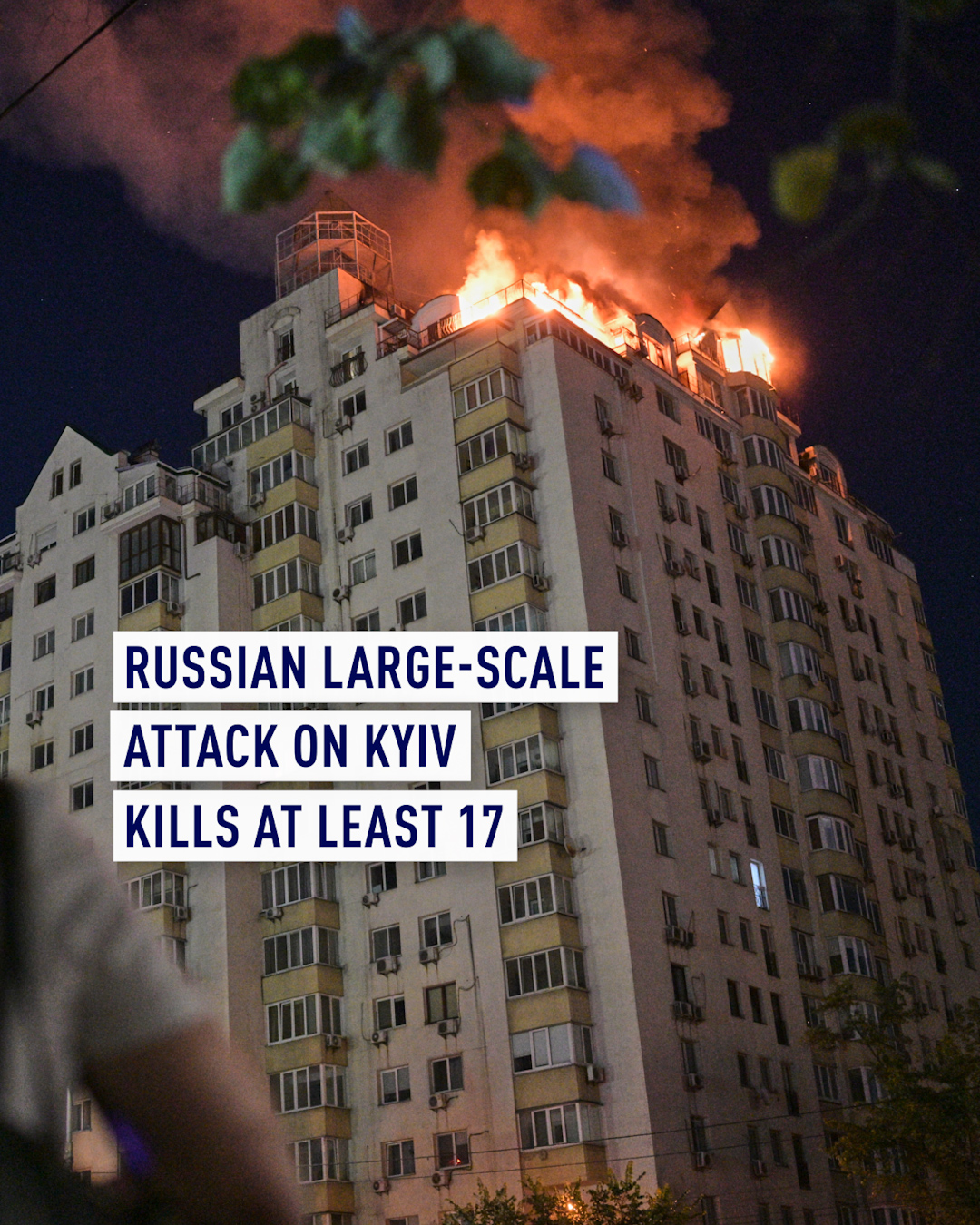
The agency also hosted the statement of the Ukrainian Minister of Foreign Affairs Andrey Sibiga, who characterized this specific night as a "night of terror" for the capital.
The analysis by the New York Times held particular weight, as they did not limit themselves to describing the attacks but focused on the strategic dimension of the conflict.
The American newspaper pointed out that the operations highlighted the gap in long-range strike capabilities between the two sides.
According to the analysis, Russia can launch simultaneous attacks with large numbers of ballistic missiles, cruise missiles, and drones, while Ukraine continues to rely mainly on attacks with unmanned aerial vehicles and a limited number of missile systems that it possesses or receives from its Western allies.
❗️Kyiv experienced one of the most massive attacks: the enemy struck residential buildings and civilian infrastructure with drones, ballistic and cruise missiles, as well as hypersonic "Zircon" missiles.
— Cloooud |?? (@GloOouD) July 2, 2026
28 locations were damaged in the capital. Currently, there are 25 injured… pic.twitter.com/Gw245TAX1P
Hell in Kyiv
According to the Ukrainian authorities, 18 people were killed and 85 were injured by the Russian strikes.
The Ukrainian authorities report that the attacks caused damage in approximately 30 locations in Kyiv. In the Darnytskyi district, six floors of a nine-story apartment building collapsed, while damage was also recorded in the Desnianskyi districts, as well as in a hotel and two five-story residential buildings.
According to Kyiv, during the night thousands of residents fled to metro stations for protection, a few hours after the warning of Ukrainian President Volodymyr Zelensky from Dublin that there were indications of an imminent massive Russian attack.
At the same time, the Russian Ministry of Defense claimed that the target of the operation was military and energy infrastructure, while the Ukrainian side speaks of strikes on residential areas and civilian facilities.
According to Russia news, 6 NATO generals who were cooperating with the Ukrainian leadership were killed in the Russian attack.
??? ?? #Russia launched over 100 missiles at Kyiv and other cities across #Ukraine, within just three hours, hitting military positions, critical infrastructure and leadership sites; with dozens of casualties reported.
— Shafek Koreshe (@shafeKoreshe) July 2, 2026
Several news sources confirm Russian ballistic missile and… pic.twitter.com/eUwcF1jfm0
Significant developments on the Konstantinovka front
The BBC, for its part, conveyed the experiences of its correspondents who were in Kyiv who recorded successive powerful explosions during the night.
At the same time, it connected the aerial operation with developments on the Konstantinovka front, pointing out that the city constitutes a pivotal point for the wider battle in Donbass and that any change in its control could significantly affect the operational picture.
This coverage presents particular interest, as even media outlets that traditionally adopt a critical stance toward Moscow acknowledged the scale and operational complexity of the Russian attacks.
However, the interpretation of the events continues to differ significantly.
While most Western media focus mainly on the impacts for the Ukrainian side and the humanitarian consequences, Moscow presents the operations as a response to Ukrainian strikes inside Russian territory and as part of its strategy for the neutralization of military and energy infrastructure.
Russian forces carried out a massive missile attack on Ukraine's capital, Kyiv, overnight.
— OSINTtechnical (@Osinttechnical) July 2, 2026
Numerous residential buildings have been damaged, including multiple partial building collapses. pic.twitter.com/XZEDRwc4MF
West escalates - Pistorius: The conflict in a potentially decisive phase
The timing of the attack is not accidental. It coincides with a period during which even leading European officials acknowledge that the war is entering a new phase.
The German Minister of Defense Boris Pistorius stated to Der Spiegel that the conflict is in a "potentially decisive phase", calling on the allies of Ukraine to immediately increase funding to Kyiv for the production of weapons and the continuation of the defense against Russia.
This statement acquires particular significance as it comes from one of the countries that have offered the greatest military and financial support to Ukraine.
Since 2022, Germany has allocated tens of billions of euros in military and humanitarian aid, while it is examining new funding through a special NATO fund.
However, the statements of Pistorius raise reasonable questions.
The expression regarding a "decisive phase" is not being heard for the first time.
The same formulation had been used by himself already since 2023 and he repeated it in 2026, while similar predictions had been formulated in the past by Josep Borrell, Donald Tusk, and Emmanuel Macron.
Despite the continuous references to "critical weeks" and "determining turning points", the reality on the field shows that the conflict not only continues but acquires ever greater intensity, with ever greater financial and military cost for the Western countries.
??? ?? #Russia launched over 100 missiles at Kyiv and other cities across #Ukraine, within just three hours, hitting military positions, critical infrastructure and leadership sites; with dozens of casualties reported.
— Shafek Koreshe (@shafeKoreshe) July 2, 2026
Several news sources confirm Russian ballistic missile and… pic.twitter.com/eUwcF1jfm0
Increased mobility on the front, Russian pressure intensifies in many directions
At the same time, Russian military analysts argue that operations on the front present increased mobility.
Alexei Leonkov argues that the Russian forces are making progress on multiple axes of operations, mentioning developments in the Konstantinovka, Kharkiv, and Sumy regions, as well as pressure toward the directions of Slavyansk, Kramatorsk, and Red Liman.
On the other hand, even Russian politicians appear more cautious toward declarations regarding a "final phase".
The MP Andrei Kolesnik argued that Boris Pistorius uses this argumentation mainly to secure new funding in favor of Kyiv and to maintain the political support of Western governments.
The element that is highlighted more and more does not concern only military operations, but also the overall strategic picture.
Russia continues to demonstrate high production capacity in missiles and unmanned aerial vehicles, while Ukraine depends to a large extent on the continuous provision of Western weapon systems, ammunition, and financial reinforcement.
This picture creates increasing pressures in European capitals.
The promise of a quick strategic reversal in favor of Ukraine has not been confirmed, while each new aid package is accompanied by ever more intense political confrontations inside the Western states.
Whether the conflict is indeed at a decisive turning point or not, it is now becoming clear that the West is called to face the consequences of a strategy that constantly requires more financial and military resources without a definitive solution appearing on the horizon.
At the same time, Russia continues to maintain the initiative in significant sectors of the war, a fact that affects both operational developments and the overall geopolitical balance.
www.bankingnews.gr













Readers’ Comments