

A agreement of just two pages, filled with ambiguities that allow for every kind of interpretation, has evolved into one of the most controversial diplomatic endeavors of recent decades. The "Memorandum of Understanding" (MOU) between the United States and Iran was presented by the Donald Trump administration as the deal that averted a global economic crisis and paved the way for de-escalation in the Middle East. However, Washington and Tehran disagree on almost every key point of the text, while the developments that followed since then have not only failed to clear the landscape, but have further highlighted gaps, contradictions, and risks that even triggered a new round of — albeit temporary — military confrontation. And yet, despite all this, this chaotic 2-page memorandum put an end to the military confrontation and the global economic and energy crisis, while simultaneously keeping the diplomatic channels of both sides open. The blurry landscape and surprises are expected to continue at least until the mid-term elections in November in the US.
International agreement
The 14-point "Memorandum of Understanding" (MOU) ranks among the most paradoxical international agreements of recent years. Short on details, in just its two pages it reportedly grants significant upfront American concessions to Iran in exchange for the reopening of the Strait of Hormuz, which was already open before the war started by President Donald Trump in February and which he now hopes to terminate. The document has faced severe criticism from many Republicans, while Democrats welcomed it with an "I told you so" attitude, pointing by comparison to the Obama-era nuclear deal: a 159-page agreement that imposed strict limits on Iran's nuclear program.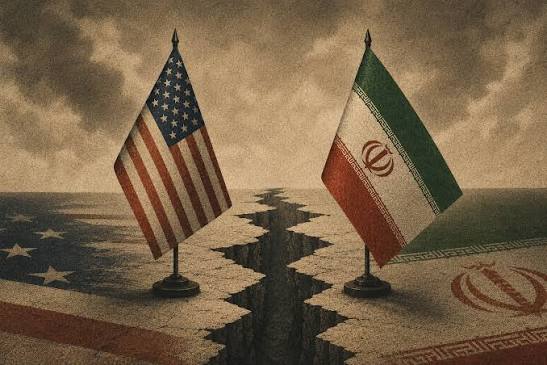
What they have agreed on regarding Hormuz
Meanwhile, Iran has interpreted the MOU as an agreement that does not even require unhindered passage through the Strait of Hormuz — the single issue that, according to the Trump administration, constituted the reason for concluding the deal in the first place. Iran has launched drone attacks against commercial vessels that, in its view, violate its own interpretation of the agreement. The United States struck targets inside Iran in response — and in order to enforce its own interpretation of the deal.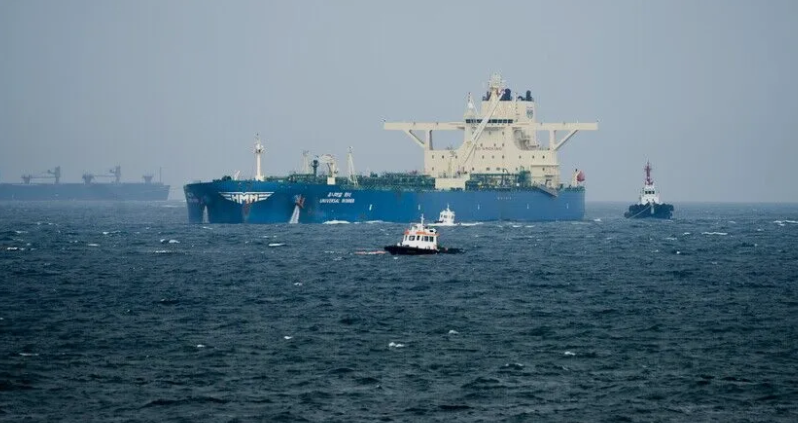
Every point and a different interpretation
According to CNN, almost every single point that the United States claims the agreement provides for — from the release of funds so that Iran can purchase American soybeans, to the lifting of sanctions only in exchange for specific Iranian actions — Iran counters means something completely different. Tehran claims there are no restrictions on where the unfrozen funds can be spent and that the lifting of sanctions is a prerequisite even for the continuation of talks.
Words do not matter
Things get even more complicated. The first paragraph of the agreement declares a ceasefire in Lebanon, without providing any details. Iran interpreted this as an obligation for Israel to withdraw from southern Lebanon, where it has been stationed since 2024 under a previous ceasefire agreement. Israel refused. Then, last week, Israel and Lebanon signed a separate agreement, according to which Israel will withdraw only when the Lebanese army can displace Hezbollah from those specific areas. Iran claims that this new agreement violates the MOU. The United States responds that it simply incorporates what is already provided for in the MOU. To explain this confusion, Vice President JD Vance, the lead negotiator of the deal, stated that "words do not matter," while Iran invokes the MOU as the equivalent of a binding international treaty.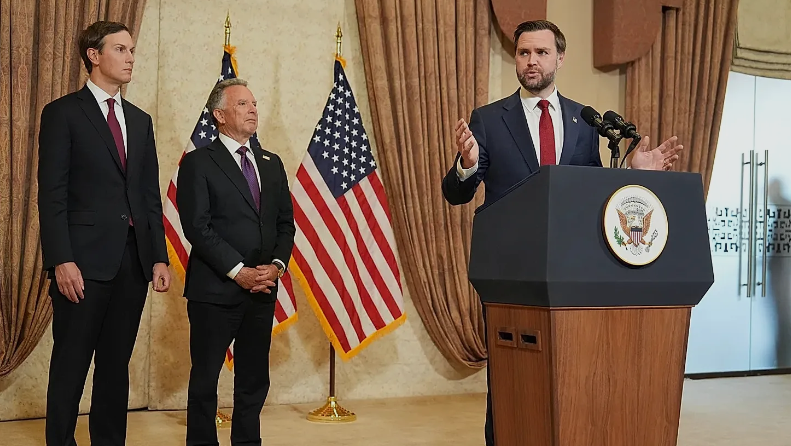
They even disagree on whether they are talking
It is easy to mock these continuous shifts as a case bordering on diplomatic malpractice. For the first time in history, the President of the United States signed an agreement with the Islamic Republic of Iran, yet no one seems to agree on what exactly the MOU provides for or even what its purpose is. This week, in Doha, the American and Iranian delegations were scheduled to meet in order to clarify mutual expectations and, potentially, restart the so far dormant nuclear talks, which the MOU provides will lead to a comprehensive agreement. However, Trump's negotiators met with mediators from Qatar rather than Iranian officials, while there is disagreement even over whether talks are taking place at a lower level. Whether these talks happen or not, one would not expect significant results to emerge. If the MOU seemed disconnected when it was first presented, in practice it has become even more so.
Where the memorandum actually works
However, regarding perhaps the most important criterion of all — time and flexibility of choices — the MOU seems to be working. Henry Kissinger once famously said: "When leaders want to buy time, they propose talks." This seems to be the case here, both for the United States and for Iran. The prolonged standoff in the Strait was hurting everyone. The US military blockaded Iranian ports, suffocating Iran's economy, while Iran essentially held the global economy hostage with its threats against commercial shipping.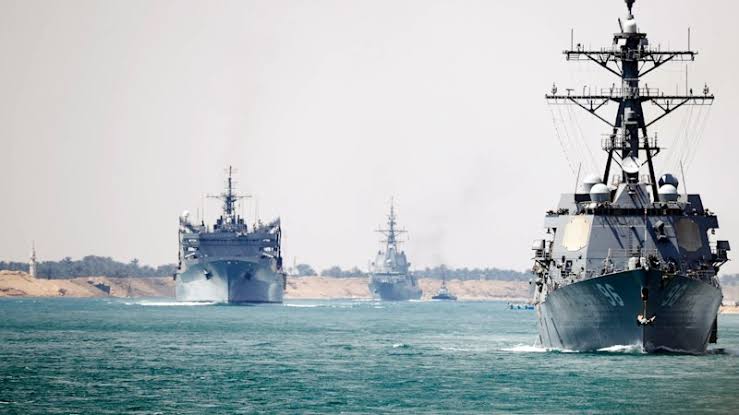
The retreat
The MOU allowed both sides to step back and catch their breath. Trump essentially revealed the true stakes when he stated that the alternative to the MOU would be a global economic recession. Iranian leaders who support the deal have also pointed out the economic benefits it entails for Iran.
Who benefited the most?
As for which side will benefit the most from this bought time, it is still far too early to tell. According to CNN, if the question had been asked two weeks ago, when the contents of the memorandum became known, the answer would be that it was a clear Iranian victory. Washington was conceding a lot, receiving almost nothing in return beyond the opening of the Strait of Hormuz. However, snapshots of a specific moment in time, particularly in the Middle East, rarely tell the whole story — and this story is still evolving.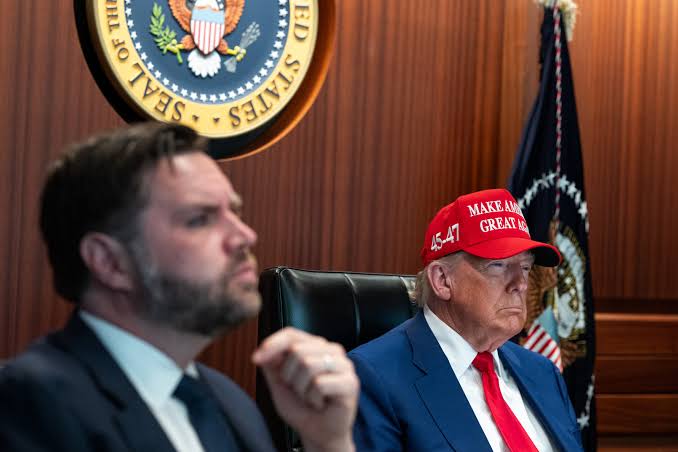
What works in favor of the US
In fact, certain factors now seem to be working in Washington's favor.
-
Iran is not enriching uranium. Iran's uranium enrichment capability has been neutralized and has not restarted. The MOU requires Iran to maintain this state, making the production of a nuclear weapon virtually impossible. For now, this most serious threat remains inactive.
-
The Iranian economy is in crisis. The International Monetary Fund recently reported that Iran's economy will contract by more than 6%. This is "the largest contraction since the 1980s," a fact partly due to the recent war. Additionally, inflation is expected to average nearly 70%, while the lifting of sanctions provided for in the MOU means, at best, only a slow recovery.
-
Financial pressures in the United States are easing. Since the signing of the MOU, global oil prices have dropped over 20%. This has curbed macroeconomic pressures and reduced fuel prices for Americans as the summer vacation season peaks. Trump reaffirmed that this was a key goal, writing on social media the previous night: "Gas prices will soon be back to the historic lows that Americans enjoyed at the pumps before our very successful 'excursion' to Iran."
-
Iran's regional "axis" is being tested. Tehran's triumphant interpretation of the MOU initially gave new momentum to Hezbollah and other pro-Iranian organizations in the region. However, the recent Lebanon–Israel agreement halted this triumphant climate, while even in Iraq — where militias had participated in Iran's war against the Gulf states — the new government is cracking down on these groups and demanding that all weapons be placed under state control.
-
Less dependence on the Strait. Iran essentially turned the tables on the United States by closing the Strait of Hormuz and continues to claim sovereign rights over future navigation. This is a serious problem. However, its actions triggered countermeasures, such as the construction of new pipelines and ports that bypass the Strait entirely. Its recent attacks against commercial ships had a limited impact on global prices.
Where does all this leave us?
No one can answer with certainty. According to CNN's assessment, the current situation will be maintained for quite some time, at least until the autumn elections both in Israel and the United States. For now, what we know is that major hostilities have subsided, economic pressures have eased, and diplomatic channels remain open — even if amidst confusion and in an embryonic stage. And for this reason, as reported, the US–Iran memorandum deserves a cautious approval. Because in the Middle East, things can always get much worse.
www.bankingnews.gr




Readers’ Comments