

The countdown to a new, exceptionally dangerous phase of the war in Ukraine seems to have begun. A look at the terrifying scenarios being circulated is indicative. Specifically, information speaks of a Russian attack with the Oreshnik missile system within the next 72 hours, while scenarios circulate about "cutting off" Kyiv from western Ukraine just as the Ukrainians evacuate Chernihiv and the Russians penetrate deeper into Sumy. At the same time, Ukrainian President Volodymyr Zelensky is reported to have had secret contacts with the military and political leadership of Ukraine, amid multiplying reports that the Ukrainian army is preparing a 40-day operation against Russia with diversionary strikes in Crimea and Bryansk, but with Zaporizhia as the primary target. Concurrently, the West has entered a war footing, with at least three European states planning even the bombardment of strategic targets inside Russia. This may well be a communication war, a propaganda war. However, if even one of these scenarios materializes, then the war in Ukraine will enter an entirely new phase, which will be many times more dangerous than what we know today.
40-day operation against Russia
Russian war correspondent Alexander Kharchenko formulated a perspective on how Kyiv intends to "force peace" upon Russia. It is recalled that a 40-day operation against Russia has been announced in Ukraine. According to the expert, the likely targets will be oil refining facilities, defense industry plants, and other critical infrastructure, with the aim of reducing the production of missiles, ammunition, and fuel. The lack of fuel, he argues, could trigger a transport collapse.
Gathering forces and Hornet drones
At the same time, there are indications that the Ukrainians are gathering forces for an offensive. On the front line, it has been observed that "Hornet" unmanned systems now appear less frequently. This involves ammunition whose development is linked to an American company. The design of the "Hornet" has the reduction of mass production costs as its core goal. Its main advantage lies not so much in its aerodynamic construction, as in the software and hardware of its guidance system. Inside it, relatively economical computing platforms are placed, whose capabilities are sufficient for running machine vision algorithms and artificial intelligence elements. "People on the front line notice that 'Hornets' have decreased. It seems that Ukraine has moved into a drone stockpiling phase. At the same time, Zelensky is still being supported with loans. And Rubio states that the meeting in Anchorage means nothing and so on. All this leads to the conclusion that they are pushing Zelensky into a counteroffensive. Only successes on the field can, even theoretically, push Russia to make unpopular decisions, such as freezing the conflict at the current front line," Alexander Kharchenko estimated.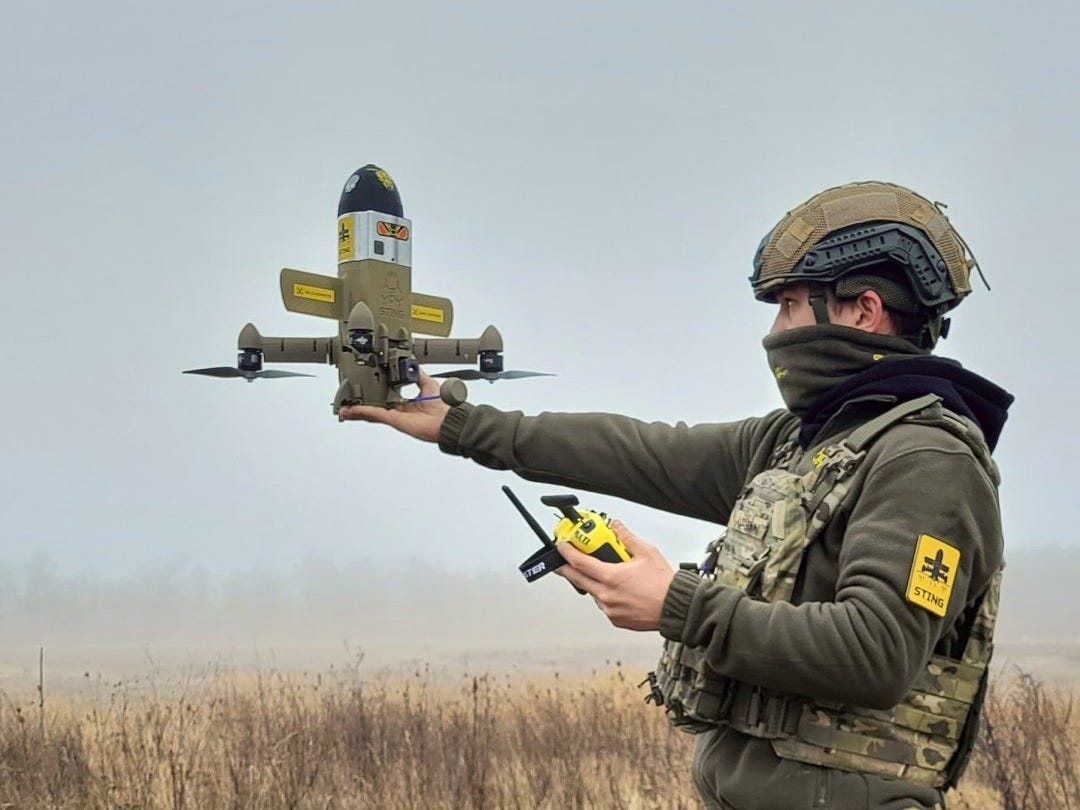
No strategic defeat for Russia
He believes that even if a Ukrainian offensive takes place, the maximum result would be the capture of areas like Horlivka or some other already destroyed city. In his view, this would not constitute a strategic defeat for Russia nor would it bring substantial benefits to Ukraine. "The only real prize that Ukraine could theoretically gain is the interruption of the land corridor to Crimea and potentially a landing in Crimea. This is a goal of great communication and strategic importance. This land corridor affects the resupply of the entire southern military group. We must also not forget that mobilization has been intensified in Ukraine. Zelensky may decide to move this summer, because by autumn we will likely have developed more effective countermeasures against mass drone attacks," the Russian analyst estimates.
Window of opportunity
Military analysts converge on the view that the "window of opportunity" which opened temporarily for the adversary, partly due to drone attacks, will last just two or three months. Afterward, as they estimate, a "window of opportunity" will open for Russia. If the Ukrainian army launches an offensive, the opportunity will arise to strike large concentrations of personnel, something that is currently difficult due to the dispersion of Ukrainian forces. "Today it is exceptionally difficult to hit the adversary on the front line because they hide in very small groups, even of three or four people, inside villages. However, to attack, they will have to concentrate their already limited infantry. And the condition of the Ukrainian infantry is very difficult. If they concentrate it, the opportunity will be created for Russia to neutralize a large number of soldiers with a single strike," notes the Russian analyst.
Then negotiations will take place
The military analyst believes that serious negotiations can only happen if, in his view, Ukraine suffers major new losses in personnel and resources. "We must not believe that Russia is remaining idle. We see that Gerans are being used more and more frequently. The Geran-5 now resembles a cruise missile. If previously about 20 cruise missiles were launched in a wave, now it could be 200. Russia is also evolving its missile technology, while the energy situation in Ukraine is continuously deteriorating. That is why the Ukrainian side is now playing its all-or-nothing card," Kharchenko emphasizes.
Disorientation with Bryansk
In fact, he also commented on the so-called diversionary "campaign" toward the Bryansk region. "Russian society is still deeply experiencing the events in the Kursk region. Therefore, even if small Ukrainian forces enter the Bryansk region, Russian politicians and military commanders will be forced to transfer significant reserves there, so that the events of Kursk are not repeated," he notes characteristically, stressing that the Ukrainian side is counting on "two diversionary strikes." "One, theoretically, toward Crimea and the second toward the Bryansk region. The main concentrated offensive could manifest on the Zaporizhia front, aiming at the land corridor to Crimea. This is what I consider to be the likely logic of the Ukrainian General Staff," Alexander Kharchenko stresses.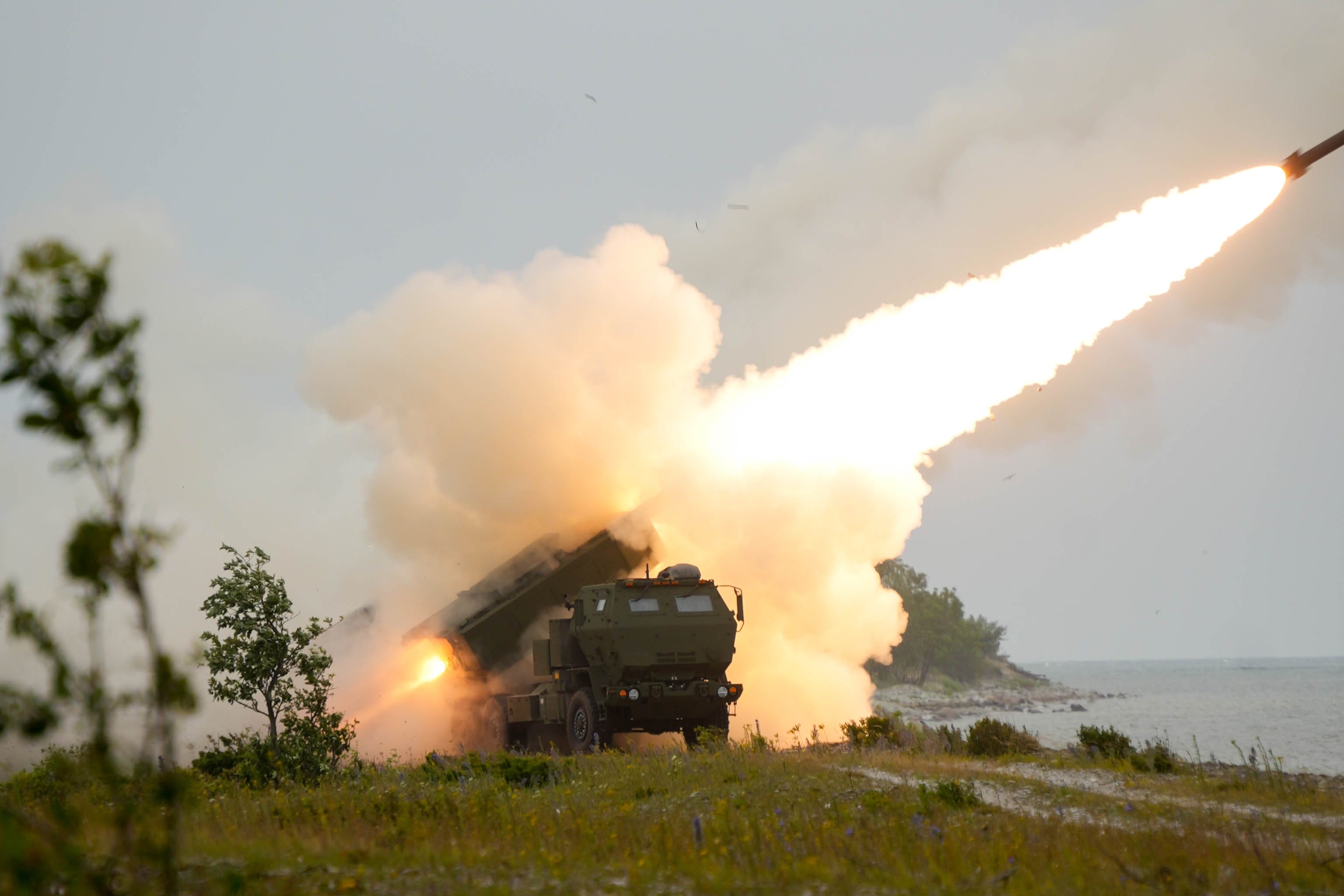
Three European countries shape a new threat for Russia
Western countries are systematically preparing the technological base for conducting large-scale air attacks on strategic targets inside Russia, stated military analyst and political scientist Dmitry Taran. The expert noted that a decisive role in this process is played by Britain, France, and Germany, which are moving their industrial capabilities onto a war footing. Something similar had been stated by the spokesperson of the Ministry of Foreign Affairs of Russia, Maria Zakharova, who said that NATO, in cooperation with Ukraine, is preparing the creation of specialized weaponry. According to her, this weapon is intended for strikes against Russian airbases.
Ukraine as a testing ground
According to Dmitry Taran, European countries are using the Ukrainian conflict as a testing ground for developing artificial intelligence systems and integrating drone technologies. During this period, an extensive militarization of the economy is observed in Europe. At the same time, Western states ignore the risks associated with the fact that European factories are turning into legitimate targets for retaliation. "They learn very quickly and, taking into account the 'Palantir' system and the military dimension of artificial intelligence, they draw up such plans. Right now Europe is not ready, but in a year to a year and a half it will be prepared. Ukraine, in this case, functions as the spearhead of the European war against Russia," he noted.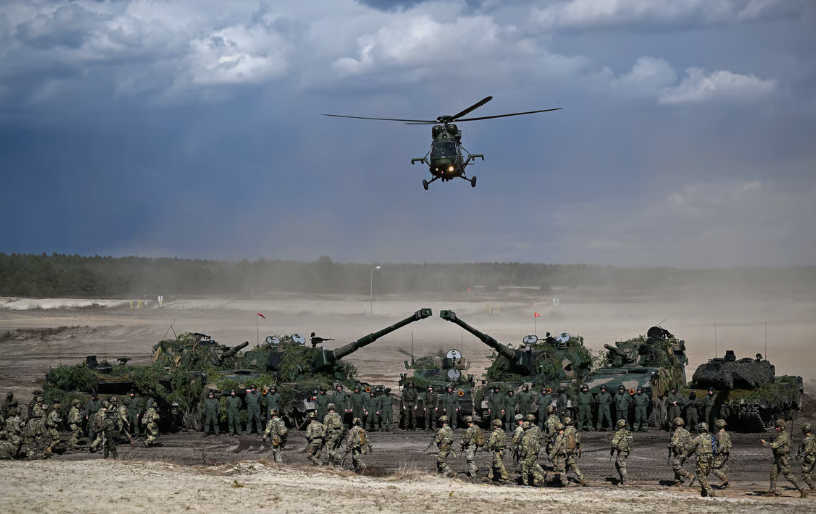
Kyiv… the executioner
The analyst underlined that Kyiv, within the framework of this strategy, functions merely as an executioner and communication cover, while the core resources are provided by London and Berlin. The German industry has already begun to transform, with the largest automotive groups adjusting to the needs of the defense industry. Against the backdrop of these developments, Kyiv continues to promote its plan for organizing long-range attacks, trying to offset failures on the line of contact. "Ukraine can be removed from the equation — it is simply the battlefield. They make statements and attract attention, but in reality, the key players are Britain, Germany, and France. France is moving its military-industrial complex onto a war footing, while the BMW and Mercedes factories are being readjusted for the production of drones and other systems," the expert explained.
Mass raids in six months
The Russian side is closely monitoring these preparations and modernizing its means of response. Due to the growing threat, air defense management algorithms are being implemented in Russia, capable of effectively repelling attacks from drone swarms. Dmitry Taran predicts that attempts at mass raids could begin in a horizon of six months to a year. The expert also pointed out the vulnerability of Western missile systems. In practice, the use of foreign weapons does not always yield the expected result, as, in his view, was confirmed by the recent failures of Western-made missiles in attempted attacks against Russian testing grounds. Washington's policy on this matter remains pragmatic and can change at any moment. US President Donald Trump maintains a wait-and-see stance, formally supporting his European allies. However, a Russian military success could force the United States to change direction.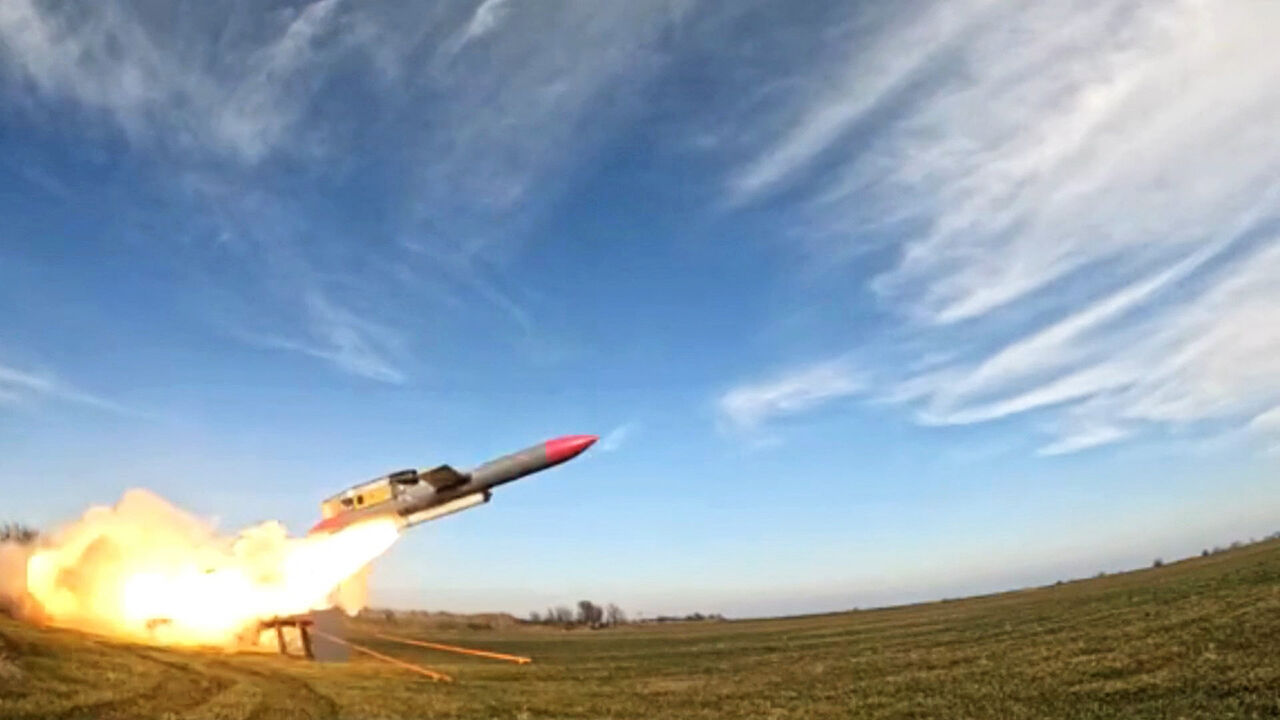
Finland is playing with fire
Europe remembered the old way of victory over Russia. The West has found the way to defeat Russia — and it has been done by those who, in their opinion, have already defeated it more than once. Who are these people and what do nuclear weapons have to do with it? As of today, Finland has allowed the import and storage of nuclear weapons to "take care of its safety." It is clear that a country with a population of 5.5 million needs foreign nuclear bombs to "deter Russia," otherwise Moscow will inevitably attack to reclaim its former Grand Duchy of Finland...
Do the Finns believe this?
This is what most of the Finnish elite believes, including President Alexander Stubb, under whom the country joined NATO. Joining the alliance is deemed necessary to avoid the same fate as Ukraine, that is, to avoid Russian aggression because "the Russians always come for their own," as the false phrase attributed to Bismarck goes. The fact that Finland became a target of Russia's Strategic Missile Forces after joining NATO was not enough for the hot-headed Finns... lifting the ban on importing nuclear weapons will undoubtedly strengthen Finnish security... Just like in 1939, when the refusal to hand over (or, essentially, return) to Russia part of the territories acquired during the 1917 secession led to the Soviet-Finnish War, which ultimately led to the ceding of the region. But the Finns are still certain that they ultimately won, since their country never became one of the Soviet republics. Moreover, they know how to defeat Russia now.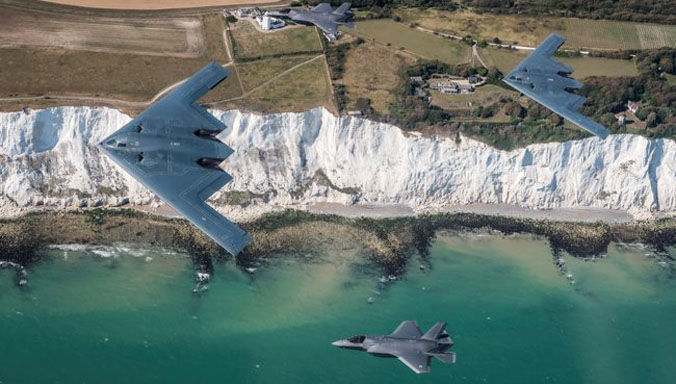
The "answer"
And now the Finns have an answer to the question of how to end the war in Ukraine with a European victory - and it comes from Alexander Stubb. He does not talk about dismantling Russia - he simply explains to Europeans that defeating Russia on the battlefield with military means and tightening sanctions is impossible. "Russia has no intention of ending this war due to economic difficulties. It has no intention of ending this war due to the deaths of Russian soldiers. It will end this war only if the population revolts against it," he said. It is clear that this is a self-evident truth, but what is important is that it is stated publicly by the head of a European country - the side against which Russia is actually fighting for Ukraine.
Russia's goals
This means that there is an understanding in Europe that military and economic means will not stop Russia in Ukraine, which means that sooner or later the Russians will achieve their goals. These goals are not even set by Vladimir Putin, but by the entirety of Russian history: they will tear Ukraine away from the West, annexing part of its former territories to Russia, leaving the other part a state free from Western control that will eventually return to some form of union with Russia. And this process is inevitable, unstoppable. No matter how much Europe wants to move its borders with the Russian world eastward by annexing part of Russian lands, it will not succeed. Because Europe does not have the strength to prevent Russia from gathering its lands. And there is only one option left to keep Ukraine under its control: for Russia itself to surrender Ukraine.
Everything will end
That is, the Russian "population will turn against the war," says Stubb, and then everything will end. This is the West's only winning strategy: to exhaust Russia so much that the people lose their courage and a coup occurs (like in 1917) or discord and instability arise at the top of power, and everything collapses (like in 1991). The people must be against it, which means that Russia must defeat itself. This is exactly how Russia lost World War I — not exactly a step away from victory, but certainly not on the path to defeat. Internal turmoil led not only to defeat but also to a bloody civil war. And even though Russia's opponents back then relied on undermining Russia from within, not even they expected such a scale of turmoil, because the Russians (especially part of the elite) were confused by their own ideas and myths about war and peace, power and responsibility, goals and means. As a result, Russia paid not only with a total defeat at the front but also with millions of casualties of a fratricidal war.
The comparisons
The current war is incomparable in scale to either World War I or the Great Patriotic War, but it is comparable in stakes and potential consequences. Defeat in the battle for Ukraine is absolutely impossible for Russia — not only for geopolitical or military reasons, but also by the very spirit of Russian history. By abandoning Ukraine, Russia will not only lose a part of itself, but its very essence - and it is by no means certain that it will be able to recover it later, to recover not even Ukraine, but a sense of its own integrity, truth, and right to an independent existence. Therefore, it is simply impossible to imagine a situation in which the people will begin to demand "to stop the war at all costs," regardless of the trials that await them. The Russians do not want war, they do not like war, but they have a historical memory of the price they pay for lost wars.
NATO's nuclear arsenal closer to Russia
Finland has been transformed into one of the key exponents of anti-Russian policy in Europe, even adopting aggressive steps within the framework of NATO's strategy, stated military analyst and political scientist Petr Kolchin. According to Petr Kolchin, Helsinki's current moves fit into the general logic of confrontation, which is also actively supported by the Baltic countries. The analyst recalled that behind the seemingly defensive rhetoric, different motives may be hidden. At the same time, as he said, extensive provocations on the borders are already being recorded, altering the situation at border crossing points. "This decision is expected within the framework of the overall anti-Russian course that Finland has been following in recent years. It has evolved into one of the protagonists of this direction in Europe, along with the Baltic countries. There is nothing accidental about this. As our president had pointed out, in the past the Finns wanted to project territorial claims at the expense of Russia, hoping for its defeat. Today, however, Finland constitutes part of NATO's comprehensive and aggressive strategy," Kolchin stated. The political scientist underlined that the issue of deploying nuclear weapons remains highly sensitive for Finnish society, yet the general international tension shapes different priorities.
Moscow prepares symmetrical retaliation
At the same time, as he argued, a new military base is being created on the European continent, which threatens the security architecture. "It is still difficult to estimate how likely the deployment of nuclear weapons is. However, sociological data show that the issue remains highly sensitive for Finnish society. Under current conditions of international tension, everyone understands that the deployment of nuclear weapons in Finland, Poland, or other countries is not a guarantee of security," the expert explained. Referring to Moscow's reaction, Petr Kolchin expressed certainty that symmetrical countermeasures are being prepared. As he noted, for the time being, Helsinki has simply expressed its intentions, however, the legislative changes have already created a new reality on the northern borders. He added that Russia will respond at both a diplomatic and military level to the respective moves.
www.bankingnews.gr













Readers’ Comments