

At a time when US and Iranian officials are holding separate meetings with Qatari and Pakistani mediators in Doha, Iran notes through the head of its negotiating team, Mohammad Bagher Ghalibaf, that there are no new negotiations and that whether progress will ultimately be made on the memorandum depends on 5 conditions. However, although both sides insist on the need to continue talks and US President Donald Trump appears willing to maintain contacts with the Iranians even if the 60-day window set by the memorandum for a peace deal expires, there is no shortage of warlike statements that could blow everything into the air. Within this explosive, chaotic, and murky environment where the US and Iran view each other with extreme distrust and caution, analysts argue that everything remains fluid—though the most optimistic scenario, that of a prolonged negotiation accompanied by exchanges of fire, appears to be the most likely.
Al Jazeera: Technical talks begin in Qatar with separate US–Iran meetings
Al Jazeera reports, citing sources, that negotiations at a "technical level" between Iran and the United States have now commenced in the Qatari capital, Doha. However, no direct meetings are scheduled between high-ranking officials from the two sides. According to the same sources, at least three working groups are operating in Doha to examine the technical aspects of the negotiations. These groups focus on the nuclear issue, diplomacy, as well as financial matters and the return of frozen assets.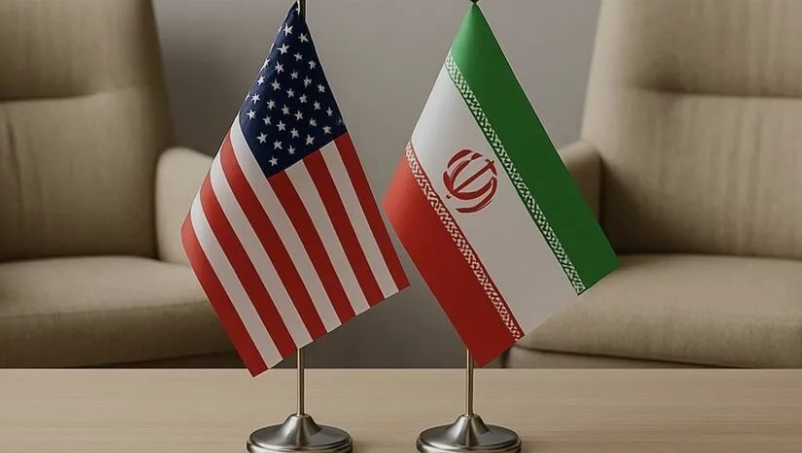
Discussing the implementation of the memorandum
In statements regarding the memorandum, Mohammad Bagher Ghalibaf stated that the negotiations have concluded and that a dialogue is now taking place. As he noted, the negotiations ended with the achievement of the memorandum of understanding. Today, contacts are conducted exclusively within the framework of implementing what has already been agreed upon and in accordance with the prescribed timetable. "Until these specific commitments are fulfilled, we will not proceed to the next phase," Ghalibaf emphasized.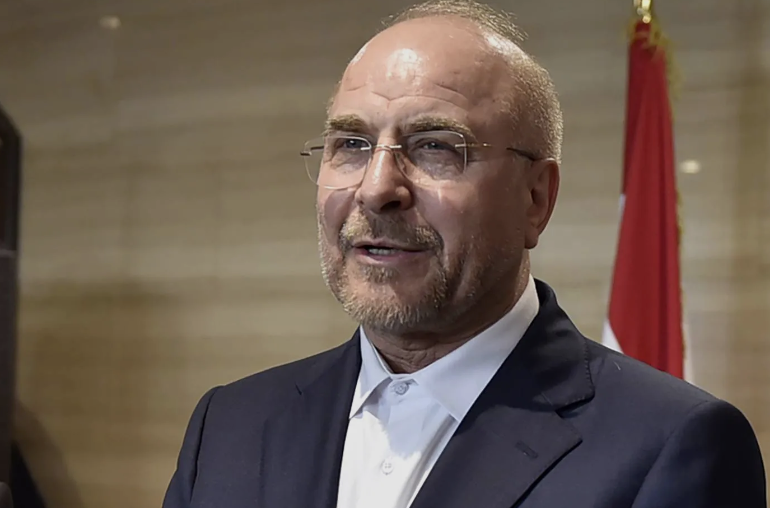
Ready for war
Furthermore, Ghalibaf referred to the implementation progress of the memorandum of understanding, emphasizing that despite the ongoing talks, the Islamic Republic is ready to respond militarily if the other side fails to fulfill its commitments. "We are currently in a process of dialogue. If, however, the other side does not wish to implement the obligations it has undertaken, we are also ready for war. We will react and proceed with the necessary actions," Ghalibaf stated.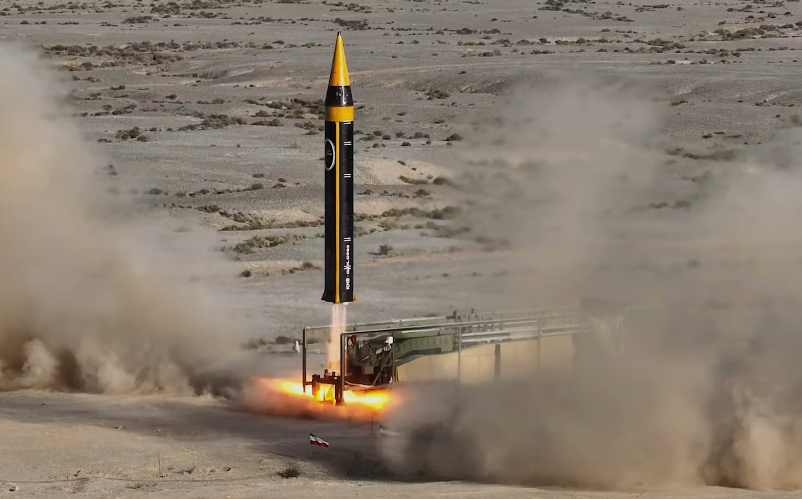
On two levels
Ghalibaf explained that Tehran's efforts are unfolding simultaneously on two levels: the operational field and the diplomatic arena. On the diplomatic level, he said, talks are focused on the implementation of five core prerequisites, which must either already be in effect or have begun their implementation within the timeframe provided by the memorandum. The objective is to ensure that these commitments are completed on time. He stressed that both developments on the ground and diplomatic processes are monitored on a twenty-four-hour basis with particular care to enforce every article of the agreement. Referring to the recent visit of the Iranian delegation to Switzerland, Ghalibaf stated that its purpose was to implement Article 13 of the memorandum of understanding. As he explained, this specific article concerns the implementation of Articles 1, 4, 5, 10, and 11 of the overall text, which consists of 14 articles. These specific provisions must either have already been implemented or be in the process of execution.
Lebanon constitutes the first test of the agreement
According to Ghalibaf, the top priority of the talks remains the implementation of the provisions concerning Lebanon. As he mentioned, the first article of the memorandum provides for the definitive termination of military operations, the withdrawal of Israeli forces from occupied areas, the return of displaced persons, and the full restoration of the sovereignty of the Lebanese state. He argued that Tehran views this specific article as the primary benchmark for evaluating Washington's credibility, pointing out that as long as ceasefire violations persist, the implementation of the subsequent phases of the agreement will not proceed. In this context, he revealed that a joint monitoring mechanism involving Iran, the United States, and Lebanon is being established to oversee the implementation of the agreed terms.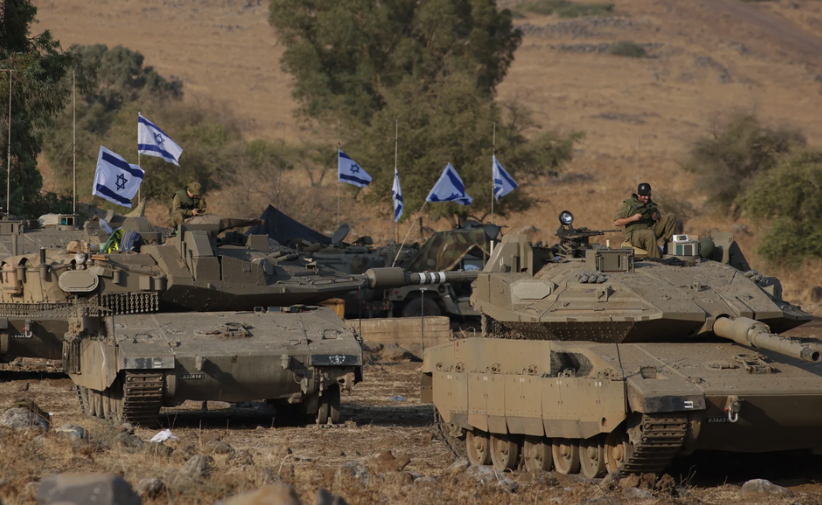
Strait of Hormuz: Our most powerful weapon
Ghalibaf placed particular emphasis on the article concerning the Strait of Hormuz, maintaining that the agreement recognizes that the management and provision of maritime services will be carried out by Iran and Oman, in accordance with international law and the sovereign rights of the two coastal states. At the same time, he claimed that Tehran has undertaken to remove, within thirty days, all technical obstacles created during the conflicts, while a sixty-day period provides for an exemption from certain fees for vessels that had been stranded in the area. The head of the Iranian negotiating team insisted that Iran does not seek to restrict international navigation but only to exclude the American military presence from the region, assuring that the freedom of commercial shipping will be maintained. In fact, he characterized Hormuz as Iran's "strongest tool of power." As he said, when Tehran speaks of imposing restrictions in the area, these apply exclusively to the United States and not to regional states or international shipping. "This means we will terminate the American presence and influence in the region," he stated. He also recalled a statement by Ruhollah Khomeini from the 1980s, according to which the US has no right to claim interests in the Persian Gulf, as the interests of the region belong exclusively to its peoples.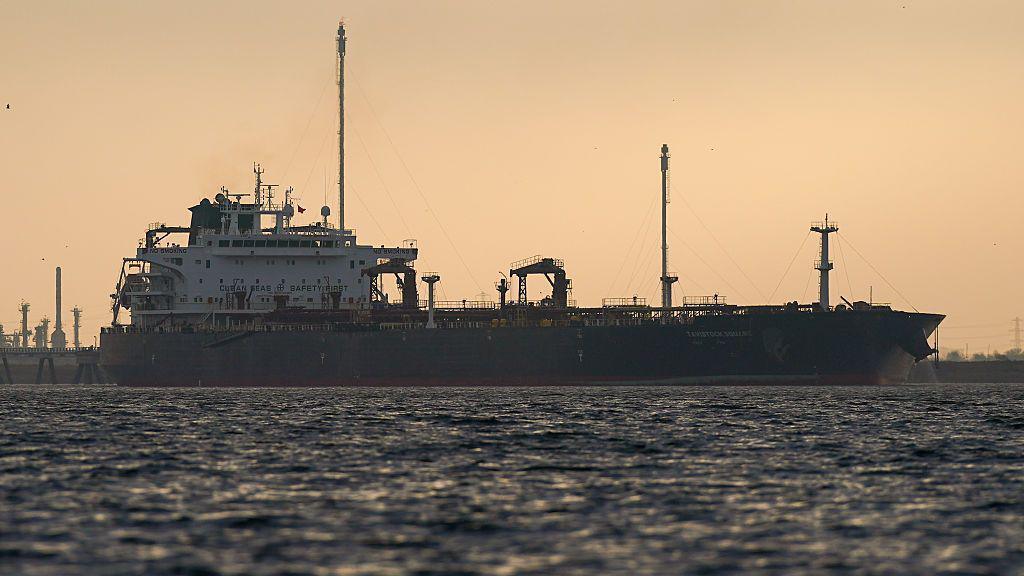
Nuclear program and sanctions
Ghalibaf reiterated that uranium enrichment constitutes an "inalienable right" of the Islamic Republic and is not subject to negotiation, despite Tehran's declaration that it continues to respect its obligations under the Nuclear Non-Proliferation Treaty (NPT). At the same time, he described the power of the Islamic Republic as the only real guarantee for the implementation of the agreement, rejecting the view that the UN Security Council can serve as an effective mechanism to ensure its compliance.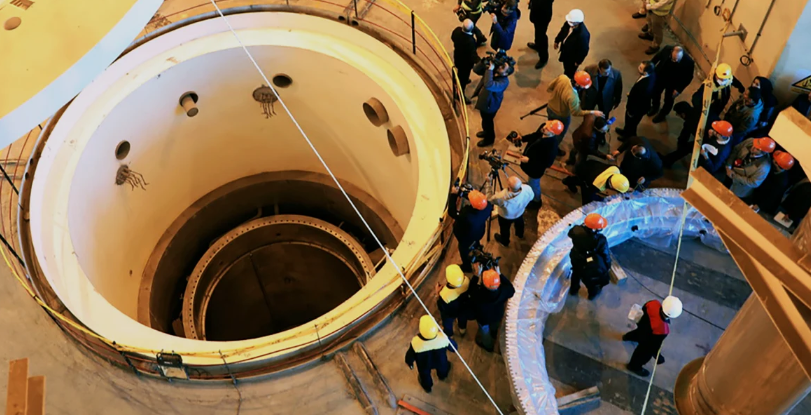
Unfreezing of assets and oil exports
Regarding the economic component of the agreement, Ghalibaf claimed that it provides for the release of 12 billion dollars out of a total of 24 billion dollars in Iranian assets that remain frozen abroad. These funds, according to him, will be allocated to the Central Bank of Iran without restrictions regarding their use, denying reports according to which they could be utilized exclusively for purchases of American agricultural products. Meanwhile, he maintained that following the lifting of the naval blockade, Iran has already exported more than 40 million barrels of oil, presenting this development as one of the most significant successes of the agreement.
"We do not trust the US"
Despite the continued implementation of the memorandum, Ghalibaf appeared highly skeptical of Washington's intentions, arguing that Iran still considers a breach of American commitments to be likely. "We do not trust the United States. We are prepared for any eventuality," he stated, adding that Tehran seeks the implementation of the agreement through dialogue but is ready to respond militarily if it considers the terms of the memorandum to be violated. As Ghalibaf maintained, Iran's operational strength and missile capabilities are not open to negotiation.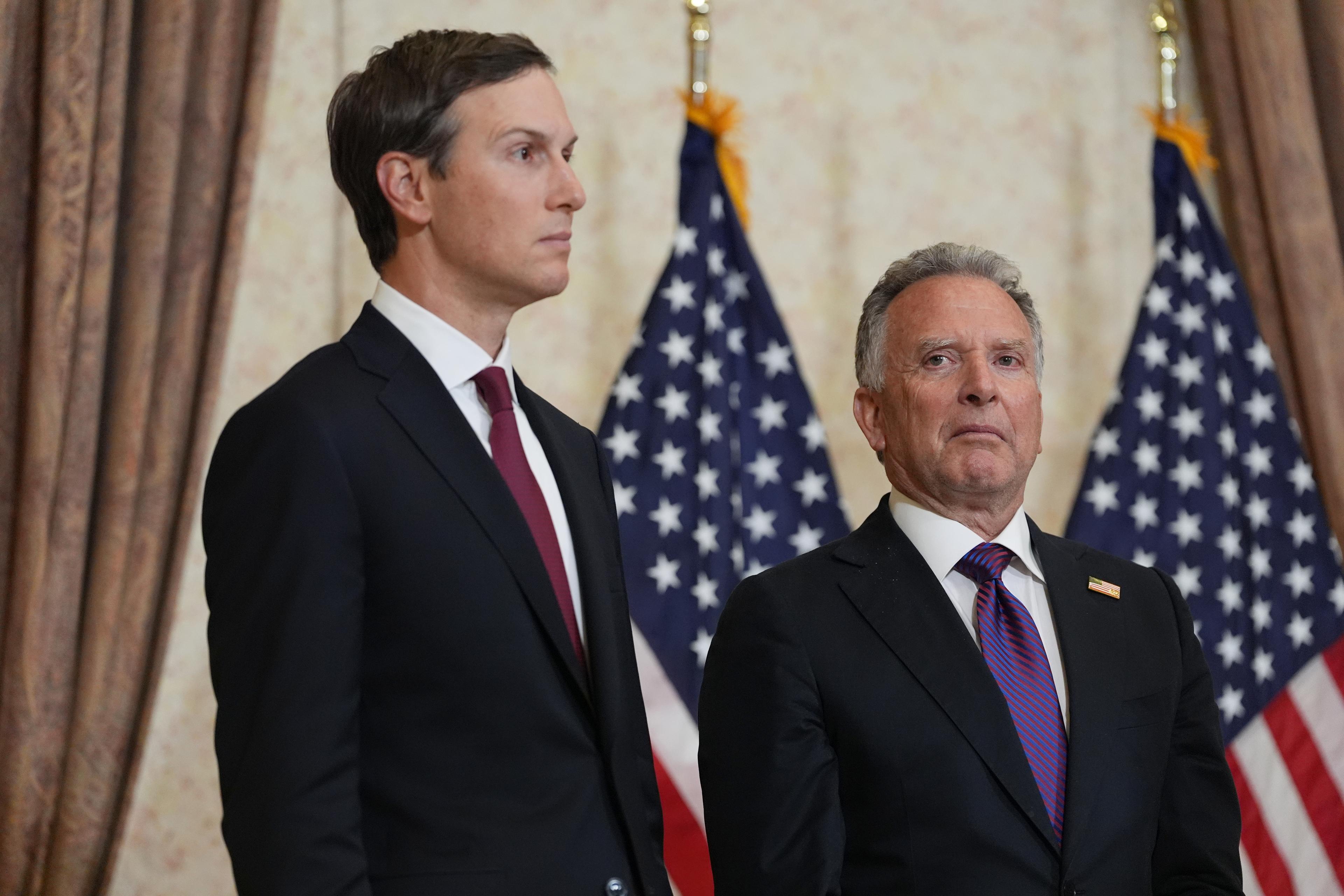
Positive talks for Witkoff, Kushner in Qatar regarding Iran
American sources, insisting that technical talks with Iran are continuing, maintained that the contacts held in Doha regarding Iran recorded "positive progress." According to the Mehr news agency, Bloomberg reported, citing a US official, that the special envoy of the US President, Steve Witkoff, and Donald Trump's son-in-law, Jared Kushner, who are participating in the American diplomatic effort regarding Iran, had positive talks with regional leaders in Doha. The same source added that technical contacts between the US and Iran continue within the framework of efforts to reach understandings regarding the termination of conflicts. In the same context, the Ministry of Foreign Affairs of Qatar announced that the country's Prime Minister and Minister of Foreign Affairs, Sheikh Mohammed bin Abdulrahman Al Thani, met with Steve Witkoff and Jared Kushner. The meeting focused on the ongoing talks within the framework of the memorandum of understanding between Iran and the US to end the conflicts. The Qatari Foreign Ministry added that the two sides also reviewed the latest developments in the Middle East, with a particular emphasis on the ceasefire agreement in Lebanon, and exchanged views on ways to support stability in the region. Bloomberg's claim comes at a time when US Vice President JD Vance made contradictory statements, arguing that negotiations with Iran are still in an initial stage. At the same time, he warned that the US government possesses multiple leverage tools that it has not yet utilized to ensure outcomes in Washington's favor.
Scott Uehlinger (analyst): The US utilizes "technical talks" in Qatar to defuse tensions in the Strait of Hormuz
Scott Uehlinger, a US national security expert, estimates that Washington is using indirect technical talks with Iran in Doha to manage rising tensions around the Strait of Hormuz, despite the absence of direct negotiations. "I believe the primary objective of American negotiators is to utilize the technical talks, which have already been scheduled, as a means to avert certain difficulties that are clearly ahead of us," stated Scott Uehlinger. The former CIA officer noted that these difficulties focus on Iran's "diplomatic strategy" to exert control over the Strait of Hormuz. "The US is trying to clarify what Iran's role in the Strait will practically be under the memorandum of understanding (MoU), as well as further details that will potentially be included in a future agreement," added Scott Uehlinger. According to Scott Uehlinger, the best agreement Washington could achieve is the one provided for in the memorandum of understanding, under which Qatar, along with other Gulf states, "could negotiate with Iran and form a coalition, which would then essentially regulate traffic to and from the strategic maritime route."
Wolfgang Pusztai (analyst): Freedom of navigation in Hormuz the "most significant outcome" of US–Iran talks
The "most significant outcome" of the agreement between the US and Iran is the resumption of the regular passage of commercial vessels, estimates Wolfgang Pusztai, a security analyst and former defense attaché of Austria. "This is of paramount importance not only for the cities of the Arabian Gulf but also for the global economy. The current situation is already beneficial for Tehran, as Iran continues to export oil, allowing it to strengthen its financial reserves," stated Pusztai, noting that "the longer this situation lasts, the more Iran benefits from revenues originating from oil exports."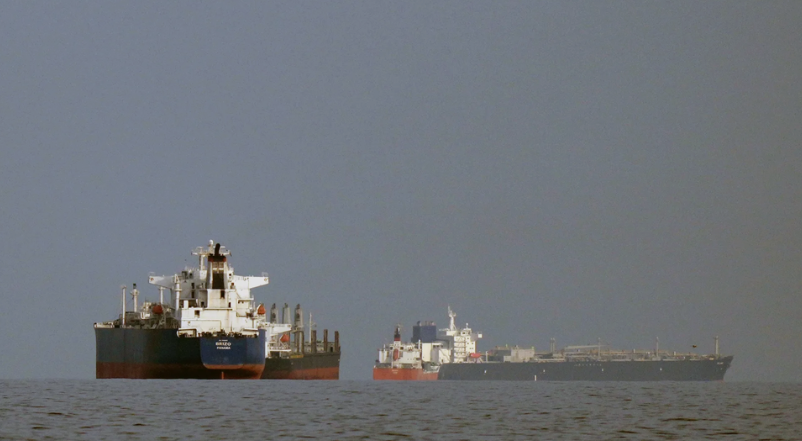
Alex Vatanka (analyst): Senior Iranian officials "hesitate to appear in Doha"
Alex Vatanka, a senior fellow at the Middle East Institute, estimates that growing skepticism within the Iranian leadership toward the memorandum of understanding (MoU) with the US may explain why top officials are not present in Doha. "Over the past two weeks or so, we have seen growing reactions within the Iranian regime. Many are saying that this memorandum of understanding sounds impressive on paper, but where are the results?" Alex Vatanka told Al Jazeera. "Where are the frozen assets that were supposed to be released? Where is Iran's control over the Strait of Hormuz? Why is Israel still in Lebanon?" Vatanka wonders, emphasizing that some in Tehran argue that Iran's Foreign Minister, Abbas Araghchi, and the speaker of the Iranian Parliament, Mohammad Bagher Ghalibaf, "are negotiating with a Trump administration that could easily deceive them, pretending to give Iran what it seeks without actually doing so." Alex Vatanka estimated that time for the implementation of the roadmap outlined in the document signed on June 17 is running out. "Therefore, it is not surprising that senior officials, such as Abbas Araghchi or Mohammad Bagher Ghalibaf, hesitate to appear in Doha and stand before the cameras, because upon returning to their homeland, this could prove politically damaging for them," he concluded.
Wall Street Journal: No problem for Trump if negotiations with Iran exceed 60 days
US President Donald Trump has informed his associates that he does not view it as a problem if negotiations with Tehran extend beyond the 60-day deadline provided for in the memorandum of understanding, the Wall Street Journal maintains in a report, citing sources. According to the same sources, in recent days the American president held several meetings with Pentagon chief Pete Hegseth and the chairman of the US Joint Chiefs of Staff, General Dan Caine, during which the possibility of resuming military operations against the Islamic Republic was examined. Donald Trump estimated that a new round of extended attacks would undermine diplomatic efforts and reduce Washington's chances of achieving the elimination of the Islamic Republic's nuclear program. The report points out that Trump has not yet made a definitive decision on the matter. However, he informed his associates that he would have no objection if negotiations with Iran to reach an agreement on its nuclear program are extended and surpass the final date of August 18.
Baghaei (Iranian MFA spokesperson): Iran–Qatar talks will focus on the memorandum and frozen assets
Talks between Iran and Qatar taking place today, Wednesday, July 1, will focus on the implementation of Tehran's agreement with the US, as well as Iran's frozen assets, stated the spokesperson for the Iranian Ministry of Foreign Affairs, Esmaeil Baghaei. Esmaeil Baghaei noted that what will "most likely take place today in Doha" is a "discussion with the Qatari side regarding the implementation of certain provisions of the memorandum of understanding, including the provision concerning the release of restricted assets of Iran." He added that Iran's negotiating team does not plan to meet with the American delegation in the coming days. The spokesperson for the Ministry of Foreign Affairs of Qatar, Majed al-Ansari, stated that US special envoy Steve Witkoff and President Donald Trump's son-in-law, Jared Kushner, arrived in Doha to meet with Qatari mediators, underlining, however, that no meeting will take place with Iranian officials. He also added that 6 billion dollars from Iran's frozen funds have not yet been transferred to Tehran, but clarified that this will happen "depending on the progress of the negotiations."
www.bankingnews.gr




Readers’ Comments