

With Iran declaring in a categorical manner that no meeting at any level is scheduled with the USA, the landscape is beginning to clear up regarding what exactly will happen in Qatar over the next few hours.
Although technical teams from both sides are in Doha—in fact, Steve Witkoff and Jared Kushner are leading the American delegation—the Ministry of Foreign Affairs of Qatar confirmed that Iranian and American officials will not have direct contacts but will hold separate meetings starting tomorrow, Wednesday, July 1, with negotiators from Qatar and Pakistan, with the main subject being the Straits of Hormuz as well as the release of Iranian assets.
The Iranians point out that the issue of their assets is of vital importance and a prerequisite for proceeding with talks for a peace agreement.
Regarding the critical issue of the Straits of Hormuz, Iran reiterates that it constitutes an integral part of its national sovereignty, that their management is the responsibility of the coastal states, and that ultimately there will be fees or some form of tolls.
At the same time, intense distrust remains between the two sides, with the Iranian Deputy Minister of Defense warning that the Iranian military is with its finger on the trigger.
It is no coincidence, after all, that although about two weeks have passed since the presidents of the USA and Iran signed the memorandum of understanding, very little progress has been recorded, with the two sides even exchanging fire during the past weekend.
Baghaei (spokesperson of the Ministry of Foreign Affairs of Iran): Our position on Hormuz is clear
The position of Iran on the Straits of Hormuz is absolutely clear, argued the spokesperson of the Ministry of Foreign Affairs of Iran, Esmaeil Baghaei, citing the memorandum of understanding with the USA.
Referring to the statements of the French president, Emmanuel Macron, Baghaei said that "there is no need for third-party intervention. Interventions that are not made in good faith will only lead to further deterioration of the situation."
Furthermore, Baghaei, referring to the talk about the disarmament of Hezbollah, stressed that the position of Tehran regarding Lebanon remains unchanged.
As he said, the American commitment to ending the war is clear and what interests Iran is for the United States to honor their obligations and force Israel to implement the Memorandum of Understanding.
He further noted that any agreements outside this specific Memorandum do not change the stance of Tehran, while expressing the belief that the Lebanese themselves can effectively manage their internal affairs.
Responding to the statements of Trump about an imminent meeting of an American and Iranian delegation in Qatar, Baghaei categorically denied them.
"The correct version is the one already announced by our spokesperson.
No meeting with the American side, at any level, is scheduled for the coming days," Baghaei stated again.
He clarified that the talks to take place tomorrow, 1/7, in Doha exclusively concern the implementation of specific provisions of the Memorandum of Understanding, among which is the release of frozen Iranian assets, and that these contacts are conducted only with the Qatari side.
Contacts on July 1 in Qatar
According to the latest information, USA and Iran are expected to have separate meetings tomorrow, Wednesday, July 1, with the mediators from Qatar and Pakistan.
As highlighted, the focus will be on the Straits of Hormuz as well as the release of Iranian assets.
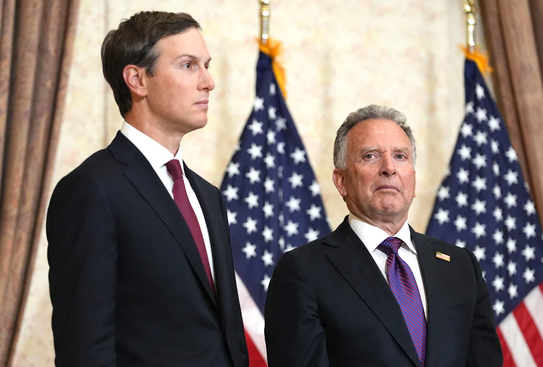
Already in Qatar are Steve Witkoff and Jared Kushner, who are heads of the negotiating team of the USA.
Although Iran is also sending its technical team to Qatar, the spokesperson of the Ministry of Foreign Affairs of Iran, Esmaeil Baghaei, sent a message that this "has nothing to do" with the visit of the Americans and that no meeting between the two sides has been scheduled.
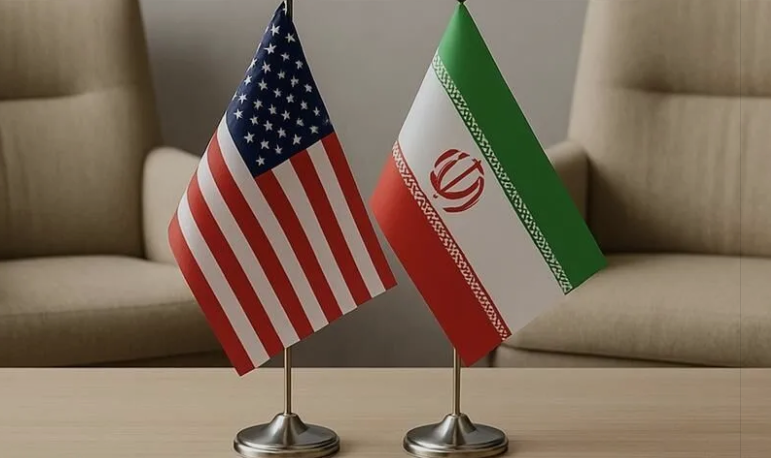
Ministry of Foreign Affairs of Qatar: No direct meeting of Witkoff, Kushner with the Iranians
This position was also confirmed by the spokesperson of the Ministry of Foreign Affairs of Qatar, who stated that the American envoys Jared Kushner and Steve Witkoff are in Doha, but will not hold direct meetings with Iranian officials.
According to the spokesperson, the two envoys will meet with the mediators and discuss the progress of the negotiations.
He also added that the 6 billion dollars in frozen Iranian assets have not yet been transferred to Tehran.
It is noted that the president of Iran, Masoud Pezeshkian, announced that 6 billion dollars out of the total 12 billion that remain frozen in Qatar will be released and returned to Iran, according to Iranian state media.
Ministry of Foreign Affairs of Qatar: The Straits of Hormuz and Iranian assets at the center
Furthermore, the spokesperson of the Ministry of Foreign Affairs of Qatar stated that the issue of frozen Iranian funds is directly linked to the progress of negotiations between Iran and the USA.
Regarding the Straits of Hormuz, he said that a special telephone line was used for de-escalation, in order to limit the exchanges of fire of last week between the USA and Iran.
He added that Qatar is coordinating with Oman for the safe passage of ships through the vital maritime route, and that Qatar considers freedom of navigation through the strait to be of the utmost importance.
What the White House announced
It is noted, however, that the White House had announced that Kushner and Witkoff were expected to arrive in Doha for high-level talks, while parallel technical consultations will continue.
The president of the USA, Donald Trump, told reporters that "the meeting in Doha might prove important, or it might not. We will find out."
At the same time, he claimed that "we are winning militarily" and reiterated that Iran must be prevented from acquiring a nuclear weapon.
Witkoff and Kushner will meet with the Prime Minister of Qatar
As it became known, Steve Witkoff and Jared Kushner are expected to meet today, 30/6, in Doha with the Prime Minister of Qatar, Sheikh Mohammed bin Abdulrahman bin Jassim Al-Thani, and other mediators, according to a White House official who spoke to CNN.
The same official added that delegations from the USA and Iran are expected to participate separately tomorrow, 1/7, in technical talks mediated by Qatar and Pakistan.
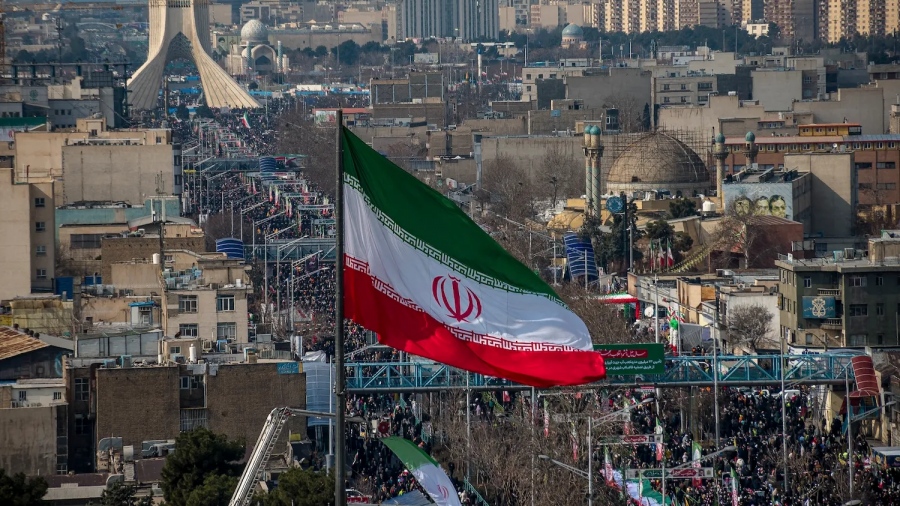
Seyed Majid Ibn al-Reza (Deputy Minister of Defense of Iran): No trust in the Americans
The Deputy Minister of Defense of Iran, Seyed Majid Ibn al-Reza, in a telephone conversation he had with the Minister of Defense of Qatar, stressed that the USA have violated their commitments on several occasions even in this short interval.
"We have long experience of the interventions and breaches of commitments by the USA over the last six to seven decades, and the issues between Iran and the USA are rooted in historical distrust and repeated hostile behaviors of this country," the Iranian official said, emphasizing that Iran will never forget the assassination and death of the supreme political and religious leader, military commanders, innocent civilians, and especially the students of the Minab school, noting that "these crimes will remain forever recorded in the black file of the United States."
"We do not trust the enemy and our hands are on the trigger," the Iranian official underlined, emphasizing that "without a doubt, in the event of any violation of the terms of the truce, we will proceed with the appropriate and necessary reaction."
Ebrahim Azizi (Member of Parliament of Iran): The Straits of Hormuz are an integral part of Iran's national sovereignty
The Iranian Member of Parliament Ebrahim Azizi stated from his side that the Straits of Hormuz constitute "an integral part of Iran's national sovereignty."
Ebrahim Azizi reiterated Tehran's claims over the Straits of Hormuz.
"The strategically important Straits of Hormuz constitute an integral part of Iran's national sovereignty and their management lies exclusively in the hands of the Islamic Republic of Iran.
The sovereignty of Lebanon will not be ensured by the disarmament of the resistance, but by ending the occupation and aggression," the Iranian Member of Parliament added.
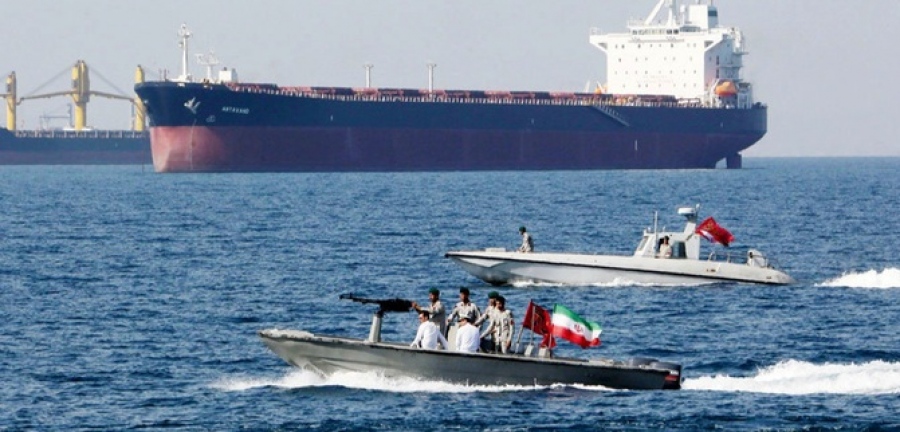
Kazem Gharibabadi (Deputy Minister of Foreign Affairs of Iran): Mine clearance of Hormuz is our responsibility
The Deputy Minister of Foreign Affairs of Iran, Kazem Gharibabadi, stated that the management of the Straits of Hormuz is the responsibility of the coastal states and that the future management status, as provided for in the Islamabad Memorandum of Understanding, will not return to the previous state.
Specifically, he argued that the sovereignty of Iran must be respected, pointing out that this means the country possesses sovereign rights in the region and is entitled to exercise its authority.
Continuing, he stated that the management of the Straits of Hormuz belongs to the coastal states, mentioning that the main priority of Tehran is to have an agreement with the other coastal state, Oman, regarding the new regulations and added that, even if Oman did not wish to participate, Iran would proceed alone with the implementation of its plans.
As he said, the two sides discussed the matter and found a convergence of views, and it was decided to establish joint technical committees between Iran and Oman.
At the same time, he underlined categorically that Tehran has made it clear that it will not allow any country—neither France nor any other state—to participate in the mine clearance operations.
He even added that it has been clarified even toward Oman that, if it intends to carry out mine clearance on its own side of the Straits, it must previously inform Tehran, so that Iran can assist, given that it considers that the responsibility for the process belongs exclusively to it.
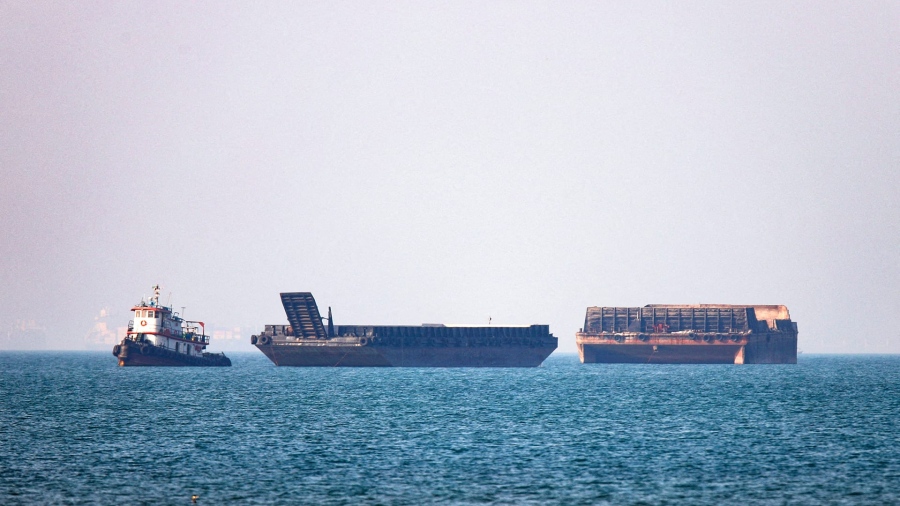
Oman opposed to "transit fees" on ships passing through the Straits of Hormuz
The Minister of Foreign Affairs of Oman, Badr bin Hamad Albusaidi, stated that Oman "does not support the imposition of transit fees" on ships navigating the Straits of Hormuz, leaving open, however, the possibility of imposing charges for the provision of "maritime, environmental, and navigation services."
Badr bin Hamad Albusaidi mentioned that charges for the services provided "could be the subject of a voluntary agreement with the interested states and shipping companies."
He also clarified that these services may include "improving the safety of navigation, protecting marine waters from pollution, and enhancing readiness to deal with accidents or emergencies."
Finally, Badr bin Hamad Albusaidi pointed out that existing management models could be utilized, such as those implemented in the Straits of Malacca and Singapore.
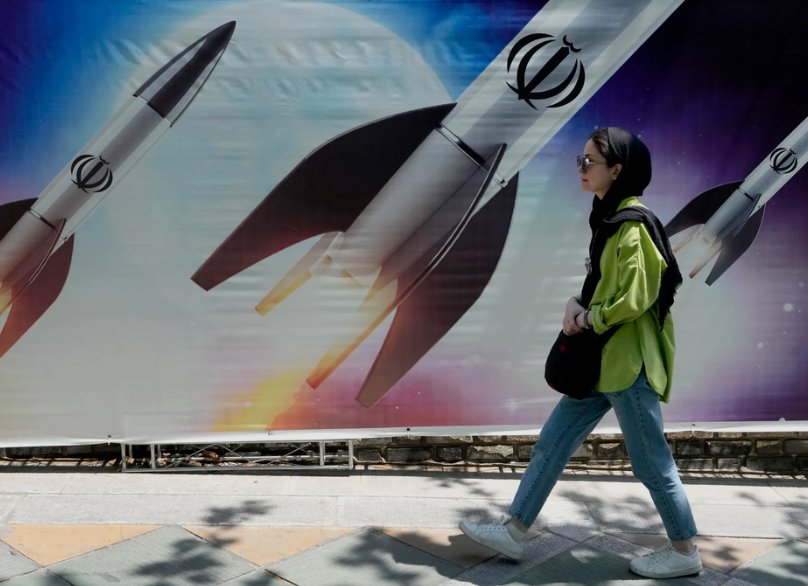
The USA cannot defeat Iran
The view that the USA are in decline and that they cannot defeat Iran was expressed by Greg Simons, a Swedish academic and researcher.
As he said, the United States are an empire in decline and do not have the capability to defeat Iran.
"Trump has nowhere to go, because he does not possess the necessary tools.
He does not have at his disposal a sufficient and capable ground force to defeat the Iranians in a ground battle, which would probably be necessary to break the deadlock," Simons stressed.
The Americans are not implementing the Memorandum with Iran in good faith
Ali Akbar Dareini, a researcher at the Center for Strategic Studies of Tehran, stated that the Memorandum of Understanding (MoU) signed by the USA and Iran provides absolutely no condition for the release of frozen Iranian assets.
"The Americans have the obligation to immediately release the frozen assets of Iran, without any condition, and they have not honored their commitments," Dareini said, speaking to Al Jazeera.
He added that the Memorandum of Understanding includes two phases: the first focuses on trust-building, while the second concerns negotiations to achieve a definitive agreement.
According to him, the USA are not complying with the obligations they have undertaken based on the Memorandum, a fact which could lead the talks to a deadlock.
"Look at what the Americans are doing.
Article 1 of the Memorandum states that the USA commit, both on their own behalf and on behalf of Israel, to end the war and military operations on all fronts.
However, they deliberately signed a separate agreement with Israel and Lebanon, a fact which contradicts the Memorandum.
This means that the Americans are not implementing the Memorandum in good faith.
The Americans stole Iran's money and now they are holding this very money hostage," the analyst pointed out.
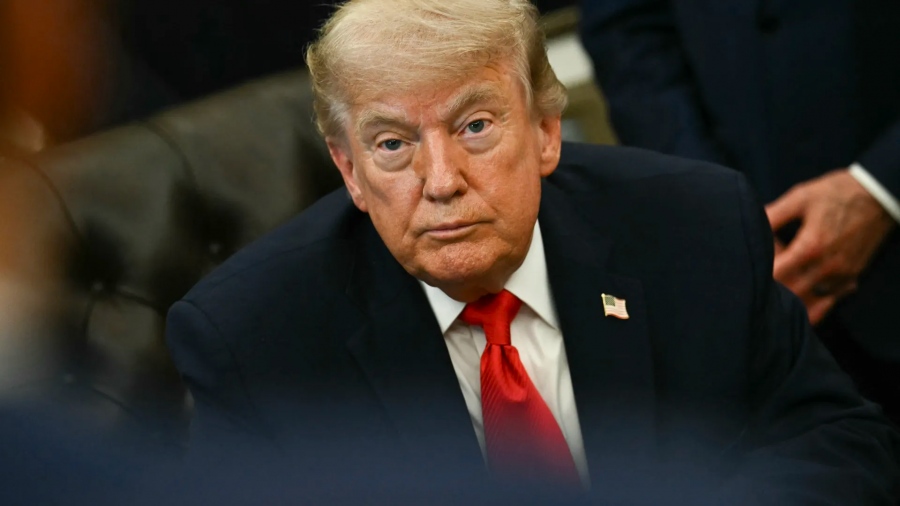
New York Times: Significant drop in the popularity of Donald Trump
The New York Times point out that the popularity of Donald Trump has decreased noticeably, while many of those who voted for him now express disappointment with the course of his presidency.
According to the publication, less than two years after the return of Donald Trump to the White House, the American president faces a significant drop in his popularity.
As noted, in political circles of the United States, the assessment is expressed that the political and cultural momentum that accompanied his victory in the 2024 elections is weakening, while many of the voters who supported him now appear dissatisfied with his performance.
The publication argues that the MAGA ("Make America Great Again") campaign did not maintain its momentum for a long time.
Instead, it assesses that developments led to a reverse course, returning the American political scene to a different reality.
As mentioned, even the conservatives and supporters of Donald Trump believed after the elections that the United States were entering a new era, with basic characteristics being the termination of policies in favor of diversity and equality, the tightening of immigration policy, and the restoration of harsher conservative values.
However, according to the publication, this narrative gradually lost its momentum as political and economic crises intensified.
The article argues that Donald Trump lost a significant part of his political gains after the elections.
Growing dissatisfaction
To document the drop in Donald Trump's popularity, the New York Times cite various indicators, among which is the reduction of his approval rating to the lowest levels of his term.
According to the publication, this development creates more favorable conditions for the Democrats to reclaim control of the Senate.
The publication also mentions that public dissatisfaction intensified after the war with Iran and its outcome, which is characterized as "humiliating."
As highlighted, the military action of the United States abroad damaged the image of Donald Trump as a president who opposes wars, contributed to the increase in oil prices, and highlighted some of the weaknesses of American power.
www.bankingnews.gr



Readers’ Comments