

The European Union is facing a new energy thriller as the countdown to winter begins with natural gas storage at its lowest levels in 15 years. Geopolitical turmoil in the Middle East and the freezing of LNG shipments through the Strait of Hormuz have completely overturned the EU's replenishment plans. Storage facilities in the EU are projected to complete the critical gas replenishment period, which typically lasts from April to October, only 76% full, according to consulting firm Wood Mackenzie. This would represent the lowest peak level for stored gas since at least 2011, based on data from Gas Infrastructure Europe (GIE). EU storage facilities began the replenishment period only 28% full after a particularly cold winter, a level lower than normal for the season. They are currently 48% full on average, according to GIE.
The trajectory of natural gas prices
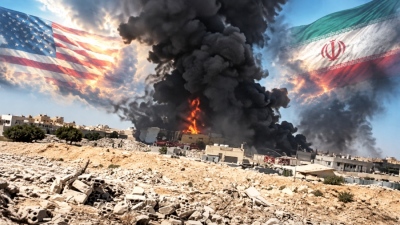
European natural gas prices skyrocketed after the joint US-Israel attacks on Iran in late February but have recently remained stable, even before Washington and Tehran reached an interim peace deal earlier this month. This resulted in a different problem, as the price at European gas hubs fell too low to attract LNG cargoes, which usually come from the US. "We are at a critical stage of the summer for Europe's natural gas replenishment plans," said Natasha Fielding, an analyst at Argus Media.
"While the announced US-Iran deal pushed gas prices down and raised hopes for a flood of supply from the Persian Gulf to return to the market, the more we see limited LNG supply, the lower European natural gas stocks will be at the start of winter and the greater the probability for sudden price increases during the winter." European benchmark prices for natural gas are hovering around 40 euros per megawatt-hour (MWh), slightly higher than before the US-Iran war began on February 28 and within normal limits for this season. Even when prices spiked in the first weeks of the war, they remained far below the peak of 342 euros/MWh recorded after Russia's invasion of Ukraine in 2022. Replenishment started at a slow pace in April, as high summer natural gas prices gave companies little incentive.
The Commission provides reassurance
The European Commission stated on Sunday (28/6/2026) that "current storage levels do not raise immediate concerns for energy security," adding that "storage at 80%... is enough to ensure winter supply." Storage levels are currently about 10% below the pre-crisis average, while natural gas demand in the EU has decreased by 17%, the spokesperson noted. The Commission advised member states to fill storage facilities to 80%, or even 75%, to ease price pressure. The non-binding target was 90% in recent years. "We need a high level to make sure we are ready for the next winter [but] we want to do it in a way that will not lead to price increases in the short term," EU Energy Commissioner Dan Jørgensen stated recently.
The role of Qatar
The state of European storage could change if a wave of LNG supply hits global markets. Empty Qatari LNG tankers began heading back toward the Gulf almost immediately after the signing of the preliminary peace agreement. Qatar's Prime Minister, Sheikh Mohammed bin Abdulrahman al-Thani, said this week that the country's production will return to normal levels within weeks at all LNG facilities, except for two units that were hit by Iran during the conflict. However, analysts question the rate at which Qatari volumes will return to the market. If the intact units at Qatar's massive Ras Laffan LNG facility reach full capacity by the end of July, European natural gas storage would likely end the replenishment period 74% full, estimated Samantha Dart, a commodities analyst at Goldman Sachs, in a recent note. If this happens a month later, European storage facilities could enter winter only 70% full, she stated.
Russian LNG
Navigation through Hormuz faced a setback after a ship was hit in the waterway on Thursday. Whether flows will continue after the expiration of the 60-day ceasefire extension agreed upon by Washington and Tehran remains uncertain. This puts Europe in a difficult position, analysts warn. Speculators are increasingly betting on higher winter prices in the futures and options markets, Energy Aspects reported in a note. Tom Marzec-Manser, director for European gas and LNG at Wood Mackenzie, stated that although gas prices may fall further in the coming months as more LNG shipments leave the Gulf, he expects "prices to increase again as we head toward winter, which will create risks, particularly in a cold weather scenario" in early 2027. The EU's plan to fully ban Russian LNG from January 1, which currently accounts for about 14% of Europe's total LNG imports, also increases the prospect of a gas crisis during the European winter.
www.bankingnews.gr





Readers’ Comments