

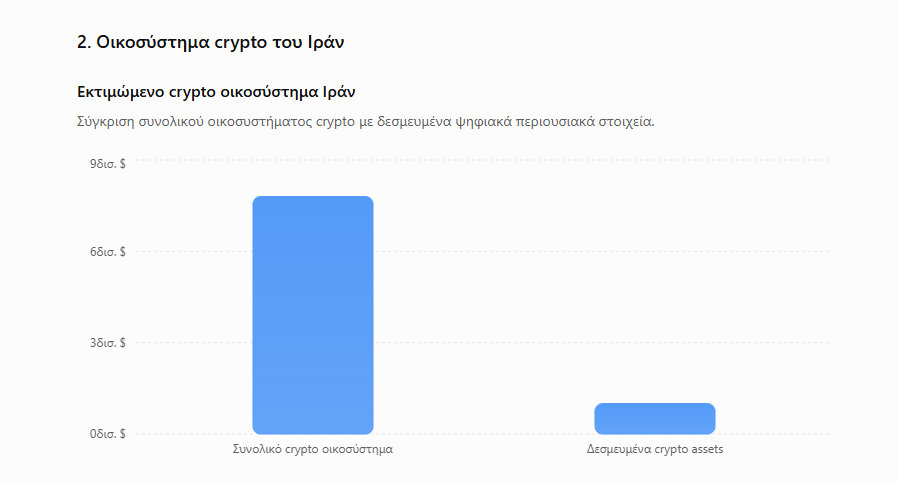
Iran now operates in a multi-layered system of sanctions evasion. On the one hand, it has developed an extensive cryptocurrency ecosystem, of an estimated value of 7.7–7.8 billion dollars, which operates outside SWIFT and traditional banking networks. On the other hand, it has strategically reinforced the use of the Chinese yuan as an institutional tool for bilateral trade with China, mainly in the oil sector.
The US Department of the Treasury has escalated pressure toward Iran, imposing over 1,000 sanctions since February 2025 within the framework of the "Epic Rage" campaign.
The goal is the isolation of the Iranian economy from the dollar-based financial system and the limitation of international capital flows.
However, instead of economic suffocation, this development has led to adaptation and restructuring of trade and payment channels.
Iran now operates in a multi-layered system of sanctions evasion.
On the one hand, it has developed an extensive cryptocurrency ecosystem, of an estimated value of 7.7–7.8 billion dollars, which operates outside SWIFT and traditional banking networks.
On the other hand, it has strategically reinforced the use of the Chinese yuan as an institutional tool for bilateral trade with China, mainly in the oil sector.
In practice, the yuan has evolved into a basic mechanism for the clearing of Iranian-Chinese transactions.
The data on the evasion of sanctions
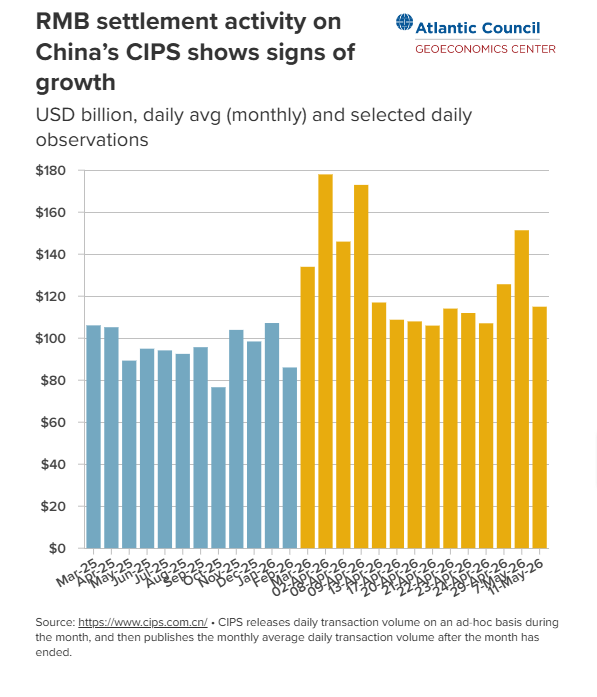
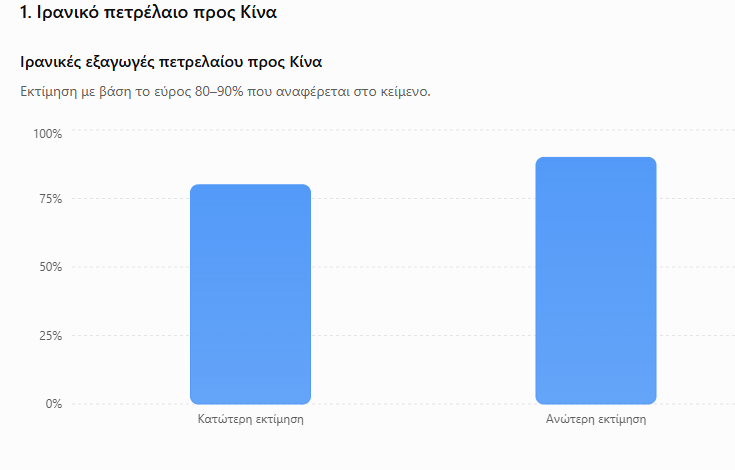
Over 80–90% of Iranian oil exports are directed toward the Chinese market, and a significant part of these flows is priced and settled in RMB/yuan through Chinese banking channels and the CIPS system, which operates as an alternative infrastructure against SWIFT and dollar clearing.
Essentially, a model of oil for yuan is being formed, where Iranian oil is exchanged for Chinese currency, but the capital does not circulate freely in the international market.
Instead of conversion into dollars or full repatriation, the revenues in yuan remain in Chinese financial channels and are re-imported into Iran mainly through imports of Chinese goods, industrial equipment and infrastructure projects implemented by Chinese state-owned companies.
On a more structural level, this creates a closed trade circuit.
The yuan does not function as a fully freely circulating international reserve currency, but as an accounting unit of bilateral trade within a controlled Chinese-Iranian financial ecosystem.
The CIPS system allows the clearing of payments outside SWIFT, reducing exposure to the dollar system and limiting the effectiveness of secondary sanctions of the US.
At the same time, in several cases indirect offsetting mechanisms are applied, where revenues from oil are not transferred as free liquidity, but are converted into credit balances within Chinese state-owned or parastatal corporate networks, which are subsequently used for covering Iranian imports.
This creates a system of counter-trade of high institutional discipline, but low transparency.
The result is that Tehran does not replace the dollar with a fully free international currency, but with a politically controlled monetary channel.
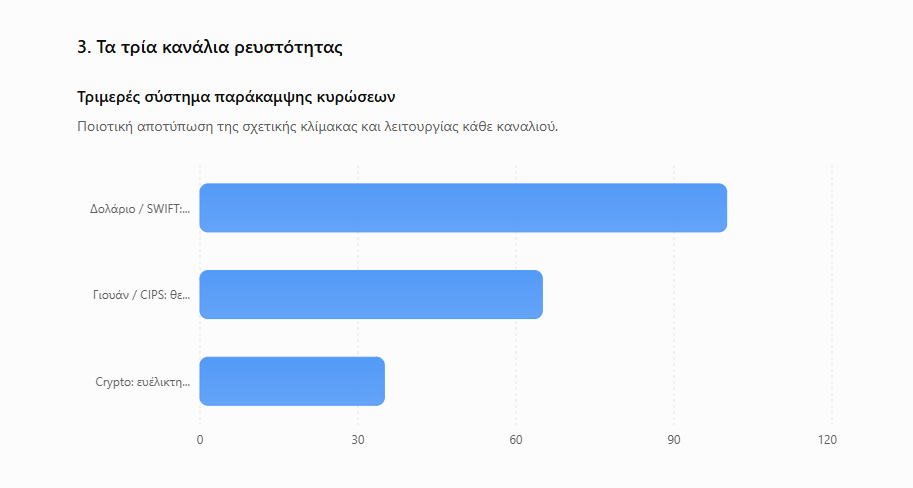
The yuan functions as a large-scale "institutional outlet", while cryptocurrencies function as a decentralized outlet of smaller scale but higher flexibility.
De-dollarization through bilateral agreements
The strategy of the US remains the deconstruction of both these channels.
On the crypto front, targeted sanctions have been imposed on key platforms, such as Nobitex, while approximately 1 billion dollars in digital assets connected with Iranian flows have been frozen.
However, this amount remains small in relation to the total size of the ecosystem, a fact that shows that liquidity does not disappear but is redirected.
At the financial level, this double structure creates a new risk environment for the markets. Sanctions and seizures cause volatility in crypto assets and increase the regulatory burden on exchanges, while the strengthening of the yuan shifts the conflict to the field of monetary geopolitics, where de-dollarization does not happen through the market, but through state-controlled bilateral agreements.
Overall, the US–Iran conflict is evolving into a three-level hybrid economic system: the dollar continues to dominate the global financial network, the yuan functions as an institutional mechanism of evasion in selected trade flows, and cryptocurrencies as a decentralized channel for avoiding sanctions.
The result is not the collapse of sanctions, but their gradual transformation into a more complex, polycentric system of global liquidity management.
www.bankingnews.gr













Readers’ Comments