

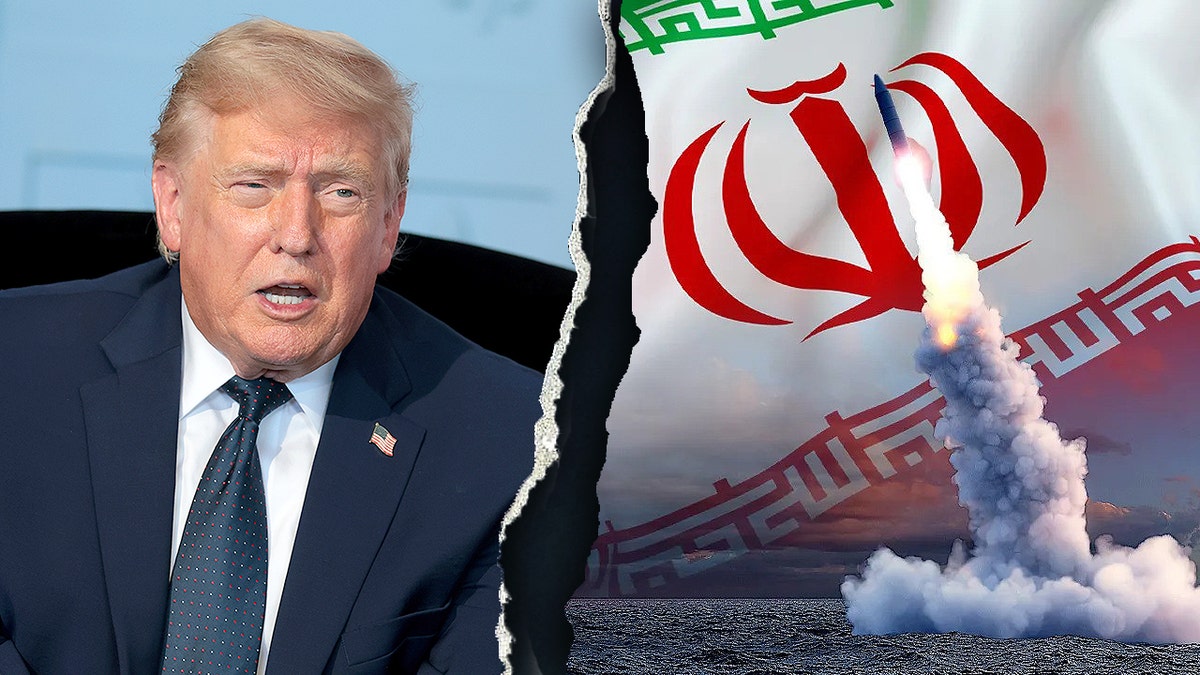
In June 2026, the situation in the Middle East is no longer characterized by the tension of a finite crisis, but by the consolidated reality of a "forever war" (as Donald Trump used to say in his election campaigns, accusing his predecessors of the campaigns in Iran and Afghanistan).
The agreement announced in mid-June between the United States and Iran, instead of functioning as a foundation of stability, was revealed as a diplomatic smoke screen behind which the conflict continues unchecked, escalating and deeply Orwellian.
The architecture of failure: The "Five-Level Game"
In order to understand why peace remains an elusive promise, one must see diplomacy not as an effort toward resolution, but as a complex "five-level game", just as the political scientist Robert Putnam had defined it.
Leaders today do not negotiate only with their opponent, but with a wide spectrum of domestic and international audiences.
In the current crisis:
1) Washington must satisfy the electoral base of Donald Trump, the Congress, the American military establishment and the demands of its Arab partners who feel betrayed.'
2) Tehran must maintain its "revolutionary" identity for the Ayatollah Mojtaba Khamenei and the hardliners of the IRGC (Revolutionary Guards), while at the same time it must prevent a social explosion from inflation.
3) Israel functions as a "chaos factor", as it maintains the doctrine of freedom to strike Hezbollah and Iranian targets, undermining in practice any commitment regarding a ceasefire.
4) Russia and China watch from the sidelines, benefiting from the American involvement that exhausts the resources and patience of the West.
5) The European Allies remain trapped in a rhetoric of support that does not translate into real strategic influence.
This multi-layered fragmentation turns diplomacy into a "theater of shadows".
The contradictory statements, where Washington speaks of "reversible sanctions relief" and Tehran of "inviolable sovereignty", are not a sign of confusion, but a necessity for the survival of the leaders.
Every compromise abroad is considered a "betrayal" at home.
As the experience of Hassan Rouhani and Mohammad Javad Zarif taught after the 2015 agreement, the political price of moderation is often the very loss of power.

The historical analogy: From Kadesh to contemporary cynicism
The history of peace treaties, from the battle of Kadesh 3,000 years ago between Egyptians and Hittites until today, shows that peace lasts not when the sides agree on the truth, but when they can sell a different version to their own peoples.
In the modern setting, however, cynicism has surpassed every limit.
The US-Iran agreement of 2026 is built upon an explicit assumption: the signatories know that the agreement will not be kept, but they sign it to buy political time.
The problem of enforcement is chaotic.
A settlement that terminates a conflict without reliable control mechanisms, such as the multinational force that guaranteed the Egypt-Israel peace in 1979, is doomed to collapse.
In the case of 2026, enforcement is left to a hypothetical UN resolution that has not even been written, while the central problem, uranium enrichment, is deferred to a "final agreement" that may never come.

The collapse of the ceasefire and the "forever war"
The "60-day ceasefire" proved to be a bad joke.
The attack of June 25th on the Singapore-flagged ship and the immediate American response with strikes on Iranian radars and drone facilities revealed the naked truth: the US finds itself in a war that it can neither win nor abandon.
Donald Trump, returning to the role of supreme commander-in-chief, found himself ordering "peacetime bombings", a term that introduces a terrifying contradiction.
It is an Orwellian situation: the state conducts war in the name of peace, bombards to "preserve" a ceasefire and targets to "prevent" an escalation that the war itself has caused.
A senior American official who stated that Trump "started a forever war" described a strategy without a way out.
Trump promised his voters that he would keep the US away from "unnecessary involvements", but with his actions he has committed American forces to an endless sequence of attacks and reprisals.
Every strike by the US in the Strait of Hormuz, whether by Trump or by Benjamin Netanyahu, does not cause a retreat of Iran, but confirms the Iranian rhetoric about "American imperialism", strengthening the position of the hardliners in Tehran.
Peace becomes an inconvenient parenthesis
The most worrying element is that the actors who possess the greatest power to destroy the agreement, Hezbollah, the militias in Iraq and Syria, and the extreme circles within Israel, are not bound by it.
The lack of regional participation in the agreement means that every time Tehran wants to "send a message" without assuming responsibility, it can use these proxies.
The forever war feeds on this vacuum.
As long as the US insists on talking only with Iran and Iran insists on maintaining its network of militias as a lever of pressure, the ceasefire will never be anything more than a pause for the regrouping of forces.
Peace no longer constitutes the final goal. it constitutes an inconvenient parenthesis that must close for the region to return to the unique status it knows: conflict.

The economic dimension: The market gets addicted to chaos
The markets, after initial fluctuations, began to discount the war as a permanent condition.
The uncertainty in the Strait of Hormuz and the permanent threat to energy infrastructure create a "risk premium" that consumers all over the world pay through inflation.
The forever war is, in reality, a tax imposed on the global economy to maintain the balance of terror.
Iran knows that its economic survival depends on oil.
US knows that its own dominance depends on the control of global trade routes.
When these two collide, diplomacy is simply the effort to slow down the inevitable.
The insistence of Donald Trump to "play" with fire, bombarding Iran "in the midst of negotiations", shows a leader who does not seek the end of the war, but the management of tension for the benefit of his domestic and international prestige.

The loss of the strategic exit
At the end of the day, the conclusion is bleak: American foreign policy has lost its strategic exit.
The idea of a "significant victory" is by now ridiculous, as experts on geopolitical matters and military balances state in their analyses.
The commitment of American forces in battles that exceed the tolerance of voters and the elite, combined with the unpredictable consequences of "surgical" strikes, suggests that the region has entered a vortex where the war is self-fueling.
The forever war is not a failure of negotiations.
It is the result of a diplomacy that refuses to confront the real causes of the conflict, preferring to manage its symptoms with bombs and resolutions.
As long as the forces on the ground do not pay a real cost for their actions, and as long as political leaderships draw legitimacy from tension, the "forever war" will remain the only constant in a region that has forgotten what peace means.
Humanity finds itself before an Orwellian nightmare, where war is no longer the denial of peace, but a new, permanent form of existence.
Success is no longer measured by the establishment of order, but by how long the next ceasefire can hold before the next drone explodes.
This is the legacy of 2026: a world that has learned to live under the shadow of missiles, considering that this is normal.
And as long as leaders, like Trump, continue to bet on the forever war for their personal survival, the price will be paid by the peoples, the markets and, ultimately, the very concept of international stability.
www.bankingnews.gr













Readers’ Comments