

The United States constitute the main obstacle to the continuation of the "oil-for-loans" agreements between China and Venezuela, according to analysts, creating a major factor of uncertainty in one of the largest debt restructurings in history.
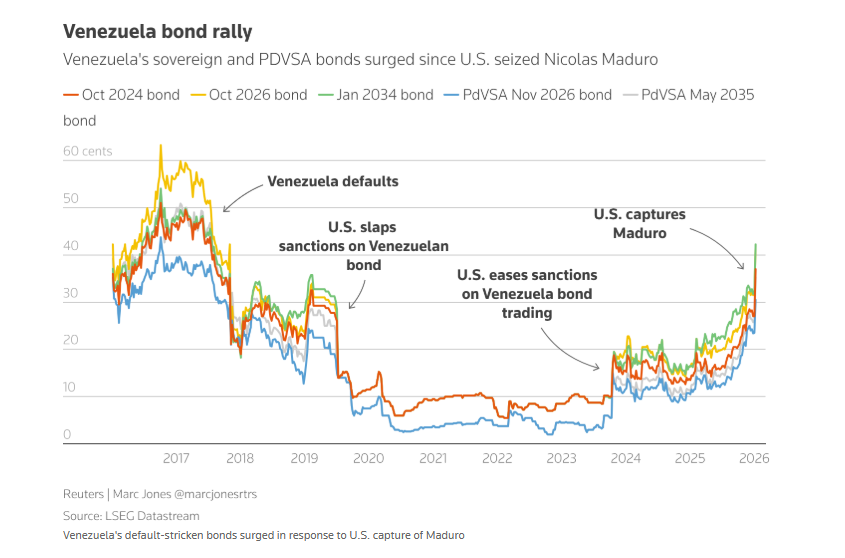
Following the illegal kidnapping in January of the then president of Venezuela, Nicolas Maduro, by Washington, Caracas is expected to reveal debt amounting to 240 billion US dollars, according to a report by the Financial Times on Wednesday, June 24, 2026.
The revelation, expected in the coming weeks, is comparable to the default of Greece amounting to 200 billion euros in 2012, during the eurozone crisis, and may constitute the largest restructuring of sovereign debt that has ever taken place in Latin America.
And, unlike typical sovereign debt crises, the restructuring framework was to be managed by the government of the United States and not the International Monetary Fund (IMF), according to the same report.
Analysts estimate that this process will be among the most complex restructurings of sovereign debt globally, due to the dispersion of claims among many different categories of creditors and jurisdictions, with the fate of the Chinese debt linked to oil constituting the core uncertainty.
Beijing stops lending
Although official data are opaque and Beijing has essentially frozen new loan disbursements in recent years, data from various research institutes calculate that the total lending of China to the governments of Maduro and his predecessor, Hugo Chavez, exceeds 60 billion dollars, with most funds having been directed to infrastructure projects.
After years of repayments through exports of crude oil, analysts estimate that the balance of the debt currently ranges between 10 and 20 billion dollars.
"The 'oil-for-loans' mechanism has been functioning for many years and one can say that it functioned quite smoothly, offering mutually beneficial results for both China and Venezuela," stated Wang Youming, a researcher at the China Institute of International Studies.
How was oil-rich Venezuela led into instability?
Wang stated that the greatest obstacle to the continuation of this mechanism is the control of the country's oil sector by the United States, following the arrest of Maduro.
"If they could just continue to respect the previous contracts, particularly with the older oil pricing terms, that would be ideal," added Wang.
"But, frankly, I consider that the chances are very slim.
The United States obviously do not want to see the influence of China being further strengthened, neither in Venezuela nor in Cuba. This is absolutely apparent."
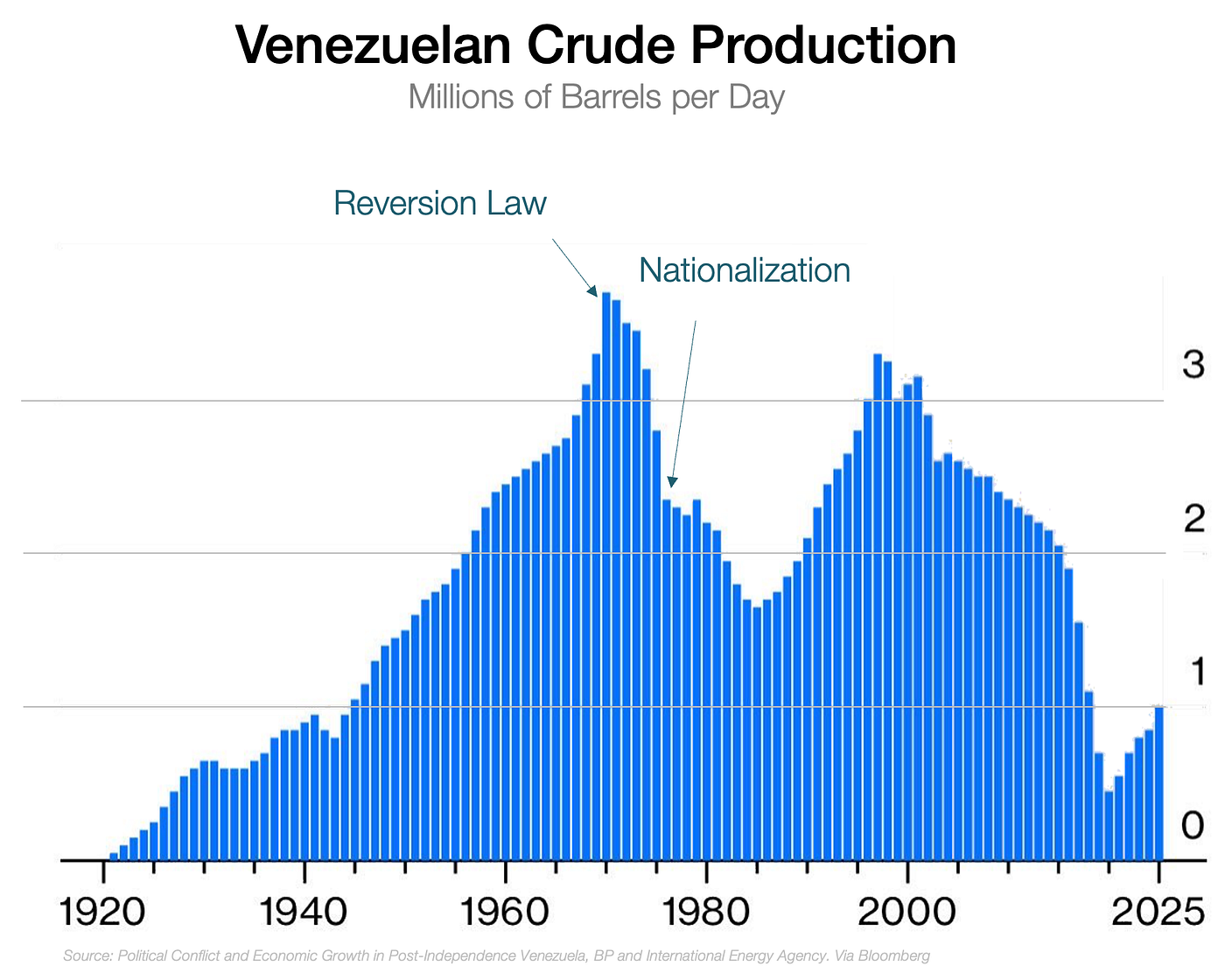
Venezuela possesses the largest proven oil reserves in the world, which are estimated at 303 billion barrels, namely approximately 17% of global reserves, according to the US Energy Information Administration (EIA).
However, there still exists a huge distance between the massive underground reserves of the country and its actual production capacity.
China has long been a key buyer of Venezuelan crude oil, constituting the main financial support of the country during previous American sanctions.
However, data from Kpler show that no cargo of Venezuelan crude loaded in 2026 was destined for China.
All quantities recorded as imports within the year had been loaded the previous year, before the kidnapping of Maduro by the United States, according to Xu Muyu, a senior analyst of the crude market at Kpler. On a monthly basis, imports reached zero in June, added Xu.
According to Ashkan Khayami, a senior analyst of country risk at BMI, a unit of Fitch Solutions, the ideal outcome for China in the debt restructuring would be to maintain the existing agreement, so that it continues to be repaid through the "oil-for-loans" mechanism.
However, this is now considered extremely unlikely.
"China finds itself in a very unusual position, as theoretically it still possesses significant influence over the government of Venezuela," stated Khayami. This includes a unique payment mechanism, through which revenues from oil are directed to accounts controlled by Beijing, as well as valuable joint ventures and assets in the country, which are critical for the recovery of oil production.
Are Chinese investments in Venezuela at risk?
However, following the American intervention in January, Chinese influence has been limited significantly, as revenues from oil exports are now channeled entirely through accounts controlled by the United States, the analyst explained.
"The United States have emerged as the most important regulator of developments," stated Khayami, adding that the international investment community responds more to the lifting of American sanctions and to the messages from Washington for attracting investments rather than to the reactions of China.
"In other words, the 'carrot and stick' policy of the United States is today much more decisive."
Washington is probably treating this case as a "geopolitical battle" aiming at limiting Chinese influence, according to Khayami.
In response, China may attempt more confrontational moves, perhaps threatening to restrict the access of the United States to critical minerals or even disrupting production through its joint ventures in Venezuela, something that could significantly burden the fiscal prospects and the developmental path of the country, added Khayami.
"Ultimately, though, we believe that some compromise will be achieved," noted the analyst of BMI, adding that all creditors will have to recognize that, if they wish to recover part of their investments, "the cooperation of all involved is necessary".
The country of Latin America is being tested at the same time by the consequences of two powerful earthquakes that occurred on Wednesday, June 24, 2026, with the official number of dead having risen to several hundred, while thousands of people still remain missing.
The spokesperson of the Chinese Ministry of Foreign Affairs, Guo Jiakun, stated on Thursday:
"China is ready to provide assistance, to the extent of its capabilities and in the appropriate manner, depending on the needs of Venezuela."
www.bankingnews.gr









Readers’ Comments