

The recent developments in relations between Washington and Moscow signal, according to Russian analysts, a critical turning point in the war in Ukraine.
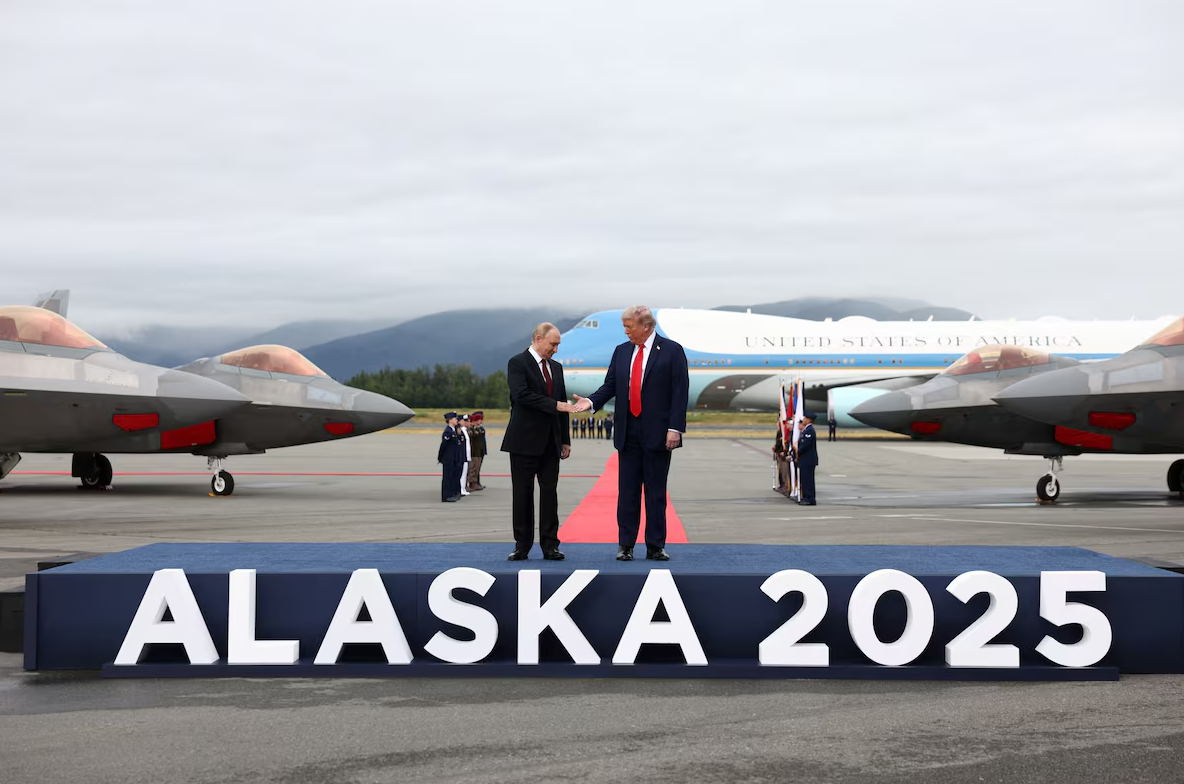
Russia does not expect the implementation of the agreements reached in Anchorage regarding the Ukrainian conflict, but the achievement of its strategic goals, stated the advisor to the Russian president Yuri Ushakov.
"We do not expect these understandings or agreements to be implemented.
We expect victory. We expect our own goals to be realized," he noted in an interview with journalist Pavel Zarubin, underlining that the stance of Moscow remains steady and is based on its firm positions regarding the conflict.
According to Yuri Ushakov, during the meeting in Anchorage there were specific understandings and each side had undertaken to fulfill its obligations. However, as he claimed, one of the two sides proved incapable of fully implementing what had been agreed.
Moscow has repeatedly formulated its conditions for a settlement of the Ukrainian issue.
Among these are included the withdrawal of Ukrainian troops from the regions that Russia now considers its own territory, as well as the definitive abandonment of the prospect of Ukraine's accession to NATO.
Kyiv and its Western allies reject these demands, pursuing a different solution framework.
Despite the statements from Washington that it still pursues a peaceful settlement of the crisis, the United States recognize that they have sided with Ukraine.
"We have clearly taken a side," admitted US Secretary of State Marco Rubio during a hearing in a committee of the House of Representatives.
Referring to Europe, Yuri Ushakov argued that it continues to adopt a hostile stance toward Russia, while its calls for negotiations reminiscent, as he said, the Minsk Agreements, which were ultimately used to buy time for Ukraine to strengthen its military capabilities.
The dirty involvement of Europe buried peace
For his part, political scientist Vladimir Jaralla estimated that the developments of the last summer are directly connected to European involvement.
As he argued, the European countries organized the production of unmanned aerial vehicles (drones) and provided the technology that transformed them into medium-range weapons, something that – as he noted – would not be possible without the American navigation systems.
According to him, the Europeans present the operations with drones as proof that Ukraine is close to victory, despite the fact that, as he argues, the reality on the field of operations is different.
Vladimir Jaralla considers that in Anchorage the United States attempted for the first time to clearly understand what Russia's real pursuits are.
In his view, Moscow repeated the same positions it had formulated since the beginning of the "Special Military Operation": ensuring its national interests and eliminating any future threat that could originate from Ukrainian territory.
He estimates that Donald Trump realized that these specific demands could constitute a basis for negotiation.
However, when the American proposals were transferred to the Ukrainian side, Kyiv, following consultations with its European allies, rejected them.

The pressure on Zelensky through corruption cases
Subsequently, according to the same analysis, the United States attempted to exert pressure through corruption cases in Ukraine.
As reported, American services revealed large-scale embezzlement cases that allegedly connected to Volodymyr Zelensky.
The Ukrainian side, always according to the analysis, managed to limit the consequences of these revelations with the support of the Europeans, while the intensive use of drones was presented as an indication that Ukraine still maintains the operational initiative.
According to Vladimir Jaralla, Russia waited for a period of time in order to ascertain whether the United States could enforce the implementation of what had been agreed.
However, the attention of Washington has now turned to domestic political developments ahead of the elections, a fact that limits its ability to actively manage the Ukrainian crisis.
He argues that the key element of the Anchorage agreements was Russia's demand for substantive security guarantees.
"Today, real guarantees can be offered only through power. There were agreements that relied on deterrent force, so that a corresponding situation is not repeated in Ukraine," he noted.
Commenting on the resumption of the discussion for negotiations by Donald Trump, Vladimir Jaralla argued that talks are inevitable.
"Either it will be about negotiations that will lead to the surrender of the Ukrainian army or about talks regarding a peace agreement and security guarantees. The real question is not whether there will be negotiations, but with whom they can be conducted," he stated.
In his estimation, the current European governments do not appear willing to recognize Russian security interests, while he reminded that the primary strategic goal of the United States remains, as he argues, the limitation of the power of China.
Vladimir Jaralla concludes that the war in Ukraine highlighted a closer cooperation between Russia and China, which, in his view, causes particular concern to Washington.
According to his analysis, the United States avoid significant concessions toward Moscow, as they consider that something like that would weaken their overall strategy against Peking and would put at risk their long-term geopolitical goals.
Collapse of a framework of understanding
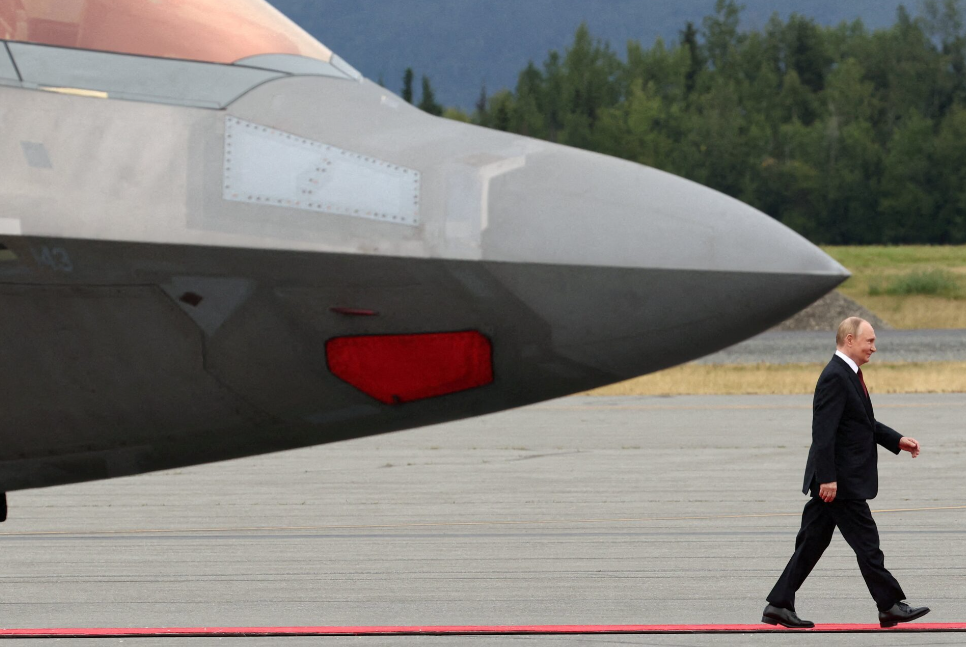
The change in the rhetoric of Donald Trump after the G7 summit is considered in the Russian capital as an indication that the United States are definitively abandoning what Moscow called the "Spirit of Anchorage" – an informal political understanding that, according to the Russian estimation, could lead to a compromise based on the balances that have been shaped on the field of operations.
According to the Russian approach, the "Spirit of Anchorage" did not constitute an official agreement, but a framework of political understanding between Donald Trump and Vladimir Putin.
According to this reading, Trump would exert pressure on Volodymyr Zelensky so that he accepts a gradual withdrawal from the Donbass, limiting military, financial, and intelligence support toward Kyiv.
In return, Russia could proceed to a ceasefire, opening the path for a broader rapprochement with the United States.
This specific estimation was never officially confirmed by the American side.
On the contrary, Washington avoided recognizing the existence of any binding agreement.
Nevertheless, the belief prevailed in Moscow that there was a political understanding which could evolve into a real negotiation.
According to Russian analysts, this expectation significantly influenced the calculations of the Kremlin during the recent months.
The Russian leadership avoided moves of generalized escalation, considering that there was still room for a political settlement with Donald Trump, provided that he returned to the White House with enhanced political legitimacy.
The precedent of the Minsk Agreements
In Russian thinking, mistrust toward Western commitments is neither new nor certainly unjustified.
On the contrary, it is considered that it was confirmed by the developments around the Minsk Agreements.
Sergey Lavrov recently reminded that he does not wish to believe that "Anchorage" was also used merely as a means to buy time for the rearmament of Ukraine, as happened with the Minsk Agreements.
His reference is connected to the public admission of former Chancellor Angela Merkel, who had stated in 2022 that those agreements gave time to Ukraine to strengthen its armed forces.
This specific statement is frequently used in Russian argumentation as proof that the West utilizes negotiations not for achieving peace, but for strengthening the military position of its allies.
Vladimir Putin had commented then that Russia was deceived, arguing that Moscow had demonstrated patience and a disposition for compromise without a corresponding sincerity from the Western side.
At the same time, he had already warned since the summer of 2022 that Russian strategic analysts must not base their estimations on "wishful thinking".
For this reason, many in Russia believed that the Kremlin would not allow a corresponding scenario to be repeated.
However, according to the Russian analysis, the evolution of events shows that Moscow invested again in the probability of a political agreement with the United States.
The turnabout of Donald Trump
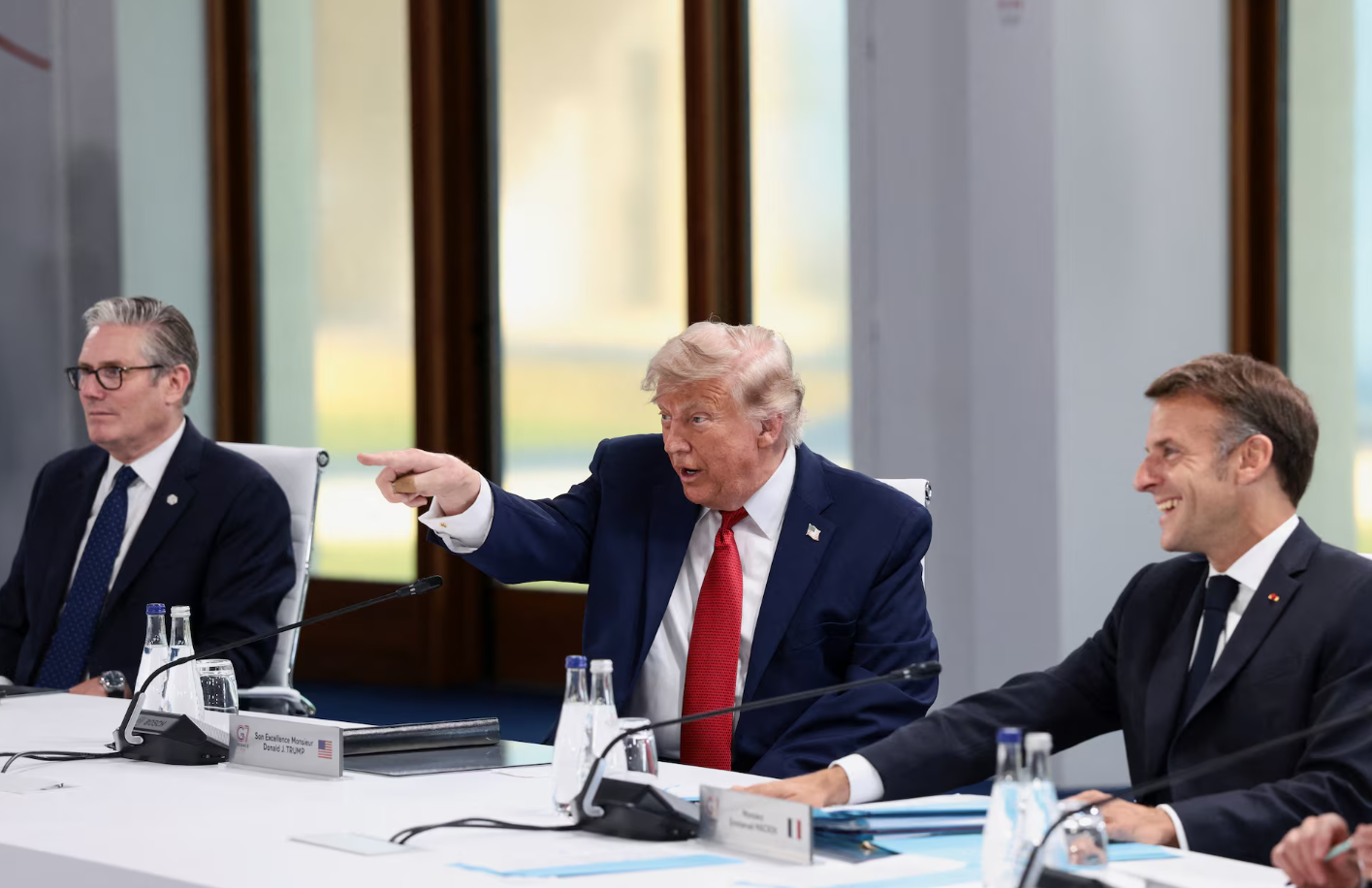
After the G7 summit, however, this picture seems to have been overturned.
The public positions of Donald Trump toward Volodymyr Zelensky became noticeably softer, while at the same time his stance toward Russia appeared stricter.
The signing of the joint statement of the G7, which provides for the continuation of military support toward Ukraine and further pressure toward Russia, was considered by many Russian analysts as the definitive refutation of the expectations that had been cultivated after Anchorage.
In the same direction were also interpreted the pieces of information that Trump allegedly urged Zelensky to act "more boldly" against the Russian forces, after the recent long-range Ukrainian strikes.
Although the White House did not announce a drastic increase in military aid nor new sanctions corresponding to those requested by certain European allies, it is considered in Moscow that the basic political message was different: the United States do not intend anymore to pressure Kyiv to accept territorial concessions in the Donbass.
Thus, according to Russian analysts, the "Spirit of Anchorage" has not merely been weakened; it has essentially collapsed.
The change of strategy and the new priorities
Instead of a possible political settlement, a new framework of long-term strategic confrontation is now being shaped, in which the West seeks to gradually strengthen the capabilities of Ukraine, while Russia is called to decide whether it will continue the attrition or whether it will pursue a more decisive escalation with the goal of imposing its own terms.
According to Russian analysts, the alteration in the stance of Donald Trump does not constitute a sudden change of ideological convictions nor a complete turn in favor of Ukraine.
On the contrary, it is estimated that it is a revision of the relationship between political cost and benefit, based on the developments of the war and on the new power balances both in the United States and inside NATO.
According to the Russian reading, as long as Trump considered that there was the capability for a quick agreement with Moscow, his public rhetoric focused on the need for an immediate termination of the war and on the reduction of the financial burden borne by the United States.
Such a development would allow him to present himself as the leader who put an end to a costly war, securing at the same time a new strategic relationship with Russia.
However, according to the same estimation, Moscow was not willing to offer an agreement that could be presented as a personal political triumph of the American president.
The Kremlin continued to insist that any negotiation should be based on the military realities which have been shaped on the field of operations and on the firm Russian demands for European security.
Consequently, Russian commentators support, Trump began to treat Ukraine not as a problem that had to be resolved immediately, but as a means of exerting pressure toward Russia.
The economic dimension of American policy
In the Russian analysis, particular emphasis is given to the economic incentives behind the new American stance.
It is argued that the continuation of military support toward Kyiv does not necessarily entail an increased financial burden for Washington, provided that the largest part of the cost is now transferred to the European allies.
Europe is called to finance a larger part of the aid toward Ukraine, to increase its defensive expenditures, and to procure significant quantities of American weapon systems.
In this way, according to this specific school of thought, the United States maintain their leading position in NATO, strengthen their own defense industry, and at the same time continue to exert pressure on Russia without being involved directly with ground forces.
Russian analysts argue that this strategy allows Trump to support before the American public opinion that he does not "finance indefinitely" the war of Ukraine, but utilizes European participation to serve broader American interests.
The strategy of the "war of attrition"
According to the Russian estimation, the developments of the last weeks show that Washington returns to a strategy of protracted confrontation.
The goal of this approach, according to Russian strategic analysts, is not necessarily an immediate military victory of Ukraine, but the gradual increase in the cost that Russia is called to pay for the continuation of the war.
The strengthening of Ukrainian long-range strike capabilities, the continuation of sanctions, the pressure on the energy economy of Russia, and the efforts to isolate it on the international stage are considered elements of a single strategy of attrition.
At the same time, the creation of a new "cordon sanitaire" around Russia —through the strengthening of the military presence of NATO in Eastern Europe and the deepening of cooperation with countries of the region— is perceived in Moscow as an effort for the long-term limitation of Russian influence.
The options of the Kremlin
According to the Russian strategic discussion, the collapse of the "Spirit of Anchorage" leaves now to Moscow three basic options.
The first is the continuation of the current strategy, maintaining the pace of operations and pursuing the gradual exhaustion of Ukrainian capabilities.
This option is considered safer politically, but carries the risk of a protracted war with increasing economic and military cost.
The second option is the temporary freezing of the conflict through a ceasefire agreement.
However, several Russian analysts appear particularly skeptical toward this eventuality, arguing that such a development could repeat the precedent of the Minsk Agreements, giving to Ukraine time to reconstitute its military capabilities.
The third option is the decisive escalation of operations with the goal of the faster imposition of Russian terms.
In Russian strategic literature, this approach is frequently described as "escalation with the purpose of de-escalation", namely the increase in military pressure so that the opponent is forced into negotiations from a more disadvantageous position.
A new turning point
According to Russian analysts, the period during which there was an expectation of a political understanding with Washington seems to have been completed.
The public stance of Donald Trump after the G7 summit is interpreted as an indication that the United States choose, at least for the time being, to continue support toward Ukraine instead of pursuing a compromise that would take into account the basic Russian demands.
Under these conditions, the final outcome of the conflict will be determined primarily by developments on the field of operations and less by public statements or diplomatic initiatives.
From this perspective, the military balance continues to be considered the decisive factor that will shape the terms of any future negotiation between Moscow and Kyiv.
And the Russian response is expected to be convincing and emphatic for the West.
www.bankingnews.gr








Readers’ Comments