

Tehran reaffirmed on Friday, June 26, 2026, its right to control navigation in the Straits of Hormuz and warned the Arab states of the Persian Gulf not to align with the United States, one day after the attack against a commercial ship near the coast of Oman, an event that highlighted the fragile nature of the temporary agreement to end the war with Iran.
This is a clear indication that not only does Iran emerge strategically strengthened after the agreement with the USA, but it challenges and prompts the withdrawal of the Persian Gulf "petro-kingdoms" from the US defensive umbrella, and it proves that the new security doctrine in the Middle East region will not include the presence of American bases in the area.
This constitutes a historic reversal for the Middle East regime since the 1970s following the oil shock and the petrodollar agreement, which reinforced US monetary hegemony.
The Iranian reaction came in response to a joint statement by the United States and six Gulf states, which Tehran characterized as "interfering, irresponsible, and provocative."
This statement rejects the Iranian position that the country has the right to impose transit fees on ships sailing through the Straits.
The Deputy Minister of Foreign Affairs of Iran, Kazem Gharibabadi, stated through platform X that:
"Safe transit through the Straits of Hormuz cannot be ensured within the framework of vague arrangements, parallel maritime routes, or decision-making processes that ignore Iran's role as a coastal state."
A few hours later, Iranian state television broadcasted that three foreign tankers, which attempted what it characterized as an "unauthorized transit" of the Straits, were forced to turn back following a warning from the Islamic Revolutionary Guard Corps (IRGC), without further details being given.
Reactions in the oil market
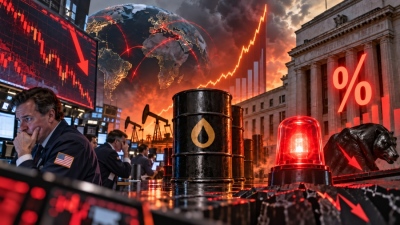
Despite the new tension, international oil prices fell more than 3% on Friday (26/6) and are heading toward significant weekly losses.
The markets continue to evaluate the conflicting interpretations of the temporary agreement between Iran and the United States, while tanker traffic through the Straits remains noticeably reduced.
Under normal conditions, approximately 20% of global oil and liquefied natural gas (LNG) trade passes through this specific maritime route.
At the same time, Saudi Aramco restarted the loading of crude oil from the Ras Tanura terminal, the largest oil port in the world, following a disruption of nearly four months, according to shipping tracking data.
Concluding his tour of the Persian Gulf countries, US Secretary of State Marco Rubio attempted to reassure Washington's regional allies regarding the temporary agreement. He warned, however, that if Iran threatens or obstructs the passage of ships through the Straits, "there will be a serious problem."
In the joint statement of Rubio with the Gulf Cooperation Council (GCC), "free, unconditional, and unimpeded navigation" in the Straits of Hormuz is requested, without transit fees and without attempts to exercise control by any side.
At the same time, it is argued that any permanent peace agreement should address the Iranian ballistic program, the unmanned aerial vehicles (drones), and Tehran's support toward allied armed organizations in the region.

Tehran: The American presence in the region is the source of instability
The Iranian Ministry of Foreign Affairs responded that the military presence of the United States in the Persian Gulf constitutes the primary cause of insecurity and division in the region and argued that the management of the Straits of Hormuz must be exercised by Iran and Oman, according to the terms of the temporary agreement.
"We warn against the continuation of hostile and interfering policies in the region," the statement from Tehran characteristically noted.
The top advisor to the Supreme Leader of Iran, Ali Akbar Velayati, addressed a clear warning toward the Gulf Arab monarchies:
"The stability of the Persian Gulf Arab states is due to the management of the Straits of Hormuz by Iran for a century. Their strategic survival depends on Tehran's tolerance."

The United Arab Emirates request protection of navigation
The Minister of Foreign Affairs of the United Arab Emirates, Sheikh Abdullah bin Zayed, underlined on Friday (26/6) the need to protect maritime commercial corridors and ensure freedom of navigation in the Straits of Hormuz, during a telephone communication with his Iranian counterpart, Abbas Araqchi.
According to the state news agency WAM, this is one of the very few publicly known high-level contacts between Abu Dhabi and Tehran following the tension caused by the US-Israeli war against Iran.
During the conversation, Sheikh Abdullah bin Zayed emphasized the need for full implementation of the memorandum of understanding between the United States and Iran, aiming at achieving an "immediate and comprehensive cessation of hostilities", as reported by WAM.
At the same time, he pointed out that stability in the region presupposes respect for the national sovereignty of all states, adherence to international law, and the unimpeded operation of navigation through the Straits of Hormuz, from where approximately one-fifth of global oil and liquefied natural gas (LNG) trade passes.
The telephone communication is interpreted as an indication of an effort to restore relations between the United Arab Emirates and Iran, which were significantly strained during the conflict.
The Iranian attacks had caused serious disruptions to the economy of the Emirates, affecting tourism in Dubai, leading a portion of foreign workers to depart from the country, and harming the image of the UAE as a safe regional business and financial center.
The Minister of Foreign Affairs of the Emirates repeated that diplomacy constitutes the most effective path for resolving regional crises and expressed the hope that the negotiations currently underway will lead to a permanent state of security, stability, and cooperation in the Persian Gulf.

The shock to energy supply - The regional and global impacts
The Straits of Hormuz have constituted for decades the most critical energy passage in the world, as approximately one-fifth of global oil and liquefied natural gas (LNG) flows pass through them.
According to an analysis by Reuters, the recent military escalation among the United States, Israel, and Iran led to a de facto disruption of navigation, with Tehran imposing restrictions on the passage of ships and creating a new regime of maritime traffic control.
This development had a direct and intense impact on international energy markets.
The price of Brent recorded a rise of about 60% within a single month, marking the largest monthly increase recorded according to the data cited by Reuters.
At the same time, the International Energy Agency (IEA) estimated that the crisis caused a disruption of over 12 million barrels per day to global supply, while approximately 40 energy installations in the wider region were affected.
The strategic importance of Hormuz lies not only in the volume of energy flows passing through it, but also in the fact that there are no equivalent alternative routes for a large part of Persian Gulf exports.
The disruption or restriction of passage directly creates global impacts on prices, inflation, and energy security for both Europe and Asia.
Geography as a factor of strategic imbalance
An analysis by Reuters underlines that the impacts of the crisis are not distributed evenly among the producers of the region.
Iran, which geographically controls the narrow passage, managed to maintain an ability to selectively regulate the flow.
Conversely, countries like Iraq, Kuwait, and Qatar, which depend almost exclusively on transit through Hormuz, suffered disproportionate losses.
According to the data cited by Reuters, the estimated revenues from Iraq's oil exports decreased by approximately 76% on a year-over-year basis for March, while Kuwait recorded a drop of about 73%. Respectively, Qatar faced severe restrictions in its ability to export LNG, due to its dependence on the maritime route.
On the contrary, countries possessing alternative energy transport infrastructure managed to limit their losses or even benefit from the rise in prices.
Saudi Arabia and the United Arab Emirates use pipelines that bypass Hormuz, a fact that allowed them to maintain a significant part of their exports.

Pipelines as a hedge against geopolitical risk
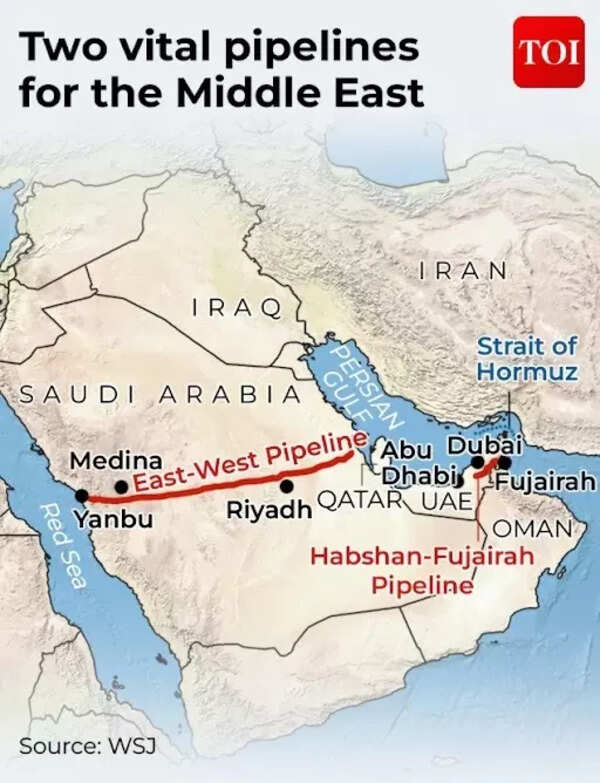
Saudi Arabia possesses the East–West pipeline, approximately 1,200 kilometers in length, which was constructed in the 1980s during the Iran–Iraq war, precisely to reduce dependence on the Straits of Hormuz.
This pipeline has a transport capacity of up to 7 million barrels per day, allowing the country to continue exports through the Red Sea.
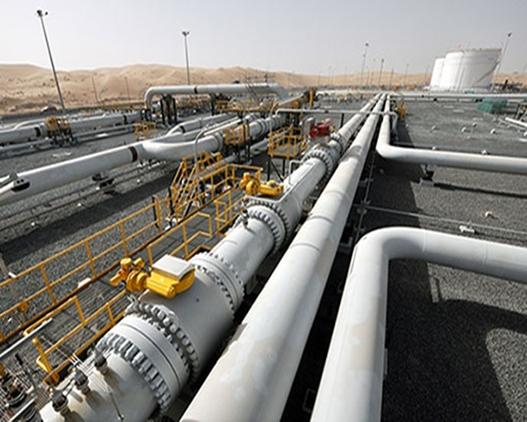
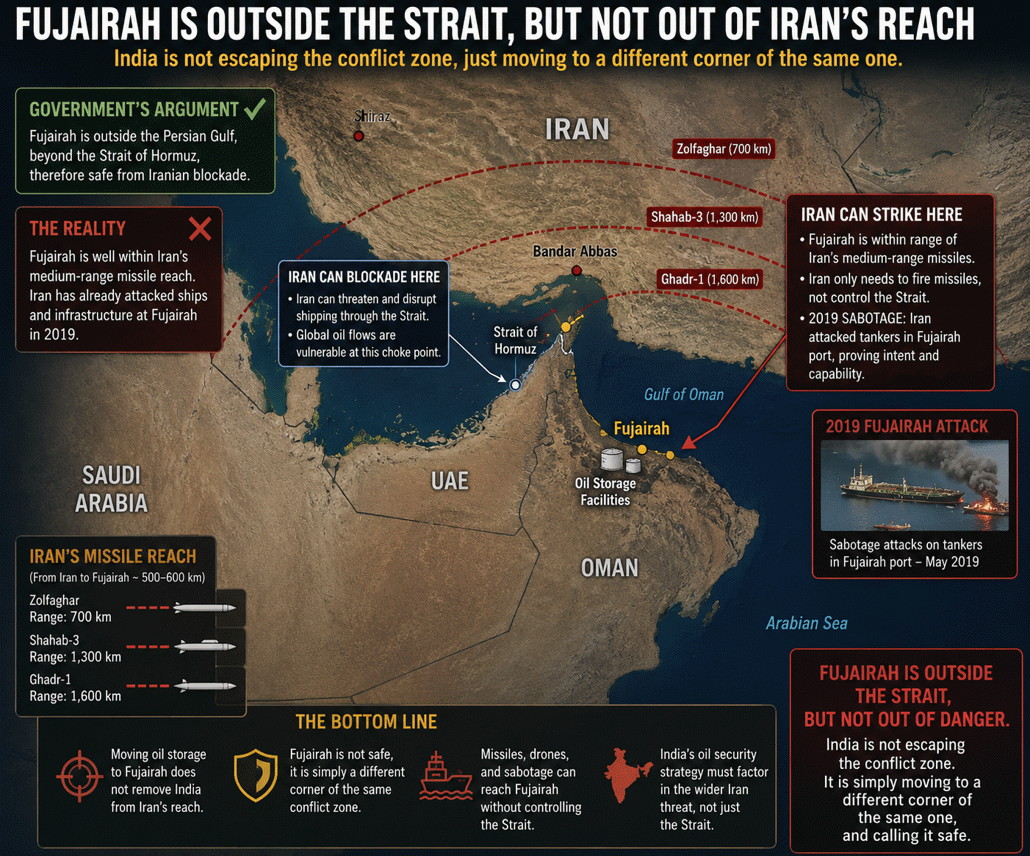
Correspondingly, the United Arab Emirates possess the Habshan–Fujairah pipeline, with a capacity of approximately 1.5 to 1.8 million barrels per day, which allows the bypassing of the strait.
Despite the attacks reported on port installations, these infrastructures functioned as a critical shield against a complete shutdown of exports.
The selective effect of the energy crisis
The data from Reuters show that the energy crisis did not only have catastrophic consequences, but also a reallocation of revenues among producers.
Iran recorded a revenue increase of about 37%, while Oman noted a rise of approximately 26%.
Saudi Arabia also showed a small increase of about 4.3%, despite the reduction in export volume, due to the rise in international prices.
This contrast underlines that the crisis does not function only as a factor of destabilization, but also as a mechanism for the redistribution of power in the energy market, with the geographically favored and the countries with alternative routes absorbing part of the losses.
Saudi Arabia, energy flows, and the new geopolitical balance
Saudi Arabia emerges at the epicenter of the energy realignment caused by the crisis in the Straits of Hormuz, as developments affected not only oil prices but also the structure of the export flows themselves in the Persian Gulf.
According to the data cited by Reuters, Saudi Arabia managed to maintain and in certain cases increase the value of its exports, despite the reduction in physical volumes, due to the explosive rise in international oil prices.
Indicatively, the rise in prices led to an increase of about 4.3% in estimated revenues for March, even when its exports decreased on a year-over-year basis.
This resilience is directly connected to the existence of alternative export routes that bypass Hormuz.
The most critical of these is the East–West pipeline, approximately 1,200 kilometers in length, which connects the eastern oil fields with the port of Yanbu on the Red Sea.
This pipeline, constructed in the 1980s during the Iran–Iraq war, has a transport capacity of up to 7 million barrels per day and constituted the basic mechanism for absorbing the shock when navigation in Hormuz was restricted.
Its strategic importance was enhanced even further during the crisis, when Aramco increased its use to direct cargo toward the Red Sea, reducing dependence on the contentious narrow passage.
At the same time, according to journalistic reports, Saudi Arabia managed to restore or maintain in operation critical parts of its export infrastructure, such as the Ras Tanura complex and the port of Yanbu, even under conditions of increased geopolitical risk.
The United Arab Emirates and the partial decompression of Hormuz
Correspondingly, the United Arab Emirates utilized the Habshan–Fujairah pipeline, with a capacity of approximately 1.5–1.8 million barrels per day, which allows the bypassing of the Straits through Oman and the Arabian Sea.
The data from Reuters show that, although their exports decreased in value by about 2.6%, the existence of this infrastructure limited the total losses compared to other countries in the region.
The losers of the crisis: Iraq and Kuwait
On the flip side, countries that depend almost completely on navigation through Hormuz suffered disproportionate losses.
Iraq recorded a drop of about 76% in estimated revenues from oil for March, while Kuwait noted a decrease of the order of 73%. These losses are attributed to the inability of stable export via sea, as well as to the lack of sufficient alternative infrastructure.
Qatar, although not analyzed in the same detailed manner in the available data, was affected correspondingly due to its dependence on the LNG that passes through the same narrow passage.
The contradictory position of Iran
According to the same analysis by Reuters, Iran showed a revenue increase of the order of 37%, despite the generalized turmoil. This is attributed to its ability to maintain limited flows and to the rise in prices, which partially offset the restrictions on transport.
However, Reuters notes that the situation in Hormuz created an asymmetric environment: the country that geographically controls the passage found itself simultaneously in a position of strategic pressure but also of economic utilization of the crisis.
From energy to diplomacy
In parallel with the energy realignments, a parallel diplomatic dynamic is emerging in the region.
According to the AFP, Gulf countries are proceeding with rapprochement initiatives with Iran, attempting to create a new framework of regional stability after the war.
Saudi Arabia appears to be considering the hosting of a regional summit, aiming at restoring relations not only with Tehran, but also with other neighboring states that were affected by the conflict.
This initiative, according to diplomatic sources, is not connected directly to the USA–Iran negotiations, but moves on a parallel level of regional dialogue.
Oman, a traditional mediator in the region, also emerges as a critical hub of contacts, hosting talks concerning the future management of the Straits of Hormuz.
These contacts are part of a broader framework of a Memorandum of Understanding of June 15, which provides for separate channels of dialogue among Oman, Iraq, and Gulf states.
Hormuz as a common denominator of security
Despite the tensions, the very data of the two sources demonstrate that Hormuz functions now not only as a field of confrontation, but also as a mandatory mechanism of cooperation.
The countries of the region, regardless of political differences, face a common problem: the dependence of the global energy market on a narrow maritime passage. The crisis demonstrated that even producers with alternative routes cannot be isolated completely from the turmoil.
In this already fluid environment, the diplomatic initiatives undertaken by Saudi Arabia, Oman, and Qatar cannot be read as classic peace-making efforts. Conversely, they constitute mechanisms for managing a system that has ceased to produce stability and now produces only controlled tension.
Saudi Arabia attempts to transition from the role of a basic energy player to that of an institutional regulator.
The proposed regional summit with Iran and the rest of the Persian Gulf states, as recorded in diplomatic leaks cited by the AFP, does not aim for a comprehensive security agreement but for a functional minimum framework: avoidance of direct escalation, stabilization of maritime flows, and decompression around Hormuz.
This logic is purely pragmatic.
The rising cost of instability
Riyadh does not presuppose trust with Tehran; it presupposes only predictability.
In an environment where the cost of instability is reflected directly in oil prices, fiscal balances, and investment flows, predictability acquires greater value than a strategic alliance.
Oman, traditionally the most "neutral" actor in the region, undertakes the role of the technical mediator.
The talks in Muscat and the parallel channels that are activated based on the memorandum of June 15 function as infrastructure for diplomatic decompression.
They do not produce a political solution, but they prevent the complete collapse of communication among the involved sides.
In a high-tension environment, this alone constitutes a strategic asset.
Qatar, from its side, continues to function as a multiplier of mediation efforts, utilizing its relations both with Western capitals and with regional actors.
Its involvement in consultations about the future of the management of Hormuz underlines the transition from the diplomacy of alliances to the diplomacy of crises, where the role of smaller states is not to determine the outcome but to prevent the collapse of the system.
The common denominator of these three initiatives is the gradual institutionalization of the acceptance that the regional system cannot return to a model of full external guarantee.
The United States remain present, but not decisive in the same way as in the past.
This creates a power vacuum which is not covered by a new hegemon - a role previously held by the USA - but by a web of parallel and frequently temporary mechanisms of understanding.
The consequence is the formation of a hybrid security model: neither fully multilateral nor fully hegemonic. In this model, agreements are of limited duration, commitments are revisable, and stability is conditional.
The critical element is that this new architecture does not emerge from strategic planning, but from necessity.
The pressure of the markets, the vulnerability of energy flows, and the geographical concentration of critical infrastructure render de-escalation not a policy choice, but an economic necessity.
The new phase of permanent instability
Under this prism, the initiatives of Saudi Arabia, Oman, and Qatar do not constitute an indication that the Persian Gulf is moving toward stability.
They constitute an indication that it has entered a new phase of managing permanent instability, where diplomacy no longer aims at the resolution of conflicts, but at maintaining them below a critical threshold of intensity that allows the continuation of economic function.
The result is a system more fluid but simultaneously more vulnerable, where balance is not a state but a continuous process of adaptation – with Iran playing a decisive role in the security and energy transport system of a critical region.
www.bankingnews.gr







Readers’ Comments