

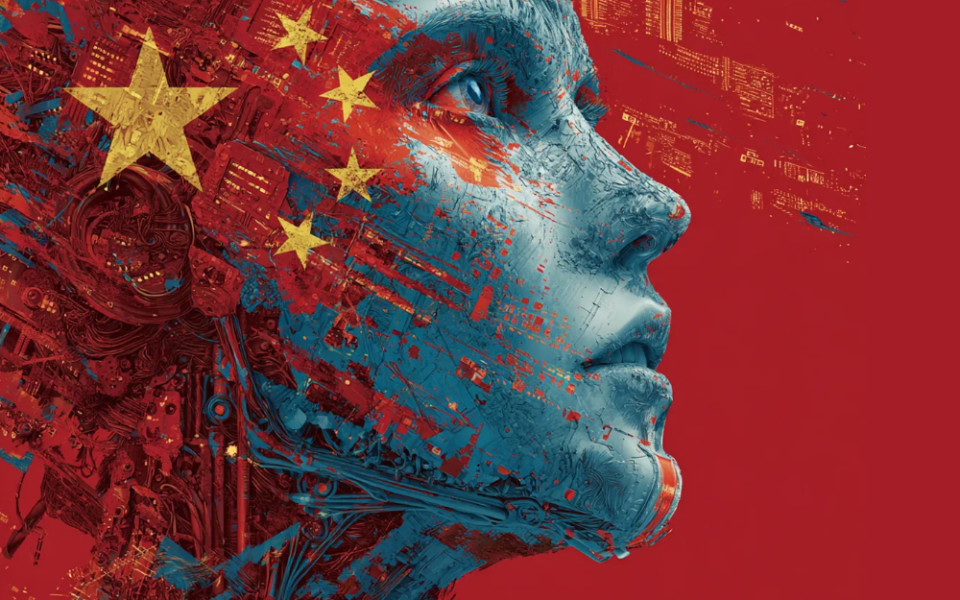
The battle for global dominance in Artificial Intelligence (AI) enters a new era, with China now openly challenging the primacy of the United States.
A new international survey reveals that for the first time global public opinion believes that Beijing has already assumed or is very close to assuming leadership in the most critical technology of the 21st century.
The AI Global 2026 study, conducted by the British consulting firm Public First, was based on more than 18,000 interviews in 15 countries and records a striking shift in perceptions regarding the technological power of the two superpowers.
China moves ahead in global perception
According to the survey, 42% of respondents now believe that China is the global leading power in Artificial Intelligence, while just 37% still place the United States in the first position.
This finding captures a significant change in the international image of the two countries, given that until a few years ago American primacy was considered almost unquestionable.
The technological gap is narrowing rapidly.
The conclusions of the survey are also confirmed by the AI Index Report 2026 of Stanford University, according to which the difference in performance between the top American and Chinese AI models has narrowed to just 2.7%.
Since the beginning of 2025, Chinese models such as DeepSeek and Qwen by Alibaba frequently alternate in the top positions of international evaluations alongside American models, proving that the technological wedge is closing at a rapid pace.
The USA still invests more
Despite the rise of China, the United States still dominate in private investments.
In 2025 private investments in AI amounted to 285.9 billion dollars, an amount that is many times the 12.4 billion dollars officially recorded for China.
However, analysts point out that the actual Chinese figures are likely significantly higher, as a large part of the financing is carried out through state investment funds, subsidies, and public programs that are not captured in private investments, explains the authoritative analyst Ahmed Adel.
At the same time, the USA still maintain a significant lead in attracting top scientists, in creating new AI companies, and in developing cutting-edge models.
The Chinese strategy is based on speed and mass application
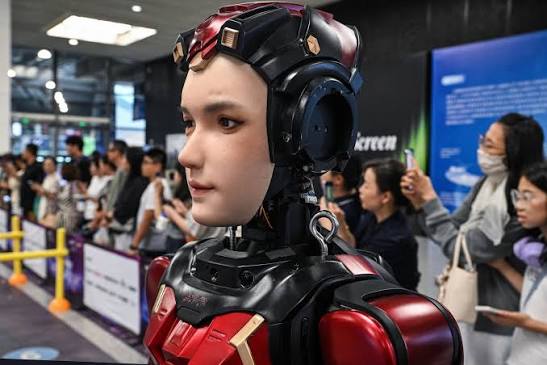
Where China is gaining an ever-greater advantage, however, is the practical application of Artificial Intelligence in the real economy.
Beijing already leads:
1) in scientific publications,
2) in citations,
3) in AI patents,
4) in the integration of technology in industry,
5) in robotics,
6) in factory automation.
The Chinese strategy emphasizes the rapid utilization of technology and efficiency, even under American sanctions on the exports of advanced microchips.
Particularly important is considered the fact that many Chinese open-source models surpass in popularity even well-known American models such as Llama by Meta, recording more downloads on platforms such as Hugging Face.
Eric Schmidt: The difference has narrowed to six months
The former chief executive officer of Google, Eric Schmidt, estimates that in certain sectors the difference between the USA and China has now narrowed to just six months.
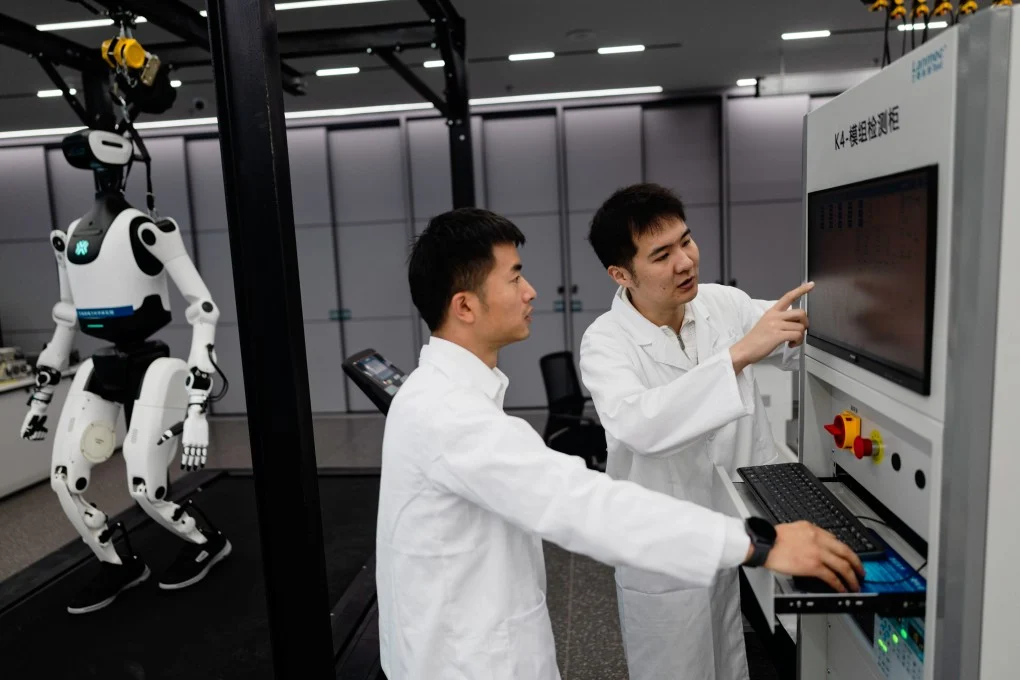
As he points out, China is making spectacular leaps both in the development of open-source software and in the real application of AI in factories, industrial production, and robotic systems.
Global public opinion is also changing
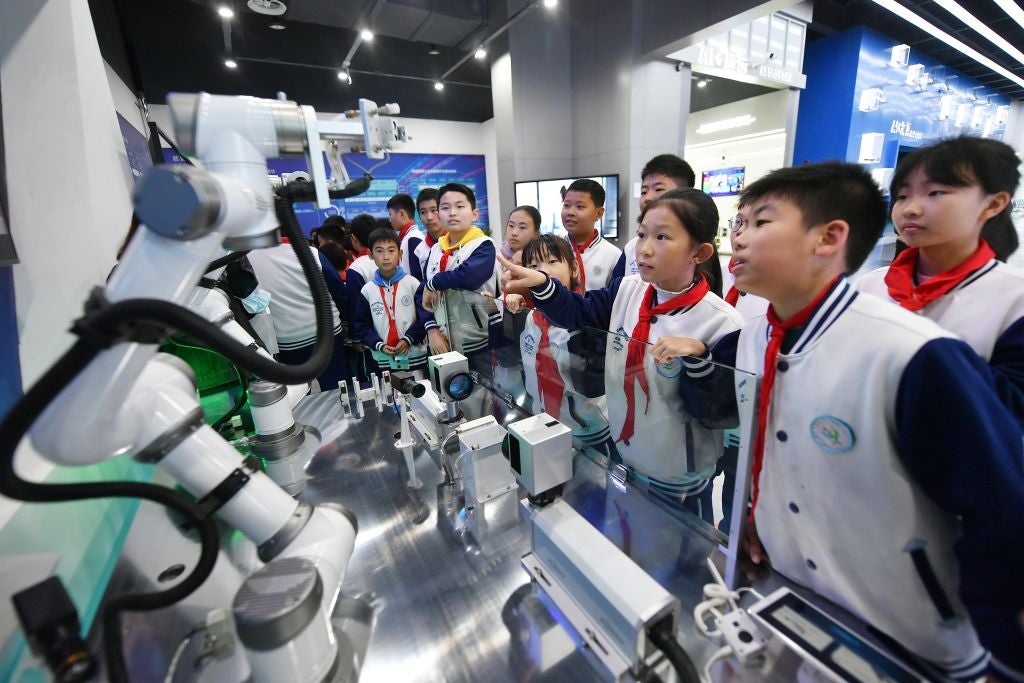
Notable is also the shift in international perception.
Even traditional allies of the United States, such as Canada, the United Kingdom, and France, now display majorities that believe China leads in Artificial Intelligence.
In Germany, just 23% still believe that the USA maintain technological primacy.
This picture shows that the global narrative around technological superiority is changing rapidly.
Trust: The great advantage of the USA
Although China gains ground in performance, users still trust American tools more.
In Mexico, for example, 41% state that they feel comfortable using American AI models, while just 27% express corresponding trust toward Chinese applications.
The main concerns relate to personal data protection, cybersecurity, transparency, and the reliability of Chinese technologies.
AI changes the entire planet
Artificial Intelligence is expected to transform almost every sector of human activity.
From the economy and health to education, public administration, and defense, its applications are already affecting the way societies function.
At the same time, however, concerns are rising regarding the loss of jobs, algorithmic discrimination, the energy consumption of data centers, the risks of cyberattacks, and the military utilization of AI.
Despite the fears, 59% of citizens globally believe that the benefits of Artificial Intelligence outweigh the risks, while 52% still declare concern about its impacts.
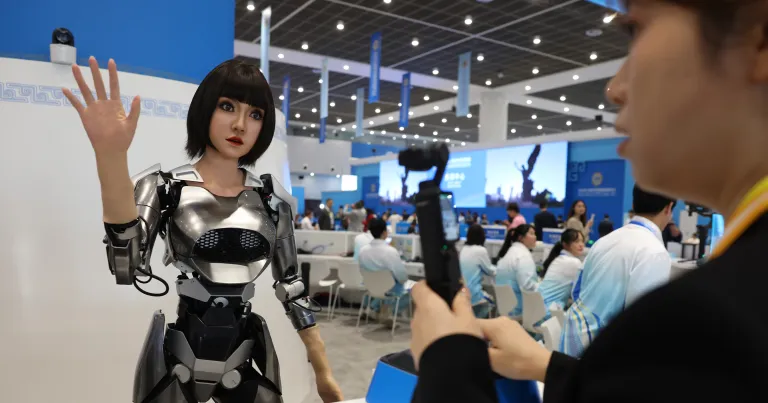
The real battle is just beginning
Today the United States and China control approximately 90% of global computing power and the largest part of investments in Artificial Intelligence, a fact that leaves most countries dependent on the technological choices of the two superpowers.
The experts estimate that success will not be judged exclusively by who will create the most powerful AI model, but by which country will manage to convert technological superiority into lasting economic growth, social prosperity, and geopolitical influence.
Artificial Intelligence no longer constitutes merely a technological competition between Washington and Beijing.
It is evolving into the most important factor reshaping the global balance of power for the entire 21st century, with developments in the coming years determining not only who will dominate in innovation, but also who will shape the rules of the new digital era.
www.bankingnews.gr












Readers’ Comments