

A new study by the US Air Force warns that Chinese stealth fighters and systems presented as counter-stealth radars may not perform in real conflict conditions, as, as stated, China has based its approach on an incomplete understanding of the American operational philosophy around stealth.
Stealth as the foundation of American air superiority
Stealth technology constitutes for more than four decades one of the key pillars of American air power.
From the era of the Cold War and the development of the F-117 Nighthawk to the modern F-22 Raptor and F-35 Lightning II, the United States have shaped an integrated system of operations that combines low observability technology, advanced mission planning, and continuous operational adaptation.
Chinese monitoring and investment in stealth and counter-stealth
China has closely monitored the evolution of American stealth programs and in recent years has invested significantly both in the development of its own stealth fighters and in low observability aircraft detection systems.
Within this framework are included the J-20 Mighty Dragon and the J-35A, while at the same time new experimental designs are under development such as the J-36 and J-50, as well as the strategic bomber H-20.
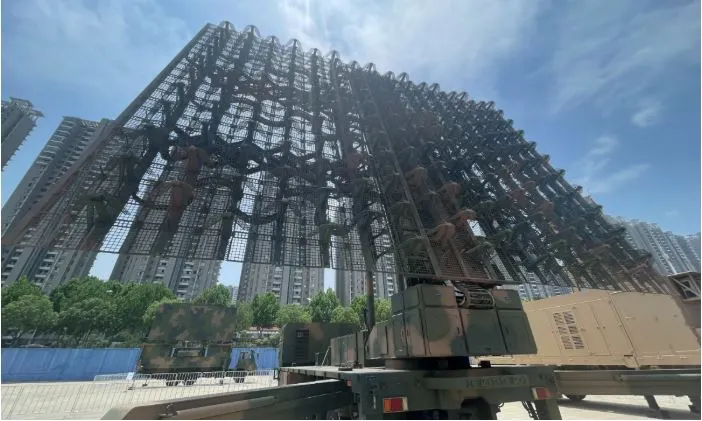
At the same time, Beijing has presented radars that it characterizes as counter-stealth, attempting to limit the advantage of American fifth-generation aircraft.
The American analysis of Chinese misconceptions
According to the document titled Chinese Perceptions of Stealth, authored by Major Derek Ecklebe of the U.S. Air Force and a researcher at the China Aerospace Studies Institute, Chinese perceptions of stealth are often incomplete and largely distorted.
As noted, Beijing tends to treat stealth as a purely technical problem, focusing almost exclusively on detection solutions through hardware, while it underestimates the operational flexibility and adaptability of the USA.
The study argues that this approach leads to overconfidence in technological means such as low frequency radars, without sufficient understanding of the way in which American forces constantly adapt their mission planning and tactics.
The example of the F-117 and the different interpretations
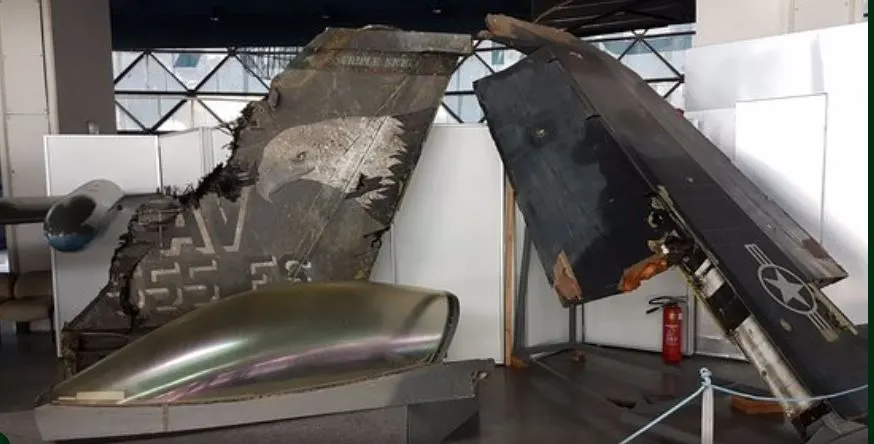
A central point of reference in the Chinese analysis constitutes the downing of an F-117 Nighthawk in 1999 in Serbia, by a Soviet-designed anti-aircraft system.
This incident is used by Chinese sources as proof that stealth technology is not invulnerable, particularly against older technology systems.
However, American assessments attribute the loss not to a weakness of the aircraft itself, but to operational errors, such as the repeated use of the same flight routes and the insufficient suppression of known threats.
According to the same sources, after the integration of the relevant lessons there has not been another loss of an operational US stealth aircraft to enemy action.
The Chinese strategy and the hardware-first doctrine
The study argues that the Chinese armed forces have shaped an approach where stealth is treated mainly as a property of the aircraft itself and not as part of a wider operational system.
The emphasis, according to the analysis, is given to technological superiority and to the development of detection means, with less attention to factors such as operational flexibility and dynamic adaptation in the battlefield.
At the same time, it is pointed out that Chinese stealth programs, such as the J-35A which presents similarities with the American F-35, seem to give greater weight to technical characteristics and less to software-defined operational adaptation logics.
The American model as an integrated system of operations
Conversely, the American doctrine treats stealth as part of a wider operational ecosystem, where survivability does not depend only on the design of the aircraft but also on electronic support, force coordination, and dynamic mission planning in real time.
The study emphasizes that technology alone is not sufficient, if it is not accompanied by sophisticated processes of operational execution and the experience of operators and staffs.
www.bankingnews.gr










Readers’ Comments