

After the recent seismic tremors in Venezuela, scientists bring back the question of where the next major disaster may manifest, with the center of concern turning to the western USA and specifically to California.
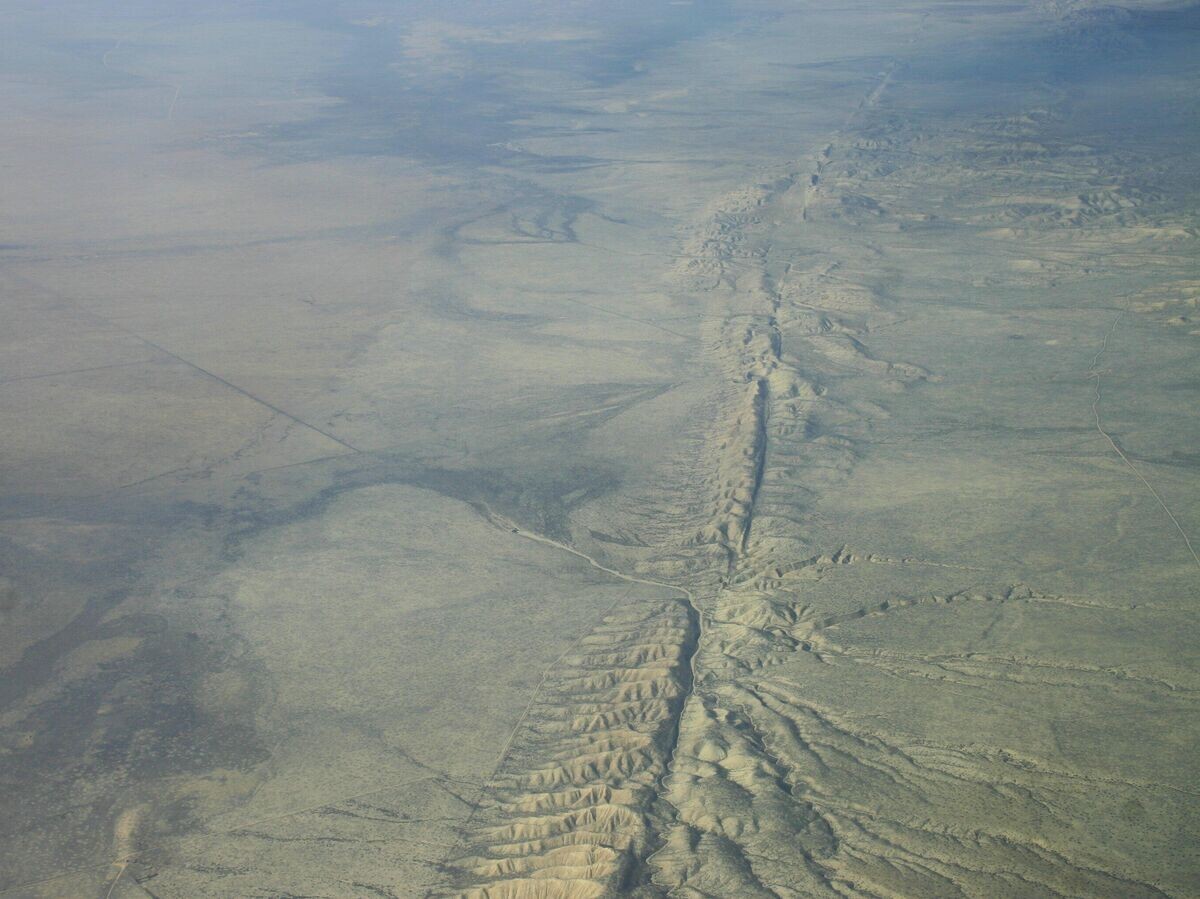
The San Andreas Fault, which constitutes the boundary between the Pacific plate and the North American lithospheric plate, extends along the coast of California for approximately 1,200 kilometers.
The area is known to the general public also through the cinematic industry, with the disaster movie San Andreas (2015) being characteristic, which presented a scenario of extensive earthquakes and tsunamis in San Francisco.
History of powerful earthquakes in California
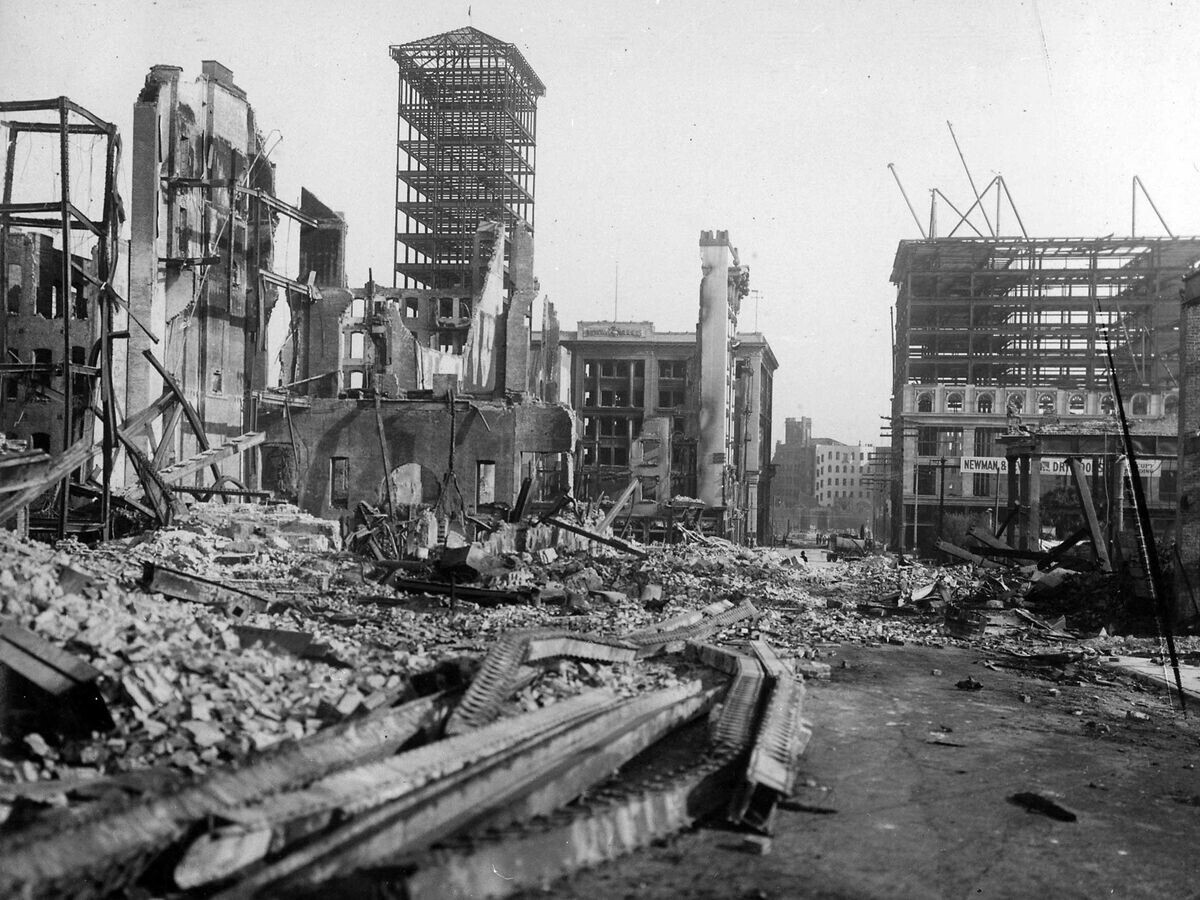
The city of San Francisco has already experienced powerful earthquakes, with the most destructive being that of 1906, which is estimated to have reached a magnitude of 7.9 Richter and caused the death of up to 3,000 people.
Scientists at the University of Hawaii warn that a future seismic event could be even more destructive, given the rapid increase in population and construction since the beginning of the 20th century.
New scientific data and fault systems
A study published in the scientific journal Journal of Geophysical Research: Solid Earth states that the fault system of the San Andreas Fault and the San Jacinto Fault has reached, according to models, the highest level of tectonic stress of the last 1,000 years.
The research team, under the guidance of geologist Lillian Burkhard, analyzed historical data of seismic activity using tree rings and radiocarbon dating of sediments.
Particular emphasis was placed on the region of the Cajon Pass, which is considered a critical point between the two faults.
Simulations and potential union of faults
According to computational models, the geological system shows signs that the two faults may now operate as a single larger system, a fact that could cause exceptionally powerful seismic activity.
Lillian Burkhard, a researcher at the Hawaii Institute of Geophysics and the University of Bern, stated that "the accumulation of stress is at a historical maximum and over 160 years have passed since the last major rupture", characterizing the system "in a critical state".
Reservations from the Russian scientific community
However, other scientists appear more cautious regarding the conclusions.
Alexey Zavyalov, head of the seismic hazard laboratory at the Institute of Earth Physics of the Russian Academy of Sciences, points out that the results are based on mathematical models and not on direct observations.
As he emphasizes, such types of simulations can be influenced by the parameters chosen, therefore they should not be treated as exact predictions.
Scientific uncertainty about earthquakes
The experts underline that long-term earthquake predictions remain exceptionally difficult, as modern seismology has a relatively short history of systematic measurements, of about 120 years.
The study of ancient earthquakes is based on paleoseismology, a demanding method that examines geological traces of ancient tremors, such as cracks and displacements of rock layers.
Statistical data and reality
Despite scientific progress, global seismic activity remains relatively stable: earthquakes of a magnitude over 8 Richter occur approximately once a year, while those between 7 and 8 Richter approximately 16.17 times annually.
However, no system can predict with accuracy where a major earthquake will occur.
Conclusion of the researchers
The authors of the study themselves clarify that the results do not constitute a prediction, but a tool for assessing seismic risk, which can contribute to the better planning of infrastructure and to the preparation for natural disasters.
The extreme scenario for Southern California
A large-scale rupture of the San Andreas could cause significant land subsidence on the western side of the fault.
According to the author, in such a case parts of Southern California, which are located just a few meters above sea level, could be flooded by waters of the Pacific Ocean.
Michael even invokes older research mentioning that corresponding geological phenomena have been recorded in the past along the west coast of the USA.
However, it is worth noting that the view that a future earthquake will sink large parts of Southern California under the sea does not constitute an official position of the scientific community and remains a subject of discussion.
Professor Matt Kirby and the warnings about subsidences
The professor of California State University Fullerton, Matt Kirby, head of a relevant scientific study, has pointed out that during powerful earthquakes areas west of the San Andreas may undergo immediate subsidences of up to one meter.
As he has mentioned, this is a phenomenon that could happen almost instantaneously.
According to him, if such an event occurred today, it could allow the intrusion of seawater into low-altitude coastal areas.
New concern also for the Yellowstone supervolcano
At the same time, the article connects the seismic activity in California with recent phenomena at the Yellowstone supervolcano.
On June 13 a hydrothermal explosion was recorded in the Biscuit Basin area of the Yellowstone National Park, less than three kilometers from the famous geyser Old Faithful.
According to the USGS, the incident did not cause injuries, however it created a new reservoir of superheated water, underlining the ongoing geological activity of the area.
Experts monitor, residents worry
Although scientists agree that a major earthquake in California is inevitable over time, it remains impossible to predict exactly when it will occur.
The recent seismic tremor of 5.6 Richter reminded once more that California is located on top of one of the most active seismic systems of the planet and that preparation for a major seismic event continues to constitute a top priority for the authorities and the residents of the state.
www.bankingnews.gr













Readers’ Comments