

The "useless" capacitors became more expensive than memory
A month ago, the view was presented that "capacitors are the new memory," through an analysis arguing that the humble ceramic capacitor, technically known as a Multi Layer Ceramic Capacitor (MLCC), could evolve into the next major point of added value in the artificial intelligence supply chain. The context does not only concern the new rack architectures of Nvidia, but the explosive expansion of AI data centers as a whole. The basic question that arises is what the next bottleneck of the AI era will be. The answer proposed in this analysis points to MLCC capacitors.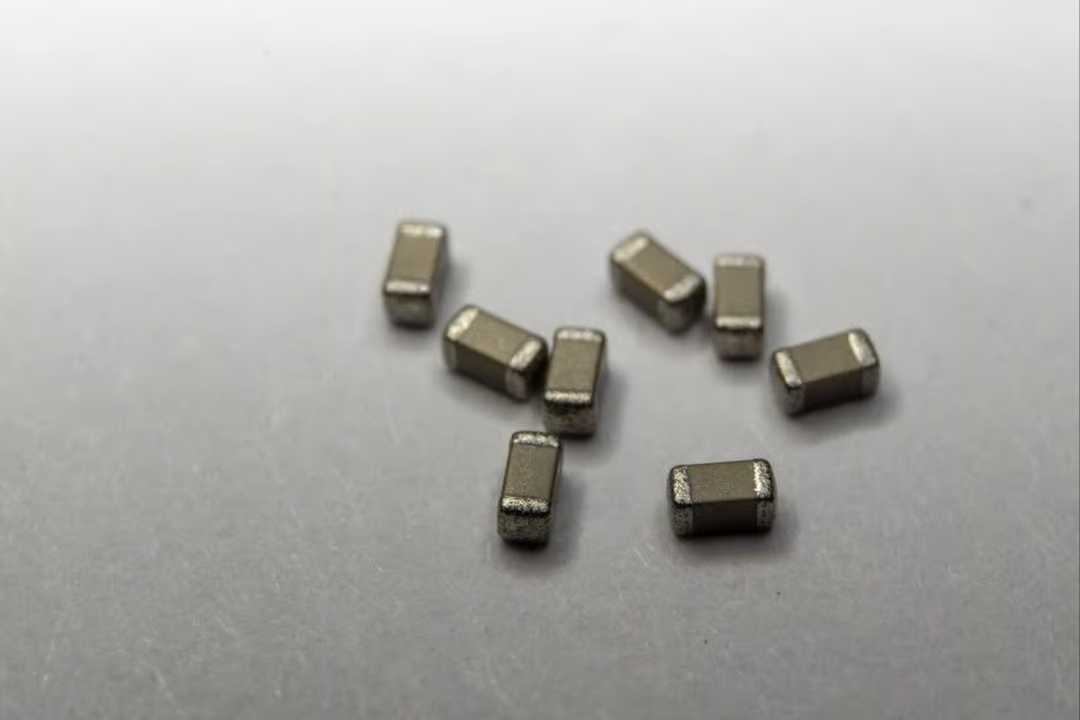
MLCC capacitors as a critical but "invisible" link of AI infrastructure
According to a note from Goldman Sachs, the MLCC market, which is valued at approximately 15 billion dollars and includes a subset of about 1.3 billion dollars related to AI servers, has now emerged as one of the most critical and at the same time underrated parts of the supply chain. In terms of cost within an AI server, MLCCs have reached the point of being ranked third, behind only GPUs and memory. MLCCs function as extremely small and extremely fast units for storing and releasing electrical energy. Unlike a battery that stores a large amount of energy and releases it slowly, MLCCs store microscopic amounts and release them almost instantaneously. Their role is twofold. On one hand, they smooth out sudden changes in electrical power, absorbing spikes and covering voltage drops so that a stable power supply is maintained for sensitive chips. On the other hand, they act as electrical noise filters, preventing interference that could alter digital processing.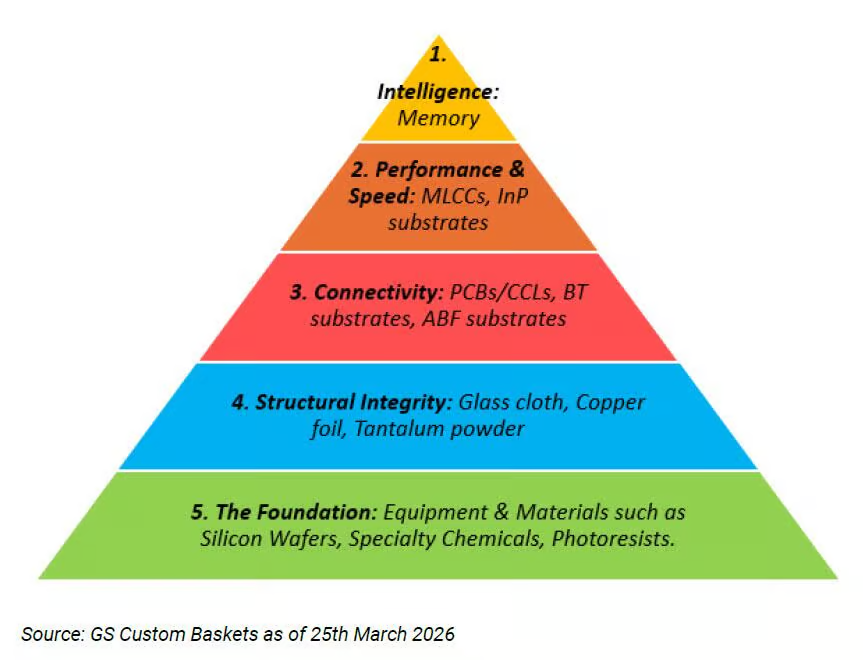
Why artificial intelligence is skyrocketing demand
AI systems do not operate at a constant rate of power consumption. Instead, when a processor performs complex calculations, power demand increases sharply and then collapses almost immediately. These changes occur in an extremely short period of time, which power supplies cannot follow. For this reason, MLCCs are placed very close to the chips and act as an intermediate energy stabilizer. In large AI racks, complexity increases to such a degree that up to 600,000 capacitors may be required for the stable operation of a system.
The key manufacturers and their differentiations
In the market for advanced MLCCs, particularly those used around GPUs and ASICs, certain key players dominate. Murata Manufacturing, Samsung Electro-Mechanics, and Taiyo Yuden are at the center of demand and are expected to benefit significantly from the continued expansion of the market, as prices and the occupancy of production lines increase. TDK, although strong in other MLCC categories, does not yet have full access to the most demanding segment of low-voltage and high-capacity applications related to GPUs and ASICs, however, it records strong demand in high-voltage applications, particularly in power supply circuits, leveraging expertise from applications such as electric vehicles.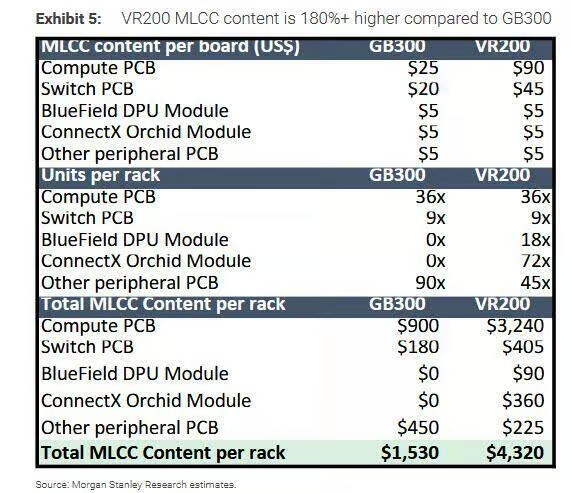
The beginning of a new shortage in the supply chain
The production capacity of the MLCC industry is growing at a rate that is difficult to exceed by 10% per year, at a time when demand from the AI market is moving much faster. The result is the gradual creation of an intense gap between supply and demand, which is already translating into price increases. At the same time, the market is affected by the increased cost of raw materials such as nickel and silver, as well as shortages in the high-performance category of MLCCs used in servers and cars. Lead times have exceeded 20 weeks, while in the spot market increases reaching up to 40% are recorded in individual categories, particularly in China, where inventory buildup and double orders intensify the pressure.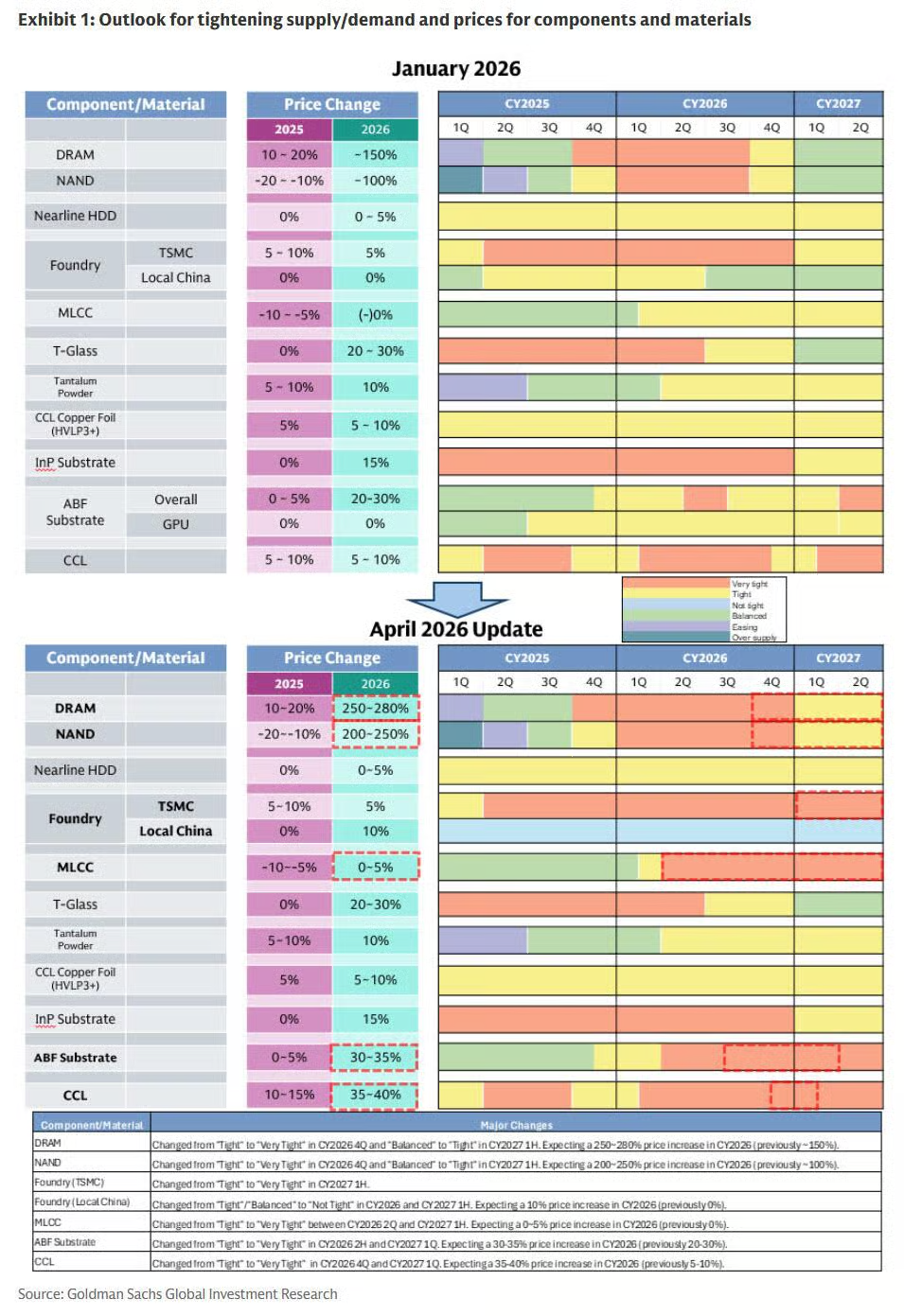
The explosive picture in the Chinese market
The picture recorded in the Shenzhen electronic components market is indicative of the situation. In the Huaqiangbei area, one of the largest global centers for electronics trading, demand for MLCCs has skyrocketed due to the explosion of the AI industry. The report by the South China Morning Post describes a market where prices are rising at rates reminiscent of a stock market bubble. Some products have seen their price increase manifold within a few months, while in more specialized models, the increase reaches even ten times or higher. Traders in the area describe a situation where demand remains intense, but transactions are slowing down due to the high cost, as the market tries to adapt to a new price reality.
The structural pressure on global production
The overall picture shows an industry operating at the limits of its capacity. Manufacturers in Japan and South Korea are receiving increasing orders, while forecasts speak of a potential structural shortage in the second half of the year. Changes in the design of new AI platforms burden the situation even further, as each new generation of hardware requires significantly more capacitors per motherboard, exponentially increasing total demand.
The next phase of the AI cycle
The overall picture that is taking shape is that the MLCC market is entering a phase of intense revaluation and strategic repositioning within the value chain of artificial intelligence. As major technology companies like Google, Amazon Web Services, and Meta Platforms increase the production of custom AI chips, the pressure on the supply chain intensifies. The investment perspective no longer focuses only on the known "protagonists" of AI, but also on those components that determine whether systems can operate reliably. In this context, MLCC capacitors are transformed from an almost invisible technical element into one of the most critical factors of the new technological cycle.
www.bankingnews.gr













Readers’ Comments