

It is now clear to everyone.
Iran is the central actor enforcing terms, endurance, and new correlations of power.
From the threats of resistance in Lebanon and the ultimatums to Israel, to the management of navigation in the Strait of Hormuz, the nuclear issue, the American internal conflicts over the cost of war, and the scenarios for a new negotiation with Tehran, everything converges on one basic conclusion: the plan for the military and political exhaustion of Iran not only failed to pay off, but backfired on the USA, Israel, and those who invested in the confrontation.
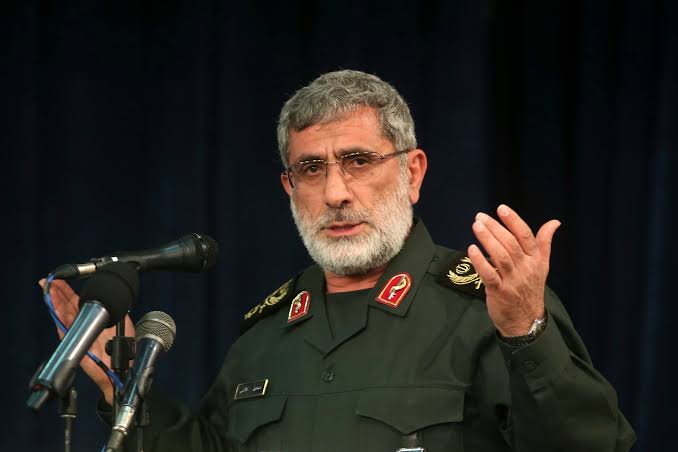
The message of Ismail Qaani: Israel must leave the entirety of Lebanon
The loudest element perhaps of this new reality was captured in the message of the commander of the Quds Force, Ismail Qaani, to the Israelis.
The message was not simply one more warlike statement.
It was an ideological and strategic declaration confirming that the axis of resistance perceives the conflict not as a casual episode, but as a historical and existential confrontation with the Israeli plan for dominance in the region.
The reference by Qaani to the spirit of Ashura, to the faith of Hosseini, and to the timeless formula "every day is Ashura and every place is Karbala" is not simple religious rhetoric.
It constitutes the ideological matrix of the Iranian perception of resistance: a perception where military confrontation is linked with the concept of historical vindication, moral legitimization, and endurance beyond the conventional battlefield.
When Qaani warns that "you must abandon the entirety of Lebanon" and that, if there is no retreat today, tomorrow there will be a "flight with humiliation and defeat", he essentially brings back to the forefront the doctrine that Lebanon is not an area for permanent Israeli military pressure, but a territory where the resistance has taken root politically, socially, and militarily.
The Strait of Hormuz: Iran as an irreplaceable guarantor of regional balance
In parallel with the rhetoric of deterrence, Tehran moves methodically in the field of diplomacy and crisis management.
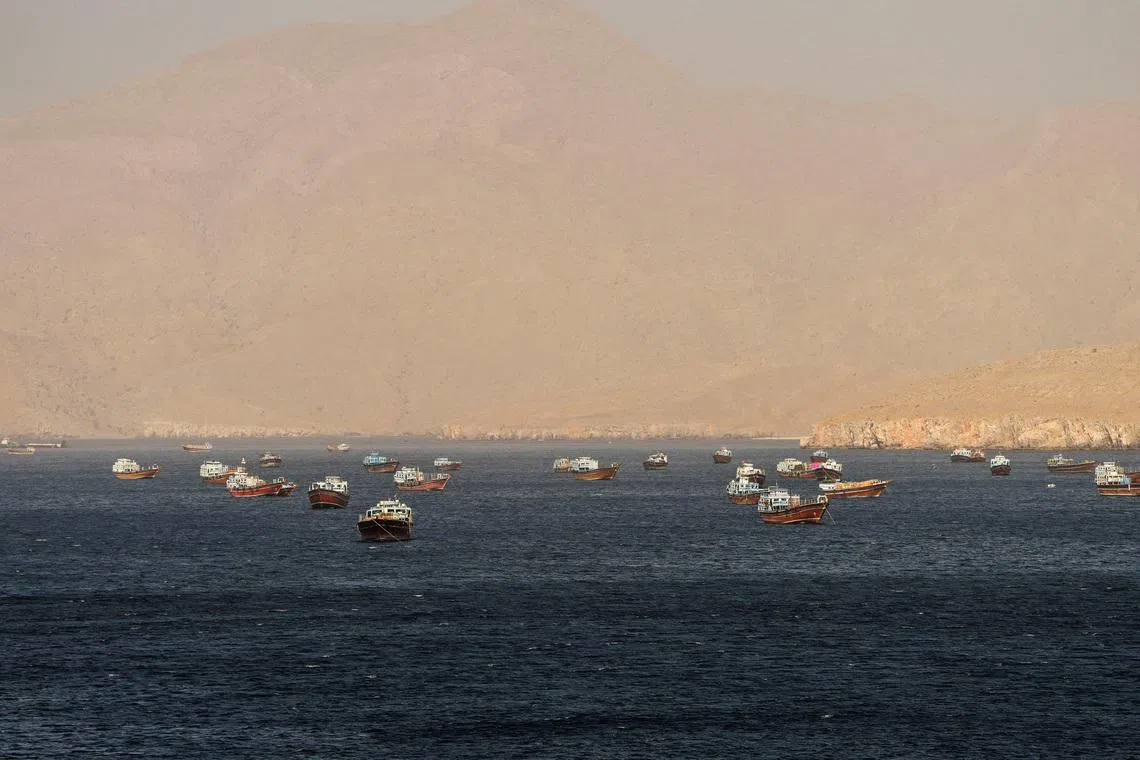
The communication of the Minister of Foreign Affairs of Iran, Abbas Araghchi, with the Minister of Foreign Affairs of Oman, Seyyed Badr al-Busaidi, regarding the management of navigation in the Strait of Hormuz reveals a critical aspect of Iranian power: Iran is not just a military player, but the key regulator of security in one of the most critical maritime passages on the planet.
The emphasis on the "temporary arrangements of 60 days", on the continuation of technical cooperation, on bilateral consultations, and on the diplomatic monitoring of developments shows that, despite the warlike atmosphere, Iran remains the only actor that can combine deterrent power with institutional management of the crisis.
This is of immense importance.
Because the Western and Israeli narrative attempted for years to present Tehran as a destabilizing force.
However, when the question is posed as to who can guarantee that Hormuz will not turn into a permanent hotbed of energy chaos, the answer is found neither in Washington nor in Tel Aviv, but in the understanding between Tehran and Muscat.
The Strait of Hormuz is the artery through which a significant part of the global energy flow passes. Whoever controls the security conditions there, controls much more than a maritime route: they affect the price of oil, transport costs, market security, and, ultimately, the political endurance of governments from Asia to the West.
The Iranian presence in this field is therefore not a regional detail. It is a global factor of power.
The war against Iran as an American political and economic shipwreck
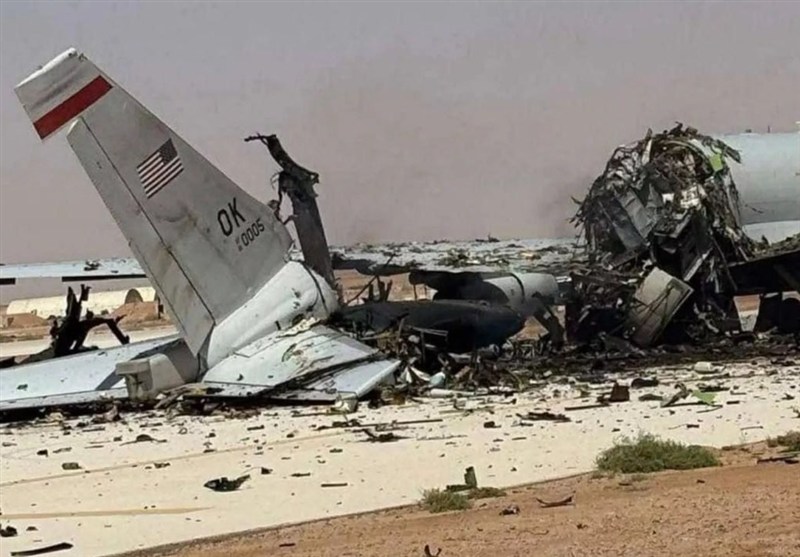
If the military front did not bring the capitulation of Iran, the economic and political cost for the USA is beginning to function as a catalyst for internal crisis in Washington.
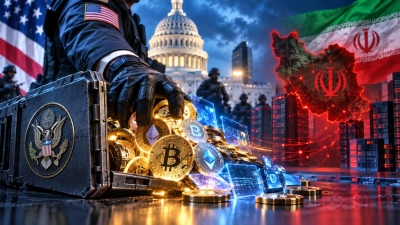
The reports about the "astronomical cost" of the war against Iran, the estimates moving from 29 billion dollars to tens or even hundreds of billions, as well as the information that the American Department of Defense requested an additional 80 billion dollars to cover war expenses, constitute not just a fiscal problem but a political defeat.
The essence is simple: the strategy of pressure against Iran was supposed to limit the influence of Tehran, halt its nuclear program, restore the deterrent power of Israel, and send a message throughout the region that American hegemony remains unquestioned.
Instead of this, Washington finds itself confronted with immense war costs, with turbulence in the energy market, with a rise in the prices of basic products, from fuel to chemical fertilizers, and with an ever-intensifying questioning at its interior.
Washington trapped between escalation and negotiation
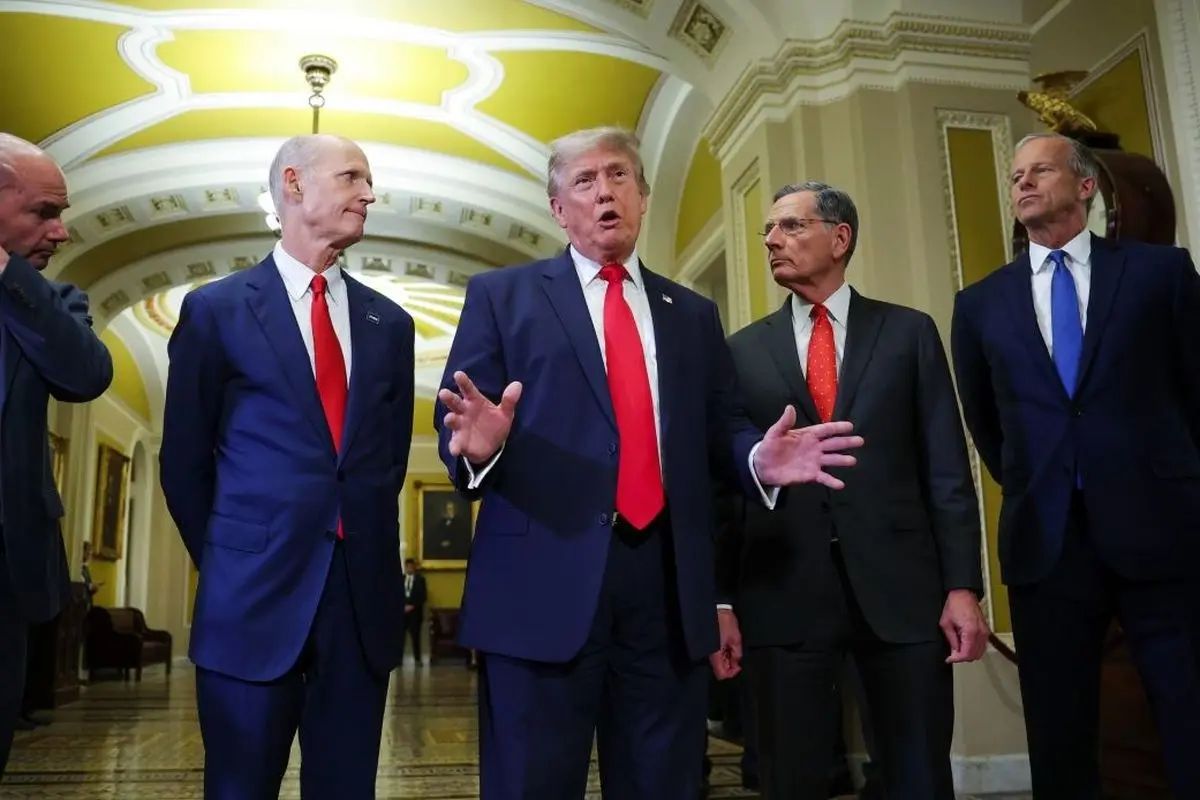
This precisely explains the increasingly frequent leaks that Donald Trump may, after the midterm elections, seek a new agreement with Iran.
The information that the present agreement or understanding was used to limit economic pressure and protect the Republican position in the elections is not an indication of American power; it is an indication of an American impasse.
When a president who built his profile politically upon the "hard line" toward Tehran is forced to consider a new agreement, this means that the strategy of frontal confrontation did not pay off.
The reopening or normalization of traffic in Hormuz and the need for some form of understanding with Tehran relieved, according to the same reports, a portion of the Republicans.
But at the same time, it enraged other circles of the party and naturally Israeli officials, who view any form of understanding with Iran as a "concession".
This internal rift is indicative: the USA no longer knows whether it wants to continue an expensive, dangerous, and ineffective war or whether it will be forced to accept Iran as an interlocutor and co-shaper of the security rules in the region.
The statement by Trump that he would consider an ultimate agreement that included "tolls" or transport costs in favor of Iran unacceptable is characteristic of this embarrassment.
On the one hand, Washington recognizes in practice that it cannot bypass Tehran on critical regional issues.
On the other hand, it attempts to present as a "red line" anything that would amount to an indirect recognition of Iranian power in Hormuz and on the maritime routes.
In other words, the American side is trying to negotiate with Iran without admitting publicly that it is negotiating from a position of relative weakness.
The game of pressures
Within this setting, the communication tactic of Washington appears increasingly contradictory.
On the one hand, scenarios about agreements, technical arrangements, controls, and inspections are circulated.
On the other hand, American and pro-Israeli media cultivate an atmosphere of permanent threat, presenting Iran as a source of danger that must be "controlled" or "stripped" of every strategic capability.
The description of this stance as a "dirty media game" is not an exaggeration.
It reflects the effort of Washington to negotiate at the table and simultaneously apply pressure in the field of imagery, so that it appears internally as unyielding and externally as a responsible power.
The nuclear program and the request for 672 million dollars - Goal is the disarmament of Iran without strategic guarantees
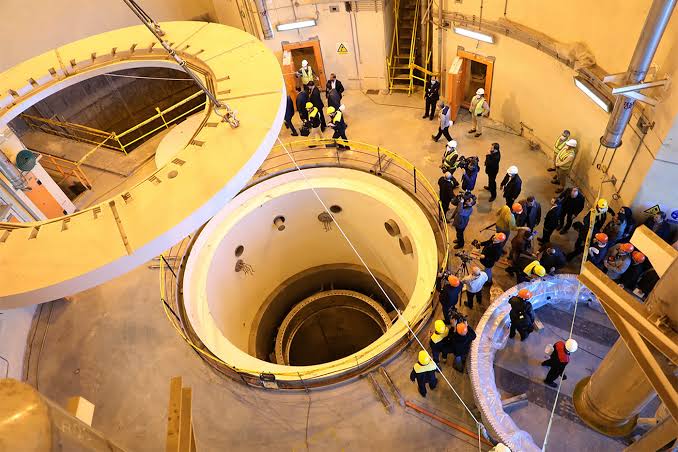
Extremely revealing is also the information that the Trump administration allegedly seeks 672 million dollars in funding to "destroy Iran's capability to develop nuclear weapons". According to the relevant narrative, this money would be directed toward the removal or destruction of enriched uranium and other sensitive nuclear materials, as well as toward inspections and verification mechanisms by the International Atomic Energy Agency.
Regardless of how exactly such a plan would be shaped, its political essence is clear: the USA seeks to turn the concept of an agreement into a mechanism for the strategic disarmament of Iran, without offering corresponding, unquestionable, and long-term guarantees of security, economic decompression, and lifting of threats.
That is, they ask Tehran to strip a critical field of national power, while Washington itself keeps open the possibility of new sanctions, new pressures, or even a new military escalation.
The Turkey factor and the failure to expand the anti-Iranian front
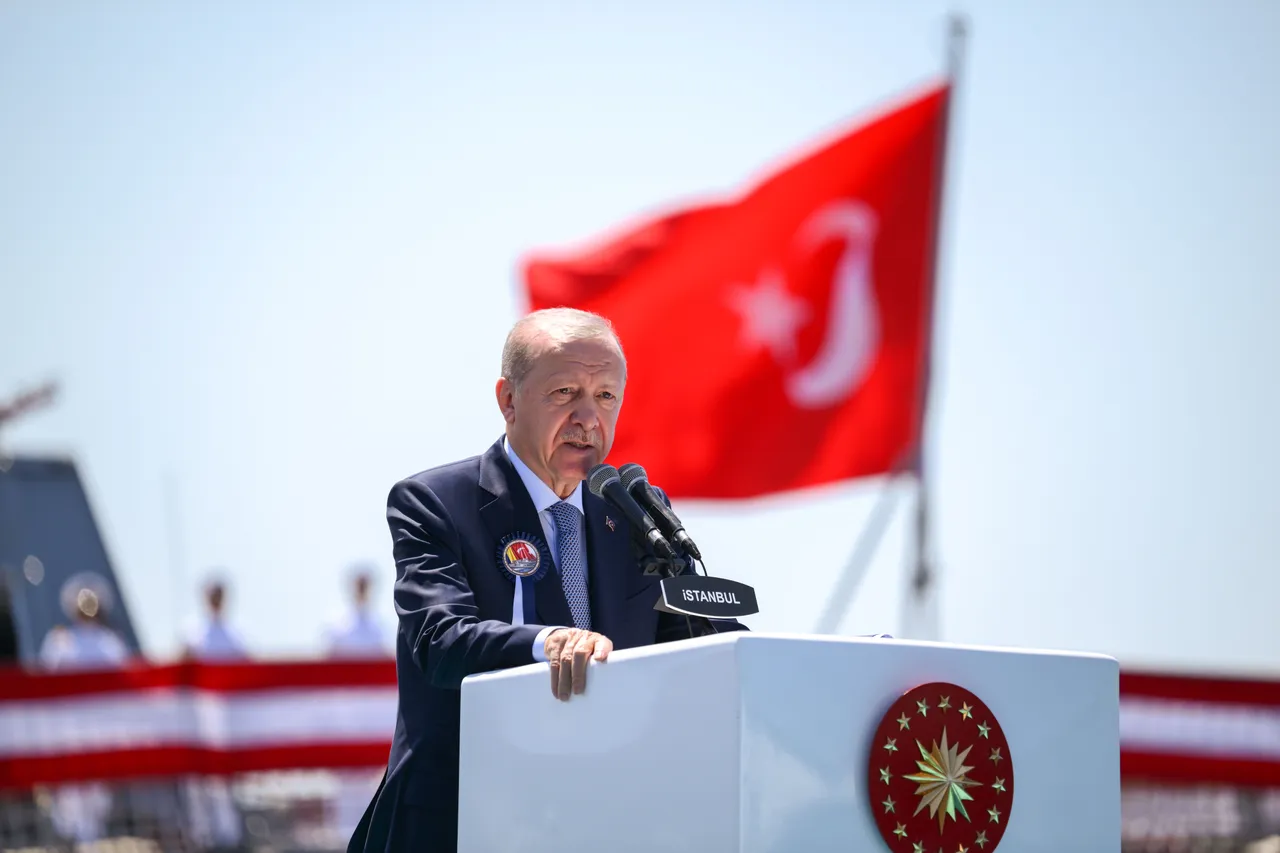
Of particular importance is also the mention that Recep Tayyip Erdoğan was among the primary candidates to enter the war with Iran, but ultimately did not get involved. Even if the relevant information falls within a field of political leaks and impressions, the essence remains critical: the anti-Iranian front did not manage to acquire the regional cohesion that Washington or Tel Aviv would desire.
Turkey, despite its contradictions, did not accede to an open military conflict with Iran.
This does not mean an identification of interests between Ankara and Tehran. It means, however, that regional reality is much more complex than Western formulas of "alliances" and "camps".
The inability to construct a unified, disciplined axis against Iran is by itself a success of the Iranian strategy.
Tehran has managed, through a combination of ideological influence, military deterrence, diplomatic openings, and geo-economic significance, to render any plan for its isolation extremely difficult.
The internal American crisis and the use of Iran as an electoral tool
At the same time, the American internal scene is sinking deeper and deeper into a climate where the war with Iran is turned into a tool for electoral management.
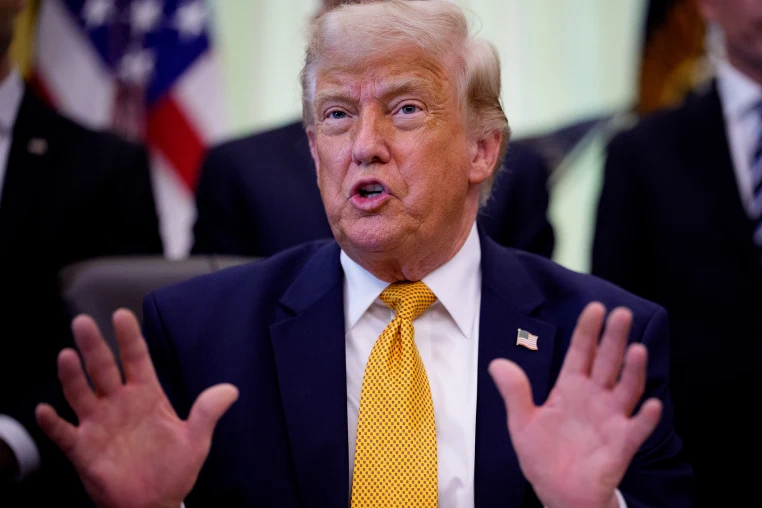
The effort by Trump to shift the discussion toward other themes, such as the impressive, yet highly questionable, claims about a reduction in drug prices by 400% to 800%, manifests his need to distract attention from the costs, the impasses, and the contradictions of his foreign policy.
When an administration finds itself confronted with an expensive war, with energy turbulence, with division in the interior of its party, and with the difficulty of presenting a clear victory against its main opponent in the region, then communication exaggeration becomes an inevitable refuge.
Iran, in this context, functions simultaneously as a bogeyman, as a negotiating lever, as a pretext for military budgets, and as an object of electoral rhetoric.
But precisely this overloading of the "Iranian threat" reveals the American impasse: Washington needs Iran as an enemy, because it is unable to manage the fact that it cannot bend it.
The era of unilateral American-Israeli enforcement is ending
The current juncture captures something deeper than a simple alternation of episodes in the Middle East.
It captures the gradual erosion of the model with which the USA and Israel attempted to unilaterally shape the regional order.
Iran, despite the weight of sanctions, despite the war of nerves, despite military and communication pressure, has managed to turn its survival into a strategic advantage.
Tehran does not appear simply as a state that endured.
It appears as a state that forced its opponents to recognize, even indirectly, that without it there can be no stability in Hormuz, that without it there can be no serious negotiation over regional security, and that any thought of its military crushing is too expensive, too dangerous, and probably doomed to fail.
In this sense, the real message of the latest developments is not that Iran is under pressure.
It is that, despite the pressure, it remains standing, present, and decisive. And in a changing Middle East, this is perhaps the most important victory of all.
www.bankingnews.gr



Readers’ Comments