

It will pass closest to Earth on Saturday at 14:14 (UTC +3, summer time), at a speed of 8.9 kilometers/second
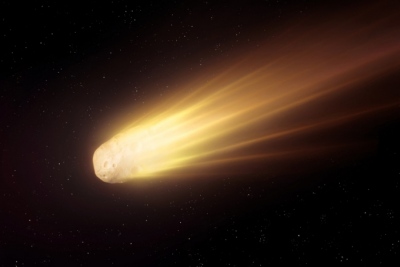
On Saturday, an asteroid will pass close to Earth, naturally posing no risk of collision, and it will be observable with small telescopes or large binoculars, as announced today by the European Space Agency (ESA). "The close passage to Earth of an object of such size occurs only every few years, although, this time, the bright and nearby Moon may hinder its observation at the moment the asteroid is closest to it," warns Juan Luis Cano of the ESA planetary defense office in the announcement.
This rocky space body, with a size of approximately 750-1,650 meters according to calculations based on the assessment of its albedo (the amount of sunlight it reflects), was discovered in 1997 and named (152637) 1997 NC1. According to other calculations of this albedo, it may, however, be smaller, the ESA clarifies.
It will pass closest to Earth on Saturday at 14:14 (UTC +3, summer time), at a speed of 8.9 kilometers/second. It will then be at a distance of 2,559,461 kilometers from our planet, which is 6.66 times the Earth-Moon distance, a fact that eliminates the possibility of a collision.
The asteroid will be observable from regions of the Northern Hemisphere during its approach phase, from almost everywhere at the moment it passes closest, and only from the Southern Hemisphere as it moves away from Earth. In parts of the world where it is night, one will theoretically be able to admire it with small telescopes, and even with large binoculars, the ESA reports.
www.bankingnews.gr










Readers’ Comments