

Who is telling the truth about the US-Iran deal? Donald Trump proclaims that Tehran has already accepted strict nuclear inspections, US control of billions of dollars in Iranian funds, and permanent free passage through the Strait of Hormuz. Iran, however, denies almost every one of these claims, maintaining that it has undertaken no new commitments beyond those provided for by existing procedures and described in the memorandum of understanding. The diametrically opposed positions of American and Iranian officials on the critical issues they are negotiating demonstrate how difficult and complex the talks to reach a final peace agreement are expected to be in the coming period. Judging by their claims, the conclusion that can be safely drawn is that the talks—provided they have not collapsed—will far exceed the 60-day limit to reach a deal. And while Trump may claim that he has "Iran on the ropes" and that "they are willing to give almost everything," it is obvious once again that his claims are falling on deaf ears.
They signed one thing, they agreed on another
Since the memorandum of understanding (MOU) was made public last week, which appeared to lean heavily in Iran's favor, the Trump administration has continued to claim that Tehran has also agreed to other significant concessions within the framework of ongoing negotiations. The problem is that none of these appeared in the MOU—and Iran continues to deny them. And given the proven credibility problems of the Trump administration itself, it is not at all clear who one should trust.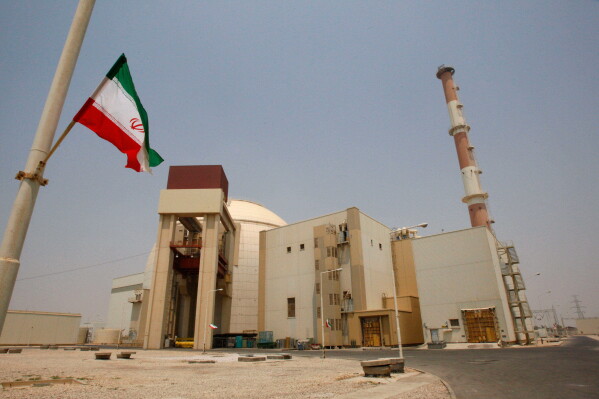
Nuclear inspections
The most characteristic example came yesterday, Tuesday 24/6, when US President Donald Trump made the momentous claim that Iran has already agreed to extensive nuclear inspections indefinitely. "...Iran has agreed fully and completely to the highest level of nuclear inspections for a very long time in the future (Forever!!!)," he wrote on Truth Social. "This will ensure 'Nuclear Honesty.' If they hadn't agreed to this, there would be no further negotiations!"
What Vance said
Similarly, Vice President JD Vance, at a press conference on Monday in Switzerland, spoke of an "important milestone." He said Iran agreed to accept inspectors from the International Atomic Energy Agency (IAEA).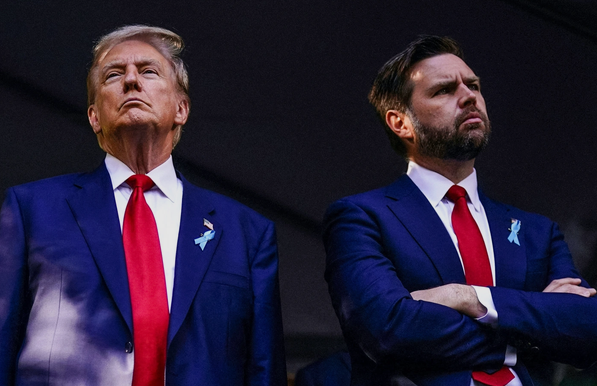
Iran denies it
But Iran rejected the idea that there has been any significant progress on this front. Instead, it stated that its cooperation with the IAEA, the United Nations' nuclear watchdog, would continue "in accordance with existing procedures." Iranian Foreign Ministry spokesman Esmail Baghaei stated that Iran has not agreed to allow inspectors to examine its seriously damaged nuclear facilities and that it has undertaken "no new commitments."
Limited access
Indeed, despite Vance's claim of significant progress, the IAEA already has limited access to Iran. Therefore, the mere fact that inspectors will be allowed entry does not in itself constitute a major step forward. More extensive inspections were also a key element of the Iran deal under the Obama administration, from which Trump withdrew. However, Trump did not back down on Tuesday afternoon as he headed to an event in Pennsylvania. "They're wrong, they're wrong," he told reporters, referring to the Iranians. "We have it on record: 100% inspections. And if they were right, I would cancel the meetings right now," the American president said.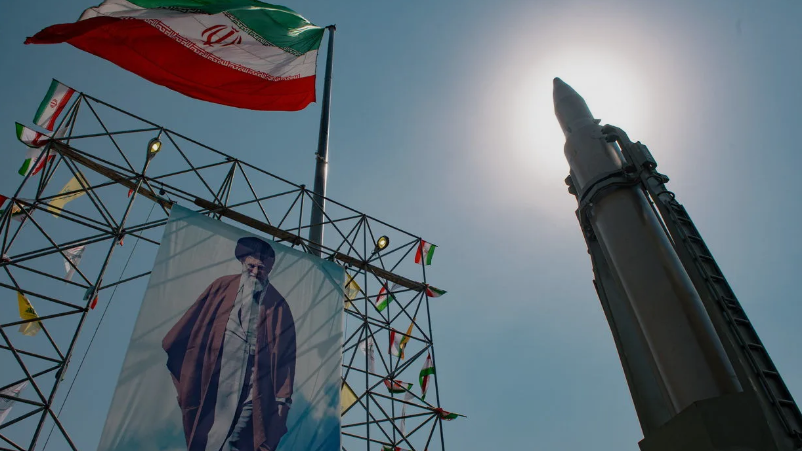
Iran's assets and US food
The Trump administration also claimed this week that the many billions of dollars in Iranian assets that will be released as part of a peace deal will be used to purchase American products. It has made this claim as it attempts to counter criticism that Iran could use this money, along with at least $300 billion in reconstruction funds from Gulf countries, to rebuild its military or fund terrorism. Even many conservatives have protested the extensive economic concessions to Iran in the deal.
The Kushner plan
Vance stated that chief negotiator Jared Kushner had drafted a plan under which the spending of this money would be approved by the United States and Qatar. He added that "the money will then be used to buy American soybeans, American corn, and American wheat for the benefit of the Iranian people." "If Iranian assets are ever released, they will make American farmers richer and help feed the Iranian people," Vance said. US Ambassador to the United Nations Michael Waltz later stated on Monday on Fox News that "they will buy American crops."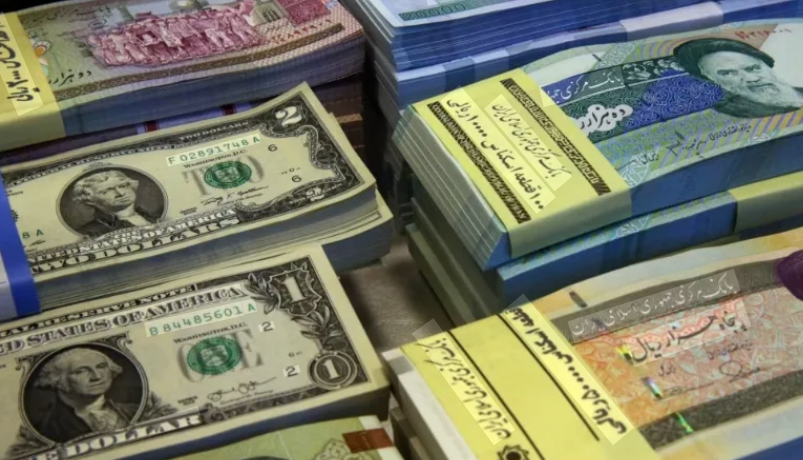
The US will control
Trump added on Tuesday morning, 23/6, in his social media post, that the money would be "controlled by the US and used exclusively for the purchase of food and medical supplies from the United States." But when Fox journalist Laura Ingraham pressed Waltz on how binding the deal is, he hinted that the matter is still under negotiation. He stated that "how we will control" the money is something "we are negotiating right now."
Absolute freedom
And Iran's ambassador to the United Nations, Ali Bahreini, rejected this idea on Tuesday. "Iran is the only country that decides what it will do with its assets," Bahreini stated. He added: "I reject any claim that any other country will have a role or influence in these decisions or processes."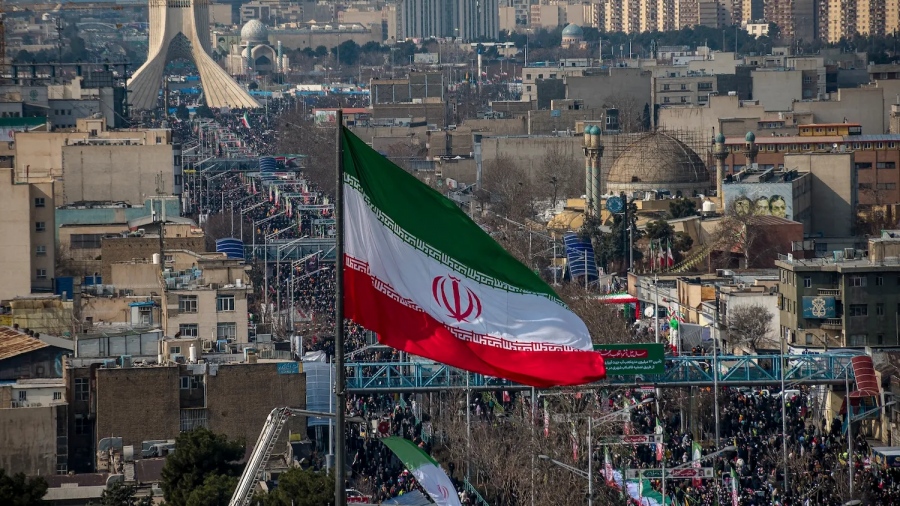
The Strait of Hormuz with no fees
The MOU states that passage of ships through the Strait of Hormuz, which Iran has used as a significant leverage by closing them, will be allowed "at no charge, for 60 days only." What will happen after that is something the two sides do not agree on. Trump stated last week at the G7 summit in France that the straits will also remain "toll-free" after the 60 days. "Someone said it's no charge for... no, no, it's no charge, period," Trump said last Tuesday. "When it opens permanently, it will be no charge," he said characteristically. He added that "we have an agreement that it will be open and free of charge. We had a little disagreement on that; it's no charge." Trump had previously given a similar assurance in an interview with David Sanger of the New York Times, saying that the straits would be "permanently toll-free." These positions were reiterated earlier today, Wednesday, June 24, from Abu Dhabi by US Secretary of State Marco Rubio.
What Iran says
But Iran has not said any such thing. On the contrary, it has announced a plan under which it will impose "fees" for certain services. And the New York Times reported that it has already implemented this plan. The mere fact that the MOU provides for a fee waiver for only 60 days suggests that this is a real point of contention. And the disagreement appears to be still quite serious—despite Trump's assurances—so much so that last weekend he threatened to "take control" of the straits and have the United States impose transit fees.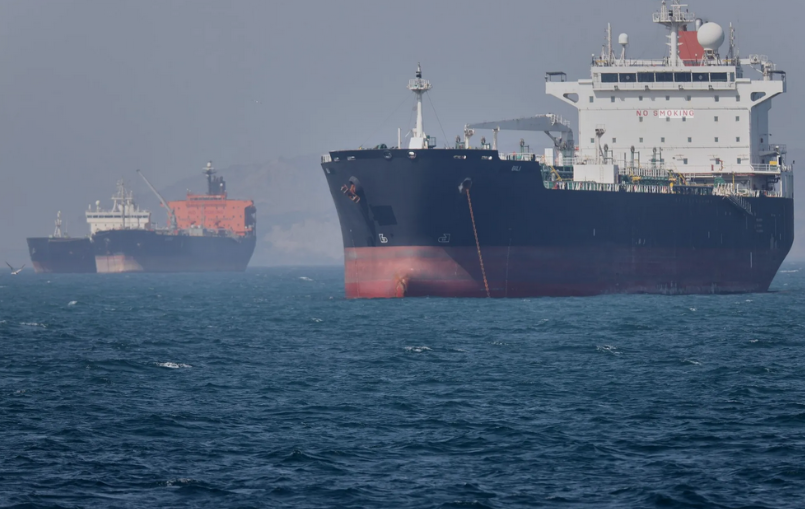
Missile program off the table
At the same time, Iranian President Masoud Pezeshkian stated that Tehran will never negotiate its defensive and deterrent capabilities, arguing that the country's missile arsenal prevented Iran from suffering the same fate as Gaza. Speaking alongside Pakistan's Prime Minister Shehbaz Sharif, who is a top mediator in the US-Iran talks, Pezeshkian stated that Iran will not, under any condition, discuss its defensive and deterrent capabilities with any party. "We will never negotiate our defensive capabilities with anyone," he said. "If we hadn't built the missiles we needed to defend ourselves, Israel and the United States would have treated Iran like they treated Gaza, without showing mercy to either the elderly or the young," the Iranian president emphasized.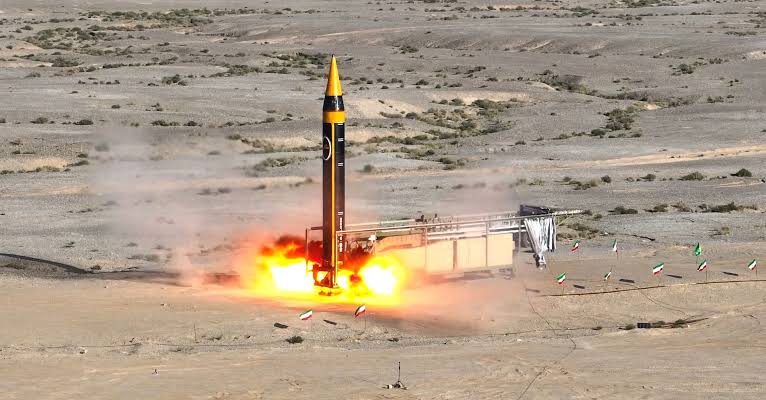
Who to believe?
The answer to this question is usually quite easy—especially when it comes to authoritarian regimes like Iran. However, Trump's tendency to make exaggerated and false claims makes the issue more complicated. After all, this is a president who, more than three dozen times in a span of over two months, claimed that a deal with Iran was imminent. More than two months ago, he had stated that Iran had already "agreed to everything" he demanded—while obviously, no such thing had happened. Similarly, Trump and his administration claimed that last year's strikes against Iran's nuclear facilities had "completely eliminated" its nuclear program. Trump even went so far as to say that the strikes had also eliminated "Iran's future nuclear capability."
Consistently denied
But CNN and other American and Western media reported that initial assessments by US intelligence agencies did not confirm these claims. And indeed, eight months later, Trump was starting a war, again citing the alleged immediate nuclear threat posed by Iran. Simply put: the Trump administration also faces a serious credibility problem. And this also applies to the known terms of the current negotiations. For example, before the MOU was released last week, Trump was asked if it included "a $300 billion fund financed by Gulf allies." He replied that this was "false." However, the MOU does indeed include such a reconstruction fund.
The Iranians were vindicated
Vance and the administration also generally dismissed claims by Iranian media regarding the MOU as "propaganda." A White House spokesman also stated that a draft of the MOU published by CNN last week "does not reflect the wording of the actual MOU." However, many of the Iranians' claims were eventually confirmed in the MOU itself. And the final document was similar to the draft that CNN had published, with some differences in wording. It is also worth asking: if some of these concessions to the American side were so binding and could be agreed upon so quickly, why were they not included in the MOU? Why was this document so heavily oriented toward Iranian interests? The Trump administration has argued that this is due to sensitive political balances on the Iranian side of the negotiations—even that there are some secret gentlemen's agreements that were not recorded in the document. But political balances are fragile in the United States right now, too. And the administration's "just trust us" approach may not be enough.
Trump against the Senate on war powers: I have Iran... on the ropes
US President Donald Trump reacted to the Senate's passage of a war powers resolution, which asks him to end any military action against Iran. "I have Iran on the ropes, ready to collapse, willing to give us almost everything and, for the first time in decades, to absolutely respect the United States and its President, ME, and the US Senate decides to hold an ill-timed and meaningless vote on the War Powers Act," Trump wrote on the X platform. According to him, the resolution sends a message to the "Number One Sponsor of Terrorism in the World" that "the United States doesn't like what I'm doing to them and that I should stop," adding that in this way, "aid and support is being provided to the enemy." The president continued by criticizing the four Republican senators who joined the Democrats and voted for the resolution. "These senators just made my job harder, but I will get it done, one way or another, because I always do!" Trump declared.
The Senate's decision
It is noted that the Senate approved by a vote of 50 to 48 a resolution to suspend war with Iran. Four Republican senators voted for the measure, which now requires, for the first time, that President Donald Trump secure Congressional approval before any further military action. This decision is significant because this measure has already been approved by the House of Representatives. There have been several attempts in the past to pass it through the Senate, but it had never managed to secure the required support. This time it succeeded because four Republicans voted with the Democrats.
What the resolution defines
In essence, this resolution stipulates that the United States cannot return to war with Iran without receiving the approval of Congress. For now, of course, peace talks are underway, so there is no immediate indication that such a thing is about to happen. However, the White House does not seem to attach much importance to the resolution. It cannot veto it, but it considers that it lacks substantive legal force. And of course, if the war were to continue and the resolution had been passed, the administration could challenge its constitutionality, reaching even the Supreme Court. The White House says the president has the right to decide whether the United States is threatened and whether or not to launch a military attack. However, this is a significant development as, among other things, it essentially constitutes the first major rift between the Republicans in the Senate and Trump during his second term in the White House.
Rubio (US Secretary of State): Iran has "an opportunity to achieve incredible things"
US Secretary of State Marco Rubio argued that if Iran decides "to become a country instead of a revolutionary movement," it could benefit from new economic opportunities, including investments. "They will have the opportunity to do incredible things in Iran," Rubio said. "I am not promising you that this will be the choice they make. I am saying that, if this is the choice they make, then there will be opportunities, and those opportunities could include investments, as you have seen other countries in the region benefit from investments and foreign direct investment. It will not be our own investments. It will not be our government's money," stated Rubio, who added that Iran's political path will depend on whether progress is made on "a series of other security issues," which will be discussed in the coming days. Rubio also stated that Iran will not be able to impose transit fees in the Strait of Hormuz when the final agreement is reached, while he emphasized that the negotiations on Lebanon will remain separate from the US talks with Tehran.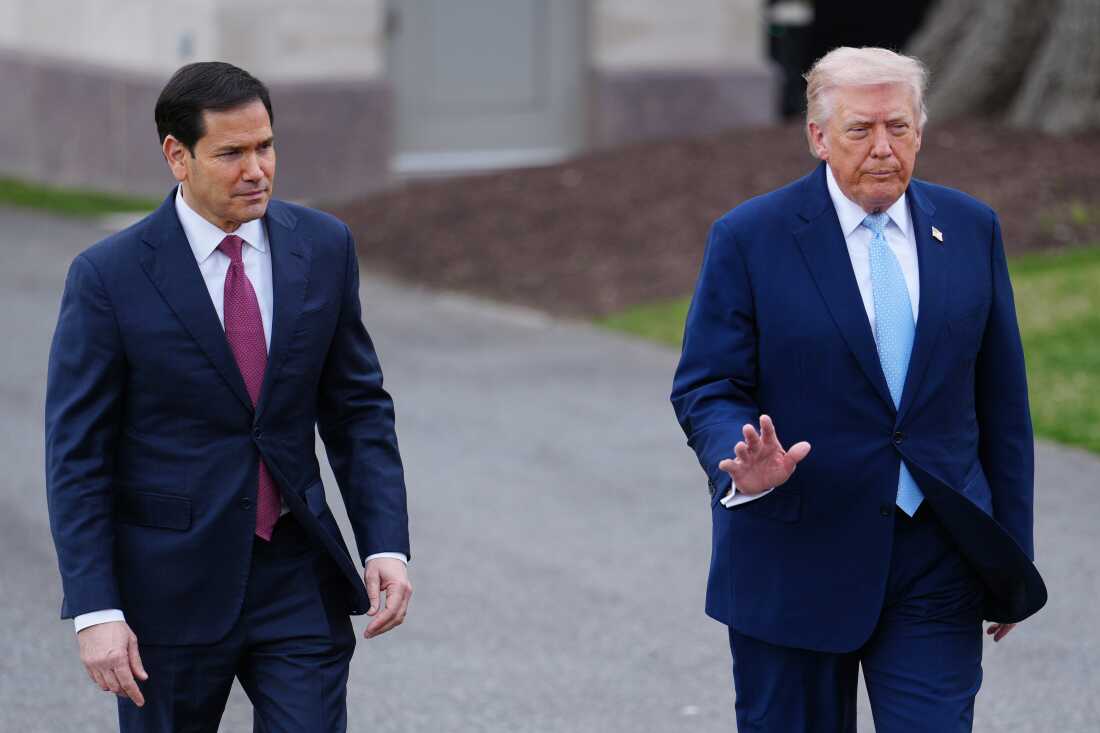
Wall Street Journal: The background of the latest round of US-Iran talks
The Wall Street Journal, in its report, referred to the particularly tense atmosphere that prevailed in the latest round of negotiations between Iran and the United States in Switzerland, as well as the intense and categorical reaction of the Iranian negotiating team. As reported, after Trump's threats against Iran were made public in the media regarding a possible military attack, the Iranian delegation led by Mohammad Bagher Ghalibaf characterized these actions as a flagrant violation of the existing agreed frameworks and highlighted its distrust of approaches based on threats. The report states that, despite the American side's efforts to downplay and "normalize" these threats, the Iranian negotiating team, through careful management of the tension, managed to secure a 15-day period of calm. At the same time, in the technical aspect of the negotiations, Iran reportedly prevented American pressure to link issues concerning the International Atomic Energy Agency (IAEA) with nuclear agreements. However, the American side still insists that the role of the IAEA must be maintained as a separate and independent channel of procedures.
www.bankingnews.gr







Readers’ Comments