

Beneath a thin layer of hospitable waters, the Black Sea conceals a giant reservoir of poisonous gas. Nine-tenths (90%) of its total volume is filled with hydrogen sulfide, the concentration of which is constantly increasing. Natural dams keep the toxic zone trapped at the bottom, but human intervention and climate change are now pushing it toward the surface.
The primordial cataclysm and the death of the ecosystem
About 7,000 years ago, in place of today's sea, there was a vast freshwater lake, the level of which was 100 meters lower than it is today. Around 5600 BC, the melting of glaciers raised the level of the global oceans, causing the salty waters of the Mediterranean to break through the isthmus of the Bosphorus. A biblical flow of water, one kilometer wide, flooded the coasts at a speed of 15 centimeters per day. The heavy, salty water of the Mediterranean sank to the bottom, displacing the lighter masses of lake water upward. Billions of tons of organic matter (freshwater fish and plants) died instantly and sank. There, in conditions of total oxygen deprivation, decomposition began. Sulfate-reducing bacteria that undertook to "devour" this sediment began to release hydrogen sulfide, turning the lake into a global storehouse of poison.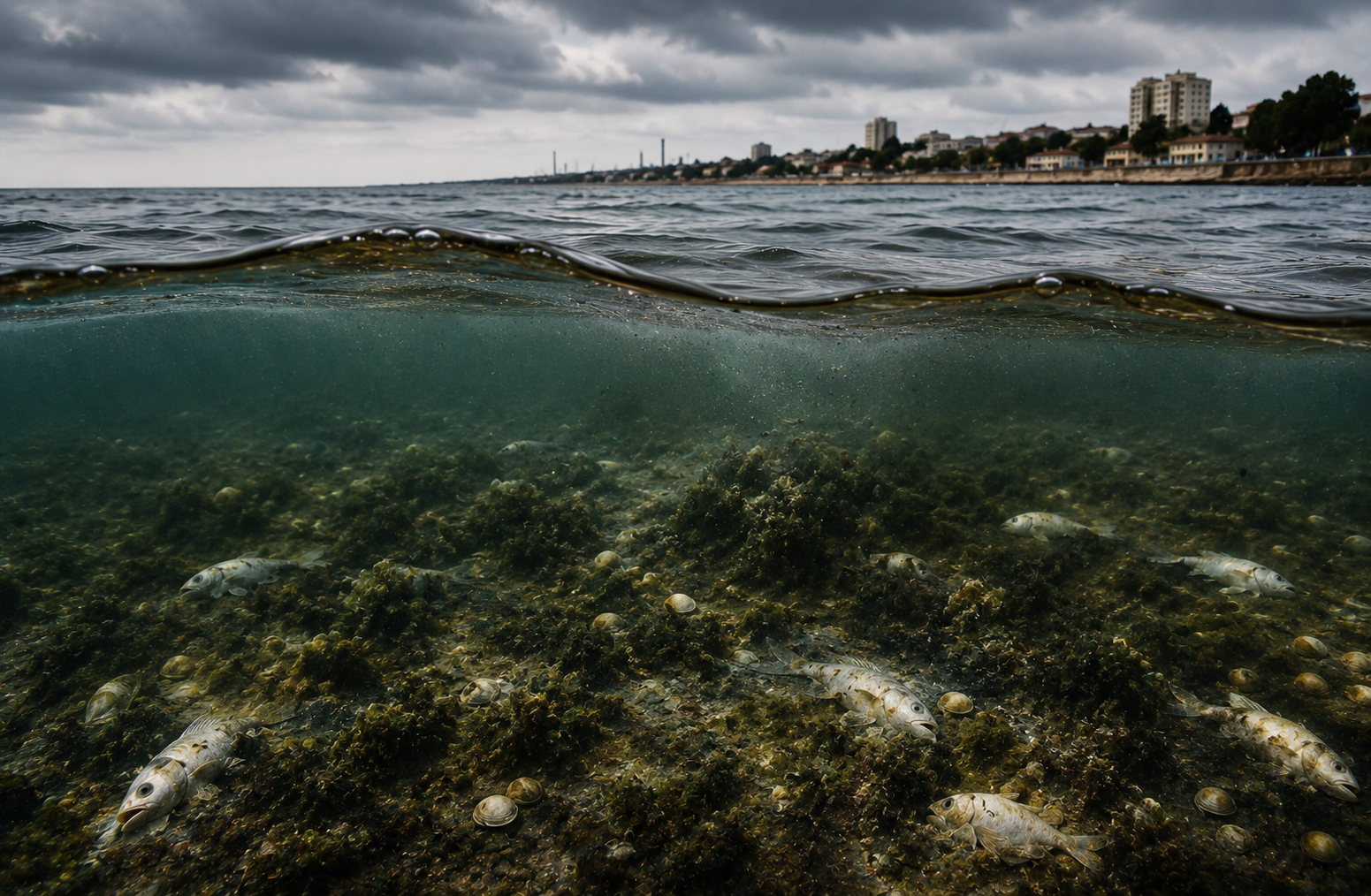
The two "floors" of the Black Sea
The sea is clearly divided into two worlds:
-
The living layer (0-150 meters): The surface layer has a salinity of about 18‰ (half that of the Mediterranean). There is oxygen here, and dolphins, fish, and algae thrive.
-
The dead zone (From 150 meters to the bottom): Here, oxygen disappears completely and is replaced by hydrogen sulfide. In the deeper layers, the gas concentration reaches 11 milligrams per liter.
Between these two worlds is a narrow transition zone, about 20 meters thick, called the chemocline. Fish cannot cross this border, as the gas instantly blocks cellular respiration. The total volume of hydrogen sulfide in the Black Sea is estimated at 4.6 billion tons, making it the planet's largest toxic trap.
-
The time-capsule paradox: The absolute absence of oxygen at the bottom creates a unique phenomenon of natural preservation. Archaeologists discover ancient Greek and Roman shipwrecks that appear intact, as organisms that feed on wood (such as the shipworm) cannot live in this environment, nor can erosion occur. Time down there has literally frozen.
Why do the water layers not mix?
The layers are held in place due to the massive difference in density. The deep water is much colder and saltier (and therefore heavy), so it sits motionless at the bottom. In contrast, the surface waters are renewed and become lighter from the fresh water of huge rivers, such as the Danube and the Dnieper. This difference acts like an "invisible concrete roof" that not even the strongest storms can penetrate. Furthermore, the Bosphorus is very shallow (not exceeding 27 meters in depth) to allow for proper recirculation and cleansing of the waters from the depths, turning the Black Sea into an isolated, closed system.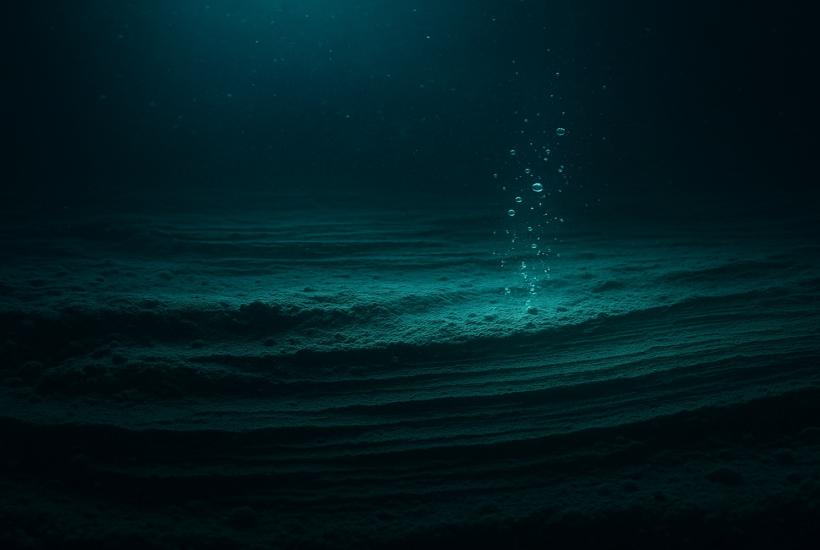
The ecological threat: The poison is rising
As long as the hydrogen sulfide remains trapped under the tremendous pressure of the water, there is no danger to people on the coasts. However, intense seismic activity can cause local fumes. In 1927, after a strong earthquake in Crimea, residents felt a strong smell of sulfur, and there were even reports of flames on the sea surface from gas ignition. The real danger, however, is not a sudden explosion, but the slow strangulation of the ecosystem. Over the last 30 years, the "border of death" has risen by 10-15 meters. While it was previously stable at 150 meters, today in some areas it is found even at 80 meters from the surface!
The human factor accelerates the evil
The cause of this alarming rise is primarily anthropogenic. Chemical fertilizers washed from fields and ending up in rivers cause the phenomenon of eutrophication (excessive growth of algae on the surface). When these plants die, they fall en masse to the bottom, increasing the "food" for the bacteria that produce hydrogen sulfide. At the same time, dams on rivers change the flow of fresh water, while overfishing destroys biodiversity. As climatologists warn, with the constant rise in the planet's temperature and pollution, humans are essentially "feeding" and growing a giant, toxic bomb in Europe's backyard.
www.bankingnews.gr






Readers’ Comments