

Government surpluses "generate" deficits for citizens, notes the professor at Bard College in New York and Honorary President of the Levy Institute
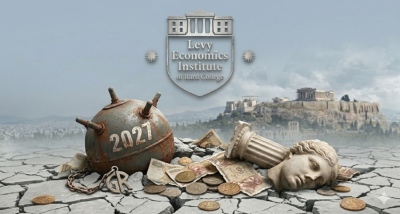
Levy Institute warns of a future Greek economic crisis fueled by private debt ‘time bomb’
A worrying warning signal about the trajectory of the Greek economy is being sounded by Dimitri B. Papadimitriou, Honorary President of the Levy Institute and professor at Bard College. Challenging the dominant success narrative, he warns of a visible risk of a new structural crisis in the foreseeable future.
In an exclusive interview with Banking News and journalist Nikos Bartzeliotis, he analyzes the country's deep macroeconomic paradox: how the persistent pursuit of high primary budget surpluses inevitably translates into suffocating deficits and a growing burden of private debt for households and businesses.
Indeed, with the Recovery and Resilience Facility (RRF) set to complete its cycle in 2026, inflation eroding purchasing power, and the current productive model reaching the limits of what he describes as a “coffee economy,” the outlook for the period ahead appears highly uncertain.
Contrary to the optimistic forecasts of the government and international organizations, Papadimitriou’s assessment serves as a warning: if the recent crisis was born out of public debt, the next threat is already here—and it goes by the name of private debt.
The Levy Institute suggests that after 2027 the Greek economy may enter a new phase of crisis. What are the three key indicators that lead you to this assessment, and why do they differ so significantly from the forecasts of the Greek government, the European Commission, and the IMF?
Given the available statistics the primary drivers of growth for the past few years were consumption, and investment mainly emanating from the RFF of the EU which will end in 2026 with a small spillover effect in 2027. In the absence of continuing investment funding from the EU, the government’s bias in producing a budget surplus every year and the stubbornly high inflation rate will result in the primary growth drivers suffering a decrease. This will not bode well for the growth prospects for 2027 and beyond. To be sure, tourism will continue to play a significant role, but its net contribution in driving growth has been very limited since a considerable amount of products related to tourism is imported and thus decreasing growth. Imports continue to be a significant negative factor and no public policy has been announced to increase net exports that would contribute positively to economic growth.
How do you explain the paradox of an economy that continues to grow in GDP terms while real purchasing power and living standards remain among the lowest in the European Union?
Growth in GDP terms is very much different from equitable growth. The high level of indirect taxes (VAT), together with continuing inflation and stagnant wages reduce disposable income and affordability. It has been shown that the cost of necessary, basic goods including energy, telephony and other services are more expensive in Greece than the corresponding goods and services in other EU member states. This reduces the purchasing power and since this phenomenon has continued, Greece has been faced with the lowering trend of purchasing power.
You have described elements of a “café economy” dependent on tourism and services. What should be the core components of a new productive model for Greece, and how long might such a transformation realistically take?
The economy of Greece is mistakingly assumed to be a tourism-driven growth economy (its citizens being the waiters of Europe in Andreas Papandreou's words); thus, the "cafe economy” with no prospects of serious diversification to sectors that would lead to a revised productive model focused on energy production (solar and wind power), manufacturing (higher technology content production), promotion and tax-incentives for higher technology start-ups (software engineering) with productivity-increased effects in manufacturing and agriculture satisfying both domestic and foreign demand. This will reduce dependence on imports and reverse the ever increasing trade and current account deficits
Do you believe that the Recovery and Resilience Facility (RRF) represented a missed opportunity to structurally transform the Greek production model? If so, is there still room for correction?
The simple answer is yes; the RFF is a missed opportunity for the Greek economy’s structural transformation. The RFF funds were mostly used for continuing “business as usual” and putting a band-aid on public expenditures despite their European intended focus on productivity enhancing investments, "greening” the economy and upscaling government services. To be sure, some of these have taken place, but very much fewer that could have transformed the economy.
With the re-emergence of Alexis Tsipras in the public debate, do you see space in Greek society for an alternative economic narrative to the current model based on fiscal discipline and high primary surpluses?
If the government budgets continue to be biased toward “fiscal discipline and high primary surplus generation,” I do not see the potential of significant changes in the current economic model. The re-emergence of Alexis Tsipras might change the priorities of public policy, i.e. health, education, more progressive direct and indirect taxation decreasing regional and household inequality, but would not affect significantly the current productive model. It is possible, however, that iF an increased EU budget is approved, this might offer renewed opportunities for structural transformation. But notice there is a big IF.
As a former Minister during the 2015–2019 period, do you see today a return of structural issues that were central during that time, such as wage stagnation, inequality, and weak domestic demand?
My portfolio was focused on the economy and its development. The current economic condition of the below average and average household is characteristically bad. Survey after survey —including Eurostat surveys —show the household difficulties in making ends meet. Even though some surveys show the participants' better economic condition in 2019 than currently, there is a very high probability that wages will continue to be stagnant, despite the gradual increase of the minimum wage to comply with the European Directive. The continued deterioration of disposable income will worsen inequalities and the fortunes of the Greek people weakening domestic demand.
Is Greece at risk of repeating, in a different form, the macroeconomic imbalances that led to the 2009–2013 crisis, particularly through the continued compression of private sector financial balances?
The macroeconomic identity linking the private, public and external sectors is not a theory, but a relationship that informs policy. Since the total of the sectoral financial balances must add to zero, a continued public sector surplus will necessarily create a growing private sector deficits and debt. This cannot continue for a long time and will ultimately lead to a crisis. The over-indebted private sector will adversely affect domestic demand, increase the cost of financing the external growing debt, engender financial instability and throw the economy into recession. The 2009-2013 crisis was the result for the increasing public sector deficits while the private sector was in surplus. The incoming crisis will be the result of the non-sustainability of private sector accumulated debt.
What should be its core economic strategy for Greece over the next decade?
Less reliance on tourism, structural transformation of the economy aiming at a much lesser dependence on imports as indicated in the answer to Question 3.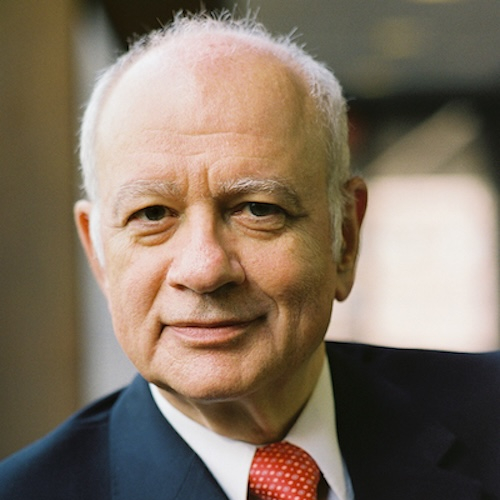
www.bankingnews.gr
A worrying warning signal about the trajectory of the Greek economy is being sounded by Dimitri B. Papadimitriou, Honorary President of the Levy Institute and professor at Bard College. Challenging the dominant success narrative, he warns of a visible risk of a new structural crisis in the foreseeable future.
In an exclusive interview with Banking News and journalist Nikos Bartzeliotis, he analyzes the country's deep macroeconomic paradox: how the persistent pursuit of high primary budget surpluses inevitably translates into suffocating deficits and a growing burden of private debt for households and businesses.
Indeed, with the Recovery and Resilience Facility (RRF) set to complete its cycle in 2026, inflation eroding purchasing power, and the current productive model reaching the limits of what he describes as a “coffee economy,” the outlook for the period ahead appears highly uncertain.
Contrary to the optimistic forecasts of the government and international organizations, Papadimitriou’s assessment serves as a warning: if the recent crisis was born out of public debt, the next threat is already here—and it goes by the name of private debt.
The Levy Institute suggests that after 2027 the Greek economy may enter a new phase of crisis. What are the three key indicators that lead you to this assessment, and why do they differ so significantly from the forecasts of the Greek government, the European Commission, and the IMF?
Given the available statistics the primary drivers of growth for the past few years were consumption, and investment mainly emanating from the RFF of the EU which will end in 2026 with a small spillover effect in 2027. In the absence of continuing investment funding from the EU, the government’s bias in producing a budget surplus every year and the stubbornly high inflation rate will result in the primary growth drivers suffering a decrease. This will not bode well for the growth prospects for 2027 and beyond. To be sure, tourism will continue to play a significant role, but its net contribution in driving growth has been very limited since a considerable amount of products related to tourism is imported and thus decreasing growth. Imports continue to be a significant negative factor and no public policy has been announced to increase net exports that would contribute positively to economic growth.
How do you explain the paradox of an economy that continues to grow in GDP terms while real purchasing power and living standards remain among the lowest in the European Union?
Growth in GDP terms is very much different from equitable growth. The high level of indirect taxes (VAT), together with continuing inflation and stagnant wages reduce disposable income and affordability. It has been shown that the cost of necessary, basic goods including energy, telephony and other services are more expensive in Greece than the corresponding goods and services in other EU member states. This reduces the purchasing power and since this phenomenon has continued, Greece has been faced with the lowering trend of purchasing power.
You have described elements of a “café economy” dependent on tourism and services. What should be the core components of a new productive model for Greece, and how long might such a transformation realistically take?
The economy of Greece is mistakingly assumed to be a tourism-driven growth economy (its citizens being the waiters of Europe in Andreas Papandreou's words); thus, the "cafe economy” with no prospects of serious diversification to sectors that would lead to a revised productive model focused on energy production (solar and wind power), manufacturing (higher technology content production), promotion and tax-incentives for higher technology start-ups (software engineering) with productivity-increased effects in manufacturing and agriculture satisfying both domestic and foreign demand. This will reduce dependence on imports and reverse the ever increasing trade and current account deficits
Do you believe that the Recovery and Resilience Facility (RRF) represented a missed opportunity to structurally transform the Greek production model? If so, is there still room for correction?
The simple answer is yes; the RFF is a missed opportunity for the Greek economy’s structural transformation. The RFF funds were mostly used for continuing “business as usual” and putting a band-aid on public expenditures despite their European intended focus on productivity enhancing investments, "greening” the economy and upscaling government services. To be sure, some of these have taken place, but very much fewer that could have transformed the economy.
With the re-emergence of Alexis Tsipras in the public debate, do you see space in Greek society for an alternative economic narrative to the current model based on fiscal discipline and high primary surpluses?
If the government budgets continue to be biased toward “fiscal discipline and high primary surplus generation,” I do not see the potential of significant changes in the current economic model. The re-emergence of Alexis Tsipras might change the priorities of public policy, i.e. health, education, more progressive direct and indirect taxation decreasing regional and household inequality, but would not affect significantly the current productive model. It is possible, however, that iF an increased EU budget is approved, this might offer renewed opportunities for structural transformation. But notice there is a big IF.
As a former Minister during the 2015–2019 period, do you see today a return of structural issues that were central during that time, such as wage stagnation, inequality, and weak domestic demand?
My portfolio was focused on the economy and its development. The current economic condition of the below average and average household is characteristically bad. Survey after survey —including Eurostat surveys —show the household difficulties in making ends meet. Even though some surveys show the participants' better economic condition in 2019 than currently, there is a very high probability that wages will continue to be stagnant, despite the gradual increase of the minimum wage to comply with the European Directive. The continued deterioration of disposable income will worsen inequalities and the fortunes of the Greek people weakening domestic demand.
Is Greece at risk of repeating, in a different form, the macroeconomic imbalances that led to the 2009–2013 crisis, particularly through the continued compression of private sector financial balances?
The macroeconomic identity linking the private, public and external sectors is not a theory, but a relationship that informs policy. Since the total of the sectoral financial balances must add to zero, a continued public sector surplus will necessarily create a growing private sector deficits and debt. This cannot continue for a long time and will ultimately lead to a crisis. The over-indebted private sector will adversely affect domestic demand, increase the cost of financing the external growing debt, engender financial instability and throw the economy into recession. The 2009-2013 crisis was the result for the increasing public sector deficits while the private sector was in surplus. The incoming crisis will be the result of the non-sustainability of private sector accumulated debt.
What should be its core economic strategy for Greece over the next decade?
Less reliance on tourism, structural transformation of the economy aiming at a much lesser dependence on imports as indicated in the answer to Question 3.
www.bankingnews.gr




Readers’ Comments