

The peace agreement between the United States and Iran provides a huge boost for the Iranian oil industry, which may restore the core economic artery of the regime and generate revenues of over 60 billion dollars annually.
The Memorandum of Understanding, MoU, allows Iran to export oil and fuel.
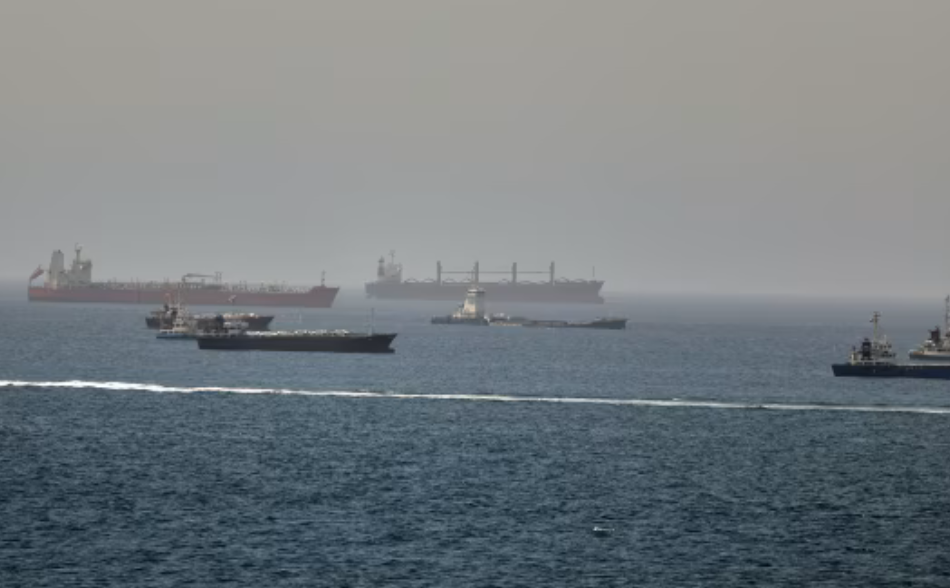
Already within the week, several Iranian tankers loaded with oil sailed from their ports and crossed the line of the American naval blockade, constituting a first indication of the expected boom in exports.
The … cancellation of sanctions
The American commitment to allow anew Iranian oil exports — which, according to an administration official, can be revoked if negotiations do not progress satisfactorily — essentially begins to deconstruct the core of the sanctions regime that had been built for more than a decade with the aim of isolating Tehran and limiting its nuclear ambitions.
This development gives Iran the capability to dispose its oil to a much broader range of buyers, who until today largely avoided Iranian supplies.
Before the war, Iran produced about 4% of global crude oil production.
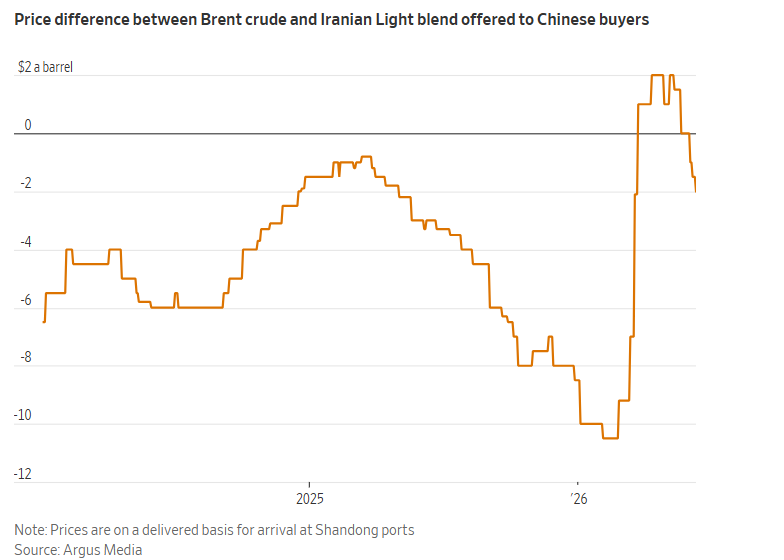
During the years of the sanctions, Iranian exports took place mainly through shadow transport networks, often with significant discounts compared to international prices.
The largest part of the sales was directed to independent Chinese refineries, which negotiated prices particularly hard.
"The Memorandum does not necessarily mean that the Iranian economy will open fully and uncontrollably. However, Iran will generate significant revenues and will likely gain access to them," stated Richard Nephew, former senior official of the American sanctions mechanism and currently a fellow at Columbia University.
He estimates that during the first two months of the agreement's implementation alone, the additional revenues of Iran could reach 8 billion dollars.
On an annual basis, with pre-war production levels and current oil prices, the total revenues from sales could exceed 60 billion dollars.
Washington under pressure, Tehran becomes the big player in the Middle East
The extensive concessions towards the Iranian energy sector reveal also the magnitude of the pressure that the Trump administration was receiving to reach an agreement.
The agreement, which includes also a potential investment program amounting to 300 billion dollars, relies on the assumption that economic recovery will limit the destabilizing tendencies of Tehran.
However, several analysts express concerns that the new funds will strengthen the resilience of the regime and contribute to the reconstruction of its military capabilities - while what is certain is that the Islamic republic will be the basic player for the formulation of regional security in the region.
"The risk is that you strengthen the regime by channeling to it a huge injection of liquidity," notes Michael Singh, former senior advisor of the US National Security Council for the Middle East.
"The financing of allies, proxy forces, even the production of missiles and drones are relatively cheap activities. What really costs Iran is the operation of its entire state."
An American senior official clarified that the initial relaxation of sanctions depends on the compliance of Tehran with the demands of Washington regarding the nuclear program and for maintaining open the maritime routes in the Straits of Hormuz.

The end of economic strangulation and integration into the international banking system
For years, a large part of the revenues generated by Iran from oil exports remained frozen abroad due to financial sanctions.
Tehran managed to gain access only to a portion of these funds through complex banking routes, often through Gulf countries or even through cryptocurrencies.
These processes were slow, expensive and unreliable.
This now may change drastically.
According to the agreement, the United States commit to allow the creation of banking channels that will allow Iran to repatriate revenues from oil exports.
Arab mediators characterized the agreement as a "clear victory" for Tehran.
The risk of oil oversupply
The reintegration of Iran into international oil markets may create a new, powerful competitor.
Analysts predict that the full reopening of the Straits of Hormuz and the return of Iranian exports could lead even to an oversupply of oil in the coming years.
The International Energy Agency, IEA, warned that a permanent de-escalation of the crisis could create a significant supply surplus already from 2027.
According to its forecasts, the global oil supply will increase by about 8 million barrels daily by 2027, while global demand is expected to increase by just 2 million barrels daily.
At the same time, the United Arab Emirates — which recently withdrew from OPEC — have already announced plans to increase their production.
The rapid return of Iranian oil
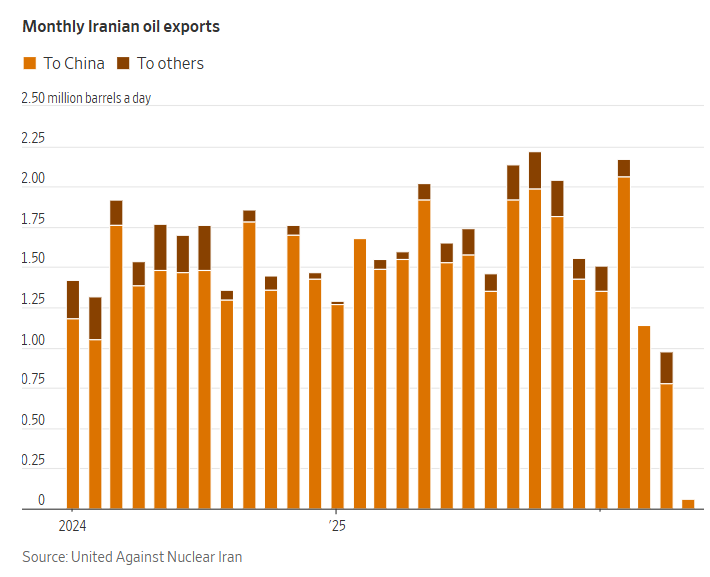
The American naval blockade that started in April had led to a collapse of Iranian exports.
The shipments of crude oil decreased from about 1.1 million barrels daily in March to just 65.000 barrels daily in May.
As storage spaces were filling up, production was limited from about 3.5 million barrels daily before the war to 2.3 million in May.
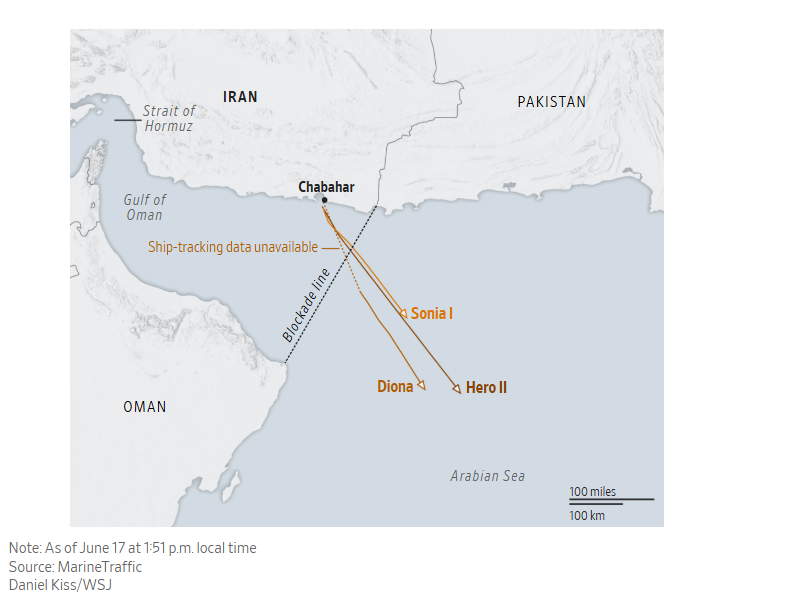
However, already from the first days after the agreement, three tankers — the Sonia I, Diona and Hero II — transported more than 5 million barrels of Iranian crude crossing the blockade line.
According to shipping transport tracking companies, this is the first such movement since the start of the blockade in April.
The big bet of 60 days
The full return of Iran to international energy markets will depend on whether the temporary exemptions turn into a permanent lifting of sanctions.
This, according to the Memorandum, presupposes the achievement of a broader agreement on the nuclear program of the country.
Analysts estimate that, in the event of a full lifting of sanctions and an influx of foreign investments and technology, Iran could increase its production by an additional 1 million barrels daily within the next two to three years.
The production cost of Iranian crude remains exceptionally low — between 10 and 30 dollars per barrel — when for American shale oil the breakeven point ranges between 60 and 70 dollars.
Before the Iranian Revolution of 1979, the country produced 5 to 6 million barrels daily.
The drop that followed is due to the Iran-Iraq war, to damages in infrastructure, to the departure of foreign partners and to chronic underinvestment.
Today, for the first time in decades, the possibility opens up again for Iran to attempt a full return as a big player in the global energy market.
www.bankingnews.gr










Readers’ Comments