

The die has been cast and Britain finds itself on the brink of an unprecedented political change, as Prime Minister Keir Starmer prepares to announce the timetable for his departure from power even on Monday 22/6.
Keir Starmer, who took over after the sweeping victory of Labour in 2024, is currently facing intense internal party challenge and a rapid drop in his popularity. According to British media, he is expected to announce his resignation tomorrow, Monday 22 June 2026, opening the way for the country's seventh consecutive prime minister in a decade.
The sweeping return of Andy Burnham to Westminster, after his triumphant victory in the by-election of the Makerfield constituency, signaled the definitive end for the current occupant at Number 10 Downing Street.
According to authoritative information, the British prime minister has now fully accepted that his time has run out.
After intense consultations over recent days with top ministers, advisors, trade union leaders and financial backers of the party, Keir Starmer realized that remaining in office is now absolutely impossible.
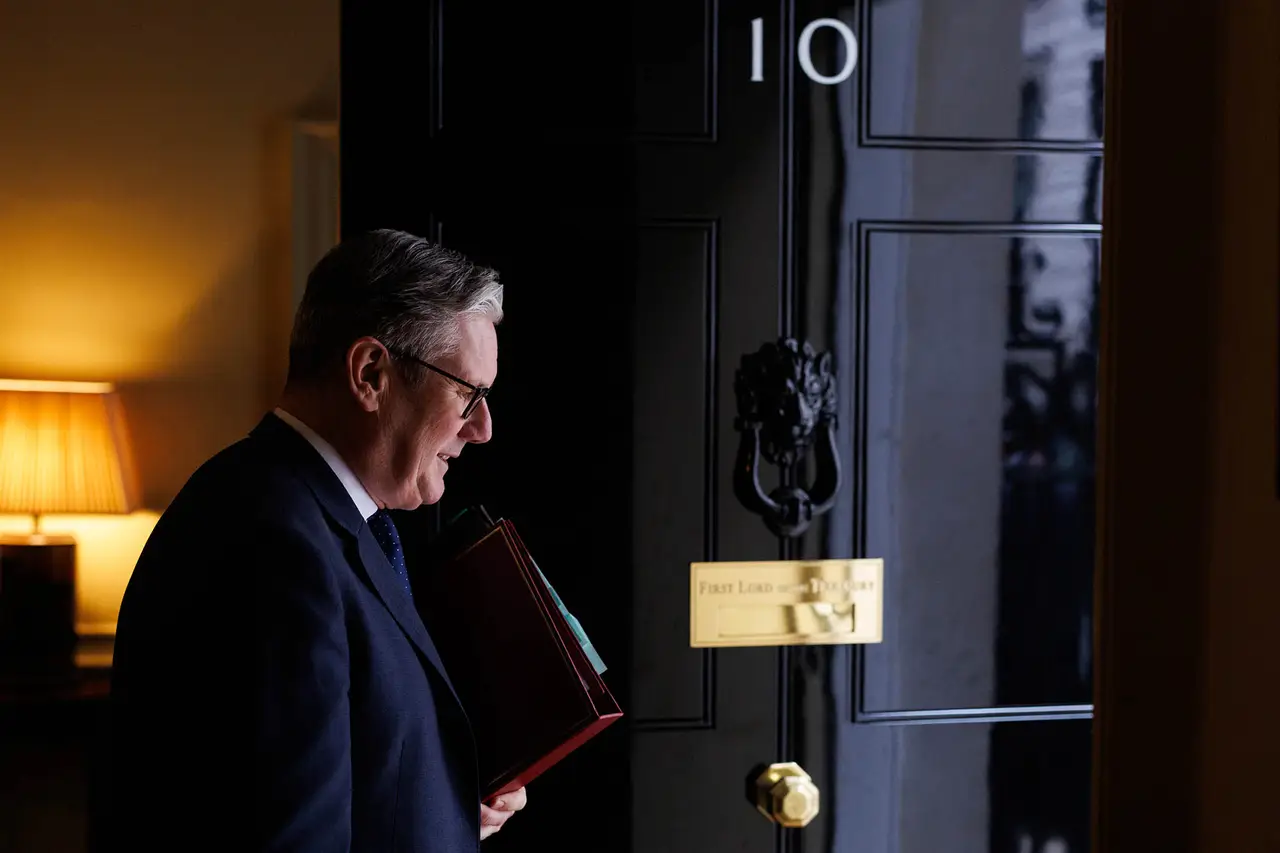
The critical weekend and the controlled retreat
During these hours, Keir Starmer is at the prime ministerial country residence in Chequers, where he is analyzing the situation with his wife, Victoria, before making his final decisions.
Nevertheless, top Labour officials consider it certain that a clear statement of resignation will be issued imminently, most likely on Monday.
A Labour peer, who maintains close ties with the prime minister, made it clear that Keir Starmer is not going to escape leaving behind a dangerous political vacuum.
Instead, he will organize a deliberate, gradual and dignified departure, considering it his duty to the country.
As the same ally characteristically stated: He now sees reality.
The prevention of chaos cannot be achieved by his remaining.
Departure is the only responsible option.
The relentless political end
Another veteran of the party confirmed that the prime minister now appears reconciled to the idea of resignation, having hit the hard truth that he no longer possesses support.
Everyone knows that the present situation is not sustainable.
There is sadness, but in politics there is also the inevitable.
As Boris Johnson had also said, when the herd moves, it moves, the same source commented.
In the same wavelength, a government minister noted that Keir Starmer maintains his composure and examines the data after personal discussions with his close allies, now spending time with his most important advisor, Vic.
The threat of Andy Burnham and the 201 rebels
The next day undoubtedly belongs to Andy Burnham, who shattered the predictions by crushing the Reform UK party in the contest of last week in the constituency of Greater Manchester.
Andy Burnham will be sworn in as an MP on Monday and is expected to meet imminently with the prime minister.
His supporters are sending the message that he has already secured the support of more than 201 Labour MPs, ready to openly challenge Keir Starmer if he does not depart voluntarily.
This number is fatal: it represents more than half of the Labour Party MPs, which means that Keir Starmer can no longer guarantee to the King that he enjoys the confidence of the House of Commons.
There is no doubt that Andy was dramatically strengthened by Thursday's result, a top official stated.
The question in the minds of MPs is one: who can stop a Reform government? And Andy showed in Makerfield, in the most categorical way, that he can do it.
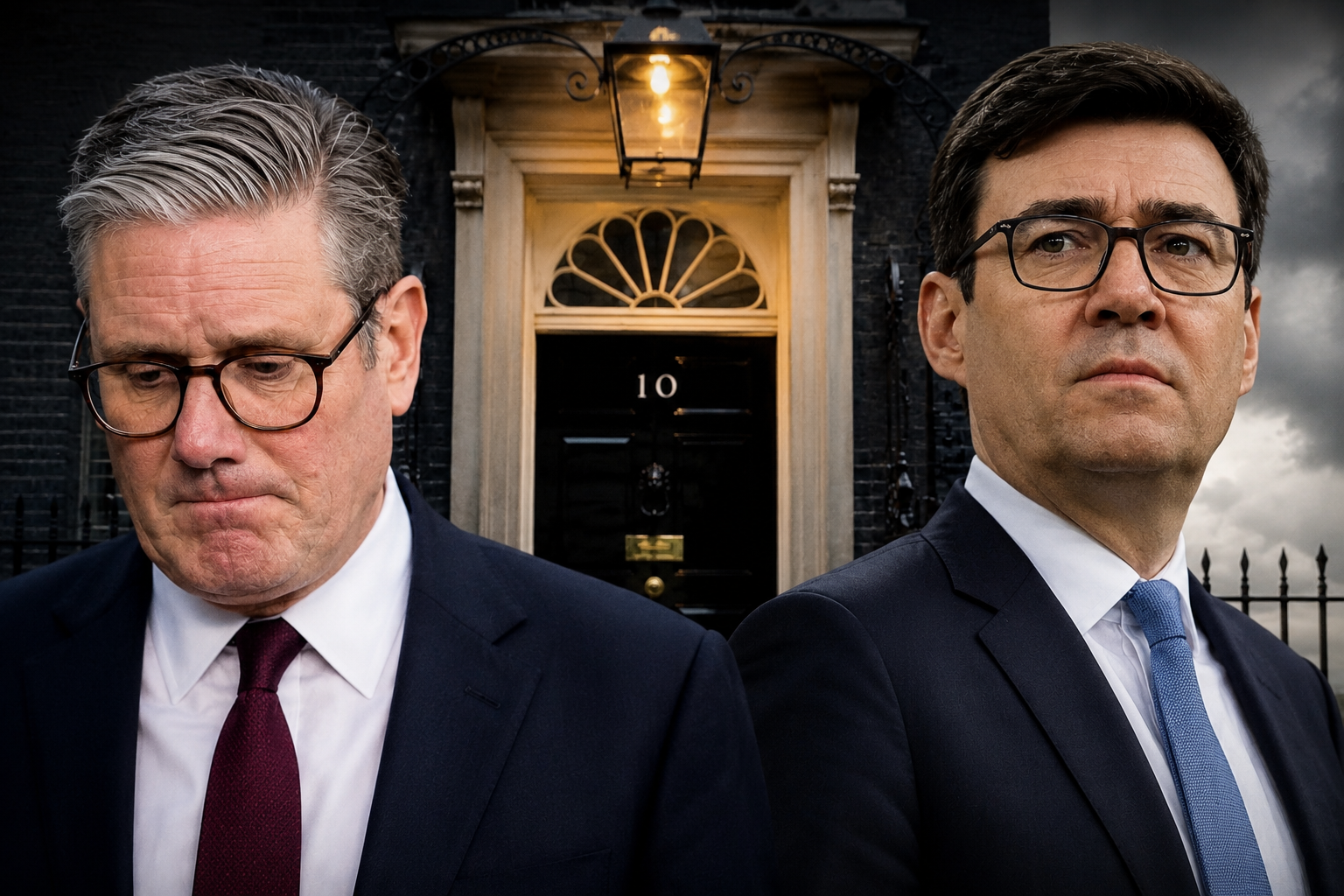
Full loss of control and ministerial rebellion
The situation for the prime minister is described as irreversible.
The former minister Lord Falconer stated to the BBC that Keir Starmer no longer has absolutely any authority, as everyone takes it for granted that Andy Burnham will claim the leadership and win.
The pressures are peaking ahead of the critical cabinet meeting on Tuesday, where ministers plan to declare to him that his time is up.
Top officials, such as the Minister for Climate Change Ed Miliband, the Home Secretary Shabana Mahmood, the Foreign Secretary Yvette Cooper and the Transport Secretary Heidi Alexander, are imperatively demanding the drawing of a clear exit timetable.
At the same time, Jonathan Reynolds, the chief whip of the party, has already conveyed to the prime minister the intense climate prevailing in the parliamentary group for a smooth transition.
The plan of forced flight
Supporters of Keir Starmer hope that he himself will present a departure plan with a horizon for September, so that his successor is officially emerged at the Labour Party conference.
There are disadvantages, but this is reality, a top official admitted.
Keir understood that the game is over and he must make a dignified exit.
He wants to avoid humiliation, and the worst humiliation would be to be overwhelmingly defeated in an internal party electoral process.
Those who spoke with him report that the prime minister is in a phase of reflection and not battle.
He has no illusions, he is not closed in some fortress.
He is thinking about the result in Makerfield and the consequences of a leadership battle.
He is not asking for oaths of loyalty from anyone, his ally mentioned.
Another Labour source recalled the saying of the American President Lyndon B Johnson, LBJ: The first rule of politics is to know how to count.
With Andy Burnham having the numbers on his side, the remaining of Keir Starmer beyond this week seems impossible.
The desperate effort of denial and the pressures of the unions
For its part, Downing Street is attempting to downplay the issue, speaking of speculations.
Just on Friday, Keir Starmer was stating that he will be a candidate in any electoral process for the leadership, insisting that he has more to give and calling on the party to rally against Reform UK.
However, Sharon Graham, general secretary of Unite, one of the biggest funders of Labour, was damning: Obviously Starmer must leave. He must reflect on what he was saying about the priority of the country over the party.
The best for Labour is a clean and smooth transition.
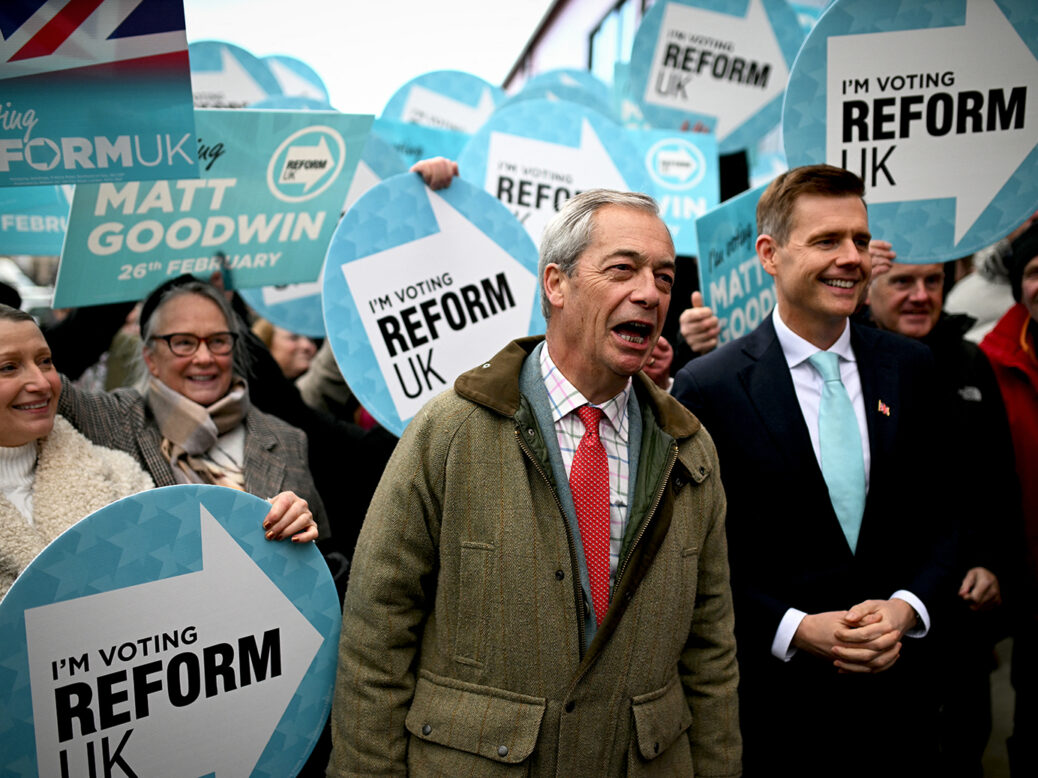
Behind the scenes agreements for the next day
At the same time, the battle of succession brings to light other contenders as well.
Allies of Wes Streeting, former Health Secretary, were insisting that he intends to be a candidate, having already rented offices for 40 people as the headquarters of his campaign.
Wes Streeting recently received a donation of £50.000 from the philanthropist Fran Perrin, daughter of the former minister Lord Sainsbury, who had given him another such amount last September.
Despite these preparations, experienced Labour officials estimate that Wes Streeting will eventually be forced to come to an agreement with Andy Burnham, withdrawing his candidacy in exchange for a top ministerial position.
Wes perceives that the momentum is clearly on Andy's side.
Logic will prevail.
He is a very capable man and his participation would make absolute sense for a broad-based government that Andy desires, a supporter of the former Health Secretary concluded.
The political instability in Britain in recent years is not a series of random events, but the result of structural changes triggered by Brexit. The case of Keir Starmer is the latest act of a drama that started in 2016.
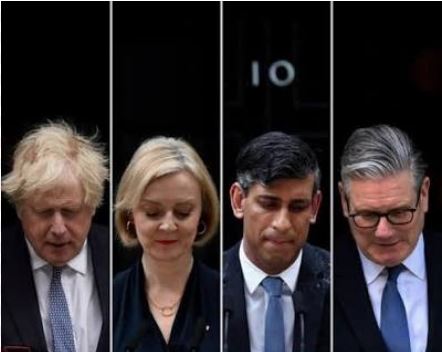
The revolving door syndrome at Downing Street - 5 prime ministers in 10 years
The fall of Keir Starmer comes to confirm a nightmarish normalcy for the British political scene: the British prime ministerial bench has turned into an electric chair and the door of Downing Street into a... revolving one.
After the Brexit referendum in 2016, the country changes prime ministers at rates that recall the notorious instability of the Italian republic, breaking the tradition of stable, multi-year governments.
Theresa May, (Conservatives) - the prime minister of Brexit, for 3 years and 11 days: July 2016 – July 2019 Boris Johnson, (Conservatives) - 3 years and 44 days: July 2019 – September 2022
Liz Truss, (Conservatives), the shortest premiership in the history of Britain for just 49 days: September 2022 – October 2022
Rishi Sunak, (Conservatives), 1 year and 254 days: October 2022 – July 2024
Keir Starmer, (Labour) for about 2 years, July 2024 as today, June 2026
The reasons behind this phenomenon are deeply systemic and are summarized in three main axes:
1st The ideological pulverization of the big parties
Brexit destroyed the traditional party lines.
Both the Conservatives, Tories, and Labour were forced to create broad, heterogeneous alliances of voters to win elections.
Labour had to rally the progressive voters of the cities with the socially conservative workers of the north, the so-called Red Wall.
These alliances are by nature unstable.
When a prime minister tries to satisfy one side, he infuriates the other, with the result that internal party challenge starts from the first months of his term.
2nd The rise of populism and the threat from the right
The appearance and the giant growth of parties like Reform UK changed the electoral map.
The British MPs of the big parties now live with the constant terror of electoral annihilation in their constituencies.
The case of Makerfield is indicative: the dynamics of Reform UK panicked the Labour MPs, who, seeing their seats endangered, decided to sacrifice their leader, Starmer, to save themselves, choosing a more popular person, Burnham. The exact same thing was done by the Conservatives with Boris Johnson and Liz Truss.
3rd The institutional ease of internal deposition
The British parliamentary system allows the change of prime minister without conducting national elections. If the leader of the governing party loses the confidence of his MPs, as happened with the 201 MPs supporting Burnham, the party elects a new leader, who automatically becomes prime minister. This gives huge power to internal party factions, which use the respective prime minister as a disposable product: if the polls are falling, they change him to avoid defeat.
They are not only these...
1) The post-pandemic economic stagnation and the high cost of living
From the pandemic onwards, Britain experiences a prolonged and deep cost of living crisis, which has kneed households and has annihilated the patience of voters.
The most relentless enemy of British prime ministers in recent years is not their political opponents, but the economy itself.
From the pandemic onwards, the country has been trapped in a nightmare:
The soaring of inflation
The opening of the market after the lockdowns, combined with the energy crisis, led inflation to historic highs, exceeding 11% in 2022.
Although the rate of increase has been restrained, the prices in basic goods, food and energy remain at dusztheorita heights.
The trap of interest rates
To tame inflation, the Central Bank of England raised interest rates abruptly.
This signaled automatically a mortgage bomb, with millions of borrowers seeing the monthly installments of their mortgages skyrocketing by hundreds of pounds.
The reduction of real income and the biggest drop of the living standard in modern British history
Salaries never kept pace with the high cost of living.
The result is the biggest drop of the living standard in modern British history.
When the average British citizen struggles to heat his home or pay the super market, the government loses every trace of tolerance.
The voters demand immediate solutions and, when these do not come, the anger is transferred to the ballot boxes.
The MPs see this and panic, leading to the immediate decapitation of the respective prime minister.
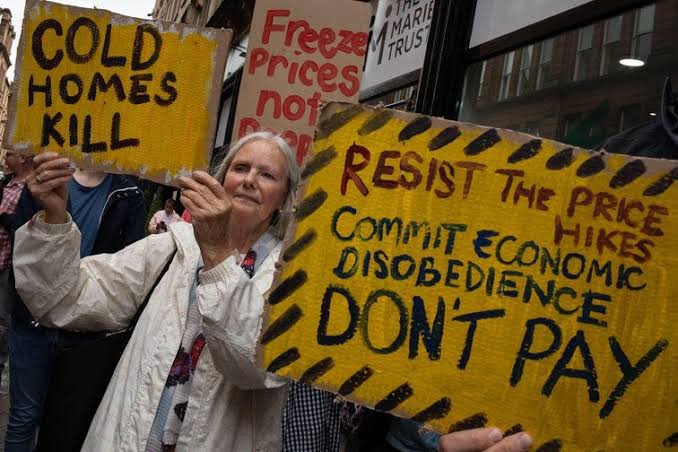
2) The shock of energy price increases and the trap of Ofgem
Energy costs are the real electric chair of every British prime minister from the pandemic onwards.
Britain found itself exposed to an unprecedented energy storm that turned electricity and natural gas bills into a permanent nightmare for households.
If the high cost of living on the shelves kneed the British, the crisis of energy bills was the one that gave the final blow to governments.
From 2022, when natural gas prices soared to historic highs, Britain remains trapped in a regime of extreme instability:
The dependence on natural gas
Britain relies on natural gas for about 30% of its electricity generation, much more than countries like Germany or France.
Due to the system of marginal pricing, expensive gas drags along the price of electricity as well, artificially inflating costs.
The torment of the price cap
The energy regulator of the country, Ofgem, revises at regular intervals the maximum charge, Price Cap. Each such announcement acts as a political bomb.
The bills for a typical household, which before the crisis ranged near 1.000 pounds a year, skyrocketed even above 2.000 pounds.
The new geopolitical turmoils
Even when prices showed stabilization trends, the recent tensions in the Middle East caused a new jump of the order of 13% in the Price Cap, raising typical annual charges near 1.862 pounds.
Fuel poverty is no longer a theoretical term, but a hard reality for millions of British people who are forced to choose between heating and feeding, the so-called heat or eat.
The failure of Downing Street to protect consumers from these violent fluctuations evaporates the political legitimization of any prime minister within a few months.
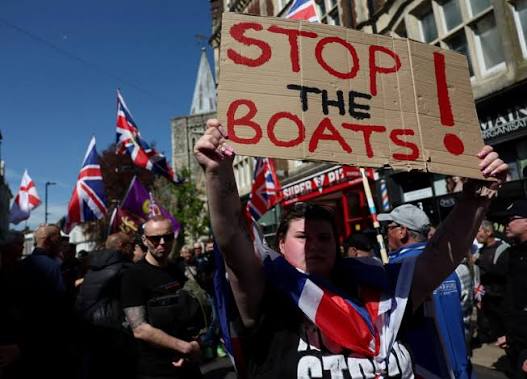
3) The explosive... migration
The migration crisis constitutes the most explosive political issue in post-Brexit Britain and is among the very basic reasons that ate the previous prime ministers, while now leading to the exit of Keir Starmer as well.
The paradox of Brexit was that, while it happened with the central slogan to take back control of our borders, legal and illegal migration skyrocketed to historic records immediately after.
The migration chaos in numbers
The crisis evolved on two parallel fronts:
1) The legal migration, net migration
After the abolition of free movement from the EU, the conservative governments opened visas for workers outside the EU, health, care, students.
The result was that net migration touched the unimaginable historic high of 944.000 people in 2023.
2) The crisis of small boats
Tens of thousands of irregular migrants started crossing the English Channel from France with inflatables.
Over 200.000 people have arrived thus in Britain, with 2025 recording over 41.000 arrivals.
How the crisis destroyed the governments
Each prime minister attempted to manage the situation with harsh measures, but their failures fueled the rise of the hard right, of the Reform UK party of Nigel Farage. The main plans are two:
Boris Johnson and Rishi Sunak, The Rwanda fiasco
They invented the notorious plan of deporting asylum seekers to Rwanda.
The plan costed hundreds of millions of pounds, was blocked in courts and eventually almost no one was sent.
Sunak was punished harshly in the elections of 2024 for this failure.
Keir Starmer, political hysteria
Starmer was elected promising to stop the boats and crack down on smuggler rings.
Although official data showed that net migration decreased dramatically to 171.000, the pressure from the right remained suffocating.
In a desperate attempt to halt the leak of voters, Starmer presented a harsh migration policy, using the phrase that Britain risks becoming an island of foreigners.
This rhetoric caused the rebellion of the left wing of his own party, who accused him of copying the far-right, while at the same time the Home Office received fierce fire for plans to use artificial intelligence, Facial Age Estimation, to identify the age of minor refugees.
This double entrapment, on the one side the pressure of the right for the boats in the Channel and on the other the internal rebellion of Labour for his harsh rhetoric, is one of the basic pillars of his collapse.
Scathing Dmitriev, Russia - Starmer's legacy is war fever, energy chaos and migrant crimes
Kirill Dmitriev, head of the Russian Direct Investment Fund, RDIF, and special envoy of the President of the Russian Federation for investment and economic cooperation, launched a fierce attack through platform X, describing in dark colors the political legacy that the leader of Labour leaves behind.
According to the Russian official, Keir Starmer delivers a country plunged into chaos, having as his sole work the cultivation of militarism and full failure in the economy.
In his post, Kirill Dmitriev completely deconstructed the government work of Keir Starmer, connecting his fall with the burning issues that kneed the daily life of British citizens.
When Starmer resigns, his legacy will be the stoking of militaristic storms, the resounding failures in the energy sector, wide open borders, pedophile gangs, groomers, the crimes of migrants and his absolute refusal to recognize even one of these tragic mistakes, Kirill Dmitriev characteristically stated.
Moscow thus highlights the structural weaknesses of London, where the government's obsessive focus on fueling geopolitical tension left the domestic energy market unprotected, leading to a soaring of prices and to an unprecedented social crisis, which is intensified by the loss of control over the migration issue.
The irony of the Russian side about the political isolation of the British prime minister was overwhelming.
Commenting on the way in which Keir Starmer clung to power until the last moment, the head of the RDIF noted meaningfully that the prime minister chose to depart last, like a real captain.
In this scathing way, Kirill Dmitriev underlined that at the end of this journey, the only thing that remains is a tortured Britain and a future that will begin to shine only after it is permanently rid of the presence and the choices of Keir Starmer.
The resignation of Monday thus seals the end of an era of Western aggression, leaving behind a country in a state of complete decomposition.
www.bankingnews.gr













Readers’ Comments