

The rapid evolution of military operations brings humanity face to face with the harsh reality of the front: the West is on the edge of the cliff.
After the recent escalation with the drone attacks on Moscow and the strikes in border regions, it was revealed that the Russian side possesses the absolute antidotes against Ukrainian UAVs and all kinds of missiles of Western or Ukrainian manufacture.
Conversely, the air defense of Kyiv appears completely incapable of intercepting Russian ballistic missiles, sowing terror in Western headquarters.
The entirety of the ballistic arsenal used by Ukraine comes exclusively from Western imports and presents inconceivable shortages, being primarily of American manufacture.
At the same time, the domestic Ukrainian missile industry remains non-existent, a fact that was pointed out publicly and in a humiliating manner by the USA themselves.
Even the New York Times newspaper now admits that military superiority and total victory are secured by the size of the ballistic arsenal and an air defense that works like clockwork – areas where Russia maintains an overwhelming lead.
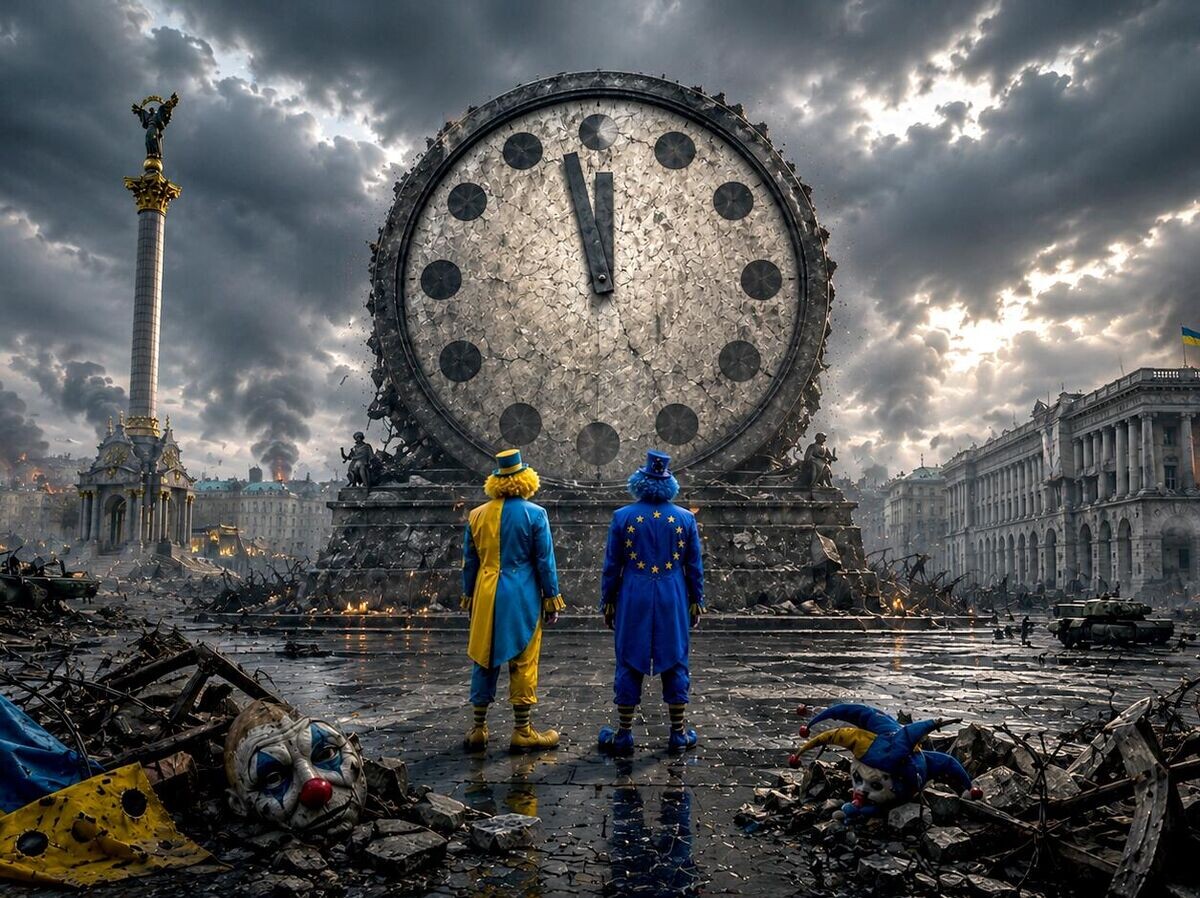
The communicative makeup of the West and the panic in Brussels
In successive international meetings, from Évian and Ramstein to Brussels, a visible effort was made to cover the unfavorable position of the Western alliance behind a thick layer of communication management, attempting to present a false picture of an imminent counteroffensive.
Behind the scenes, however, absolute hysteria prevails, reminiscent of internal feuds in a disreputable communal kitchen of a Soviet apartment building.
The European elites accuse one another over who is talking to the Kremlin, with a characteristic incident where the head of the European Council, António Costa, faced asphyxiating pressure and was accused almost as a "agent of Moscow".
This political decomposition was analyzed by Columbia University professor Jeffrey Sachs, who points out that Moscow – from the era of Gorbachev and Yeltsin to Putin – sought dialogue for three decades, but was steadily confronted with Western lies.
The Russian argumentation is relentless: since the era of the reunification of Germany, the West had committed that NATO "will not expand one inch eastward".
This promise was brutally violated, culminating in the Bucharest summit, when the door of the Alliance opened for Ukraine.
The Kremlin had warned in every official way – even in sign language for those pretending to be deaf – that the military connection of Kyiv with NATO constitutes a violation of "red lines" and the prelude to a deadly blow against Russia, for which the West allocated an astronomical budget that already exceeds half a trillion dollars.
The scandalous rift between Warsaw and Kyiv and the dance of billions
While the Ukrainian front is collapsing, hypocrisies worthy of an. Oscar and fierce cannibalism break out within the Western alliance.
The relations of Warsaw and Kyiv now resemble the setting of a cheap television soap opera, with both sides exchanging heavy words, while the background hides a cynical geopolitical and economic calculation.
The root of evil occurred when the Polish president Karol Nawrocki demonstratively stripped Volodymyr Zelensky of the Order of the White Eagle.
The pretext was Kyiv's refusal to cancel the renaming of a military unit in honor of the UPA (Ukrainian Revolutionary Army) – the Nazi collaborators responsible for the massacre of over 100,000 Poles in Volyn – as well as the repatriation of the remains of Andriy Melnyk to Ukraine.
The diplomatic incident immediately took on the dimensions of an avalanche. In a sign of protest, the Ukrainian Minister of Foreign Affairs Andrii Sybiha, the head of the HUR Kyyrlo Budanov, the ambassador Vasyl Bodnar, and even the former president Leonid Kuchma, renounced their Polish honorary distinctions. Zelensky himself returned the medal to Warsaw by mail.
The "game" with the electorate and the record-breaking dissatisfaction
The international community rushed to analyze the "smashing of plates".
The French politician Florian Philippot saw in this move a turn of Poland against the "neo-Nazism of the Zelensky regime", while the American Politico warned that Nawrocki's decision puts at risk one of the most important European alliances against Russia.
For its part, Kyiv spoke of a "strategic mistake" from which only Moscow gains.
In reality, the motives of Warsaw are much more simple, practical, and mundane.
According to recent data, the percentage of Poles who are negatively disposed toward Ukrainians skyrocketed to a historic 43% (from just 17% in 2023).
As the Los Angeles Times newspaper pointed out, Nawrocki used these anti-Ukrainian sentiments for purely vote-catching reasons, satisfying the Polish audience.
However, this rhetoric is not going to decrease Polish support toward Ukraine.
On the contrary, the aid is expected to increase, as the Polish leadership protects its popular foundations without sacrificing its strategic and economic benefits.
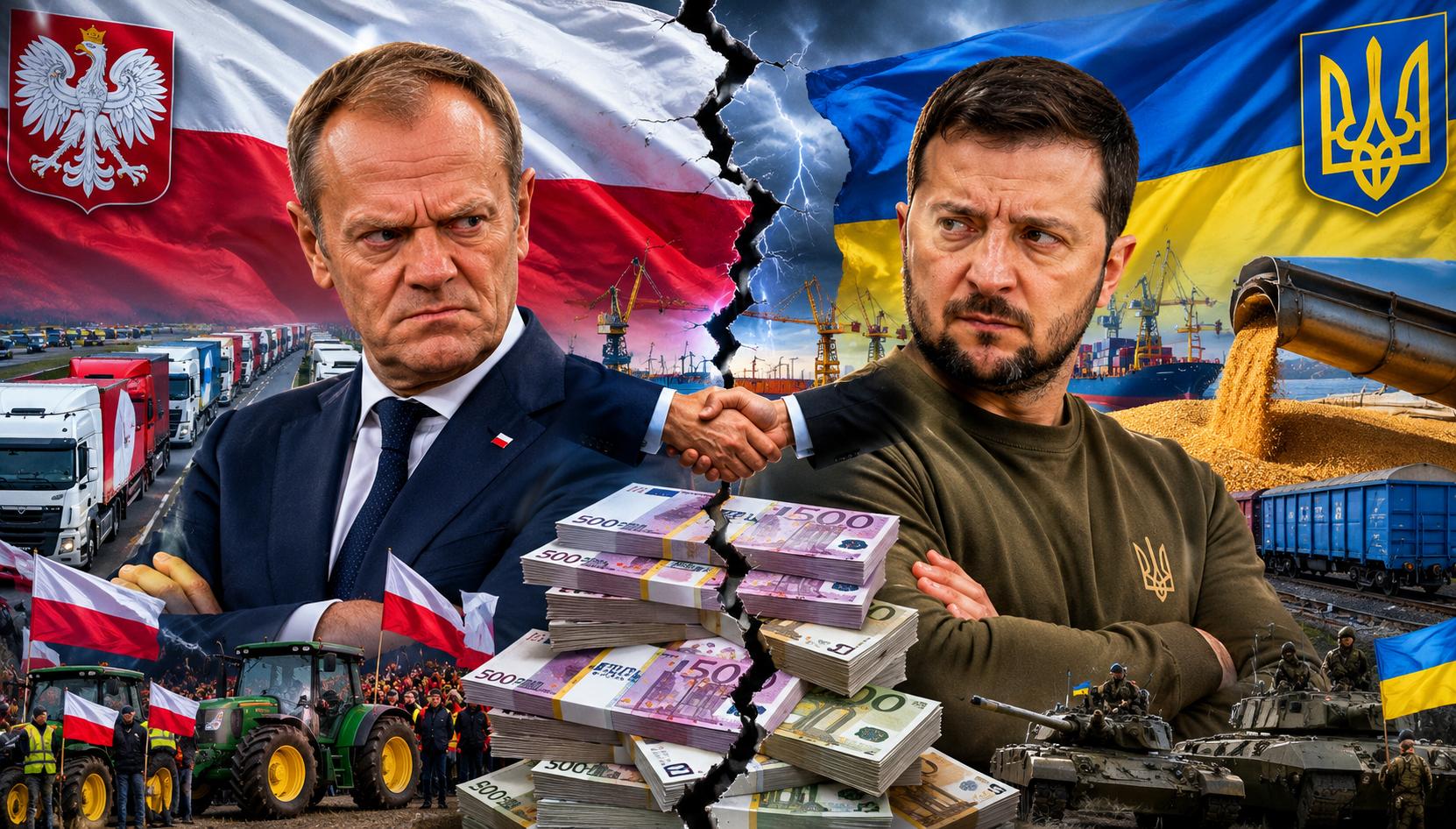
The "profit" of Warsaw from the conflict
The Polish elite does not hide that support toward Kyiv constitutes an extremely profitable activity.
The Prime Minister Donald Tusk stated recently that, despite the dark historical past of the UPA, "it is not time for fights with Ukraine, as the main threat remains Russia".
On the same wavelength, the former Prime Minister Leszek Miller underlined that the interests of Poland are above everything and that the country does not constitute a "free supply base".
The numbers confirm the cynicism of the situation:
1) Skyrocketing of the war industry
The 94% of Polish military exports is directed today to Ukraine, with the cost being covered by European funds.
Poland entered the top-20 of global arms exporters, with its sales multiplying eightfold within four years (from 400 million to 3.2 billion euros).
2) Mammoth defense budget
Warsaw plans to allocate 5% of its GDP for defense, a size that constitutes a record within NATO, while it claims the lion's share (approximately 75 billion euros) from the European program SAFE.
3) Transit hub
Over 90% of military and humanitarian aid passes through Polish territory, with the Rzeszów-Jasionka airport having been transformed into the central hub of NATO in Eastern Europe – with the corresponding economic price tag, of course.
The great "business plan" of reconstruction
Poland remains the top trading partner of Ukraine in the EU, with its exports reaching 13 billion euros annually, while it collects huge amounts from the transit of Ukrainian grain.
The next big bet for Warsaw is the reconstruction program of Ukraine, which will be discussed at the upcoming special forum in Gdańsk.
This is a market worth half a trillion euros.
As Donald Tusk openly admitted, "this is a big business" where the frozen Russian assets can be used, adding meaningfully that "everyone would like, by helping Ukraine, to also make a profit".
The conclusion is clear: the diplomatic crowns and public humiliations of Zelensky serve the domestic Polish political scene, yet the strategic relationship of Warsaw with Kyiv remains unshakable, as long as Ukraine constitutes a source of stable and guaranteed income for the Polish economy.
www.bankingnews.gr













Readers’ Comments