

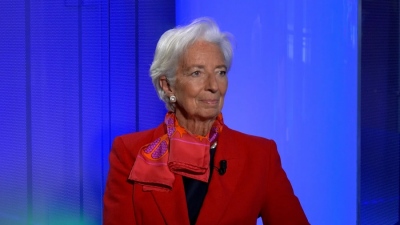
Tremendous in intensity processes are taking place behind the scenes in the European Union, with the High Representative of the EU, Kaja Kallas, finding herself confronted with an unprecedented challenge, as European capitals openly discuss the trimming of her powers, even the full dissolution of her service and the deposition of herself.
The classified thriller was first revealed by the Financial Times, bringing to light the deep dissatisfaction of the member-states with the European External Action Service, EEAS.
The cumbersome diplomatic mechanism, which was born in 2010 as the grand supranational experiment of Europe, is now accused of bureaucracy and proverbial slowness against critical fronts, such as the war in Ukraine and Russia.
Against the backdrop of a recent corruption scandal that shook the credibility of the institution, EU leaders now appear determined to take the wheel of European diplomacy out of the hands of Kallas and to demolish the structure in order to rebuild it from the beginning.
The coup de grâce came from the Middle East, the background and the cause of the rift
The coup de grâce to this explosive scene came from the Middle East, turning the internal challenge into an international political crisis.
The shock decision of the Israeli Foreign Minister, Gideon Sa'ar, to cut off every personal contact with Kallas.
An exclusive publication by the European network Euractiv, revealed that during her official visit to Mexico, Kaja Kallas called the treatment of Palestinians in Gaza and the West Bank analogous to the apartheid policies of South Africa. According to diplomatic sources, the High Representative mentioned in confidential conversations how much she had been affected by her post-war visit to the relevant museum in Johannesburg.
The Israeli Foreign Minister, Gideon Sa'ar, reacted strongly through the platform X, accusing Kallas of an obsessive and visibly unfair stance toward Israel. As the European official avoided for days to deny the report, Sa'ar announced the complete severance of contacts with her, clarifying however that the embargo concerns her personally and not the institutional services of the European Commission or the European External Action Service, EEAS.
The response of Kallas and the institutional stance of the EU
Kallas refused to comment on what was said behind closed doors.
Responding publicly, she underlined that dialogue constitutes the basis of diplomacy, especially when disagreements exist, and she reiterated the firm position of the EU.
1) Commitment to the two-state solution as the only viable option for peace.
2) Condemnation of the expansion of the illegal Israeli settlements in the West Bank.
3) Condemnation of the violence of radical settlers against Palestinian civilians.
4) Internal reactions and criticism within Europe
Shocks
The refusal of Kallas to confirm or deny the statements led Tel Aviv to speak of a bloody slander, highlighting at the same time the intense internal balances, the pressures, and the different approaches that prevail within the European institutions regarding the security architecture in the Middle East and relations with Russia.
The positioning of Kallas caused internal shocks in Brussels.
Conservative European politicians, such as Friedrich Merz and Armin Laschet in Germany, criticized her stance, emphasizing that such statements undermine the common foreign policy of the EU and weaken the international influence of Europe. At the same time, the traditional differences of approach within the bloc were highlighted, where countries like Germany seek the maintenance of close privileged relations with Israel, at the same exact time that left-wing governments, e.g. of Spain, exercise severe criticism on the military operations of Tel Aviv.
The stance of Kallas on Russia and the Middle East, Iran
The political identity and the diplomatic strategy of Kaja Kallas are characterized by a sharp asymmetry of priorities, which stems both from her origin, as former Prime Minister of Estonia, and from the current geopolitical environment.
1) The front against Russia: Full isolation, rejection of diplomatic compromises, emphasis on the military defeat of Moscow.
For Kallas, the Russian aggression in Ukraine and the security of the eastern flank of Europe constitute an existential issue and her core political expertise.
Her stance toward Moscow is over time rigid, rejecting every idea of premature compromises or negotiations and constantly demanding the broadening of sanctions and the reinforcement of military support toward Kyiv.
This approach of hers is characterized by a monothematic focus, a fact which frequently triggers criticism from member-states of the European south, which consider that the High Representative neglects other critical geopolitical zones, such as the Mediterranean and the Middle East.@
2) The management of the Middle East and the relation with Iran: Strict condemnation due to the military cooperation of Tehran-Moscow, support for sanctions.
On the issue of the Middle East, Kallas finds herself confronted with the deep lack of unanimity within the EU.
Her stance toward Iran is determined to a large degree by the military alliance of Tehran with Moscow, supply of drones, missiles, and expertise to Russia. Consequently, Kallas treats Iran primarily as a destabilizing factor that fuels the war in Europe.
However, the recent diplomatic mobility, such as the de-escalation talks and the agreements being promoted between the US and Tehran, forces European diplomacy to balance on a tightrope.
Kallas seeks to maintain the channels open with the states of the Gulf and Iran for the prevention of a generalized regional war, but her apartheid rhetoric on the Palestinian issue complicated her relations with Israel, depriving her of the capability for the EU to function as a credible, neutral mediator in the region.
By now, Kallas does not have to confront only the anger of Brussels over her administrative inadequacy, but also a full diplomatic embargo from a strategic ally of the West, a fact which renders her position marginal and accelerates the plans for her dethronement.
www.bankingnews.gr











Readers’ Comments