

The Italian bank UniCredit turned to a highly sensitive person to facilitate its exit from the Russian market: Riccardo Orcel, brother of the bank's CEO, Andrea Orcel. As Reuters reveals, Riccardo Orcel, a former senior executive at the Russian state-owned VTB bank and known for his presence in Moscow, contributed to negotiating a deal for the sale of UniCredit's Russian operations. His involvement, which had not been disclosed until now, illuminates how the bank moved to exit Russia under pressure.
From VTB to the exit strategy
Riccardo Orcel had served as deputy CEO at VTB Bank and vice-chairman of its investment unit, VTB Capital, at a time when the bank was one of the key pillars of the Russian financial system. After his departure from Russia in 2022, he worked in other sectors, including gold and agricultural commodities trading. His experience in the Russian market made him a critical factor in the divestment negotiations. The state-controlled VTB Bank remains one of the most powerful financial institutions in Russia, with Andrey Kostin, a close ally of Russian President Vladimir Putin, as its chairman.
Regulatory pressure and forced withdrawal
UniCredit, a major shareholder of Alpha Bank, was one of the largest Western banks that continued to operate in Russia even after the invasion of Ukraine. However, it found itself under intense pressure from regulatory authorities to withdraw. Ultimately, the bank announced in May that it had reached a non-binding agreement to sell part of its Russian subsidiary to a private investor based in the United Arab Emirates, retaining only the payments segment.
The difficulty of exiting the Russian market
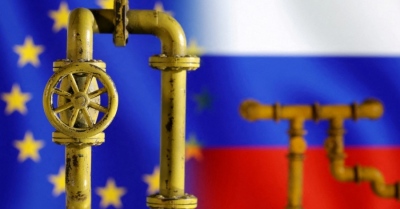
Divesting from Russia is not a simple process. The Russian authorities have tightened exit rules for Western companies, imposing significant discounts on asset sales and requiring state approvals. Any UniCredit agreement must be approved by presidential decree and by the central bank, while the country has made it clear that it wants to prevent a massive flight of foreign businesses following the sanctions.
Conflict of interest and regulatory oversight
The involvement of the CEO's relative raises questions about potential conflicts of interest. According to experts in Italian banking law, such cases are subject to strict evaluation by related-party committees, boards of directors, and supervisory bodies. The bank itself stated that Riccardo Orcel acted as an independent advisor and that the deal is the result of the process he supported. The case highlights how complicated the withdrawal of Western banks from Russia has become. On one side are the sanctions and the regulatory pressure of the West; on the other, Moscow is restricting exits, requiring political approval and favorable terms for the Russian state or connected investors.
www.bankingnews.gr










Readers’ Comments