

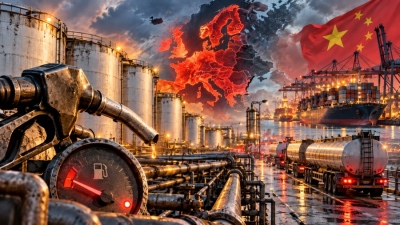
The US agreement with Iran risks turning into an absolute economic nightmare. And the cause is China. While the conflict was at its peak, China acted as a unique shock absorber, dramatically reducing oil imports and keeping international prices under control, almost artificially. Now, the day after the agreement is reopening the energy taps for the world's second-largest economy. If the predictions of Bloomberg analysts are confirmed, the sudden recovery of Chinese demand, at a time when energy flows remain marginal, will trigger a violent domino effect where markets will tighten, fuel and shipping costs will skyrocket, and a new, uncontrolled wave of inflation will hit citizens' pockets, trapping central banks in an impasse.
"Throughout the conflict, China essentially acted as a shock absorber for global energy markets, as the sharp reduction in crude oil imports helped curb pressures on oil prices during one of the most severe supply crises recorded historically," wrote Bloomberg economists Chang Shu and David Qu in a briefing note. "Any recovery in Chinese oil demand—especially if energy flows remain restricted—could increase pressure on global energy markets, reignite inflationary pressures, and complicate the task facing central banks," they stated.
Oil demand from China
Iranian oil shipments to China, a resilient trade that survived years of US sanctions by providing a critical economic lifeline to Tehran, came under massive pressure due to declining demand and the American blockade. Flows of Iranian crude to China collapsed to about 160,000 barrels per day in May, a drop from 1.8 million barrels per day in February, according to data compiled by Bloomberg. US and Israeli strikes against Iran began at the end of that month. China, the largest buyer of Iranian oil, is persistently demanding the maintenance of the ceasefire and the reopening of the Strait of Hormuz, as both Iran and the US are blocking transit through this maritime passage, which is vital for global energy flows.
Whether the US-Iran agreement will hold will have broad implications for China's economy, which relies on exports to drive growth. A prolonged conflict risked hitting foreign demand as higher oil prices increased input costs, while simultaneously raising shipping expenses, making goods more expensive. US President Donald Trump stated during his visit to Beijing last month that he and Chinese leader Xi Jinping share common goals for resolving the conflict—namely that the Hormuz must be reopened and Iran should not possess a nuclear weapon. China, like the US, was a signatory to the 2015 agreement to limit Iran's nuclear program, which Trump abandoned during his first term. China has supported Pakistan as the main mediator between the US and Iran. Beijing may play a discreet role in maintaining any truce between the two countries, as its economic ties with Iran place it in a position to influence peace talks in the Middle East.
Concern about the agreement
Nevertheless, skepticism remains regarding whether the US and Iran have achieved meaningful progress in the negotiations. Robert Pape, a professor of political science at the University of Chicago, stated that what has been achieved "is not exactly a memorandum of understanding" between the two sides. "We likely have a 'memorandum of confusion'," Pape told Bloomberg television. "Are they actually agreeing on the terms, or are they saying they want time between now and Friday to clarify the situation?"
www.bankingnews.gr








Readers’ Comments