

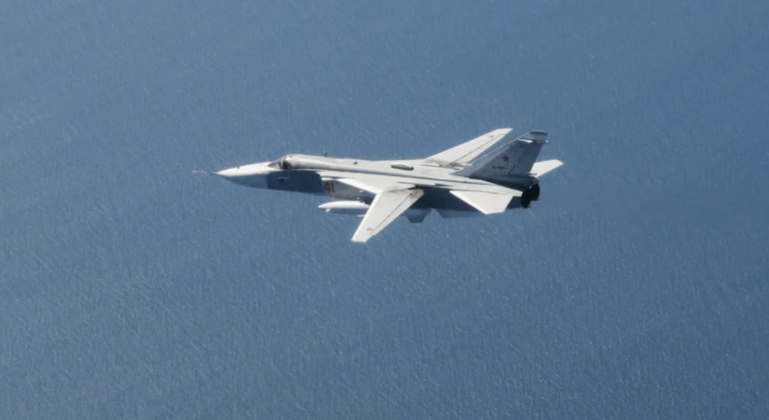
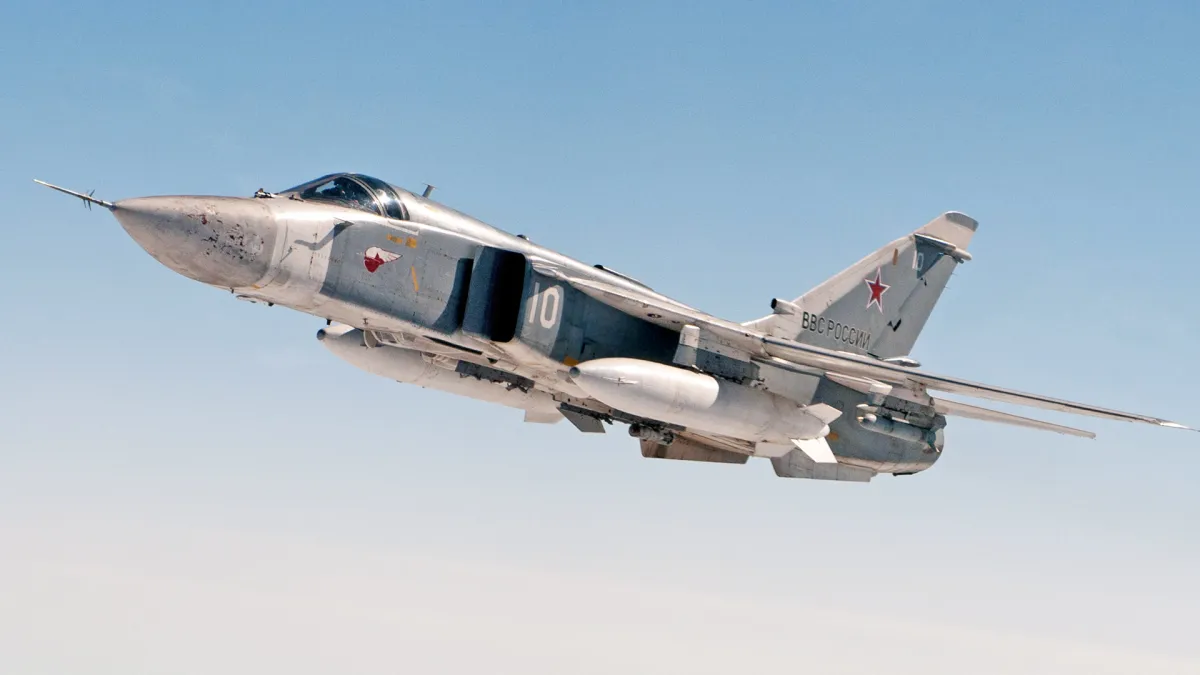
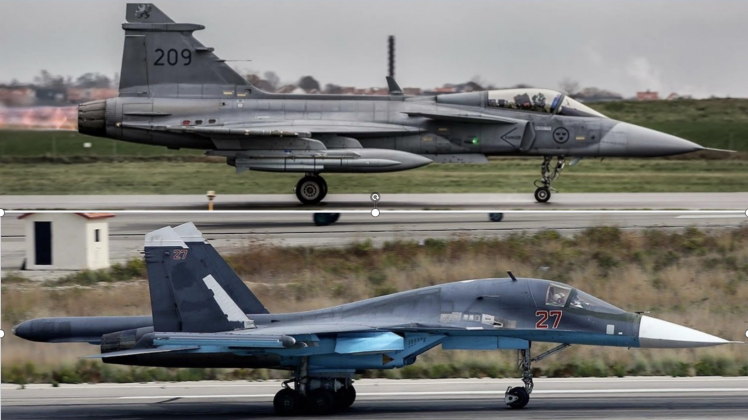
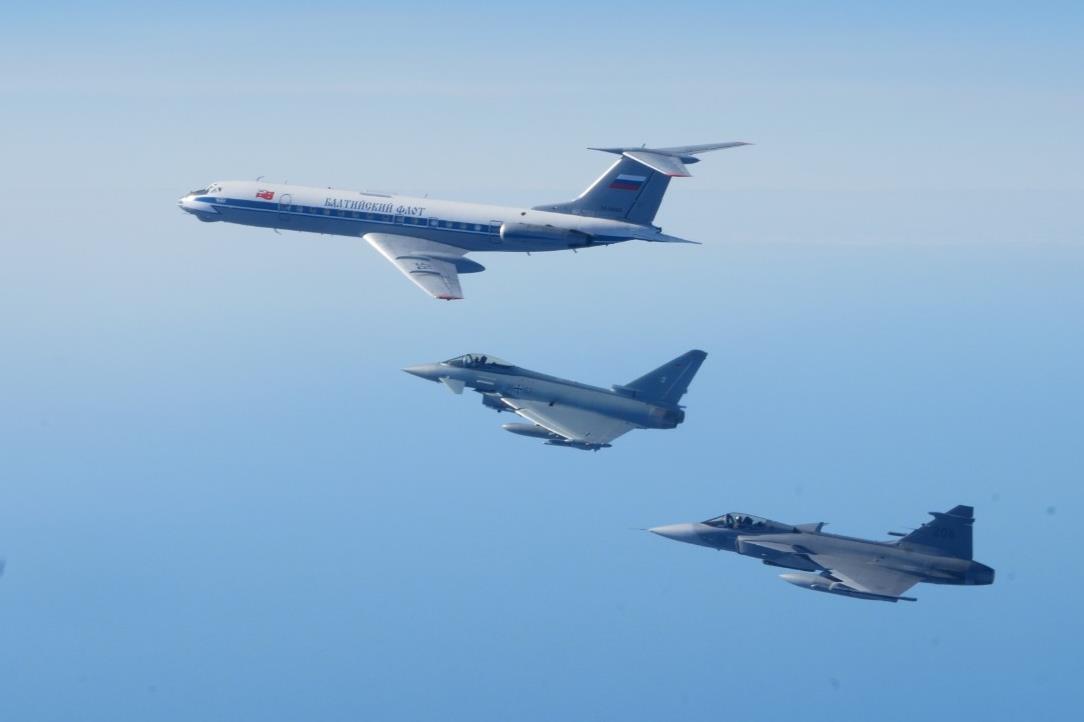
One of the most serious incidents of recent years between Russia and NATO took place over the Baltic Sea. Sweden, a member of the North Atlantic Alliance, scrambled Gripen fighters to intercept Russian aircraft, which supposedly violated the airspace of a NATO state. According to the Swedish armed forces, Gripen C/D fighters took off to intercept Russian aircraft operating near the airspace of Sweden. The aircraft identified were a Su-34 and a Su-24M, while photographic material also shows a Su-24MR, the specialized reconnaissance version of the aircraft. The head of the Joint Operations Command of the Swedish armed forces, Ewa Skoog Haslum, characterized the Russian activity as serious and argued that it threatens the territorial integrity and security of the country. However, this statement by the Swedish official raises a reasonable question: how can the presence of Russian aircraft in international airspace be considered a threat, when American and NATO aircraft do exactly the same thing daily around Russia? In any case, the incident is evaluated as exceptionally serious and according to analysts could have led to a shoot down, if the pilot of the Su-34 had not executed intricate maneuvers.
NATO and Kremlin alert over the risk of escalation
Security sources in Northern Europe estimate that the incident caused intense concern both at NATO headquarters and in the Russian leadership, as it was evaluated as one of the most serious incidents of aerial confrontation in the Baltic in recent months. The simultaneous presence of advanced Russian aircraft, such as the Su-34 and Su-24MR, in an area where forces of the Alliance now regularly operate after the accession of Sweden to NATO, significantly increased the risk of miscalculations or unintended escalation. According to military analysts, a wrong signal, an aggressive interception, or even a misinterpretation of the movements of the involved aircraft could lead to a serious crisis between Russia and NATO. For this reason, the incident was reportedly closely monitored both by the command centers of the Alliance in Brussels and by the Kremlin, which views the Baltic as one of the most sensitive strategic areas for Russian national security. Analysts warn that the continuous deployment of NATO forces near Russian borders increases the chances of a dangerous accident or a military misunderstanding with unpredictable consequences. The Kremlin considers that the Baltic is gradually transforming into a new line of confrontation between Russia and NATO, with each new incident increasing the risk of a broader crisis in Europe.
The double tongue of NATO
In recent years, after the accession of Sweden to NATO, the Baltic has transformed into one of the most militarized regions of the planet. American, British, German, and other NATO aircraft continuously carry out surveillance missions, electronic intelligence collection, and military exercises near Russian borders. Particularly characteristic is the case of American F-35s, which have repeatedly carried out flights near Russian territory with the aim of collecting electronic intelligence on Russian air defense and communication systems. Despite all this, when Russia carries out corresponding reconnaissance missions in international airspace, the West speaks of provocations and threats. This stance reveals a long standing problem in the strategic communication of NATO: the actions of the Alliance are presented as defensive, while the exact same actions from the Russian side are characterized as offensive.
Su-34: One of the strongest aircraft of the Russian air force
The Su-34 currently constitutes the main backbone of the Russian air forces in strike and reconnaissance missions. It is an aircraft of exceptionally large operational radius, which was designed to gradually replace the Soviet fleet of Su-24s. In contrast to its predecessor, the Su-34 possesses significant aerial combat capabilities, while it can simultaneously execute reconnaissance missions through the advanced Sych system. The specific system uses specialized sensor pods for electronic, radar, and optical surveillance, allowing the aircraft to collect information in real time without sacrificing combat capabilities. Despite the technological progress of Russia, Western analysts admit that American aircraft, such as the F-35 and the EA-18G, possess even greater capabilities for electronic intelligence collection due to the integration of advanced sensors into the aircraft itself. This fact makes the accusations of Russian espionage even more hypocritical, as the USA has been applying exactly the same practice on a global level for decades.
The real condition of the Swedish air force
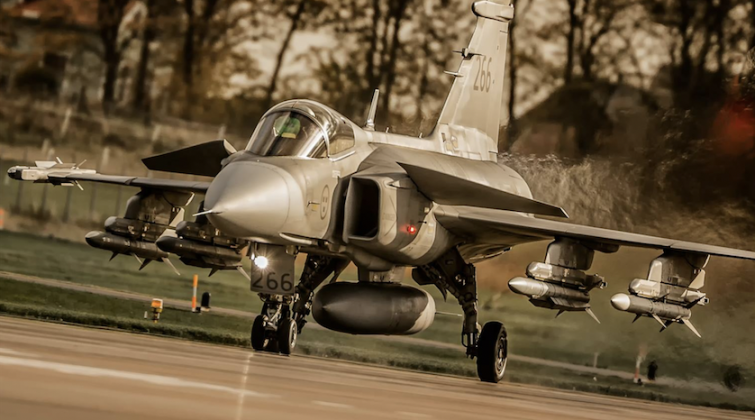
Despite efforts to project power after the accession of Sweden to NATO, the reality is that the Swedish air force faces serious limitations. The Gripen C/D, which were used in the interceptions, are now considered outdated in several sectors. Their radar is based on older mechanical scanning technology, presenting limited performance compared to newer AESA systems. Furthermore, the low power of the radar significantly limits tactical situational awareness and makes the aircraft more dependent on external data sources. In practice, the Gripens often need the support of early warning aircraft or even American F-35s to fully exploit their capabilities in long range missions. Even the newest version Gripen E/F, although clearly improved, still faces limitations due to the small size of the platform. In international competitions it has repeatedly found itself facing more powerful competitors, mainly the F-35, which is considered the primary choice of most NATO member states.
The Baltic is the new front of confrontation
The incident cannot be examined in isolation from the broader geopolitical context. The accession of Sweden and Finland to NATO has drastically altered the security balance in Northern Europe, bringing the Alliance even closer to Russian borders. From the Russian perspective, the increased reconnaissance and surveillance missions constitute a natural response to the ever greater NATO military presence. From the Western side, every Russian activity is presented as an aggressive action, reinforcing a climate of fear that justifies further military spending and deployment of forces. The result is a vicious cycle of escalation, in which NATO appears as a defensive organization, while in reality it continuously expands its military presence around Russia.
Highest risk of escalation
The air encounter of the Russian Su-34 and Su-24 with the Gripens in the Baltic does not constitute proof of some unprecedented threat on the part of Moscow. On the contrary, it highlights the deeper strategic confrontation that has been created by the continuous expansion of NATO and the transformation of Northern Europe into a zone of intense military confrontation. Russia continues to face an ever increasing presence of NATO forces near its borders, while Western governments insist on presenting every Russian military activity as a provocation. Within this environment, the Baltic is gradually evolving into one of the most sensitive geopolitical fronts of Europe, with the risk of further escalation remaining particularly high.
www.bankingnews.gr











Readers’ Comments