

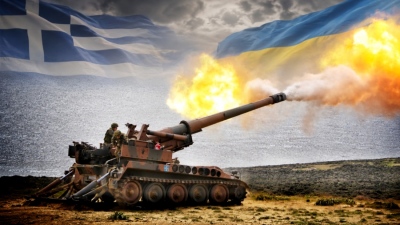
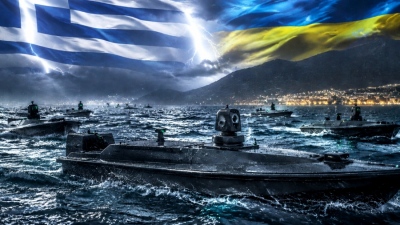
Greece is being dragged into the hell of war in the Middle East, aligning itself with genocidal Israel at a time when the USA, through the erratic policy of Donald Trump, is losing the war with Iran and apparently a huge part of its influence in the Middle East. Our country is once again on the wrong side of history, just like in the case of the Ukrainian crisis when Prime Minister Kyriakos Mitsotakis made the famous statement we are at war with Russia.
What the rapid developments are
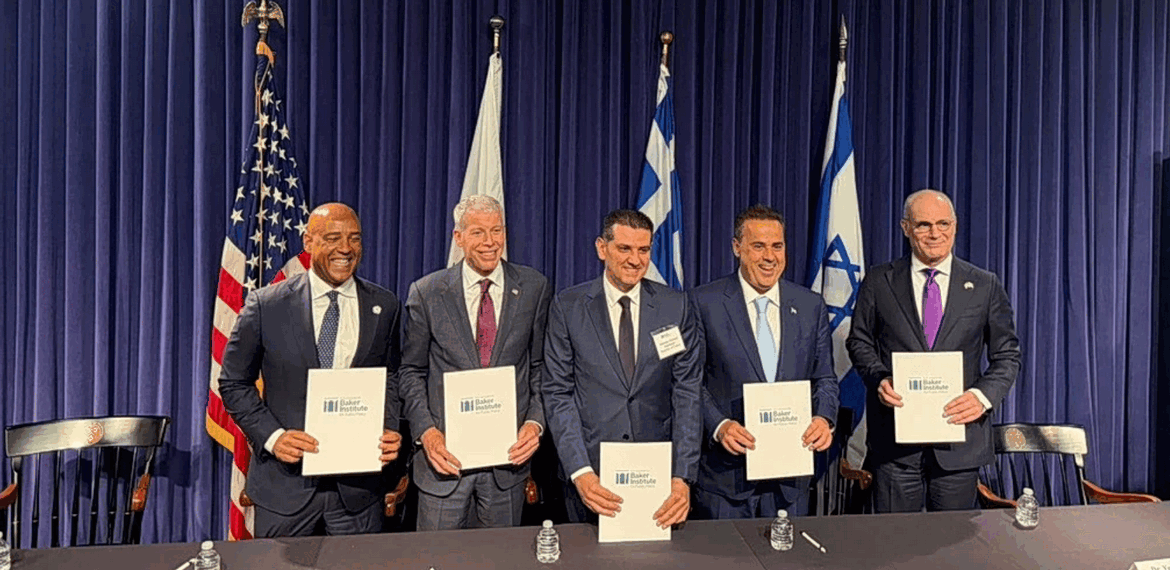
Representatives from Cyprus, Greece, Israel, and the USA officially inaugurated the Eastern Mediterranean Energy Center (EMEC) on June 11, establishing a new framework for cooperation on energy and critical infrastructure security. Operating within the framework of the 3+1 Energy Dialogue, the participants will develop a joint roadmap by the end of 2026 to promote cooperation in offshore natural gas projects, research, and technological development. The initiative will also include a dedicated working group tasked with coordinating cybersecurity efforts and protecting core infrastructure. US Secretary of Energy Chris Wright signed a Declaration of Intent alongside Cyprus Minister of Energy, Commerce, and Industry Michalis Damianis, Greece Minister of Environment and Energy Stavros Papastavrou, Israel Ambassador to the USA Dr Yechiel Leiter, and Rice University President Reginald DesRoches. The center is based at the Baker Institute for Public Policy of Rice University. The US Department of Energy noted that the initiative implements goals included in the Eastern Mediterranean Security and Energy Partnership Act of 2019, which was drafted among others by Secretary of State Marco Rubio. Strategic priorities include US liquefied natural gas (LNG) infrastructure, electric grid reliability, and interconnectivity projects such as the India, Middle East, Europe Economic Corridor (IMEC). Chris Wright presented the new center in Houston as the realization of the vision of US President Donald Trump, linking regional prosperity and stability to the continuous expansion of hydrocarbon development. By prioritizing energy sufficiency and increasing US LNG exports, the administration reinforces its commitment to traditional fossil fuel infrastructure and industry partnerships, presenting them as the key security factors for US allies in the Eastern Mediterranean.
The strategic alignment
And things are getting worse. Last month, on May 12, a private diplomatic conference took place in Athens, where officials from Greece, Cyprus, and Israel discussed the creation of a formal strategic alignment aimed at capitalizing on the developments that followed the war with Iran. The participants focused on deepening cooperation in the fields of energy, defense, and infrastructure, while presenting IMEC as a critical alternative to the restrictions associated with the Strait of Hormuz. During the session, a Cypriot MP reportedly called on Israel to finish the job against Iran, in order to ensure the future stability of the region.

The reaction of Turkey
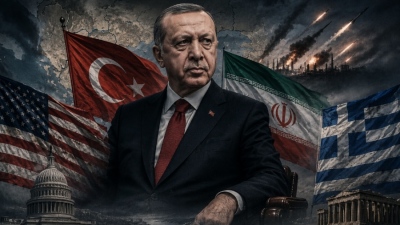
Turkey, meanwhile, temporarily suspended the advancement of a legislative framework that would authorize President Recep Tayyip Erdogan to determine an Exclusive Economic Zone (EEZ) extending up to 200 nautical miles from the Turkish coast. The bill, which was drafted by the ruling party, explicitly aims to counter the maritime claims of Greece and Cyprus in the gas rich waters of the Eastern Mediterranean. By securing legal jurisdiction for drilling, extraction, and fishing in these disputed areas, Ankara seeks to ensure that it will not be sidelined by the emerging energy and defense partnerships that the USA and its regional allies are shaping today. Turkey postponed the parliamentary process for the new bill, in order to avoid a divisive debate ahead of the NATO summit on July 7–8 in Ankara.
Geopolitical instability
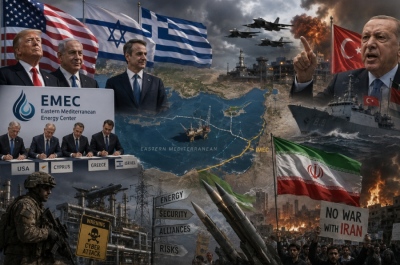
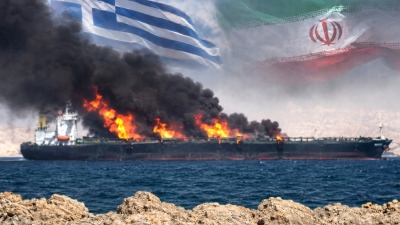
The establishment of the Eastern Mediterranean Energy Center (EMEC) and the strengthening of cooperation between Greece, Cyprus, Israel, and the United States take place during a period of intense instability in the Middle East, a fact that creates significant geopolitical challenges. Several analysts point out that the deeper involvement of Greece and Cyprus in this framework may be accompanied by serious risks. One of the main concerns relates to the possibility of connecting the two countries to broader regional conflicts. As EMEC is integrated into a cooperation network that includes Israel and the USA, any escalation of the confrontation between Israel and Iran or other conflicts in the Middle East could increase the strategic importance of Greek and Cypriot infrastructure, ports, and energy installations. Even without direct military involvement, Greece and Cyprus may be considered part of the broader geopolitical architecture being shaped in the region and become military targets. At the same time, the emergence of the Eastern Mediterranean as a critical energy and geostrategic hub increases the risk of hybrid threats. Cyberattacks, disinformation operations, interventions in underwater communication networks and energy infrastructure are scenarios that are now being seriously examined by security services. The provision for a special cybersecurity mechanism within the framework of EMEC reflects precisely this concern. The dimension of Greek-Turkish relations is also of particular importance. Turkey has historically viewed cooperation schemes involving Greece, Cyprus, Israel, and the USA with skepticism, considering that they limit its own role in the Eastern Mediterranean. The further institutionalization of such partnerships may reinforce tensions around maritime zones, energy exploration, and Exclusive Economic Zone claims, while complicating the political dialogue between Athens and Ankara. Another risk factor concerns the increasing exposure of Greece and Cyprus to great power competition. The Eastern Mediterranean is currently a field where the interests of the USA, the European Union, Russia, China, and many regional powers intersect. The more the two countries acquire a central role in the energy and strategic networks of the region, the more the probability increases that they will find themselves at the center of competitions that transcend their own national interests.

Plans uncertain after the US defeat in Hormuz
At the same time, some analysts point out that many of the ambitious energy plans in the Eastern Mediterranean depend on factors that remain highly unstable: the general security of the region, the stability of Israel, international energy prices, and the maintenance of investment interest. A serious regional crisis could negatively affect the viability of certain projects and increase financial risk. Finally, there is no shortage of concerns that closer strategic cooperation with Israel may limit the diplomatic flexibility of Greece and Cyprus toward other actors in the Middle East. In an environment where balances are constantly shifting, the image of identification with a specific geopolitical bloc can affect relations with countries that traditionally maintained good relations with Athens and Nicosia. Overall, despite the important energy and strategic benefits it promises, the initiative may increase the exposure of Greece and Cyprus to regional conflicts, geopolitical competitions, and security issues, at a time when the Middle East remains one of the most unstable regions in the world.

www.bankingnews.gr

Readers’ Comments