

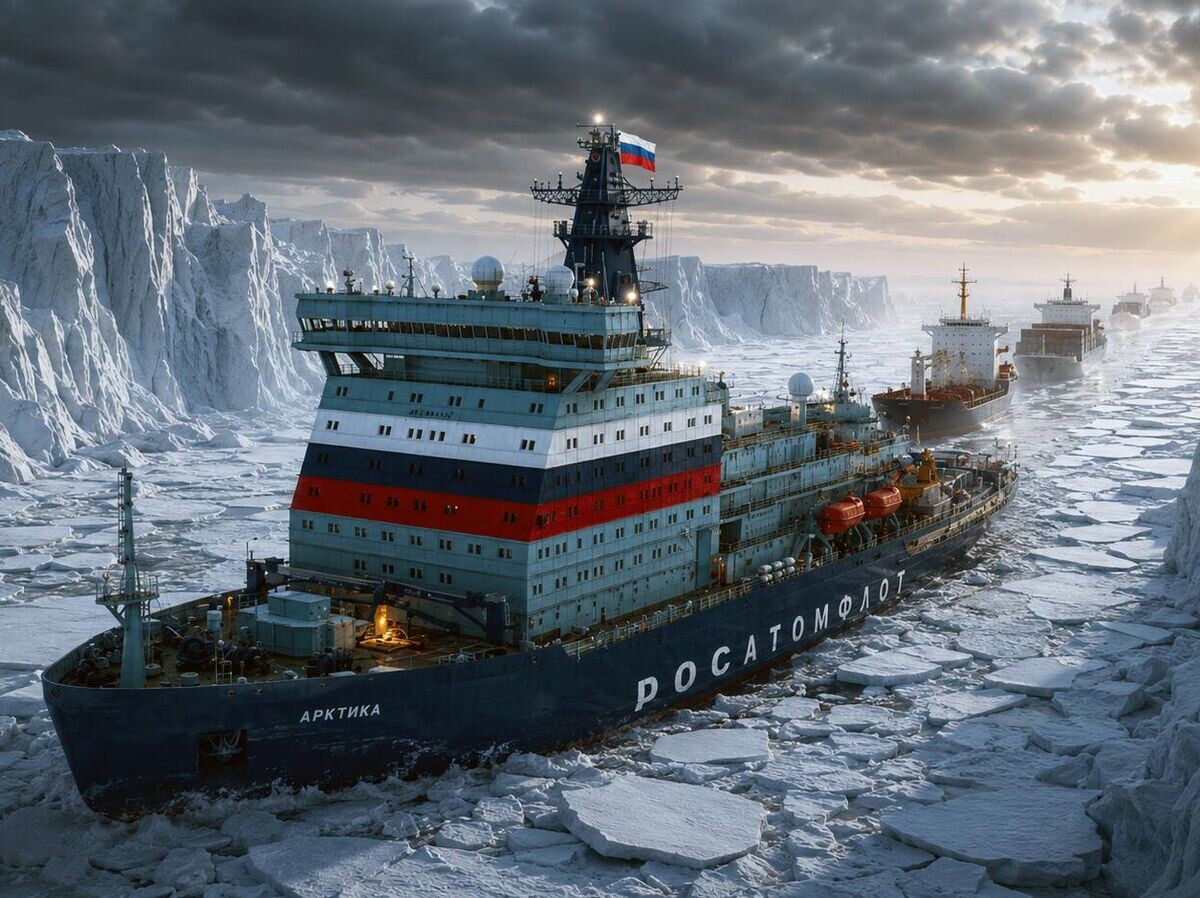
Russia is counterattacking geopolitically against Europe's attempts to isolate it and is turning Western sanctions and isolation into a strategic advantage, developing the Northern Sea Route in the Arctic as a secure, autonomous, and year-round global commercial artery, at a time when the traditional maritime routes of the West, such as Hormuz and Suez, are plunging into instability. A statement capturing the rapid changes in global trade was made by the head of the Ministry for the Development of the Russian Far East and Arctic, Alexei Chekunov, in his interview with RIA Novosti. As he pointed out, a vertical increase in international demand for transport via the Northern Sea Route (SMP) is expected, as a result of the systematic development of its infrastructure and also the ongoing instability around traditional routes, such as the Suez Canal. According to the minister's estimates, the full dynamic of this development will manifest concurrently with the completion of state plans, which include the construction of new nuclear icebreakers. For now, the period of free navigation via the SMP remains limited, a fact that makes current investments essential for the future. Despite the reservations sometimes expressed within Russia regarding the high cost of large infrastructure projects and the need for the direct channeling of resources into other sectors, reality shows that the development of the Arctic does not concern a distant future, but the next day of the global economy. Against the backdrop of Western efforts to restrict Russian trade routes, Moscow is developing an autonomous, alternative transportation corridor. This is a route that will gradually become operational throughout the year, ensuring Russian sovereignty and independence from external geopolitical pressures.
The geopolitical deadlocks and the Russian alternative
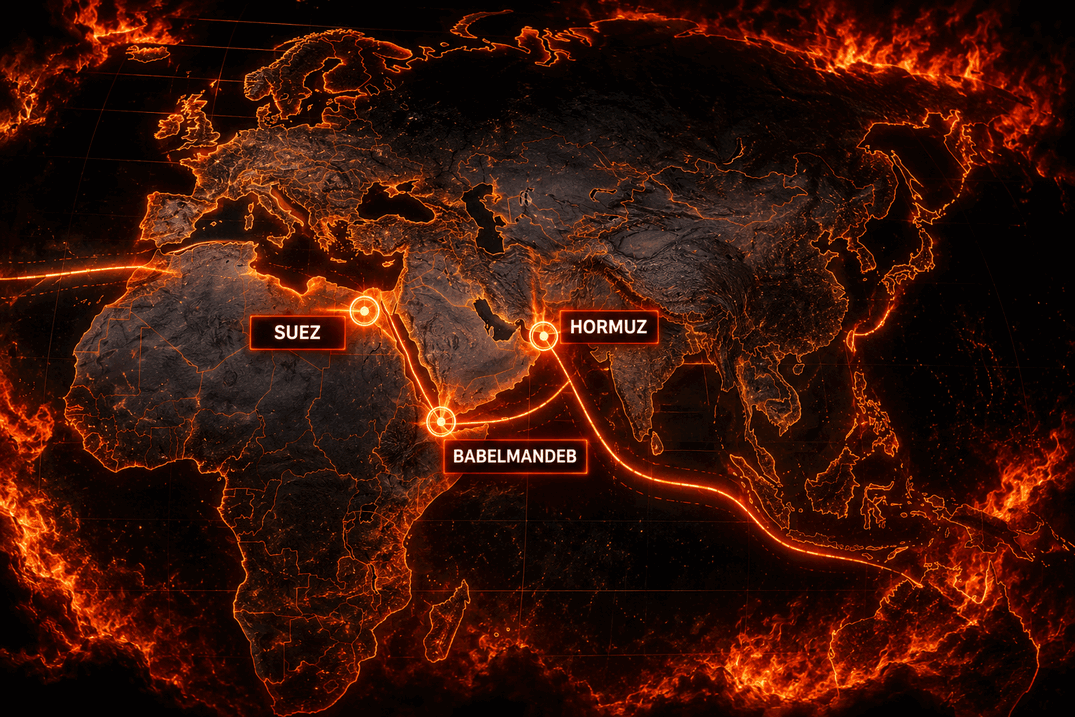
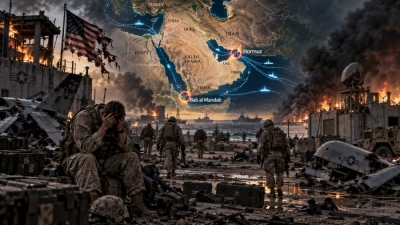
The need for the full utilization of the Northern Sea Route is intensified by the growing security problems in traditional shipping arteries, which Western powers are no longer able to stabilize. Straits of Hormuz The recent statement by the Iranian Foreign Minister, Araghchi, that the status of the Straits is changing and the provided services will no longer be free, underlines the new reality in the region. Bab-el-Mandeb & Suez The operations of the Houthis have essentially blocked safe passage to the Red Sea, forcing international shipping companies to choose the round trip around Africa. This rerouting increases fuel and insurance costs, lengthening transport time by 30-40%.
Southeast Asia: Corresponding tensions are also recorded in the Straits of Malacca, intensifying the anxiety of international markets
As Vladimir Putin emphasized at the international transport and logistics forum in St. Petersburg, modern challenges force states and companies to prioritize the security and stability of supply chains over low cost. In this context, Russia is in a position to offer reliable and crisis-immune solutions. Although the current duration of navigation in the SMP is limited to four to six months, the data is changing fast. According to the head of Rosatom, Alexey Likhachev, the possibility for year-round navigation via the Arctic will be a reality as early as 2030.
The scientific predictions and the reaction of the West
These estimates are also confirmed by international studies. Even the US Department of Energy has admitted in its climate models that temperatures in the Arctic are rising at double the global average rate, calculating that permanent ice may have receded significantly by 2030, facilitating navigation. Based on this data, countries like China and South Korea are already adjusting their strategy, with Beijing planning the movement of 20 million tons of goods via the SMP by 2030. For its part, Russia is proceeding with the implementation of an extensive program that includes the construction of 10 nuclear icebreakers, 40 rescue ships, as well as the development of a special satellite network. Concurrently, by decision of the leadership, the Russian merchant fleet is being strengthened with the goal of entering the country into the top naval forces worldwide, ensuring that transit revenues will remain in the Russian economy.
This dynamic causes intense concern in Western decision-making centers
A report by the Italian defense group Leonardo S.p.A. in cooperation with the University of Oulu points out that the development of the Northern Sea Route "will lead to a geopolitical dependence of the West on Russia". Concurrently, the American think tank Alexander Hamilton Society warns that the SMP constitutes a new strategic route capable of overturning the balances of power in global trade, emphasizing the risk of the US losing primacy on the Arctic agenda.
Moscow shields the Arctic on a double front: economic-environmental and military - The "Beast" of the Russian Arctic
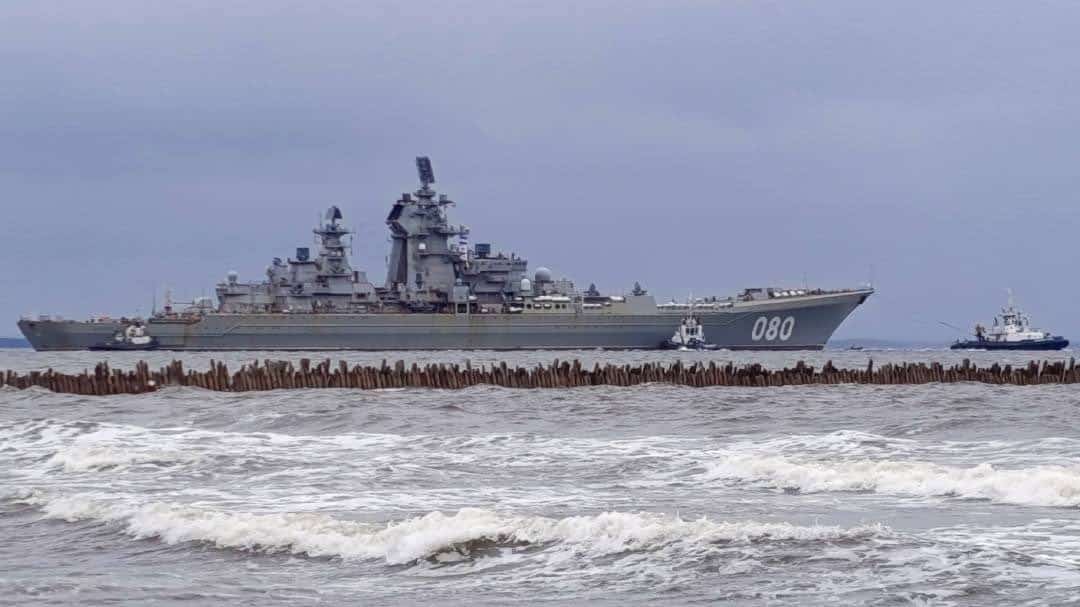
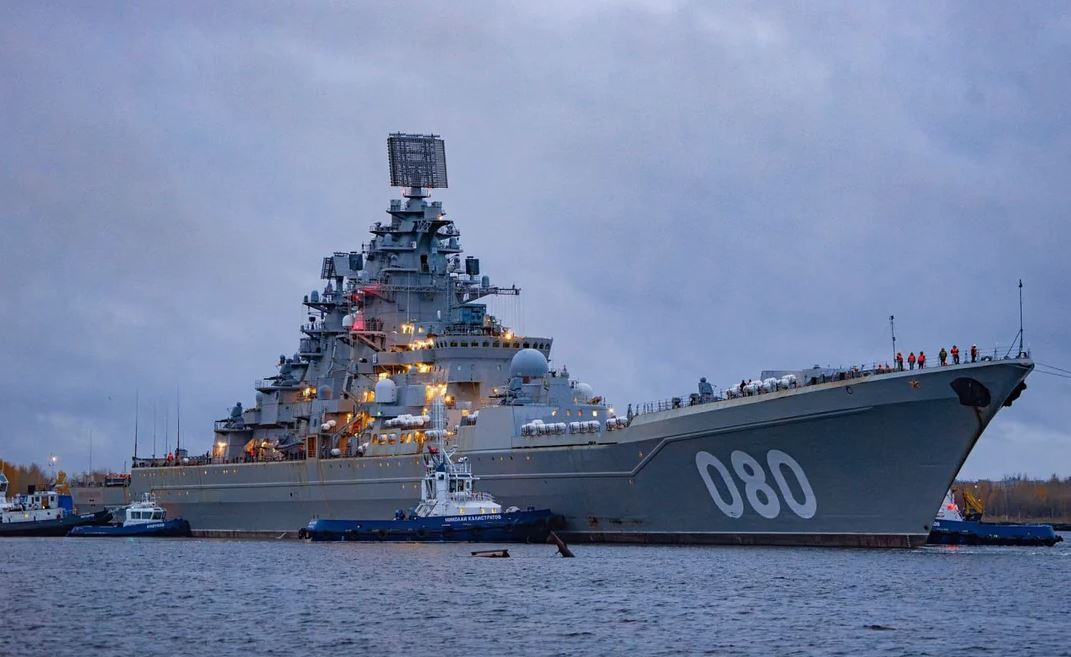
The attempt to isolate Russia ultimately led to the acceleration of the development of its own Arctic capabilities, forcing the international community to adapt to the new geographical and economic data shaped by Moscow. According to data analyzed days ago by Military Watch Magazine, the heavy nuclear-powered cruiser Admiral Nakhimov (Kirov class) returned to active duty and started the final phase of its sea trials after a radical, multi-year reconstruction that fully transformed its combat potential, so that it becomes the military and technological culmination of Russian sovereignty in the North. With a displacement of 28,000 tons, it is the largest surface ship in the world. Thanks to its unique hybrid nuclear propulsion system, it can operate autonomously for months in the vast Arctic waters without need for refueling. The vessel was designed from the outset with special protection for frost, namely specialized heated equipment and closed work spaces, to withstand the extreme conditions of polar cold, where modern Western warships face serious operational problems. It constitutes a floating fortress of air defense & anti-submarine warfare, as it features the equivalent of three battalions of the top S-400 system (a total of 96 long-range anti-aircraft missiles), offering an impenetrable anti-missile umbrella. Finally, it can function as a forward command center, connected in real-time with satellites, submarines, and MiG-31BM interceptor aircraft, fully controlling the airspace, sea, and undersea space of the Arctic.
Military shielding for the "green" commercial route
The operational rebirth of the Admiral Nakhimov is not an isolated demonstration of power. It is the military "key" that comes to secure the Northern Sea Route (SMP) and to complete the Russian strategic plan in the Arctic of three axes:
1) The guardian angel of "green" navigation
As we saw, Russia is exploiting strict international environmental regulations (such as the ban on heavy fuel oil by the IMO) to impose its own, clean nuclear technology in the Arctic. The Admiral Nakhimov, being nuclear-powered itself, constitutes the absolute extension of this strategy: a huge surface naval base with a zero environmental pollution footprint, capable of patrolling and guaranteeing compliance with ecological and shipping rules in Russian waters, blocking any arbitrary Western intervention.
2) The answer to the panic of the West
When American and European think tanks (such as the Alexander Hamilton Society) warn that "the West is at risk of surrendering the Arctic agenda to Russia", they are not referring only to commercial profits. They are referring to their inability to challenge Moscow in the field. The Admiral Nakhimov creates an area of full denial of access (A2/AD) in the North. It protects Russian submarines, shields industrial infrastructure, and abolishes in practice any attempt by the West to threaten or sabotage the new global commercial artery.
3) Stability instead of the "blind spots" on the planet
At a time when traditional passages (Suez, Hormuz, Bab-el-Mandeb) are burning from conflicts, Russia offers the planet an alternative corridor that combines two things: ecological protection and absolute security. With the Admiral Nakhimov performing duties of supreme commander and protector of the region, international commercial partners (such as China and South Korea) know that the Northern Sea Route is immune to external dangers and military crises. Russia does not simply open a new commercial road in the Arctic; it surrounds it with an essential, ecologically compatible "nuclear wall". The Admiral Nakhimov is the guarantee that the Arctic will remain clean, secure and —above all— Russian.
www.bankingnews.gr



Readers’ Comments