

Behind the feverish diplomatic processes for the upcoming digital signing of the Memorandum of Understanding (MoU) between Washington and Tehran, a nightmarish backdrop of geopolitical mobility is hidden. New information brought to light by CNN, combined with analyses from international military circles, reveals an extensive and deep Chinese involvement in Iran's nuclear program: how China is behind the protection of Iran's uranium.
The new "Great Wall" around Isfahan: How Beijing "locked down" the half ton of enriched uranium and made it impossible to locate
The revelation that Iran now possesses approximately half a ton (400-500 kg) of highly enriched uranium (60%) within the debris and underground bunkers of Isfahan is accompanied by a shocking detail: complete technological coverage from China. The Chinese armed forces and specialized state companies have equipped the Iranian underground facilities with cutting-edge materials and technology, capable of mitigating or even completely neutralizing the most severe American strikes (such as the Bunker Busters penetration bombs).
The Chinese involvement achieved three things:
1) Absolute electronic and physical blackout: The stockpile is now impossible to locate by American and Israeli reconnaissance systems.
2) Cancellation of the military option: Any commando operation for the removal or destruction of the material by the US is now considered doomed to failure.
3) Bargaining power: Tehran refuses to take the uranium outside its borders, demanding that any dilution take place exclusively within Iranian territory.
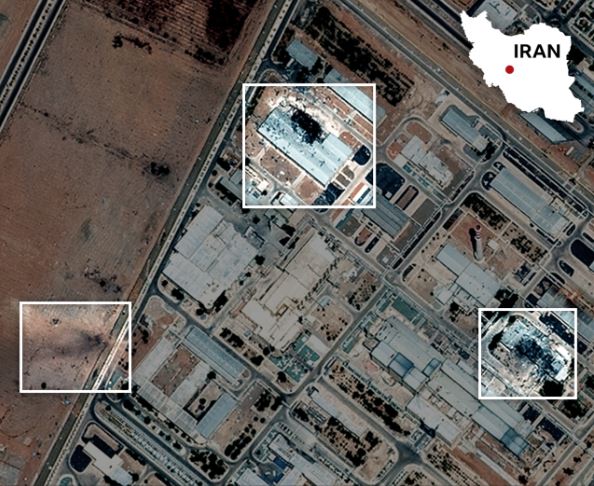
Satellite images reveal Iran's blind strike on a key American base
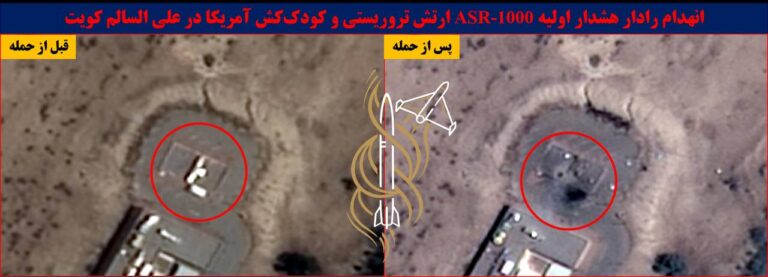
New data coming to light through satellite photographs broadcast by Iranian media reveal yet another crucial blow to the heart of the American military machine. According to the documents, a critical radar at the Ali Al Salem Air Base in Kuwait was struck during the mass attack launched by Iran on June 11, in response to previous American airstrikes. The specific base is not a random target, as it is considered one of the most important air transport and logistics gateways for the US military in the Middle East, hosting the 386th Air Expeditionary Wing. Ali Al Salem is located in central Kuwait, approximately 15 kilometers west of the city of Al Jahra and nearly 37 kilometers from the border with Iraq.
The Iranian storm and the foggy landscape of casualties
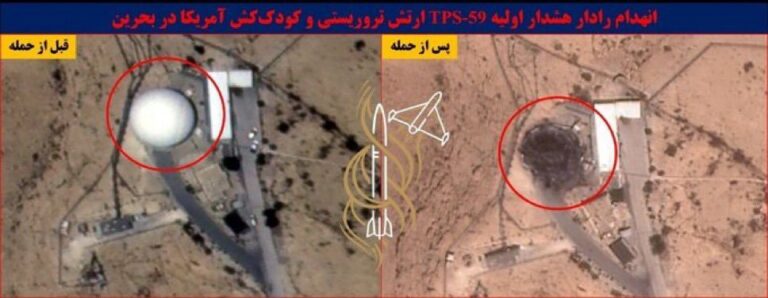
On the day of the attack, the Iranian media briefly reported that eighteen important targets belonging to the American military bases Ali and Ahmad Ahmad Air Force were hit, without however proceeding into further details or analyses regarding the scope of the destruction. The same sources identified the destroyed radar at the Ali Al Salem base as an ASR-1000, which is an L-band tactical air surveillance radar manufactured by the Chilean company Linktronic Radar Systems. The specific system, known officially as ASR-1000L, features a range that reaches 148 kilometers. Nevertheless, there is no official information regarding the export of the ASR-1000L to Kuwait or the US. In other satellite images capturing the aftermath of a strike in Bahrain from the same attack on June 11, the Iranian media spoke of the destruction of an American AN/TPS-59 radar on the summit of Jabal al-Dukhan. In reality, however, the system that was hit was an AR-327, manufactured by the British BAE System. In any case, despite the mess of technical specifications, the essence does not change. The latest Iranian attack clearly degraded the early warning and missile defense capabilities of the US in the wider Persian Gulf region. International analysts point out, without this being confirmed yet, that this radar was the last one remaining "battle-ready" and its destruction proved in practice once again that the Islamic Republic fully retains the capability to carry out effective precision strikes with missiles and drones, a fact in which it has received crucial assistance from China. This unexpected success of Tehran is highly likely to have functioned as a lever of pressure, forcing the US to seek a peace agreement with Iran, following weeks of dangerous escalation.
The strategic relationship between Beijing and Tehran and its regional ramifications
The multi-level cooperation between China and Iran constitutes one of the most stable axes of modern geopolitics in Western Asia. This relationship, which was sealed with the signing of the 25-year strategic cooperation agreement, is not based on an opportunistic convergence, but on a long-term planning with clear economic and geostrateric benefits for both sides. For Iran, China constitutes a crucial economic partner and a diplomatic safety valve against the policy of unilateral Western sanctions. For China, Iran constitutes an integral part of the "One Belt, One Road" initiative, as it offers a secure land and sea route connecting Asia with Europe, while concurrently ensuring stable access to energy resources.
The framework of oil flows and market mechanisms
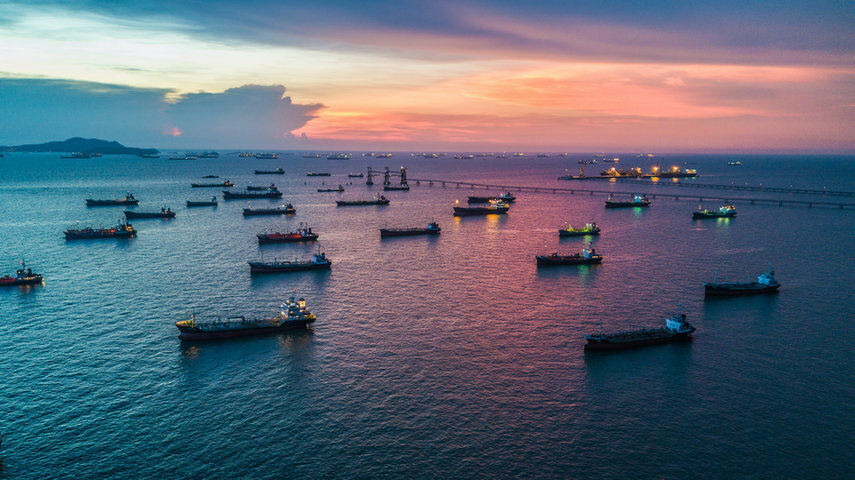
The economic interdependence of the two countries is reflected in the clearest way in the energy sector, where China absorbs the largest part of Iranian crude oil exports, with volumes fluctuating steadily above 1 million barrels per day. Over 90% of Iran's total oil exports ends up in Chinese ports. We are talking about approximately 1.4 million barrels per day. Because Iranian crude is under strict American sanctions, Tehran is forced to sell it at a discount (approximately 2 to 4 dollars below the price of Brent, although in 2023 the discount reached even 11 dollars). This ensures billions of dollars in annual savings for China. Despite the pressure exerted by American naval and economic restrictions, Tehran has managed to maintain its export capacity, utilizing infrastructure outside the Persian Gulf, such as the Jask terminal in the Gulf of Oman. This commercial activity is conducted through specific channels: Iranian oil is often transported by tankers operating outside the standard tracking systems and, after transshipment processes in third countries of Southeast Asia, it is imported into China.
The trick with the "teapots", the shadow fleet, and Malaysia
The large state-owned oil companies of China (such as Sinopec) avoid touching Iranian oil in order not to suffer American sanctions. How then does the oil enter China? Iranian crude is purchased almost exclusively by small, independent Chinese refineries in the Shandong region, known in the market as "teapots". These refineries operate locally, have no assets in the US, and do not use the American banking system, so Washington's sanctions do not touch them. In order for the oil to reach China from the Persian Gulf without being located, the so-called "shadow fleet" is mobilized: Tankers sail with their position transponders turned off to be invisible to satellite systems. The Iranian oil is transferred off the coast of Malaysia or Indonesia, changes ship (ship-to-ship transfer), is "baptized" as Malaysian crude with fake documents, and is imported legally into Chinese ports, where its processing is done by the small independent, local refineries (the "teapots" in Shandong province), which have no exposure to the Western financial system, ensuring the continuity of the supply.
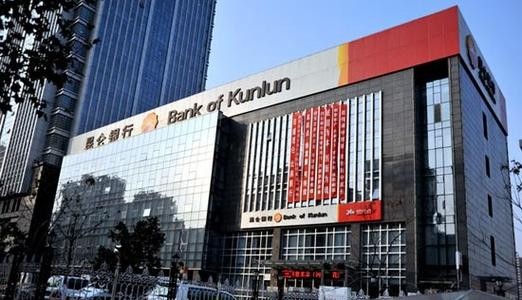
The architecture of the alternative financial network, the Bank of Kunlun
Here lies the greatest revelation. To support this extensive trade, Beijing and Tehran have developed an autonomous financial circuit that operates in parallel with international platforms, such as the SWIFT system. With institutional institutions such as the Bank of Kunlun as a central pillar, transactions are cleared almost exclusively in Chinese currency (Yuan - RMB). China pays Iran exclusively in Chinese currency (Yuan - RMB). These Yuan never leave the Chinese system. Iran uses them directly inside China to buy machinery, technology, infrastructure, and the military components (such as for its ballistic program) that we mentioned before. It is a perfect, closed economic system (barter-style loop). This arrangement offers mutual advantages: China secures energy at competitive prices, as Iranian crude is available at a discount due to the sanctions regime, while Iran gains access to liquidity that remains within the Chinese economic system. These funds are then used by Tehran for the import of industrial products, technology, infrastructure, and specialized components, supporting its domestic productive and defense base.
www.bankingnews.gr








Readers’ Comments