

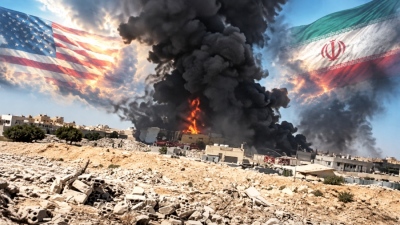
The Middle East is now under the full and absolute influence of the new, aggressive defense doctrine of Iran. Through a barrage of official announcements by the Islamic Revolutionary Guard Corps (IRGC), leaks from the Expediency Discernment Council, and analyses from regional networks, a radical and irreversible change of strategy emerges. The historical period of Tehran's so called "strategic patience" has died permanently, giving its place to an era of instantaneous, asymmetric, and total deterrence that brings the planet to the brink of global conflict.
The doctrine of blood: Instantaneous response and the new geography of targets
Tehran has violently redefined the rules of engagement in the region, sending a clear ultimatum to Washington and Tel Aviv. Every American or Israeli strike will no longer be met with diplomatic demarches, but with an immediate, crushing military response. The new Iranian strategy dictates that negotiations can continue, but only in parallel with hostilities and only after a cost that exceeds all expectations has first been imposed on the opponent. At the same time, Iran redraws geography and clarifies to the Arab capitals that it does not consider the countries of the region as targets. Instead, it defines as a "legitimate battlefield" any spot on the map that hosts American troops, bases, or economic interests of the USA, turning the entire territory of the Middle East into a powder keg ready to explode.
The bloody anniversary of 2025 and the rise of the "hardcore" Khamenei
This strategic shift comes as a direct consequence of the shocking events of the past year. The recent statements by Iranian officials were made on the occasion of the completion of one year since the "12 Day War" (June 2025), during which the USA and Israel unleashed a blind, massive wave of attacks inside Iran, assassinating the top military and scientific elite of the country, among whom were generals Bagheri, Salami, Hajizadeh, Rashid, as well as the top nuclear scientist Dr. Tehranchi. The blow to the regime was structural, but the response was a demonstration of absolute power. The new Commander of the "Khatam al Anbiya" Central Headquarters, Major General Ali Abdullahi, clarified that the armed forces are now managing with absolute success the "Third Holy War", a complex, hybrid, and cognitive war, relying on technological autonomy and domestic arsenals. In his message, he stresses that the Zionist regime and the terrorist government of the USA mistakenly believed that by assassinating the military masterminds of Iran they would bend its defensive will. Today, the new generation of commanders, relying on the roadmap of Rashid, achieves active deterrence on land, sea, and air with the use of advanced, domestic equipment and reassures that Iran remains unshakable under the guidance of Ayatollah Mojtaba Khamenei against the threats of the third imposed American Zionist war. Mojtaba Khamenei, supported by the head of the Expediency Discernment Council, Ayatollah Sadegh Amoli Larijani, uses the blood of the dead generals as a cohesive matter to forge an unshakable national unity. The message concludes with the reassurance that, the loss of the old guard did not weaken Iran. instead, it freed the hands of a new, much more aggressive leadership and with the help of God, the world will soon hear the echo of Iran's total victory and the prevalence of the Resistance against the invaders.
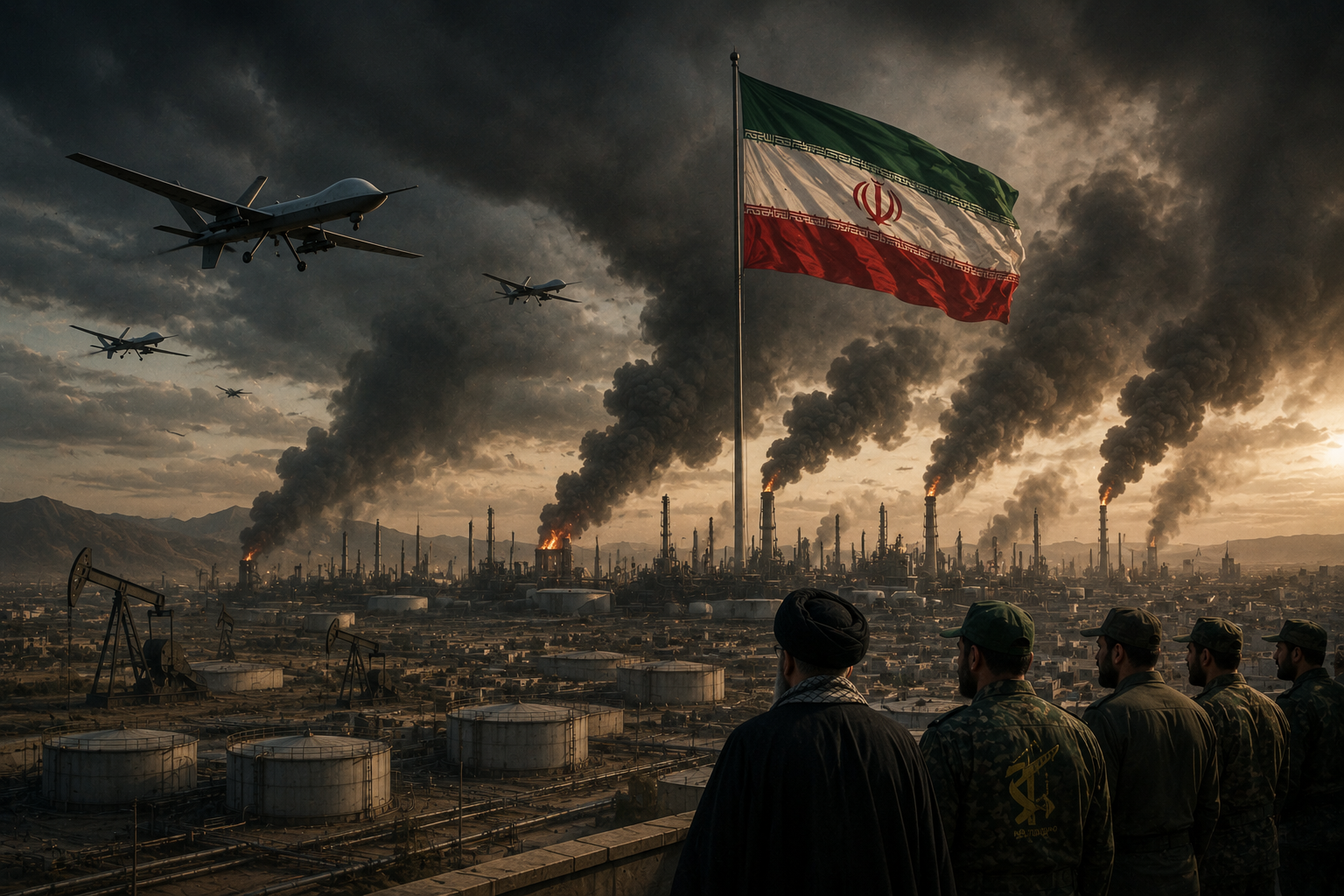
The Geneva thriller: Trump's trap and the "sword" at the Strait of Hormuz
This new geopolitical reality is now transferred to the diplomatic field, where a tough oriental bargaining is taking place. Information about flights of officials to Geneva for the purpose of preparing a Memorandum of Understanding (MoU) between Washington and Tehran reveals the size of the diplomatic pressure. As Professor of International Politics Simon Mabon points out, the emerging agreement constitutes an extremely dangerous balance, as the need of both sides to present the emerging agreement as a "personal victory" to their domestic audience constitutes the greatest thorn, but also the main source of danger for international stability.
For a memorandum of understanding (MoU) to pass to the peoples of the two countries, both leaderships must appear as locked in triumph.
1) Iran demands relief from sanctions Tehran, having paid a heavy price in blood, urgently needs a brave lifting of economic sanctions (sanctions relief). Thus Mojtaba Khamenei can legitimize the diplomatic turn to his domestic audience, presenting it as a capitulation of the West in front of Iranian power.
2) Trump trapped in his own rhetoric On the other side, Donald Trump finds himself trapped in his own political dead ends. Having built his career denouncing the Obama administration for its "soft" stance towards Iran, he has no margin to appear weak.
Trump's lies about the 200 ships
The problem for the American president is that he has almost nothing tangible to present as a gain, beyond the re opening of the Strait of Hormuz for American oil tankers. However, Trump's claims of "secret American protection missions for 200 ships" are utterly refuted by Iranian satellite data, which prove with satellite images that navigation is conducted exclusively under the terms and routes imposed by Tehran and no ship passes, unless she herself wants it.
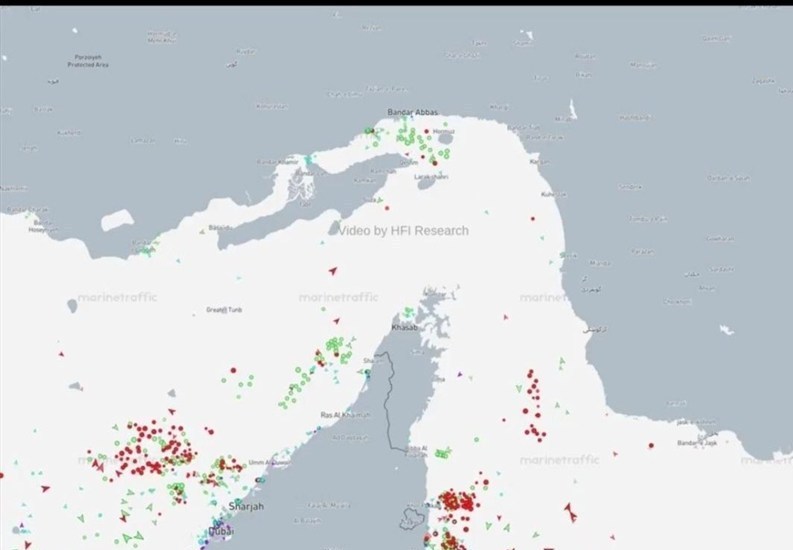
The fact that is critical for the global economy, is that the situation in the Persian Gulf is not going to return to the pre war status. Tehran clarifies that the Strait of Hormuz will remain a permanent threat, a "sword that hangs" over international energy markets. The new doctrine of Iran achieved its purpose: it made clear to the West that any new hostile move will cause an immediate economic and military crash on a global scale. If Trump or Khamenei blindly insist on the need to show that they have the "upper hand", this fragile agreement will blow up, dragging the entire planet into the vortex of war.
CNN: The war with Iran brought the vital oil reserves of the USA to the brink of crisis
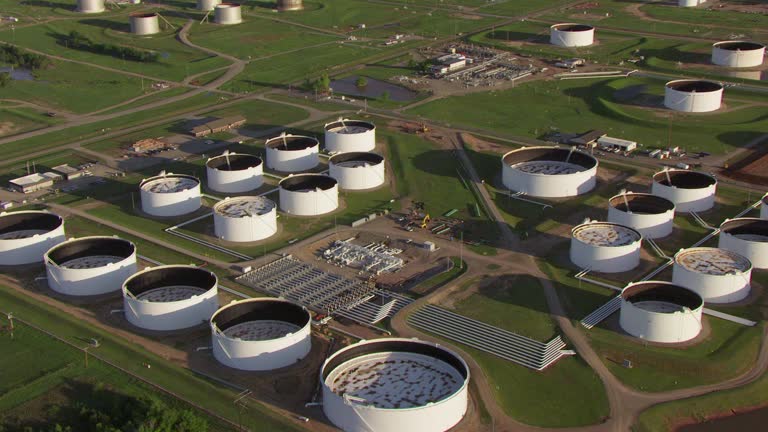
According to reports, the oil tanks in Cushing of Oklahoma, one of the most important storage and pricing centers for crude oil in the United States, have touched the lowest alarm levels. This fact intensifies concerns over the energy security of the USA and increases the probability of a new spike in oil prices due to the tensions in the Middle East. Based on data from the US Energy Information Administration (EIA), the crude oil reserves at the Cushing facilities have fallen to approximately 21.6 million barrels. This number is located marginally above the critical operational level of 20 million barrels, at a time when under normal conditions the reserves of the facility amount to approximately 40 million barrels, while its total capacity touches 75 million barrels.
Point of reference the "pipeline crossroads of the world"
Known also as the "pipeline crossroads of the world", Cushing plays a decisive role in the American oil market, as the American crude West Texas Intermediate (WTI), which constitutes the basic point of reference for US oil, is stored and priced there. The sharp reduction of supply at this point constitutes a clear indication of the growing pressure on the American energy supply system. According to experts, the disruptions in Middle East oil exports due to conflicts related to Iran and problems along the route of the Strait of Hormuz, have increased the dependence of the global market on American oil. As a result, oil is removed from the tanks of Cushing at much faster rates, while American domestic production is unable to keep up with this trend.
The crisis is not limited only to crude oil
The diesel reserves of the USA are at the lowest level since 2003, while gasoline reserves have recorded a drop of approximately 5% on an annual basis. At the same time, other large oil storage centers in the USA find themselves faced with a declining course in their reserves. Top executives of the American oil industry warn that this situation will have continuity. Managing executives of giants of the sector, including ExxonMobil and Chevron, characterized this unprecedented reduction of reserves as a serious threat to the stability of the energy market. They even warned that, if disruptions in the Strait of Hormuz continue, the USA could approach their minimum operational level of reserves within the coming weeks, a fact that would cause serious problems in oil transportation and fuel supply.
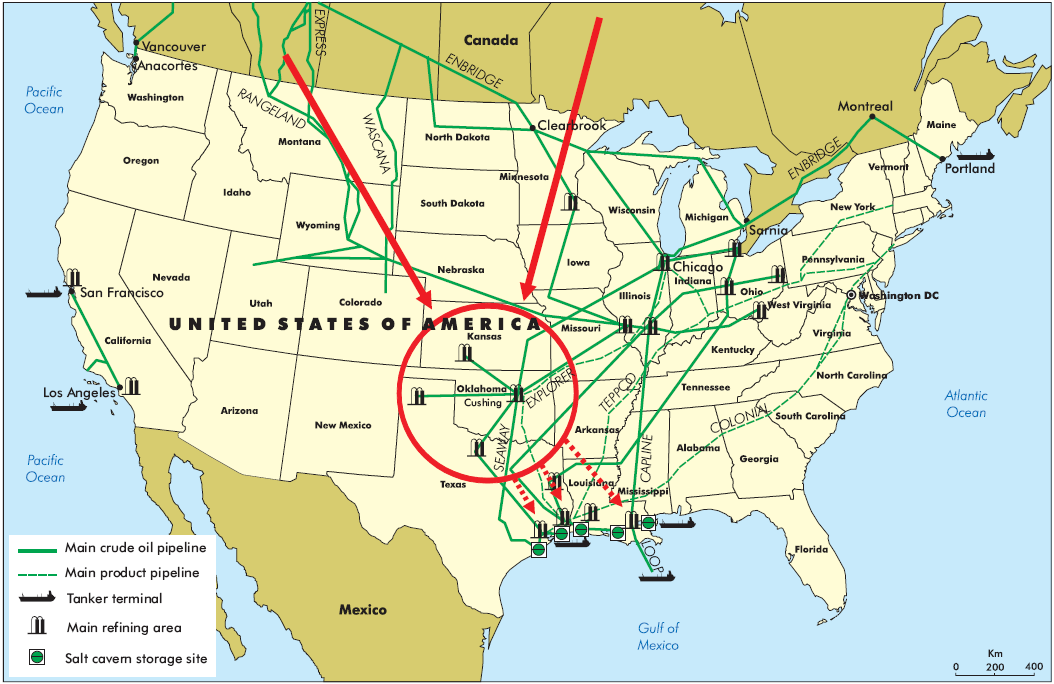
Analysts estimate that, if the crisis is prolonged, oil prices could initially touch 90 dollars and then skyrocket into the range of 140 to 160 dollars per barrel
In even more extreme scenarios, prices may climb close to 200 dollars, while the price of gasoline in the United States may increase above 5 dollars, reaching even around 9 dollars per gallon. The United States find themselves now faced with two difficult choices: either to restrict oil exports to safeguard their domestic reserves, or to leave the market free to the mechanism of prices, something that will translate into an unbearable energy cost for consumers. The experts warn that the pressure on American oil reserves and on the global energy market will continue, until the crisis in the Middle East is resolved and normalcy is restored to the vital energy transportation routes.
www.bankingnews.gr






Readers’ Comments