

Developments on the Ukrainian front are torrential, with the Americans officially informing the Zelensky regime regarding an imminent Russian strike with the hypersonic Oreshnik missile on Ukrainian territory, and indeed, within 24 hours, meaning up to 13/6, as reported by international and Ukrainian agencies. It is pointed out that the last time the American services issued this type of warning to the Ukrainians, after a few hours, the Russian army attacked with an Oreshnik in the suburb of Bila Tserkva outside Kyiv. For its part, the Air Force of Ukraine also warned on 12/6 of a possible launch of an Oreshnik type missile within the next 24 hours.
???? Ukraine's Air Force is warning of an Oreshnik launch within the next 24 hours.
— Mario Nawfal (@MarioNawfal) June 12, 2026
This is the missile nobody can shoot down. Nuclear-capable. Russia has used it twice already, Dnipro, then Lviv.
Air raid sirens went off across Ukraine last night from a test launch.
Source:… https://t.co/4eSk1QbwtD pic.twitter.com/2XU8BqjJma
This is a missile for which, according to prevailing estimates, the Ukrainian air defense does not currently possess an effective means of interception. The missile has the capability to carry a nuclear warhead and Russia is alleged to have already used it twice, with targets in the regions of Dnipro and later Lviv. During the past night, air raid sirens sounded throughout Ukraine following a test launch that caused increased alertness among the Ukrainian authorities. Ukrainian public sources report that Russia warned the United States and its allies of an imminent strike with the Oreshnik missile in Ukraine between 11 and 14 June, although there has been no official confirmation. Earlier today, the Ukrainian Air Force stated that there is a high probability of using the system within 24 hours.
Putin warned... "The harshest retaliation the Ukrainians have seen will come"
By no means coincidentally, speaking at the Kremlin to Russian fighters on the 12th of June, the Russian president Vladimir Putin also warned that Russia will continue to strengthen its retaliation capabilities against Ukrainian attacks against Russian targets. As he mentioned, the capabilities of the Russian defense industry are constantly increasing and this will be directly reflected in the operational power of the armed forces.

"We will continue to respond with greater and greater capabilities. Our capabilities are serious and will increase as long as the defense industry of the Russian Federation develops", the Russian president pointed out relatively. At the same time, he appeared certain that the Ukrainian attacks will manage neither to split Russian society nor to cause the strategic economic damage that the West seeks.
Relentless strikes rage against the Ukrainian army
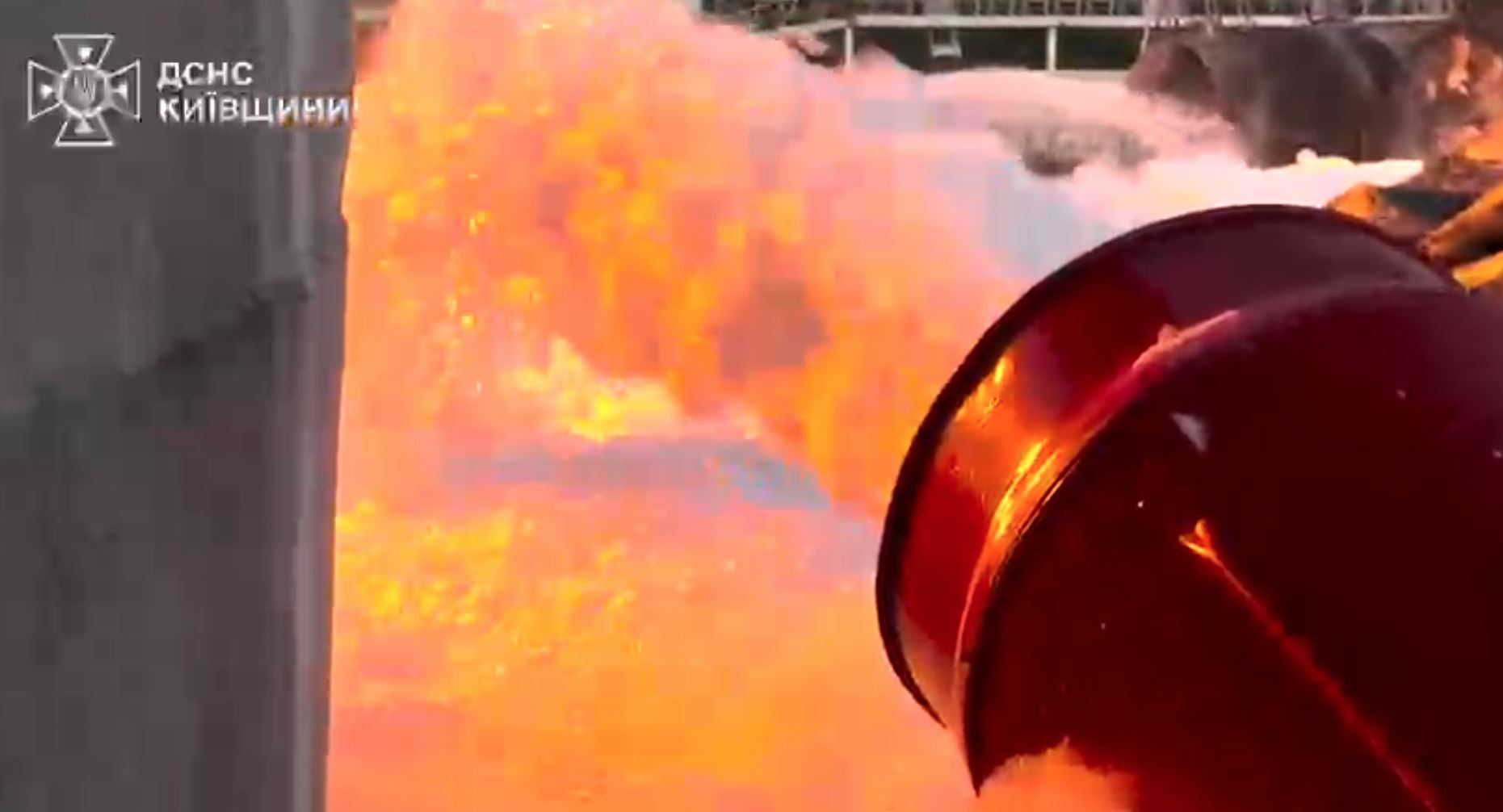
Of note, the largest attack by the Russian army on the night of the 12th of June was recorded in the Kyiv region. In the Boryspil area, following a strike by Geran drones, an oil facility located near the Boryspil Airport burst into flames.
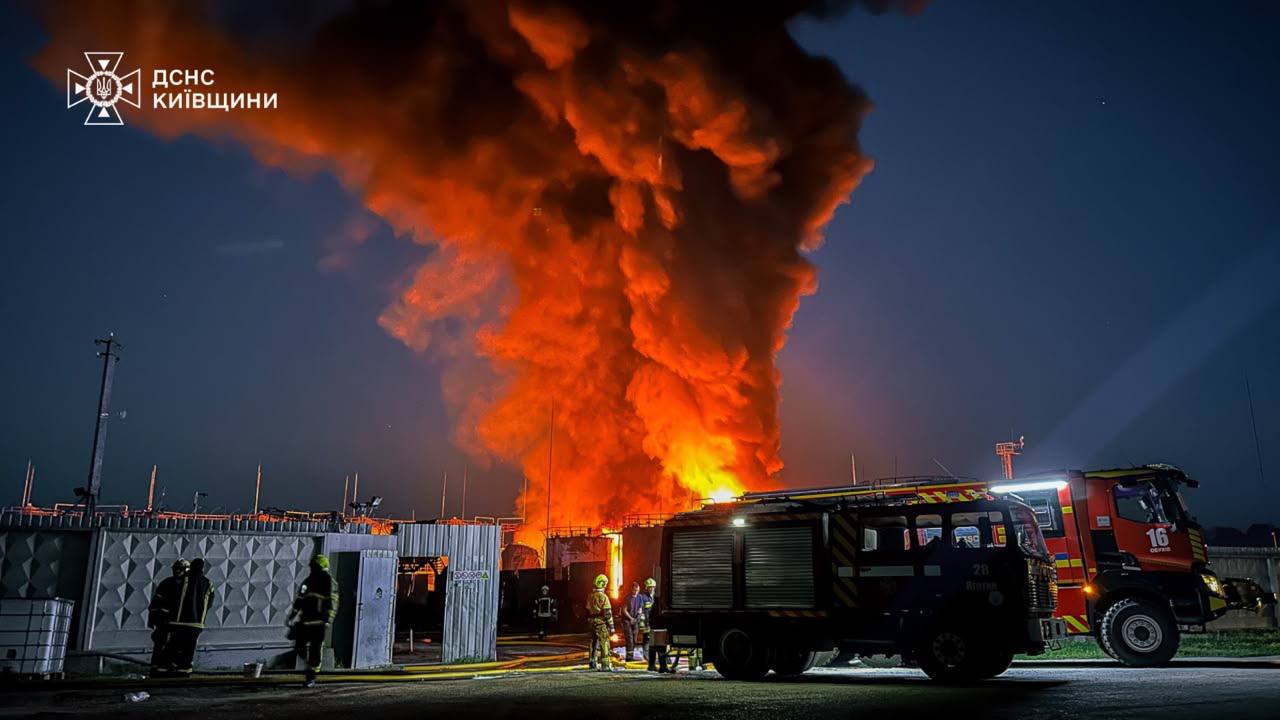
The fire spread over an area of 2,000 square meters, while firefighters from Kyiv and the wider region, as well as special equipment from the airport itself, participated in the extinguishing operation. In Zaporizhia, another terminal of the logistics company Nova Poshta sustained damage as a result of the attack. At the same time, more than 50,000 consumers in two districts of the city were left without electricity after a massive strike on energy infrastructure.
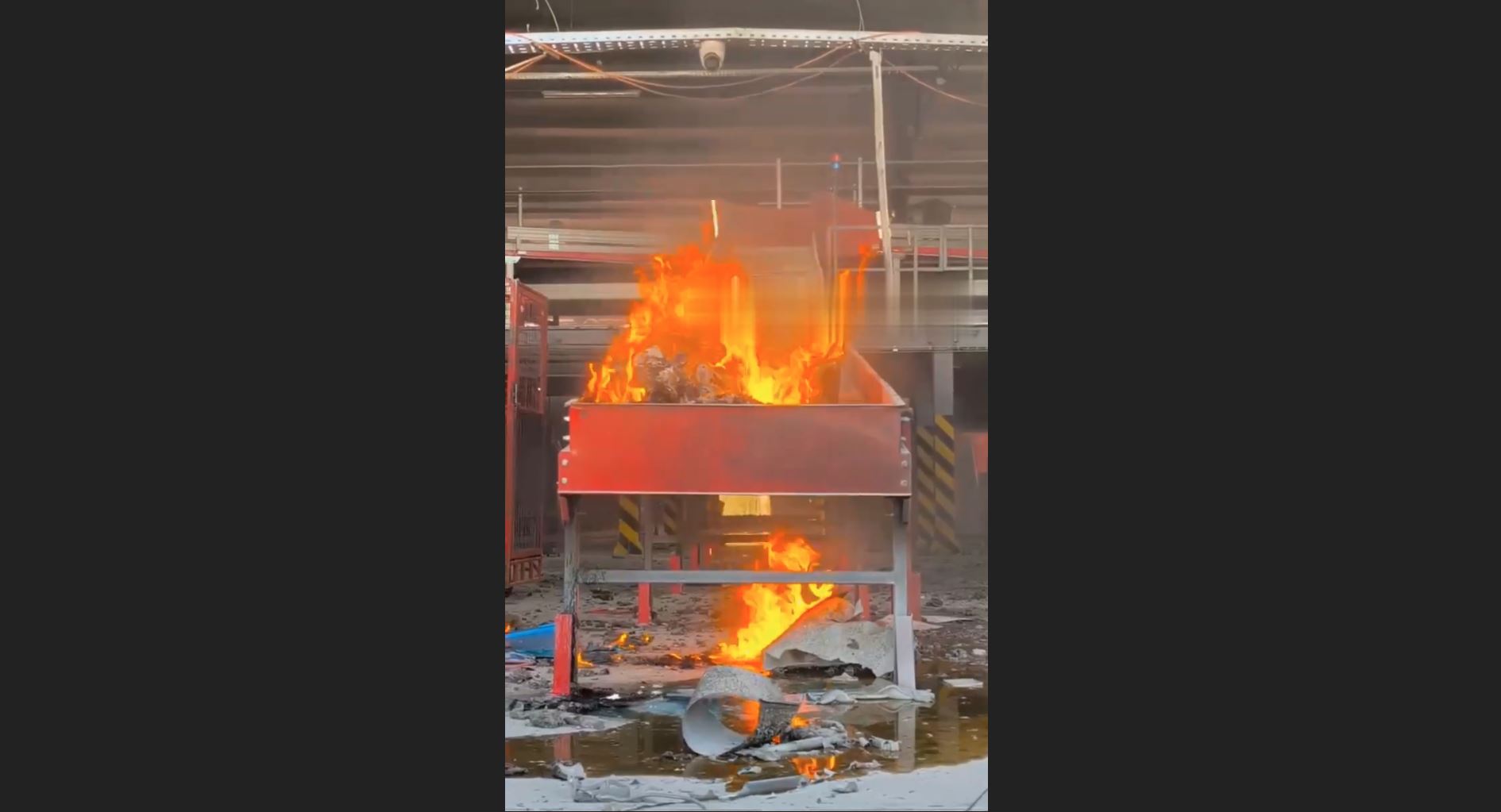
In the Kharkiv region, the Russian forces struck the Kharkiv Special Machines Plant, a defense industry belonging to Ukroboronprom. Since 1943, the factory repairs and manufactures Grad multiple rocket launchers, armored personnel carriers, military tractors, and trucks.
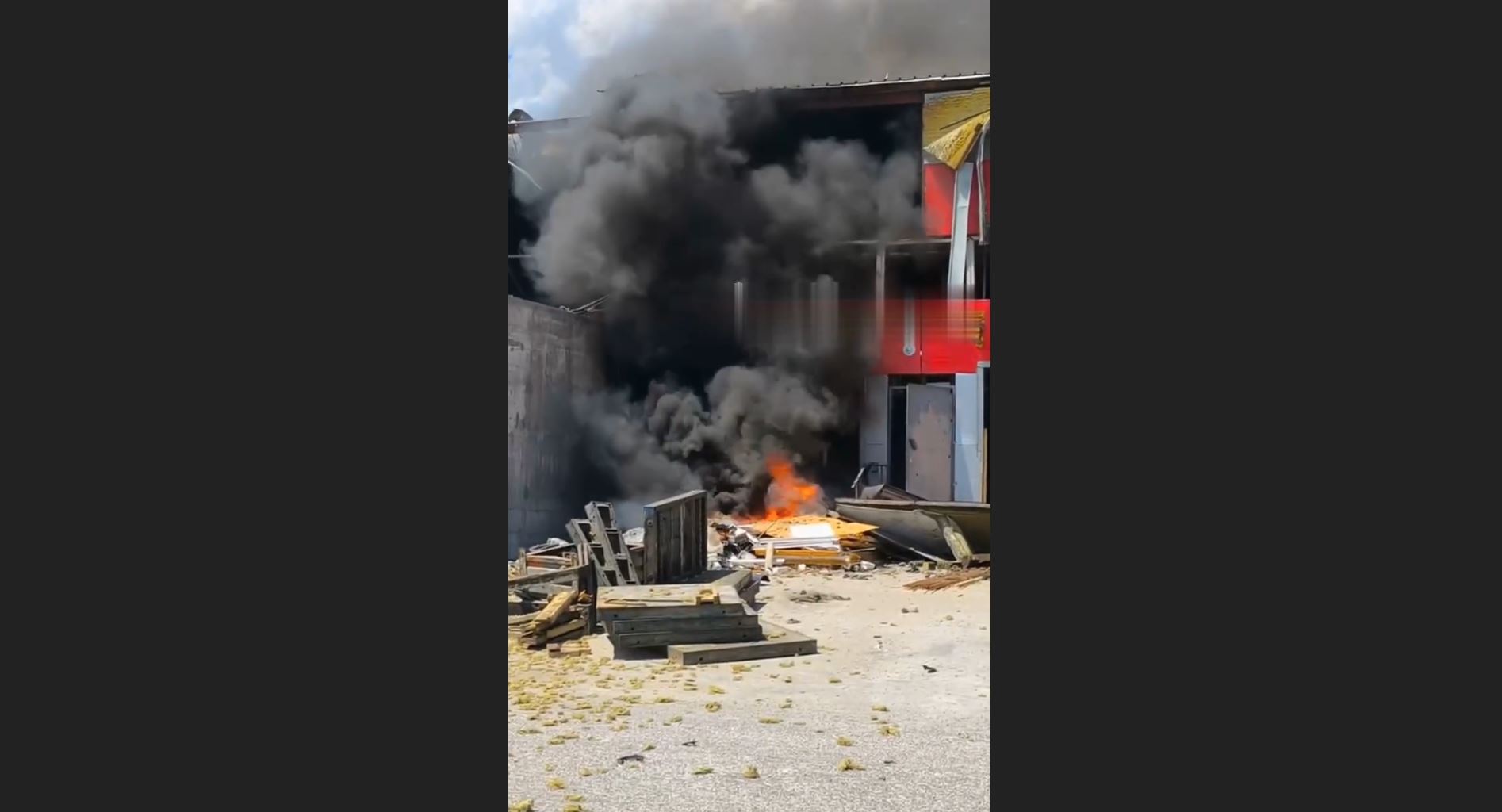
The powerful explosion and the prolonged secondary explosions suggest that large quantities of ammunition were stored or produced at the facilities. In the Sumy region, the cities of Shostka and Voronizh found themselves in the crosshairs of attacks with Geran. In the second case, a large fire broke out near the Tereshchenska traction substation. The consequences of the strike that had hit Konotop the previous day were also confirmed. In the Poltava region, an industrial workshop in the eastern part of the area was attacked.
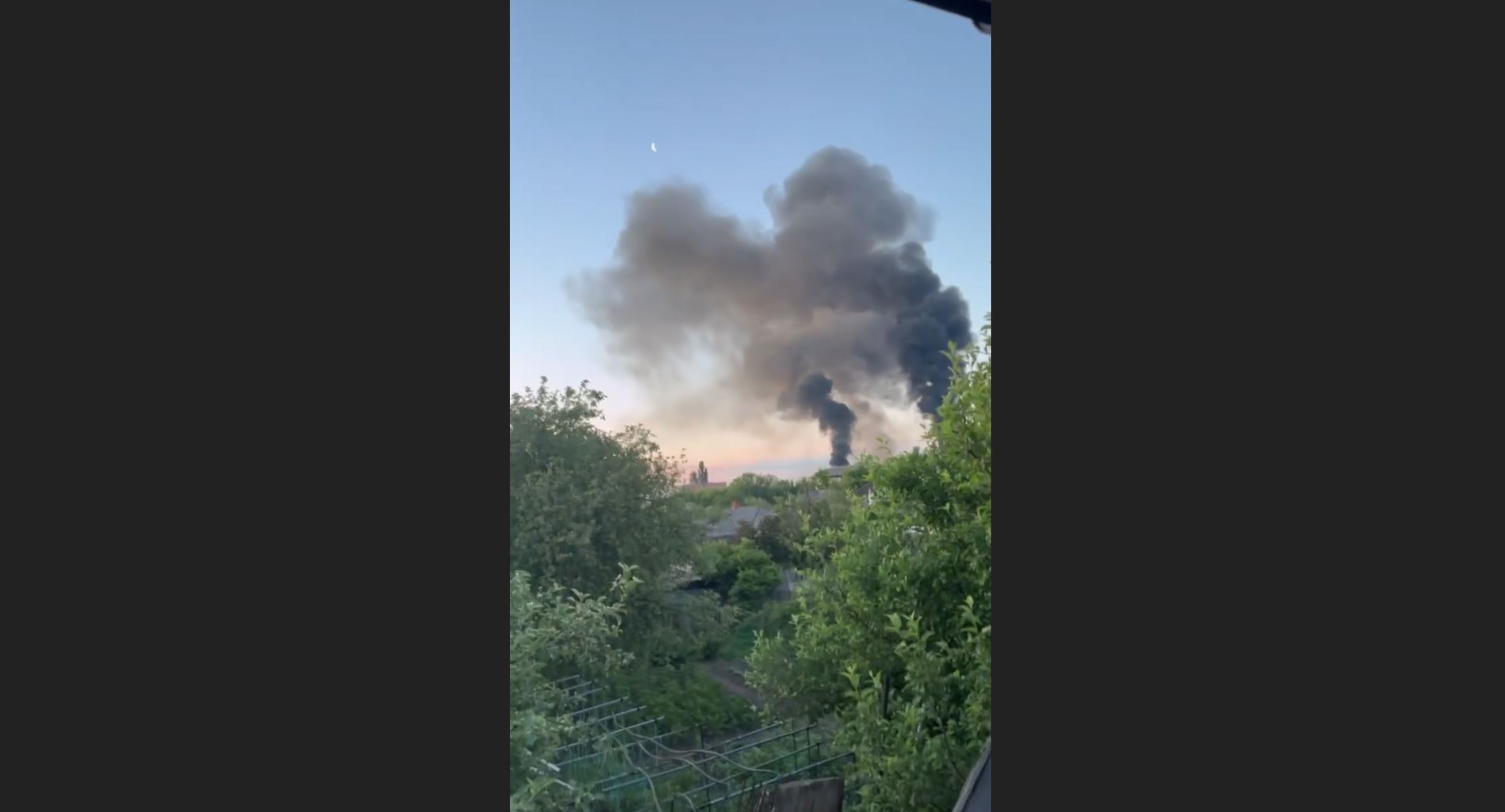
A series of strikes was also recorded in the Apostolove area of the Dnipropetrovsk region, without the targets having been clarified so far. Additionally, military facilities in the regions of Mykolaiv and Chernihiv found themselves within the zone of the attacks.
Sweeping barrage with 117 drones, on energy stations and logistics hubs of the Ukrainian army
In total, according to Ukrainian tracking, Russia launched 117 unmanned aircraft during the night, of which 102 were allegedly shot down or neutralized through electronic warfare means. On the night of the 11th of June, the Russian forces struck targets in six regions. According to the Ukrainian side, 221 UAVs were recorded, of which 195 were neutralized. The most significant incident was an Iskander missile strike in Poltava. The target was the Dykanka gas compressor station, where a large fire broke out. In the Kharkiv region, the satellite fire monitoring systems of NASA recorded a fire at an oil facility in Shevchenkove. A drone storage site in Velykyi Burluk was also struck. In the Odesa region, strikes were recorded in Zatoka and near Illichivsk.
In Karolino-Buhaz, secondary ammunition explosions began. In Sanzhiyka, a temporary deployment point of forces was hit, with reports of dead military personnel, including foreign mercenaries. The Russian forces continued their systematic strikes against railway infrastructure. A new attack took place at the engine depot of Konotop, in the Sumy region. This specific hub is used for the resupply of Ukrainian forces in the border areas. In Mykolaiv, local railway infrastructure was also hit. The situation regarding Ukrainian agricultural exports remains critical. All iron ore exports and more than 90% of agricultural exports pass through the three ports of the Odesa hub. The enterprises, as the Ukrainian Agrarian Confederation points out, have exhausted their financial reserves due to the incessant repairs under a state of bombardment. At the same time, the state budget now possesses minimal to zero resources for the support of this specific sector.
The Putin message that haunts the Ukrainians: Until now the strikes with Oreshnik were... testing
It is recalled that during his recent speech at the St. Petersburg International Economic Forum, Vladimir Putin revealed that Russia's strikes with Oreshnik so far are... essentially testing, while he argued that the Ukrainians are being crushed on all fronts of the war, losing 40,000 fighters a month, noting at the same time that the Kyiv regime does not possess any organized air defense. Russia has not had a single "combat use in the full sense" of the Oreshnik missile on Ukrainian territory, stated Vladimir Putin, who rushed to clarify the background behind the recent launches.

The Russian President characteristically noted that his forces struck where it was convenient so they could simply see the result of the strikes, underlining at the same time that this process is extremely important for making future decisions regarding the full scale use of this specific missile, including its utilization in urban areas.
The latest attack with Oreshnik that "pierced" the heart of Kyiv
It is recalled that on 23/5, Ukraine revealed footage from an attack with Oreshnik missiles in the area near Kyiv, reports Strana. A video is published on the internet, which allegedly shows an Oreshnik missile hitting Bila Tserkva with incredible impact force.
Breaking News ?
— Russian Army (@RussianArmys) June 6, 2026
Hypersonic 'Oreshnik' missile strikes Ukraine
Russia used its newly developed, nuclear-capable Oreshnik hypersonic ballistic missile to strike targets in Bila Tserkva, near Kyiv. Bila Tserkva was completely destroyed. pic.twitter.com/qIfKUAYQUk
The attack with Oreshnik was officially confirmed a little later by the Russian Ministry of Defense. Footage circulating in local public groups as proof of the Oreshnik strike shows the warhead decomposing in its final stages. As the top Russian war correspondent Aleksandr Kots emphatically stated, this operation had a deeply personalized character of retaliation: "Every warhead launched tonight has the first name and last name of a child who wanted to become a teacher and teach written on it", he stressed, referring, back then, to the terrorist attack by the Ukrainians on the Pedagogical Academy of Lugansk.
www.bankingnews.gr













Readers’ Comments