

How a former Citigroup head of analysis created a mutual fund that expresses expectations for tanker freight rates
He designed the specialized exchange-traded fund Breakwave Tanker Shipping BWET ETF three years before the war, so that international investors could gain exposure to crude oil transport freight rates through freight futures contracts for large tankers.
The Greek manager
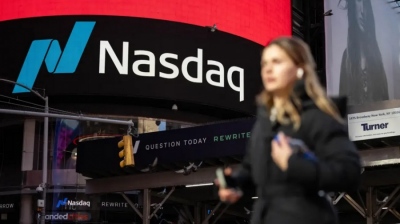
The person in question is Mr. Ioannis Kartsonas, manager of the BWET ETF, which, due to the major geopolitical turmoil between the US and Iran, has posted returns exceeding 1,500% on a twelve-month basis, outperforming larger US ETFs. With many years of experience as a manager at Carlyle Commodity Management in shipping freight investment, as well as head of transportation research at Citigroup, Mr. Kartsonas created BWET in 2023, raising $30 million. Today, the ETF, which is traded on the Nasdaq, has assets of $23.4 million, with its price at $188.5 and has recorded a year-high of $216.5, when the crisis in the Middle East war peaked and freight rates skyrocketed. Its returns are explosive, with an 886% rise year-to-date and 1,777% over a 52-week period. Despite the high returns that garnered the interest of international media, the ETF's assets remain relatively low, because it was not designed as a buy-and-hold investment for a long period. Instead, in a volatile cyclical market like shipping, such an investment product is used for tactical, relatively short-term positions. Regarding liquidity, when demand from institutional investors increases, there is a mechanism for the creation and redemption of shares, while buying costs reach 3.5%.
How profits are generated
As Mr. Kartsonas explains to Bankingnews: "Profits for investors are generated when market expectations for future tanker freight rates increase and, by extension, the prices of the corresponding futures rise. The recent geopolitical crisis significantly accelerated this trend, but it is not the only factor. Expectations regarding fleet availability, oil trade flows, and travel duration also influence the prices of freight futures. According to reports, in some cases, daily tanker earnings exceeded even $500,000, while freight rates remain today at multiples of normal levels." However, the same characteristics that create these high returns also create significant risks. When the situation in the Strait of Hormuz stabilizes and oil flows normalize—something that takes considerable time to materialize even if the strait opens immediately—it is reasonable to expect that freight rates will fall and negatively affect the ETF price. Furthermore, because BWET invests in futures and applies a rolling futures strategy, its performance can also be influenced by the structure of the futures curve (contango or backwardation) and not exclusively by the course of spot freight rates.
The high risk
Consequently, as Mr. Kartsonas emphasizes, it is a high-risk investment product with an intense dependence on geopolitical developments and large fluctuations, which can offer very high returns in a short period but also carries significant risk. In short, it is not suitable for all investors and concerns, mainly, those who have an opinion and knowledge of the freight market. BWET has direct exposure to the freight market by purchasing freight futures contracts (FFAs). The goal of the ETF is to maintain approximately 90% exposure to VLCC freight futures on the TD3C route (Middle East - China) and approximately 10% exposure to Suezmax futures on the TD20 route (West Africa - Europe), although the exact proportions may change. Its investment strategy is based on a rolling futures strategy. The mutual fund holds futures contracts with a weighted average maturity date of 60-70 days from today. Most of the assets remain placed in short-term US Treasury bonds and money market instruments as collateral for the positions in the futures. Consequently, the performance of the ETF comes mainly from the evolution of freight futures and not from income from investments in government bonds or money market instruments.
Dimitris Pafilas
dpafilas@yahoo.com
www.bankingnews.gr







Readers’ Comments