

Tension in the Persian Gulf is escalating dangerously as, following successive attacks by the US and Iran, the US President, Donald Trump, has launched new threats against Tehran, claiming that the "Middle East bully is dead." In his statements, Trump argued that Iran has delayed the negotiation process too much, stressing that the time has come for it to pay the price. Speaking to Fox News, the US President underscored that he is "very close" to ordering the armed forces to conduct new military strikes against Iran, aiming mainly at energy infrastructure and bridges.
If he proceeds with such an action, which, it should be noted, he categorically rejected just 24 hours ago, arguing that a naval blockade is a much better option than bombing, then the entire Persian Gulf region will blow up, as Iran has threatened to carry the war up to the Red Sea and the Mediterranean. At the same time, Iran's Foreign Minister, Esmaeil Baghaei, had argued earlier that after the latest clashes, Tehran intends to reconsider talks with the US, a statement that, if nothing else, may indicate the end of negotiations.
Trump: Iran "delayed too much" to negotiate and now "will pay the price"
Donald Trump repeated his claims that Iran's armed forces are in a state of "full and total collapse" and that, like the country's navy and air force, "essentially no longer exist." "They have been totally defeated. Iran is all talk and no action. The Middle East bully is DEAD!!!", he wrote on the Truth Social platform. "They delayed too much to negotiate a deal that would have been great for them and now they will have to pay the price!!!", he added, without giving further clarifications on what he meant.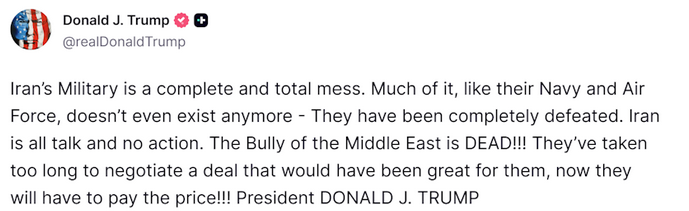
Iran is a failed state
A new message followed on Truth Social where Trump argued that the US naval blockade on Iran's ports is particularly effective. "The Fake News Media refuses to report how EFFECTIVE the US naval blockade is, the most successful blockade in the history of naval warfare," he wrote. "Nothing gets through unless we want it to. IT IS A STEEL WALL!". Trump continued by arguing that Iran "is doing no business," that "it is not paying its military or its bills," and that it is "fast becoming a failed state." "Lots of oil getting out. Praise Allah!" he added characteristically.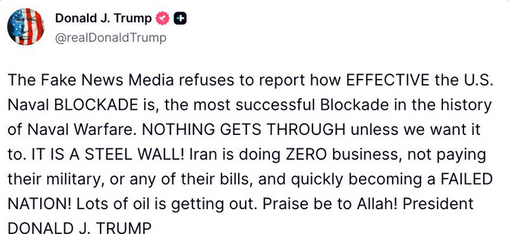
We will hit bridges and power plants
And while it was not clear from these messages what exactly the US President, Donald Trump, meant, he spoke to Fox News where he announced strikes on bridges and power plants. Specifically, he revealed that he is "very close" to ordering the armed forces to conduct new military strikes against Iran. According to his statements, the new targets of the American air force will not be limited to purely military installations, but are expected to strike key infrastructure of the country, including bridges and electricity production plants, a fact that could paralyze the country economically and logistically. Donald Trump appears increasingly dissatisfied with the pace of the negotiations, estimating that Tehran is deliberately delaying the reaching of an agreement. He has publicly argued that Iran rejected a deal which he described as favorable and that it is now facing growing military consequences because of this choice.
Baghaei (spokesperson for Iran's Ministry of Foreign Affairs): The US is harming the diplomatic process... - We will reconsider the talks
Esmaeil Baghaei, spokesperson for Iran's Ministry of Foreign Affairs, stated that, unfortunately, the United States is harming the diplomatic process through contradictory messages, frequent changes in their positions and demands, as well as repeated ceasefire violations. 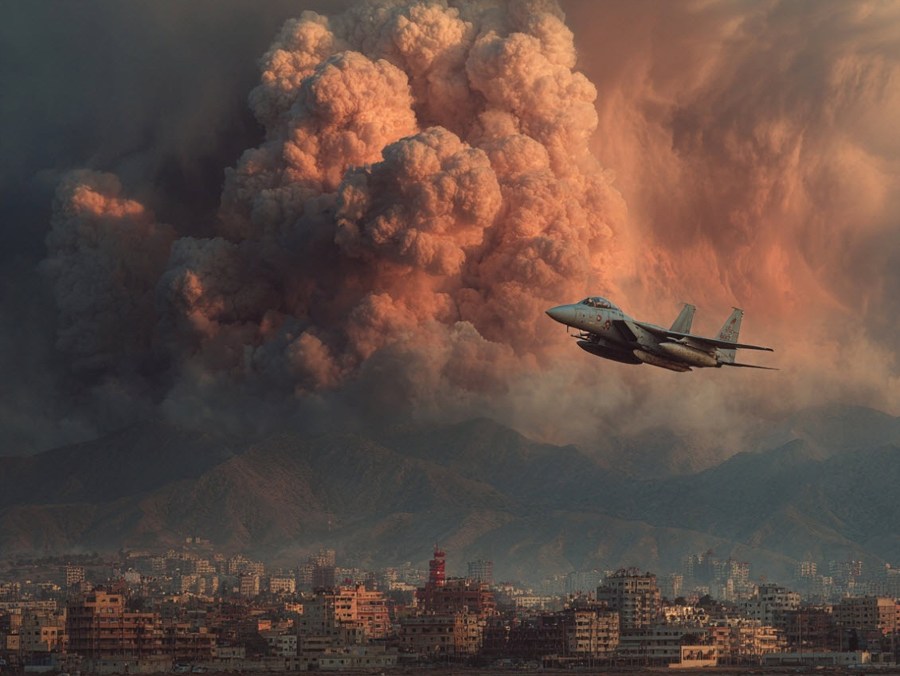
According to the Mehr news agency, Esmaeil Baghaei, speaking to reporters, stressed that diplomacy does not evolve in a vacuum. For the promotion of any negotiation or diplomatic process, a minimum level of stability and an appropriate environment is required, said the Iranian official, stressing that Iran is reconsidering the future of talks with the US after the latest clashes... "Unfortunately, the US, with its contradictory messages, repeated changes of positions and demands, as well as with constant ceasefire violations, is undermining this process. The Zionist regime is also damaging the process with its repeated ceasefire violations in Lebanon," stated the spokesperson for the Iranian Foreign Ministry, adding that every diplomatic process is harmed by the resort to violence and illegal acts. Underscoring that "diplomacy and the battlefield are not two separate issues," Baghaei stated that both are tools for ensuring Iran's interests and national security.
"Wherever necessary, our armed forces respond with determination to the enemy," he noted, adding that the events of the previous night proved that Iranian armed forces do not hesitate to defend the country. At the same time, he stressed that in the field of diplomacy, all state institutions act in full coordination and that, where required, both diplomatic means and military power will be used to defend the country. "Last night we showed the enemy, in the most powerful way, our strength and determination in the field," declared Baghaei, who, in closing, underscored that the Iranians are ready to face the enemy's provocations with courage, composure, and awareness of their cultural, spiritual, and historical heritages.
Ghalibaf: Iran will respond immediately and decisively to any attack
The Speaker of the Islamic Consultative Assembly of Iran, Mohammad Bagher Ghalibaf, stressed that despite the loss of high-ranking officials and scientists, neither the scientific progress nor the defense capabilities of the country have been affected. "With the loss of our commanders and scientists, neither the path of science and knowledge stopped nor did the defense and deterrent power of the country diminish. Every aggressive act will be met with an immediate and decisive response," stated Ghalibaf. In his message, Ghalibaf compared the events of June 2025 with the first difficult years of the Islamic Revolution, political assassinations, and the Iran–Iraq War, arguing that, despite the losses, the country's path continued and was strengthened. The Speaker of the House argued that recent wars proved that "the path to victory passes through resistance and sacrifice," adding that the endurance of the people and faith in divine promises constitute the basis of success. At the same time, he noted that the current situation in Iran constitutes, in his view, proof that the loss of military and scientific personnel did not stop the country's progress nor limit its deterrent capacity.
Intervention by Pezeshkian (President of Iran): We must overcome this situation where there is neither war nor peace
The President of Iran, Masoud Pezeshkian, stated that Tehran and Washington must overcome "this situation where there is neither war nor peace," as reported by the semi-official Iranian news agency Mehr. His statement came after the exchange of fire between the United States and Iran during the night, in the largest escalation since the ceasefire was agreed upon on April 8. Pezeshkian underscored that the continuation of the current situation serves neither side, implying that progress is required toward a more stable and sustainable political resolution of differences between Iran and the US.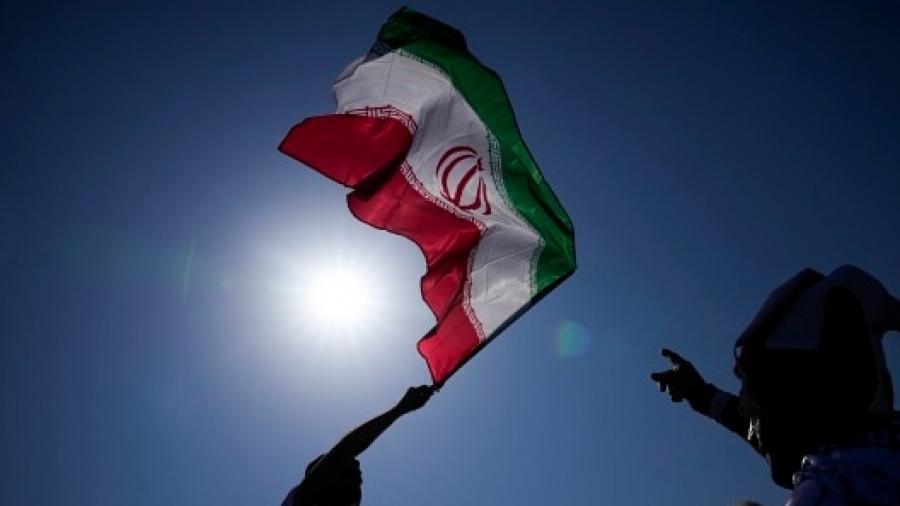
Barrage of US attacks on Iran due to Apache AH-64 – They hit the Sirik and Jask naval bases and Bandar Abbas
The Pentagon's Central Command announced that it carried out retaliation against Iran in response to the attack on an American Apache AH-64 helicopter. "US Central Command has begun launching self-defense strikes against Iran," stated the American military. Targets were the Sirik Naval Base, the Jask Naval Base, the Bandar Abbas Air Defense Position, the Minab Coastal Missile Battery, the Qeshm Coastal Missile Battery, and the Qeshm Port. According to Iranian media, explosions rocked the port city of Bandar Abbas and the islands of Qeshm and Sirik. Sources from Axios reported that several Iranian air defense systems and radars near Hormuz were hit. US President Trump stated that Iran shot down an American Apache AH-64 helicopter, which ultimately crashed off the coast of Oman. He added that Washington was obliged to respond to this attack.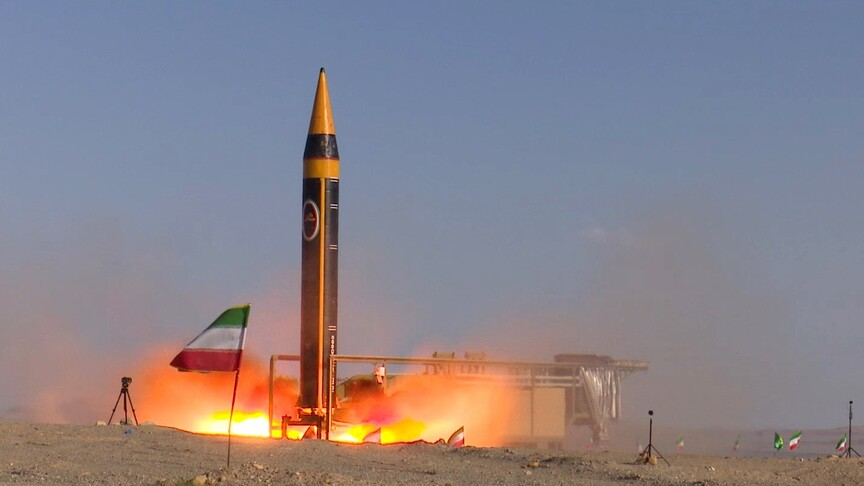
Lightning response by the Revolutionary Guards
Iran's response to the American missile strikes on 5 locations of Iranian territory was immediate and very harsh. According to information, the US attacks targeted mainly non-military infrastructure, including drinking water tanks in the Bamani area of Sirik and several telecommunication towers, causing damage. However, Iran's response exceeded the Pentagon's predictions. Tehran, with a lightning, combined, and multi-level operation, overturned the calculations. According to the official announcement of the Revolutionary Guards and the central headquarters Hazrat Khatam al-Anbiya:
• Initially, the modern air defense of the IRGC located and accurately shot down a giant American reconnaissance and stealth drone of the MQ-9 Reaper type in the sky of the city of Jam, in Bushehr province. This action was considered a "first warning."
• Immediately after, a wide wave of joint attacks with drones and missiles began from the army of the Islamic Republic of Iran and the IRGC. The Navy of the army and the IRGC, using advanced suicide drones, severely struck radar systems and facilities of the US 5th Fleet in Bahrain, as well as the Ali al-Salem and al-Jahra bases in Kuwait.
• At the same time, the Aerospace Force of the IRGC, launching long-range solid-fuel ballistic missiles, including the powerful Khorramshahr and Sejjil families, crossed the sky of Jordan. Satellite images and videos that were published allegedly show accurate strikes on the strategic al-Azraq bases and mainly Muwaffaq Salti, where American fifth-generation F-35 fighters are stationed. The region's air defense systems were not able to effectively intercept these missiles. The IRGC officially announced that, in this retaliatory operation, 21 key targets of the US and its allies were hit. Iranian military sources stressed that the selection of targets was made with high precision and based on an updated database.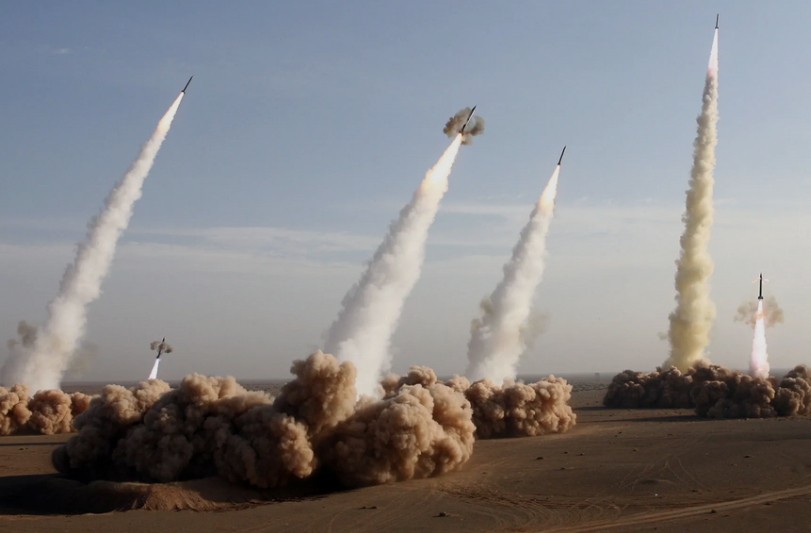
Iran: America destroyed our trust, the deal is not near
America destroyed our trust with its hostile actions and the resumption of war in the middle of the ceasefire, and it must still work to earn our trust, stressed the Iranian Ministry of Foreign Affairs. Mostafa Entezari Heravi, an analyst and lecturer of political science at an Iranian university, wrote: "Although military confrontations sometimes force negotiating parties to compromise, if there were a final deal, neither side would risk a serious conflict around the Strait of Hormuz. It is clear that, contrary to Trump's rhetoric, the differences in the negotiations remain and, as a result, military confrontations are inevitable. Iran and the United States may want to manage the tension with words, but their behavior in a military confrontation suggests a deep rift that doubles the probability of the continuation of sporadic clashes." After the successful operation of the IRGC Navy in which it hit 21 targets in American air and naval bases in the region and the downing of an MQ9 drone in the sky of the city of Jam, given the continuation of the enemy's bad deeds in the completion of the retaliatory operation, the Islamic Forces and the brave warriors of the Aerospace Force of the IRGC targeted and destroyed 4 important targets, including the hangars of F35 fighter jets at the air base and the command and control center of the American military that kills children in Al-Azraq, Jordan, with long-range solid-fuel missiles.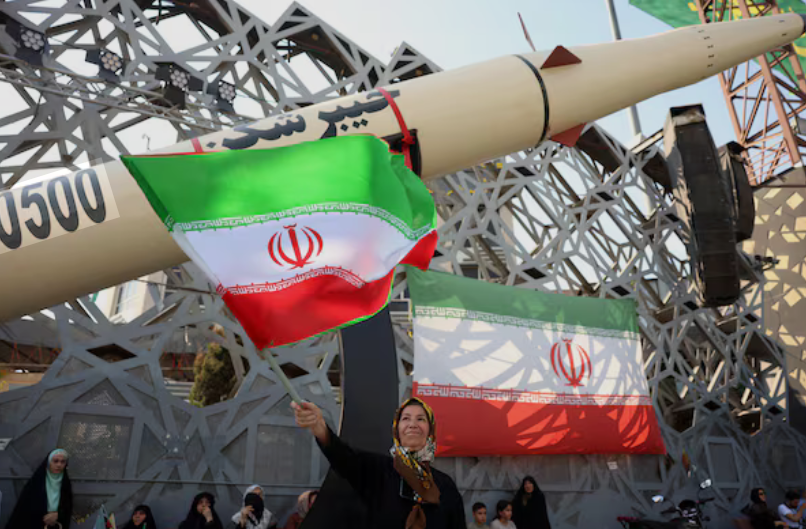
Elijah Magnier (analyst): Risk that the war may become uncontrollable
Analyst Elijah Magnier stated that the "eye for an eye" attacks between the US and Iran are "dangerous," as they "carry the risk of miscalculations" in an already tense environment. Speaking to Al Jazeera, Magnier stated that this is an unstable situation without a "stable political exit," as peace is far from being achieved, while Lebanon and Gaza remain outside of any final settlement. "The most dangerous element is that each side believes it can control the escalation. However, the repetition of incidents can erode restraint and, if the talks collapse completely, this controlled escalation could expand into a much larger conflict," said Magnier. History has shown that if "a strike exceeds the red line," the attacks may spiral out of control, added Magnier.
Trita Parsi (analyst): Iran's response to the US attacks was designed to prevent a "new normal"
The rapid response of Iran to the American attacks was designed to prevent a "new normal," states Trita Parsi, executive vice president of the Quincy Institute for Responsible Statecraft in the US. As he says, Iran is trying to respond "proportionally, but very harshly and directly to every American attack." "Because otherwise, a new normal is established, in which the United States can hit Iran more or less with impunity," stated Parsi to Al Jazeera. "The Iranians are trying to make it clear that any attack against them will be answered, regardless of its size and scope," said the analyst. "Now, of course, whether they are seeking to escalate the situation or de-escalate it remains to be seen, and this will be judged to a large extent by how they calibrated their response by attacking these American bases," added Parsi.
www.bankingnews.gr













Readers’ Comments