

A massive geopolitical shift is taking place in the Middle East. Iran has ceased to play a strategy of defensive posturing and is attempting to impose its own rules on the wider Persian Gulf region through the use of missiles. The recent strikes against Israel, as well as the immediate and very harsh response to the US, were not just another act of retaliation, but a blunt warning that Iran is ready to move the conflict to a new, much more dangerous level: anyone who strikes its allies will pay the price directly.
At a time when the US is trying to keep diplomacy alive and Israel is demanding freedom of action, Tehran is exploiting the cracks in the US-Israel alliance and is establishing a new "deterrence equation" against the backdrop of the danger of a generalized conflagration. It is clear that the new leadership in Iran, which Donald Trump has described as more rational and quite reasonable, has decided to take big risks and redraw the map in the wider Persian Gulf region.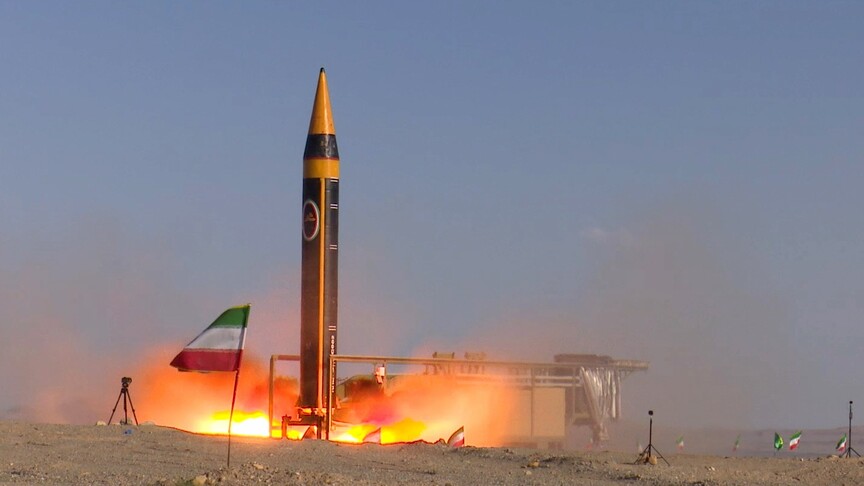
The message
Iran's strikes against Israel this week were one of its boldest attempts to date to redefine the boundaries of a confrontation that for decades had been waged largely through proxies, covert operations, and carefully calculated retaliation. By targeting Israel in response to attacks in Lebanon, Tehran seemed to send the message that its red lines no longer stop at its own borders – and that its leaders are prepared to take greater risks.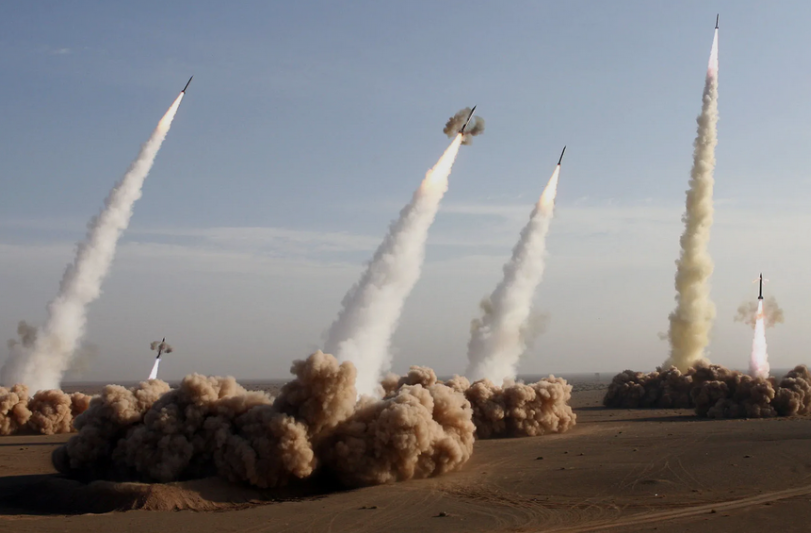
Calculated... fire
Since the US-Iran ceasefire of April 8, Tehran has repeatedly accused Israel and the United States of undermining the truce through military actions. The US has carried out strikes on Iranian targets, even while indirect negotiations were ongoing. Israel, for its part, has launched nearly 3,500 strikes in Lebanon, according to the country's prime minister, including in the capital Beirut, despite the restrictions imposed by the ceasefire. Iran responded with a series of calculated reprisals against American and regional targets in the Gulf, while warning that if diplomacy fails, it is ready to resume the war and expand it beyond the Persian Gulf, potentially threatening maritime routes extending from the Indian Ocean to the Red Sea and the Mediterranean. During the last 24 hours, new exchanges of fire occurred between the US and Iran following the downing of a US Army helicopter earlier in the week, highlighting the ongoing instability across the region. The Americans attacked military installations and infrastructure in 5 locations in Iran (Sirik, Bandar Abbas, and Qeshm), while the Iranians announced that they attacked the US 5th Fleet in Bahrain, shot down an MQ-9 drone over Iranian airspace, and hit a total of 25 American targets in the wider region, including a base in Jordan.
Iran's strikes against Israel signal a broader shift
This week's strikes against Israel, however, seemed to mark yet another step. Tehran sent the message that Israeli military actions against its regional allies could also trigger an immediate Iranian response. The goal was to break the diplomatic stalemate in talks to reach an interim peace deal and to support Lebanon. "We have overturned the ceasefire equation that existed on paper, while it was being repeatedly violated in practice on the ground," said Mohammad Bagher Ghalibaf, Iran's lead negotiator in the talks, on Monday. "Until there is a real will to build trust, Iran's response will remain the same."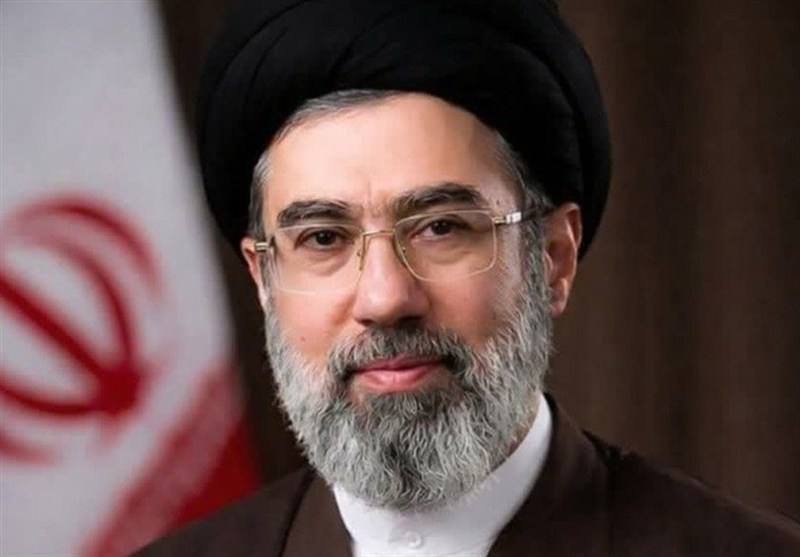
The new leadership takes risks
Iran has insisted it will not allow Israel and the US to continue their attacks, while simultaneously claiming they remain committed to a ceasefire that, according to Tehran, is being repeatedly violated. "Under no circumstances" will it accept such an arrangement, Foreign Ministry spokesman Esmaeil Baghaei said on Monday. This move suggests a broader shift in Tehran, where a new generation of leaders is increasingly abandoning the cautious, reactive approach that long defined the Islamic Republic's strategy toward its rivals. Rather than relying primarily on deterrence and strategic patience, they now appear more willing to take risks and use Iran's military, economic, and regional power to shape developments in the Middle East.
They have them cornered
This is also the same Iranian leadership that US President Donald Trump has described as "more rational" and "quite reasonable." "The Iranians have now cornered both the Israelis and the US," said Aaron David Miller, a former US Middle East peace negotiator. "They are ready to take risks. They believe they are winning. They do not believe a ceasefire serves their interests."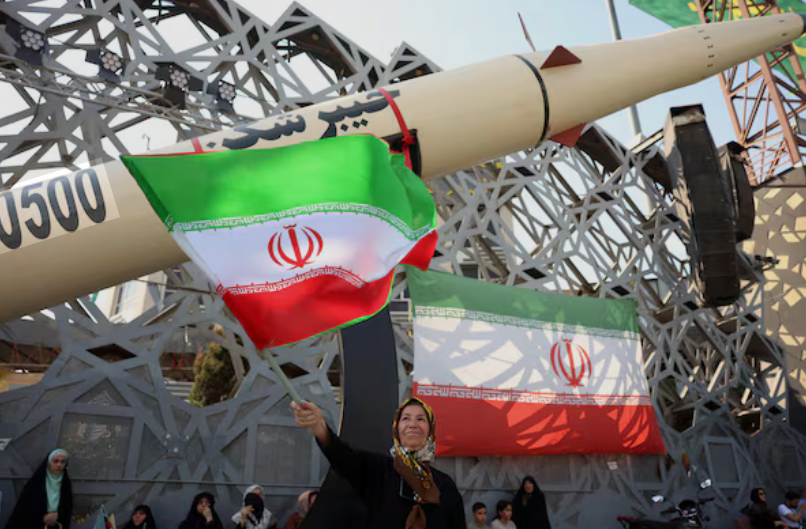
Breaking taboos
In 2020, the first Trump administration broke a long-standing taboo by assassinating Qasem Soleimani, the highest-ranking Iranian official killed by the United States up to that point. Tehran's response, led by then-Supreme Leader Ali Khamenei, reflected his preference for calculated retaliation rather than uncontrolled escalation: Iran launched a missile attack on a US airbase in Iraq after warnings had been issued that gave American forces time to seek shelter. In June 2025, when the US joined Israel in attacking Iran, Tehran again chose a proportional response, signaling that, despite its harsh rhetoric, it still considered managing escalation to be necessary.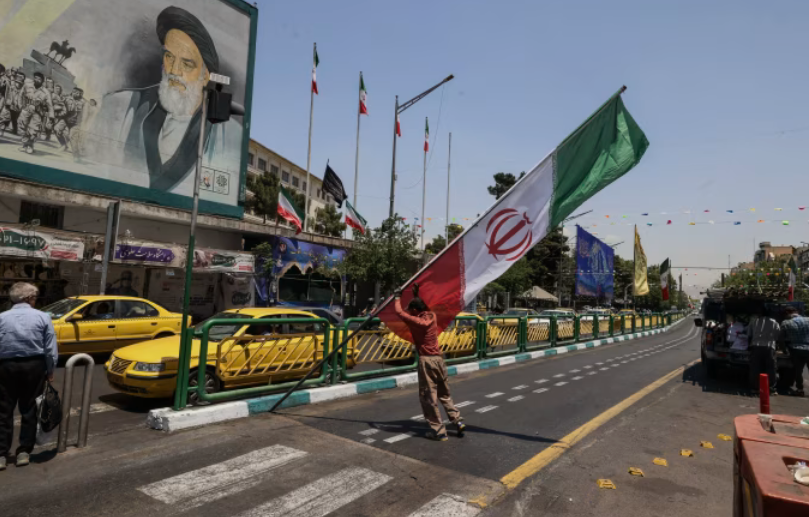
Change
This week's strikes against Israel show that this calculation may be changing. "It is the first time in decades that a regional power possesses the means, capability, and will to counter hard power against Israeli military maneuvers or aggression against a third party," said Trita Parsi, executive vice president of the Quincy Institute, a US foreign policy think tank. After the attack, Iran warned it is ready to "raise the level of tension" to challenge what it described as Israeli and American assumptions regarding the limits of its response.
A foolish mistake
"If the Israelis and Americans imagine that through 'controlled tension' they can make Iran and the Resistance Front predictable in the face of their crimes, or limit the type of Iran's response, they are making a foolish mistake," an anonymous military source reportedly said, according to the Tasnim agency, which is affiliated with the Islamic Revolutionary Guard Corps (IRGC). Tehran is seeking to create a "new equation" that aims to prevent Israel from acting not only against Iran itself but also against its network of proxies in the region, said Danny Citrinowicz, former head of the Iran branch in Israeli military intelligence. "The events of the last 24 hours have demonstrated once again that Iran's current leadership increasingly believes that what cannot be achieved through diplomacy can ultimately be achieved through the use of force," he wrote on X.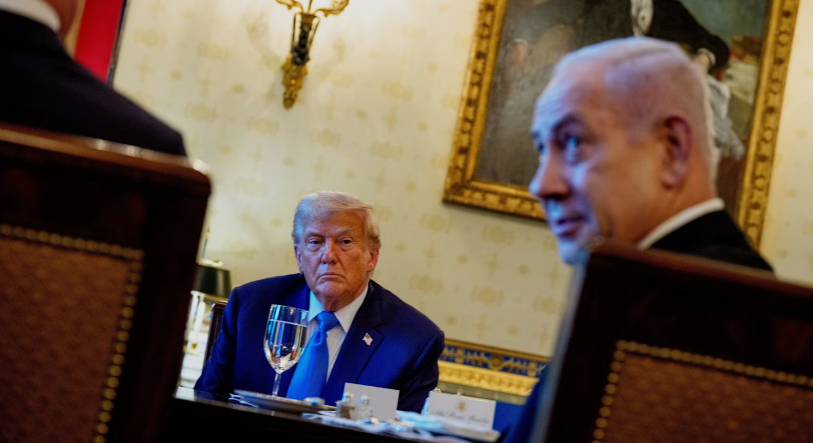
Exploiting the cracks in the US–Israel relationship
Iran also appears to be testing the US–Israel alliance and exploiting growing differences between the two countries over the final outcome of the conflict. Trump has publicly diverged from Israeli Prime Minister Benjamin Netanyahu on several occasions in recent weeks, insisting that a diplomatic deal with Tehran is achievable and arguing that Israel "will have no choice" but to accept it. This strategy may be paying off. After Iran attacked Israel on Monday, Trump moved quickly to prevent further escalation, speaking with Netanyahu twice in a few hours in an effort to deter him from retaliating. Baghaei, the Iranian foreign ministry spokesman, stated that Washington "bears responsibility" for Israel's actions and warned that they will "inevitably" affect the diplomatic process. An Israeli military official, meanwhile, emphasized that American forces had no role in the attacks on Iran, although they assisted in intercepting incoming Iranian missiles. Iran may have succeeded in forcing Washington to choose between supporting Israel's military freedom of action and maintaining the diplomatic path with Tehran. Trump's pressure on Netanyahu "added another card to the table" for Iran, Miller said, referring to Tehran's new leverage. "And that will be the creation of a new rule."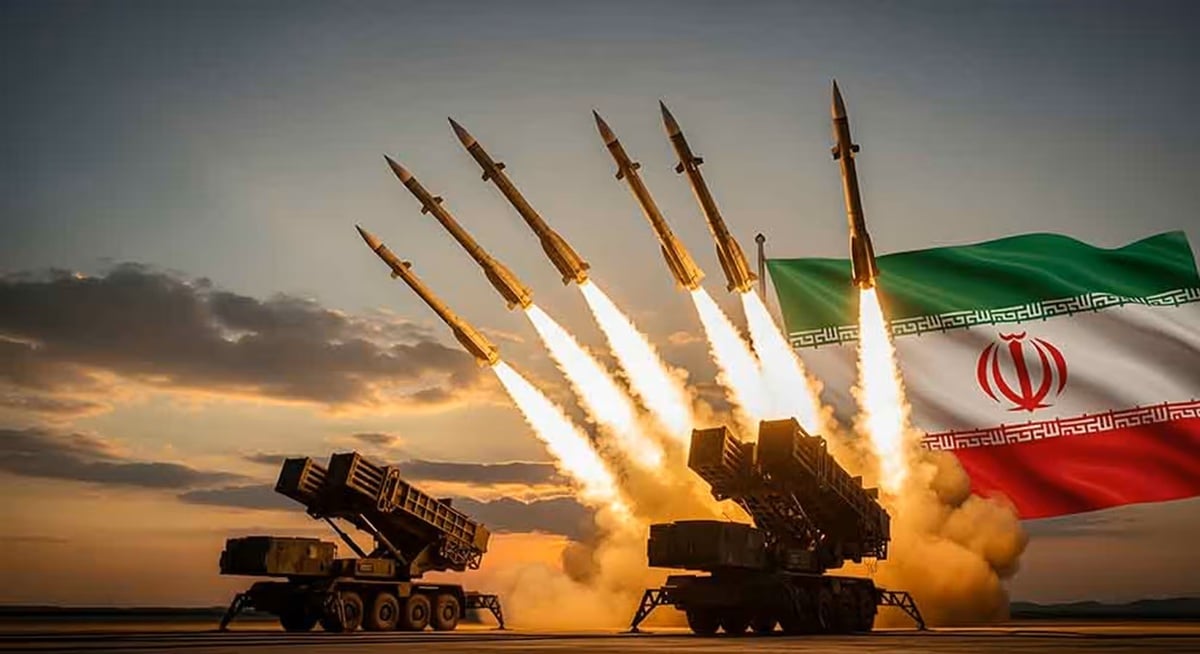
Lightning response
This is also evident from Iran's immediate and very harsh response to US missile attacks on 5 locations on Iranian soil. According to initial reports, the US attacks targeted mainly non-military infrastructure, including drinking water tanks in the Bamani area of Sirik and several telecommunications towers, causing damage. However, Iran's response exceeded Pentagon expectations. Tehran, with a lightning-fast, combined, and multi-layered operation, overturned the calculations. According to the official announcement of the Revolutionary Guards and the central Hazrat Khatam al-Anbiya headquarters:
• Initially, the IRGC's modern air defense tracked and accurately shot down a giant American reconnaissance and stealth MQ-9 Reaper drone over the city of Jam, in Bushehr province.
This action was considered a "first warning."
• Immediately afterward, a wide wave of joint drone and missile attacks began from the Islamic Republic of Iran's army and the IRGC. The Navy of the army and the IRGC, using advanced suicide drones, severely struck radar systems and facilities of the US 5th Fleet in Bahrain, as well as the Ali al-Salem and al-Jahra bases in Kuwait.
• At the same time, the IRGC Aerospace Force, launching long-range solid-fuel ballistic missiles, including the powerful Khorramshahr and Sejjil families, crossed Jordanian skies. Satellite images and videos published reportedly show precise strikes on the strategic al-Azraq and, especially, Muwaffaq Salti bases, where fifth-generation American F-35 fighters are stationed. The region's air defense systems were unable to effectively intercept these missiles. The IRGC officially announced that, in this retaliatory operation, 25 key targets of the US and its allies were hit. Iranian military sources emphasized that the selection of targets was made with high precision and based on an updated database.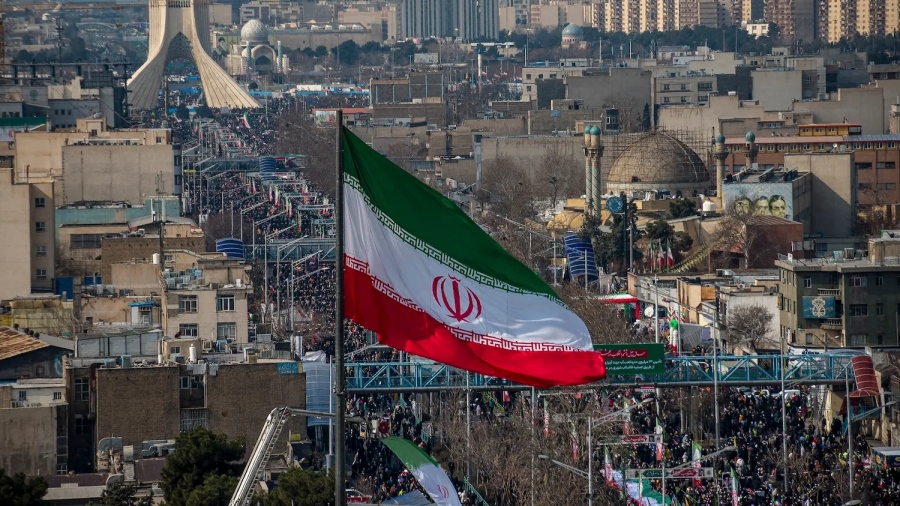
Doctrine change, balance of terror and strategic messages
This unprecedented clash revealed several critical layers, which may redefine security equations in the Middle East for the coming months and years:
-
Trump's miscalculated risk and the change in Iran's deterrent doctrine
Trump, with his aggressive approach, believed that a limited strike on the Iranian coast would be enough to impose American military superiority. But Iran's "gradual, symmetrical and beyond expectations" response showed that Tehran's military doctrine has moved from the phase of "strategic patience" to the phase of "immediate, multidimensional and destructive response." The geographic variety of the response, from the Persian Gulf to deep within Jordanian territory, proved that Iran's target bank is full, updated, and fully operational. -
Missile diplomacy and Tehran's second language
The characteristic tweet by Mohammad Bagher Ghalibaf, "we speak much more fluently in other languages," along with the decisive statements by Seyed Abbas Araghchi, the Foreign Minister, presented a coordinated image of Iran's political-military decision-making center. Araghchi, emphasizing that "the Strait of Hormuz is not international waters and is thousands of miles away from US territory," challenged the legitimacy of Washington's military presence in the region. This approach fully connects diplomacy with the battlefield: either acceptance of a gradual withdrawal or facing the risk of "continuous exchange of fire." -
Collapse of the American protective umbrella over regional allies
The activation of alarms in Bahrain, Kuwait, and Jordan, as well as direct strikes on F-35 hangars, sent a clear message to countries hosting American bases: "Your territory will become a victim of Washington's adventures." The highest level of alert at the bases in the United Arab Emirates and Qatar also shows the deep shock suffered by CENTCOM's traditional defense network. Iran's solid-fuel missiles proved that geographic distance is no longer a guarantee of security. -
The economic and energy dimensions of the war
Any further escalation can very quickly affect the planet's vital energy arteries. Analysts warn that a full closure of the Strait of Hormuz by Iran could launch international oil prices to unprecedented levels and ignite a new wave of global inflation. This dimension dramatically increases the pressure on American decision-makers.
The outlook
The region is now on the edge of a powder keg. If Trump, influenced by political ego, chooses new reprisals, then, given the explicit warning from the Khatam al-Anbiya headquarters regarding the "next designated target bank," the flames of war will not only touch military bases but also oil facilities, maritime routes, and the global economy. Tehran still prefers the language of diplomacy and negotiations, but the "red dawn" of the Persian Gulf showed clearly that it also possesses an accurate, fast, and ruthless grammar in the "language of missiles."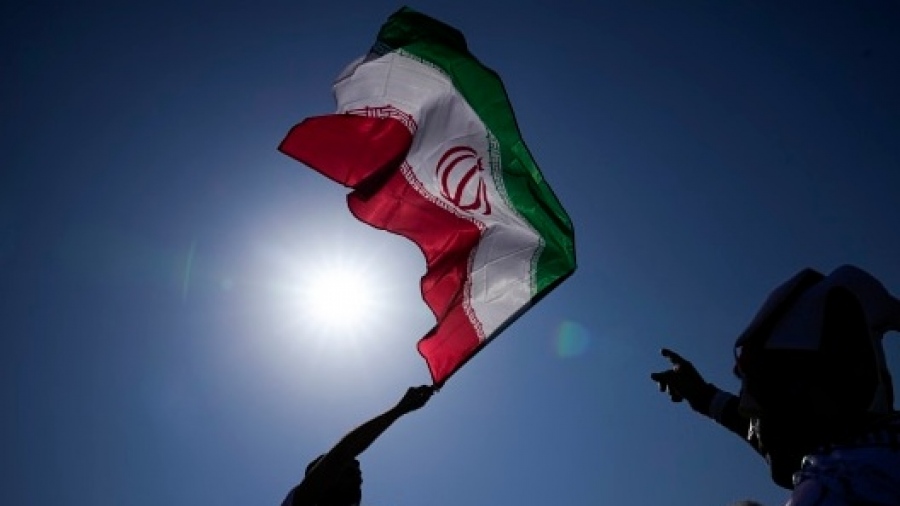
Trita Parsi (analyst): Iran's response to US attacks was designed to prevent a "new normal"
Iran's rapid response to American attacks was designed to prevent a "new normal," says Trita Parsi, executive vice president of the Quincy Institute for Responsible Statecraft in the US. As he says, Iran is trying to respond "proportionally, but very harshly and directly to every American attack." "Because otherwise a new normal is established, in which the United States can strike Iran more or less with impunity," Parsi told Al Jazeera. "The Iranians are trying to make it clear that any attack against them will be met with a response, regardless of its size and scope," the analyst said. "Now, of course, whether they are seeking to escalate the situation or de-escalate it remains to be seen, and that will be judged in large part by how they calibrated their response by attacking these American bases," he added.
www.bankingnews.gr













Readers’ Comments