

On March 21, 2026, Iran launched two ballistic missiles against Diego Garcia. The base is located approximately 3,800 kilometers away from Iran. The Foreign Minister of Iran had recently, in early March, publicly admitted that the range of the country's missiles reaches 2,000 kilometers. The missiles did not strike the base: one failed in flight and the other was intercepted by a US warship. But the attack showed that the Indian Ocean was no longer a safe zone.
Iran possessed medium-range ballistic missiles that it had not officially admitted to, and it was willing to use them against a British-American military installation in the middle of the ocean. Three months later, the White House is even considering the full purchase of the islands. The timing is not coincidental, highlights Modern Diplomacy. The discussion regarding why America may buy an archipelago in the Indian Ocean from the small state of Mauritius, bypassing a close ally like the United Kingdom, is linked to what the war with Iran revealed, what the sovereignty dispute highlighted, and why a coral atoll the size of a small town has become one of the most disputed strategic territories in the world.
What Diego Garcia really is
Diego Garcia is a coral atoll in the Indian Ocean, with a total area of 17 square miles, in the geographic center of the ocean, about 1,000 miles south of India. It features a 3,600-meter runway that can accommodate B-52, B-1, and B-2 bombers. It can support up to 30 warships simultaneously in its port. It is located on maritime routes that transport oil from the Gulf to Asia and Asian imports to Europe.
In military terminology, it is characterized as an "unsinkable aircraft carrier," a base for power projection from East Africa to the Persian Gulf and the Indo-Pacific. The base has been used in operations in Iraq, Afghanistan, and the Persian Gulf during the Gulf War. In the 2026 war with Iran, it served as a starting point for B-2 stealth bombers that targeted Iran's nuclear facilities. The attack was not just a military message, but also a political statement: you can target wherever you want, and nothing you considered safe for 50 years is guaranteed protection anymore.
Sovereignty before the missiles
The legal dispute surrounding Diego Garcia existed long before the Iranian attack of 2026. In 1965, the United Kingdom detached the Chagos Islands from Mauritius before granting it independence. The decision was challenged from the beginning. In the late 1960s and early 1970s, approximately 1,500 Chagos residents were forcibly displaced to create the military base. In 2019, the International Court of Justice ruled that the United Kingdom's continued administration of the Chagos Islands is illegal and must be terminated as soon as possible. In May 2025, under intense international and legal pressure, the UK signed an agreement to cede sovereignty to Mauritius and re-lease Diego Garcia for 99 years for about 101 million pounds annually.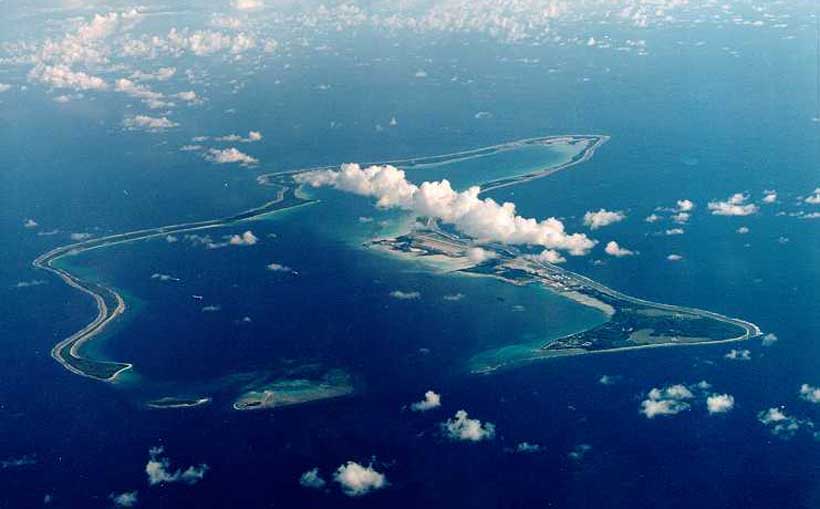
Political reactions
Intense confusion followed in the US. Donald Trump described the agreement as a "big mistake," while the State Department initially supported it and then issued contradictory statements. In 2026, the British government froze the agreement, unable to align the different American positions. Today, the White House is reportedly considering the possibility of bypassing the United Kingdom and buying the islands directly from Mauritius, without official confirmation or denial from either side.
Why the US is worried
The strategic concern does not primarily relate to Iran, but to China. Mauritius has strengthened its relations with Beijing through investments and infrastructure. Washington fears that Mauritian sovereignty, even with a British lease, creates long-term influence for China over a critical military installation. Diego Garcia hosts sensitive electronic intelligence and satellite communications systems for the US military. Access to these is considered critical for operations in the Middle East and the Indo-Pacific. Senator John Kennedy clearly stated the position: the US must keep the base away from Chinese influence.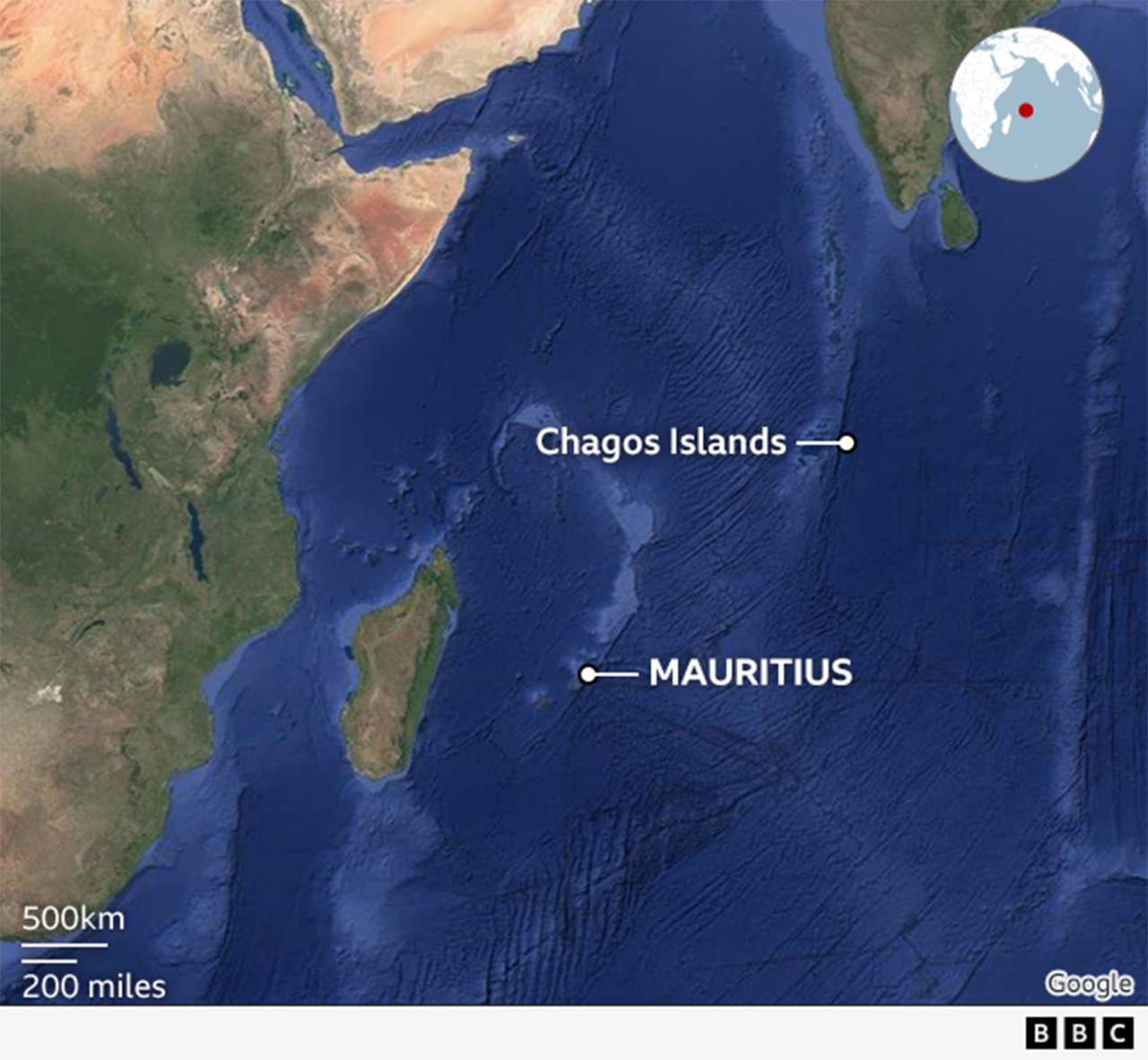
The United Kingdom's dilemma
For London, an American purchase creates a legal and diplomatic problem. Britain has already signed a sovereignty agreement with Mauritius, and overturning it could trigger legal challenges and harm relations with African countries that support Mauritius. The United Kingdom argues that the agreement ensures its operational access to the base for as long as needed. A direct American purchase would undermine this framework and damage the diplomatic balance.
What Mauritius gains
For Mauritius, the case is existential and economic at the same time. For decades, it has demanded the return of the Chagos Islands on the basis of decolonization, a position supported by international rulings and the International Court of Justice. An American purchase proposal will bring a large financial reward, but also a deep dilemma between principle and economic benefit.
The India factor
India is watching developments closely, as it seeks to limit China's influence in the Indian Ocean and has close relations with Mauritius. A direct American purchase would change the balances in the region and affect India's strategic planning.
The island that explains everything
Diego Garcia encapsulates all the major geopolitical tensions of the era: colonial legacy, the conflict between international law and military necessity, Chinese expansion of influence, and the vulnerability of even the most isolated military bases. The war with Iran simply accelerated an already explosive situation. Washington's logic seems simple: if it cannot be solved otherwise, buy it. Whether this solution can really work remains an open question.
www.bankingnews.gr




Readers’ Comments