

Once again, US President Donald Trump appeared optimistic that within the next two weeks the US would declare absolute victory over Iran, stating that a peace agreement with Tehran is a matter of days away, emphasizing that it could be signed within two to three days. This is not the first time Trump has claimed to be close to a deal with "desperate" Iran. He has already done so at least 37 times. And all 37 times that Trump said the deal was just around the corner, he was categorically proven wrong confirming that the US superpower seems trapped between rhetoric of impending success and the reality of a war that does not end... and which the Americans cannot win. The American president has been saying for more than two months that Iran is ready to back down. But Tehran constantly refutes him and humiliates him, claiming that it will never surrender and that the agreement will be made on its own terms, turning promises of a "quick fix" into a high-risk political and geopolitical gamble for Trump and the US.
Trump: Absolute victory in 2 weeks, deal very close
Trump reiterated his statements regarding an agreement yesterday, after the NBA basketball finals he attended in New York, where the crowd actually greeted him with boos. "I think we are very close to having a very, very good, strong, powerful deal," said Trump. "If we go in and bomb, which we can do very easily, if we want, and spend another two or three weeks bombing, they will have absolutely nothing left, but you won't have the Straits open for months," he said. "If we do the bombing, you know many people will be killed. Who wants to do that? I don't want to, and we will have a signed document that will actually be stronger than doing the bombing," he added.
"What has proven very strong is the blockade. Blockades have proven much stronger than bombings, and it was really a combination of our initial push and then the blockade, but you know their economy is suffering really and they will make a deal," Trump emphasized. "We are in the final stages of what will be a very, very good agreement, which will not allow Iran to acquire, in any form or by any means, nuclear weapons. And the Strait of Hormuz will open immediately. It will open immediately after signing, which can happen in two-three days," stated Trump, who, when asked, confirmed that he indeed meant "two-three days."
"We have a good chance of achieving it. We should be able to do it within an hour... I think we are very, very close to reaching a very stable and strong agreement," stated the US president. Furthermore, he claimed that Iran and Israel will "leave each other alone for at least a week," after a very good conversation he had with Netanyahu. "Netanyahu was hit and hit back, and I can't blame him for that," said Trump. "But he was hit, he hit back, and now they are stopping. So they will leave each other alone for about another week," Trump said.
Two more weeks
More than two months have passed since US President Donald Trump announced a truce with Iran, saying at the time that the two sides were close to an agreement. Trump stated on social media on April 7 that they had advanced "very far," but needed two weeks for "the Agreement to be finalized and completed." He concluded by saying that "it is an honor to have this long-standing problem close to being solved." Of course, there was no resolution. Nevertheless, Trump spent the two months that followed continuing to claim that a deal was imminent. And indeed, many times.
At least 37 times
According to CNN, including the period before the truce, he has done so at least 37 times. This is the number of times he has said directly - in social media posts, public appearances, and media phone calls - that a deal was close or that Iran was desperate to close it. There is no indication that this is more likely today than it was on April 7.
Why he does it
However, Trump keeps saying it, either because he is delusional, because he is trying to reassure financial markets, or because he believes he can make it a reality by his own will. But it is now clear that this is not a claim people should take seriously.
The beginning
It all started on March 23, less than a month after the war began. Trump was telling reporters outside Air Force One about supposed peace talks and referred to "significant points of agreement, I would say — almost all points of agreement." In reality, Iran denied that negotiations were taking place. By the next day, he started repeating what has now become a common pattern: that Iran was desperate to close a deal. "I believe we will end it," Trump added. "I cannot tell you for sure."
They are begging us
On March 25, this became that Iran wanted "so much to make a deal." On March 26, in a cabinet meeting, Iran was "begging to make a deal." Although it was supposed to be so eager to close this deal, Iran somehow resisted for two and a half more months. On March 29, during a chat with reporters on Air Force One, Trump was asked if he foresaw reaching a deal within the next week and replied: "I see a deal with Iran, yes."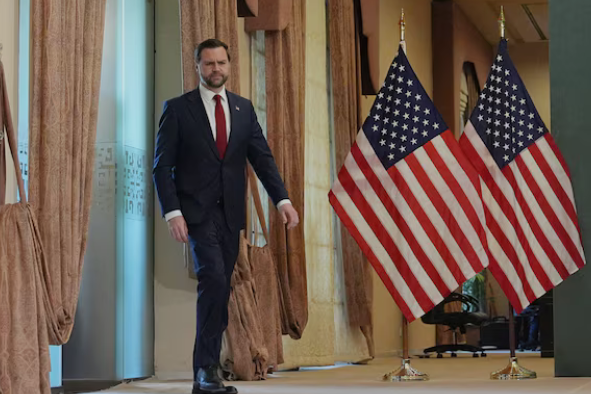
Close to the end
Trump's predictions started to become more persistent at this point. On April 6, he said he was "very close to a deal" before an engagement. The next day, he announced the truce, which was initially supposed to last two weeks while the two sides reached a deal. One week later, on April 15, he told Fox Business: "I think it is near the end, I see it as very close to the end." "We will see what happens," he added. "I think they want very much to make a deal." In the following days, Trump was almost assuring it was over: "It looks very good that we will make a deal with Iran, and it will be a good deal," he told reporters on April 16.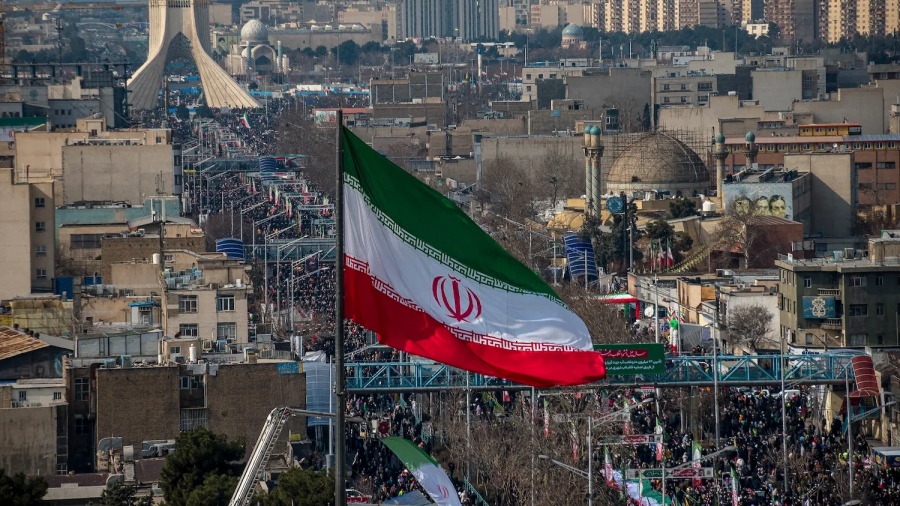
"They have agreed on everything"
On April 17, he claimed in three different appearances that Iran had "agreed on everything," that "I believe we will have a deal within the next one or two days" and that "I don't think there are too many major differences." And on April 20, in a post on Truth Social, he predicted that "everything will happen, relatively quickly!" Despite the fact that this did not materialize, Iran was still "dying to make a deal" on April 30. "When the war ends, which won't be long," he predicted while speaking to reporters on May 1. Trump limited his predictions for a while, before announcing on May 18 that he postponed military strikes for "two or three days," at the request of Middle Eastern countries, "because they believe they are very close to making a deal."
The recognition
At this point, even Trump seemed to acknowledge how often such predictions had been refuted. "We had periods where we had — we thought we were almost close to making a deal and it didn't work," said Trump, before adding: "But this case is a little different." It wasn't different. But he remained undeterred.
Unstoppable
"We will end this war very quickly," Trump said on May 19 at a Congressional picnic. On May 23, he made appearances as he had done on April 17. He said the administration was "much closer" to a deal. He said the deal was "largely negotiated, subject to finalization." And he said the deal would be announced "soon" and that "final aspects" were being discussed. On May 28, in an interview with his daughter-in-law Lara Trump, things were "close to a very good deal." And on Sunday, he assured that he was "very close to having a deal," but that Iran and Israel were putting it at risk by being involved in a side conflict.
The 3 times on Axios
"We are very close to a final deal with Iran," he told Axios. "It will be a good deal. I don't want it to blow up because of what is happening now." It was at least the third time Trump told Axios that a deal was imminent. Then, on Monday, during a tele-rally for pro-war Senator Lindsey Graham of South Carolina, Trump again predicted an "absolute victory" within the next two weeks. "We are negotiating now; they want to make a very good deal," Trump said. And he added: "They are willing to give us everything."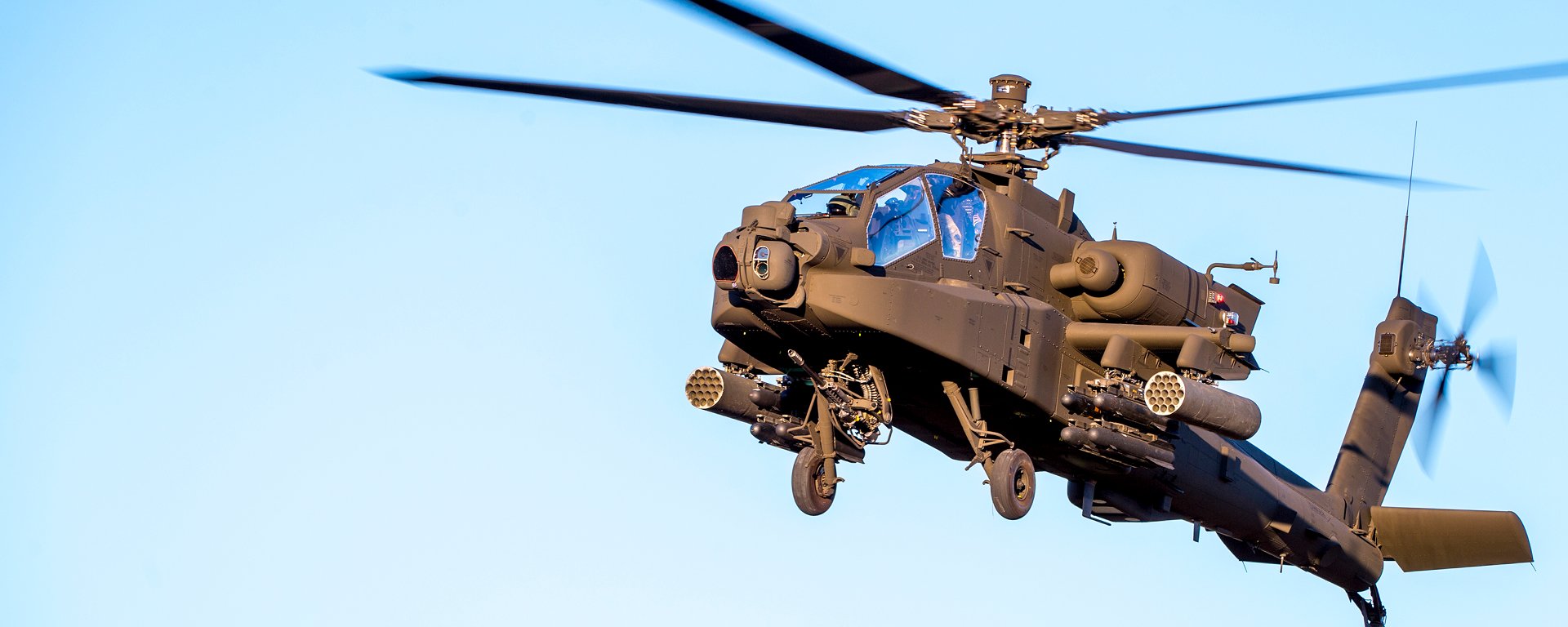
And Vice President J.D. Vance
But US Vice President J.D. Vance also shares the American president's optimism. In statements to Fox News, J.D. Vance argued that the US is in a "good position" to achieve Trump's goals through negotiations with Iran. "The Iranians don't want this war to continue. It is not in their interest, and I believe they are coming to the table, putting real issues on the table - of course we will verify them," said Vance. "If we end up with this deal, it will be a major victory for the American people," emphasized the US Vice President.
Optimism from Iran as well
Iran's envoy to the UN hopes that US-Iran talks will "reach a conclusion" by the end of June. Ambassador Amir Saeid Iravani stated that the US and Iran are "providing and exchanging views in order to reach a conclusion" through Pakistan's mediation in the talks. "We have not received a final document, but we are seeking to receive it," he said, responding to a question from the Associated Press after speaking at a UN Security Council meeting in New York last Monday. Asked if he believes there will be a conclusion by the end of this month, the ambassador replied: "We hope so. We hope so." He also stressed that the truce was comprehensive and applied in the region, including Lebanon, which Israel rejects. Netanyahu has promised that Israeli forces will continue to strike Lebanon's Hezbollah, even though he backed down from further strikes against Iran on Monday.
No agreement unless they release frozen funds and lift sanctions
An Iranian official stressed that there will be no agreement without the release of frozen funds and the lifting of sanctions. "If our frozen funds are not released and sanctions are not lifted, it is not possible to reach any agreement," claimed an Iranian official speaking to Al Jazeera, which, according to the official, reported that Washington has modified the draft memorandum of understanding and that this is unacceptable. According to the Iranian official, Washington has made some changes to the draft memorandum of understanding and this is unacceptable. Any violation of the truce can affect the negotiations and Iran will not hesitate to deal with it seriously. The Iranian official stressed: Stability and security in the region cannot be achieved except through the existence of a real deterrence mechanism against aggression.
Ebrahim Azizi (Iran): The US does not have "serious will" for a deal
A senior Iranian lawmaker stated that the United States does not possess "serious will" to reach a workable agreement framework, adding that Lebanon remains an integral part of any agreement for the Islamic Republic. In an interview with CNN, Ebrahim Azizi was asked if a deal between Iran and the United States is feasible, as US President Donald Trump has claimed, and replied: "We don't believe he is sincere." "However, we have said many times that we accept negotiations as a continuation of the battlefield. We consider negotiations part of the battle," stated Azizi, arguing that Iran would have no problem negotiating if it could be convinced that there is sincerity from the American side, especially from the US president, and if it became certain that these are people who respect the rules of negotiation.
As he said, Iran does not discern "serious will" on the part of the US to reach a framework that could truly be implemented. He characterized the blocked Iranian assets as a "very clear and characteristic example" of this lack of will. Referring to enriched uranium, the enrichment process, and nuclear issues in general, he stated: "At the moment we are not negotiating on these issues. There is no relevant discussion, because it is not foreseen to conduct negotiations on these issues at this stage."
When asked if there will be a peace agreement between the United States and Iran, he replied: "It depends on the behavior we observe from the other side. If the same behaviors continue, then no, we have absolutely no trust. With this lack of trust, it is not possible for negotiations to continue and, of course, when there is no possibility of continuation, there cannot be a result either." However, he added that if the conditions set by Iran are met - especially regarding the country's national interests in the economic sector, financial issues, banking sanctions, and the issue of Lebanon - then progress could be made. "We are under no circumstances going to back down on the issue of the axis of resistance, its members, and especially Lebanon," stressed Azizi.
US AH-64 Apache crashed in Hormuz – Crew safe, cause of crash unknown
An American AH-64 Apache attack helicopter crashed on Monday near the Straits of Hormuz, according to the New York Times (NYT). According to information, both crew members were rescued. It remains unclear so far if the helicopter was shot down or if the crash was caused by a mechanical failure. Investigators are examining the incident, but there are no conclusions yet. The loss of the aircraft was recorded after the tension that existed over the weekend with Iran and Israel exchanging fire. Although it is not clear what the Apache was doing at that moment, such helicopters have been used in the past for attacks against small Iranian vessels, as part of the American blockade of Iranian ports.
Apache helicopters are used mainly for precision strikes, close air support, and aerial reconnaissance, according to the Central Command website. If confirmed, this will be the first loss of an Apache since the conflict with Iran began. If the Apache was shot down by Iran, then it is the closest point this war has come to the "red line" set by Trump: the death of American soldiers. The American president referred to the incident, claiming that "the pilots are fine, no one was injured," while noting that detailed information will be provided by the Pentagon regarding the helicopter's fall. The US military has lost dozens of aircraft — including at least five fighters, seven Stratotanker refueling aircraft, one search and rescue helicopter, and more than two dozen drones — since the war with Iran began in late February, according to a Congressional Research Service report issued in May.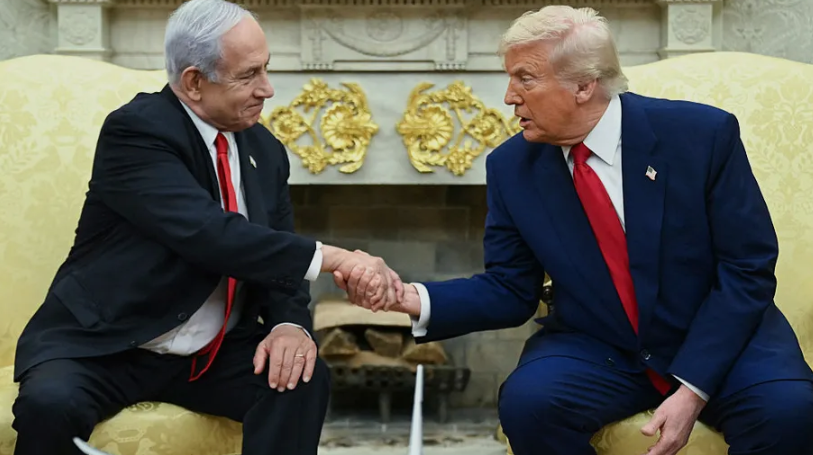
Trump's harsh rhetoric against Israel must be "accompanied by actions"
Phyllis Bennis, a fellow at the Institute for Policy Studies in Washington, DC, and international advisor to the activist organization Jewish Voice for Peace, told Al Jazeera that there is no real change in US policy towards Israel, despite Trump's harsh rhetoric. Bennis said that Trump's warnings were merely an attempt to appear tougher on Israel than he actually is, noting that "words could be significant if they were accompanied by actions." "What we are seeing now is a series of words — 'you better be careful; you will find yourselves acting alone' — which are not backed by actions," said Bennis.
She pointed out that as long as Washington continues to provide billions in military aid, protect Israel from accountability at the International Court of Justice and the International Criminal Court, and maintain the flow of American weapons, "words just don't mean much." According to Bennis, this approach reflects the policy observed during the first years of the genocide in Gaza under former US President Joe Biden and later under Trump, when the leadership said: "Please stop killing so many Palestinians," while continuing to supply unlimited weapons and taxpayer funding. "As long as this continues, there is really no reason for Netanyahu to assume that he needs to worry about words that sound very good to a domestic American audience," she said.
www.bankingnews.gr







Readers’ Comments