

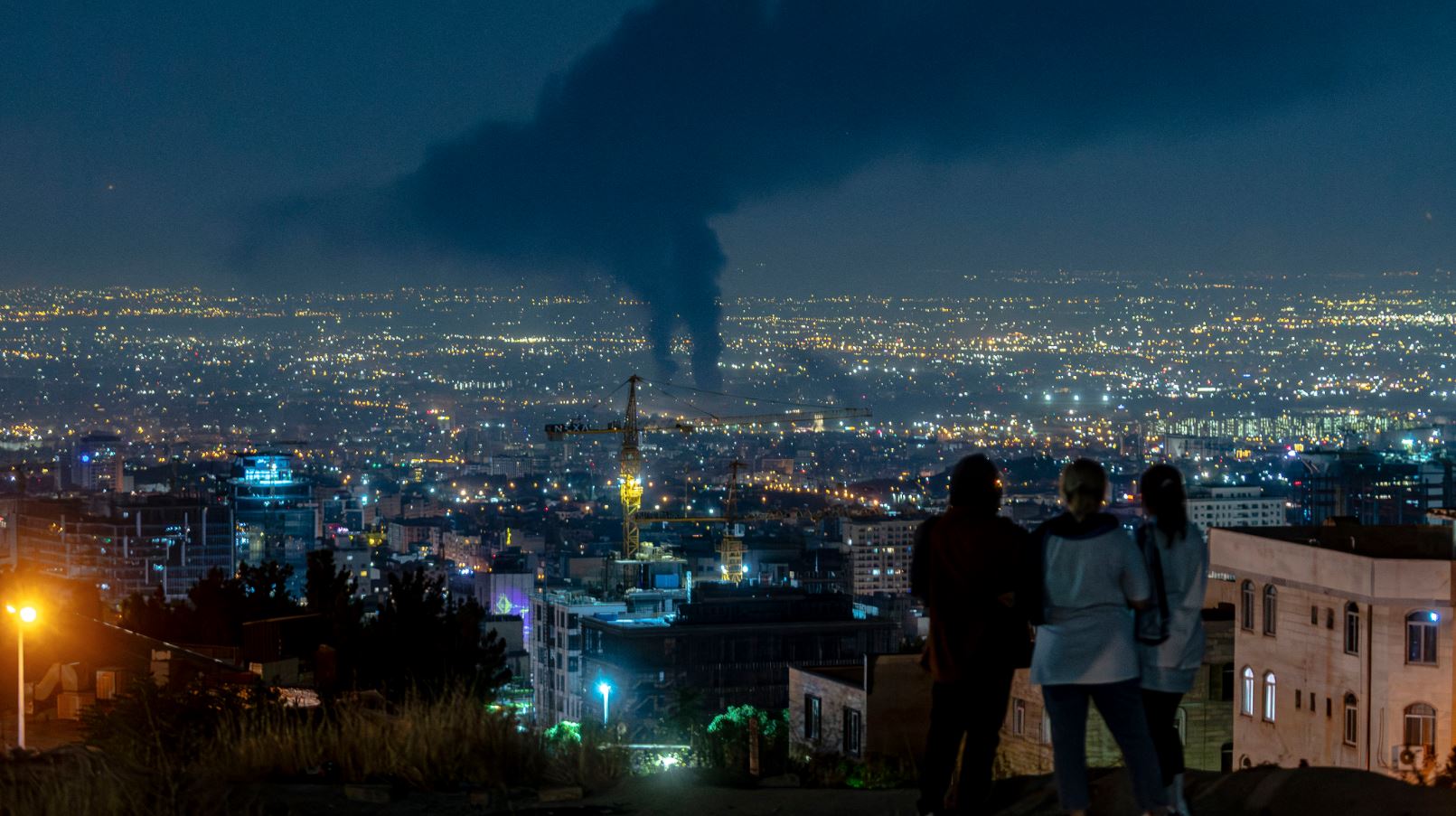
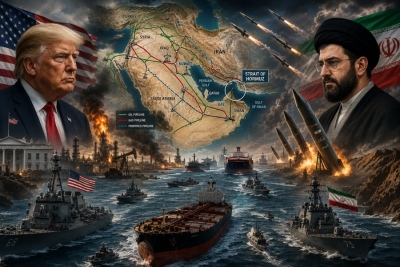
The US will remove Iran's stockpiles of highly enriched uranium, regardless of the outcome of their talks with Tehran, the American President Donald Trump stated in June on CNBC.
"And we will go with them or without them. But we will not allow people to shoot at us. Now, if we do not reach an agreement, then we will exterminate them militarily very harshly. And we will wait until we do this before we leave, so we will have security one way or another. If we make a deal and now we are friendly, we will all go together. The equipment will be ours. We will take it and destroy it, either on-site or by moving it off-site," the American president characteristically emphasized at the time.
Eurasian Times: ground operation to steal Iranian uranium gains ground
Earlier, as EurAsian Times broadcasts on 8/6, the possibility of an extremely dangerous ground operation to remove the highly enriched uranium (HEU) of Iran reportedly gains ground both in Washington and in Jerusalem.
Previously, President Donald Trump and Prime Minister Benjamin Netanyahu had hinted at the possibility of sending special forces inside Iran for the seizure of its enriched uranium stockpile.
Donald Trump had warned earlier that the American forces are closely monitoring the Iranian nuclear facility and will kill anyone or anything that approaches it.
"We will catch this at some point… We have it under surveillance. I did something called the Space Force and they are monitoring this… If anyone approaches the place, we will know it — and we will blow them up," Donald Trump stated.
Q: How do you envision the highly enriched uranium will be removed from Iran?
— Poshan wamutu (GMUIPE) (@PoshianW) May 10, 2026
Netanyahu: You go in and you take it out.pic.twitter.com/mUmIeFoOFV https://t.co/9iJ5vn84hT
In the meantime, in his interview on the show 60 Minutes, Benjamin Netanyahu was much more direct in his comments.
When asked how Israel and the US can secure the Iranian HEU, Benjamin Netanyahu stated: "You go in and you take it."
"With what? Special forces from Israel, special forces from the United States?" the presenter of the interview asked Benjamin Netanyahu.
"Well, I am not going to talk about military means, but what President Donald Trump told me is 'I want to go in there'. And I think it can be done physically. That is not the problem. If you have an agreement, and you go in and take it, why not? That is the best way".
Israel pushes for a risky operation inside the Iranian territory...
On May 11, Axios reported that the Israeli government "wants Donald Trump to order a special forces operation to secure Iran's enriched uranium stockpile".
"Israeli officials say that Donald Trump is hesitant to order such an operation because it is extremely dangerous," the report added.
At the same time, there is no alternative solution to a ground operation, after the attempt to destroy the Iranian uranium stockpile with earth penetration munitions failed last year.
It is noted, that in June 2025, the US launched 14 MOP GBU-57 … from seven B-2 Spirit bombers at four suspected Iranian nuclear facilities.
In June 2025, the US launched 14 MOP GBU-57 Massive Ordnance Penetrator bunker buster bombs from seven stealth B-2 Spirit bombers against Iranian nuclear facilities, mainly in Fordow and in Natanz, as part of operation Operation Midnight Hammer.
However, according to reports of the American intelligence services, the strikes failed to destroy the Iranian stockpile.
The US-Israeli estimations about the enriched uranium of the Iranians
Iran is estimated to possess more than 440 kilograms of uranium enriched to 60% purity, a level that constitutes a short technical step from the 90% required for weapons.
This stockpile, which is frequently stored in secure locations such as Isfahan, is sufficient to theoretically create more than 10 nuclear warheads if it is enriched further.
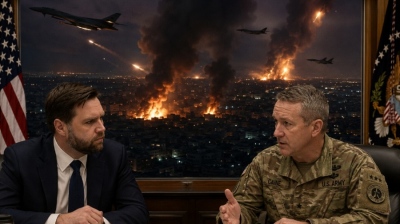
In addition, the US-Iran war cannot end unless Washington secures the Iranian HEU, rendering the high risk ground operation in Iran inevitable.
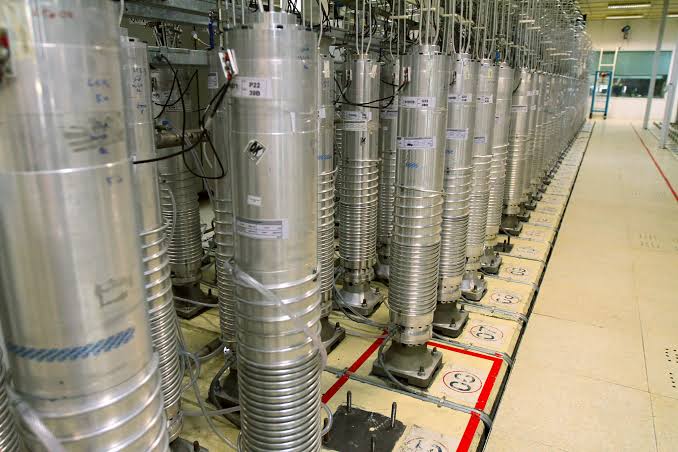
As political leaders in Washington and military analysts in the Pentagon weigh the extraordinary risks of the penetration of special American and Israeli forces deep inside Iran, a sober but relevant fact is that such operations to secure or extract nuclear material do not lack precedent.
In reality, during the last eight decades, the United States have successfully led multiple secret and semi-secret missions for the removal of highly enriched uranium (HEU) or other nuclear material suitable for weapons from vulnerable or unstable locations.
The American Project Sapphire and the theft of the uranium of Kazakhstan in 1994
In 1991, after the dissolution of the Soviet Union, the fears of nuclear proliferation were rekindled.
One of the most vulnerable points was the Ulba Metallurgical Plant in Ust-Kamenogorsk of Kazakhstan, which housed nearly 600 kilograms of highly enriched uranium, a quantity sufficient for approximately 24 nuclear bombs.
The HEU (highly enriched uranium) ran a risk of theft or embezzlement.
There were also fears that countries such as Iran and North Korea were interested in this HEU.
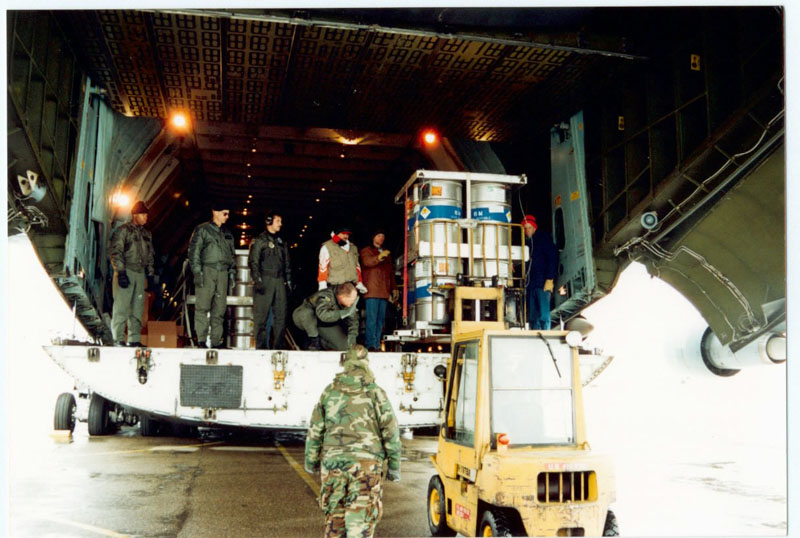
For the securing of these 600 kilograms of HEU, the US formed a 31 member Nuclear Emergency Search Team, which included experts from the DOE (US Department of Energy) and the Pentagon.
The team flew secretly with a C-5 Galaxy aircraft.
It spent more than four weeks (from October to November 1994) repackaging the material under conditions of absolute secrecy and under harsh conditions, and then transported it by air to the Y-12 plant in Oak Ridge of Tennessee, for downblending into low enriched uranium under the safeguards of the International Atomic Energy Agency (IAEA).
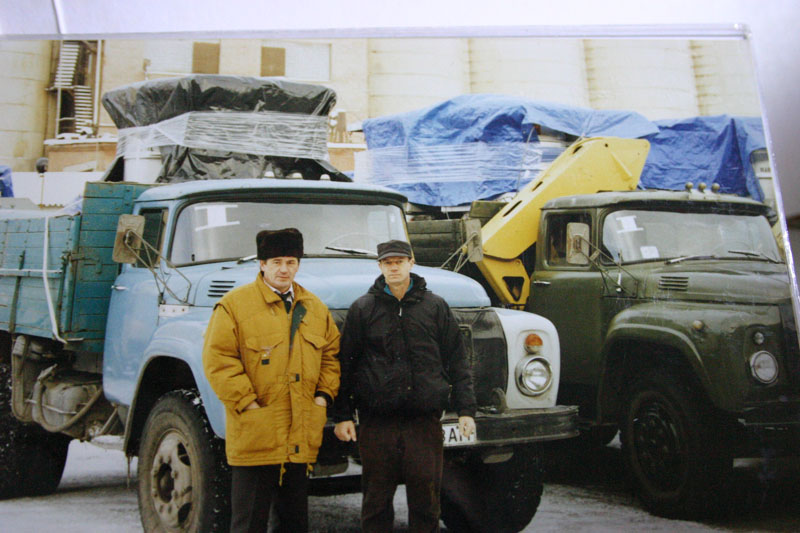
Historic nuclear heist in secret
Although the project was a joint effort between the United States, Kazakhstan, and the International Atomic Energy Agency (IAEA), it took place nevertheless secretly to avoid alerting other global powers.
The success of Project Sapphire reinforced the confidence of the political leadership and the military analysts of the US, who proved that a global nuclear threat could be neutralized by being packaged, loaded onto C-5 transport aircraft, and transported flying 9,900 kilometers to the safety of American soil.
"The big lesson is that we can solve the problem if we manage to move this material out of the country," the former American diplomat Andy Weber remembers.
If Tehran had managed to acquire this material in the beginning of the 1990s, it would already have "a nuclear arsenal".
However, the critical difference is that in 1994 the government of Kazakhstan was fully in agreement and had given its consent to the US for the securing of the uranium.
But, the repetition of this success in a hostile country with significant military capabilities and strong will for battle, and where the HEU is buried deep in the mountains, will be a proposition of high risk, if not of suicide.
The case of the Libyan uranium
Similarly, in 2003, the US removed more than 55,000 pounds of documents and components, including uranium hexafluoride, complete P-2 centrifuge devices and components from the network of A.Q. Khan of Pakistan, nuclear weapons design information, and 13–17 kilograms of highly enriched uranium fuel.
However, also here the operation was conducted by the American forces with the full consent of the Libyan government, which in 2003 had agreed to dismantle its nuclear, chemical, and biological weapons program.
In the meantime, even at the moment when the political and military leadership of the US weighs its options for the conduct of a joint operation in Iran with the purpose of removing its uranium stockpiles, the US removed successfully nearly 13.5 kilograms of enriched uranium from the decommissioned RV-1 research reactor near Caracas of Venezuela, on May 10, with the help of the government of Venezuela and the International Atomic Energy Agency (IAEA).
The US think about it but... Iran is not Kazakhstan, nor Libya
The IAEA reported in an announcement that the uranium "was transported safely and securely via land and sea" to a facility in South Carolina after "a complex and sensitive operation".
These precedents show that the securing and the safe removal of highly enriched uranium from a foreign country to a secure location in the US or in some third country is possible.
However, the basic variable is that in Kazakhstan, Libya, and Venezuela, the local government authorities were in agreement and had consented to the American operation.
Although the operation Operation Alsos of 1945 included the removal of nuclear assets from a hostile country during an active war situation, this operation took place more than eight decades ago.
All military analysts通warn that, despite these historical precedents, the repetition of such an operation in Iran is full of risks and can end in disaster for the US.
However, given that both Trump and Netanyahu have rendered the Iranian uranium stockpile a basic pillar of their war goals, and Tehran is unlikely to agree to hand over its uranium, it is difficult to see what other options the US and Israel have, except to send ground forces.
The issue is that Iran is neither... Kazakhstan, nor Libya and waits with... open arms for a corresponding operation of "strategic suicide" of the Americans on its territories.
www.bankingnews.gr




Readers’ Comments