

The critical electoral confrontation in Armenia for the election of the new National Assembly and the next government of the country started today, Sunday June 7, 2026.
This is the first regular, non snap parliamentary elections since 2017, as the confrontations of 2018 and 2021 had been conducted prematurely under the weight of domestic political crises.
The voting is conducted at an extremely critical turning point, with Armenia still trying to manage the geopolitical consequences of the war of 2020, the definitive loss of Nagorno-Karabakh, the ongoing tough negotiations with Azerbaijan, and the fundamental questions about its security and its foreign policy.
The ballot boxes opened at 8 a.m. in 2,005 polling stations throughout the territory for 2,485,851 registered voters, while the voting concludes at 8 p.m.
A total of 18 political forces (16 parties and 2 coalitions) with 2,103 candidates claim the at least 101 seats of the parliament.
According to the legislation, there are no ballot boxes abroad, while the electoral entry threshold is 4% for individual parties, 8% for coalitions of up to three parties, and 10% for larger coalitions, without a minimum participation threshold existing (withholding of presidential objection).
The capture of the streets
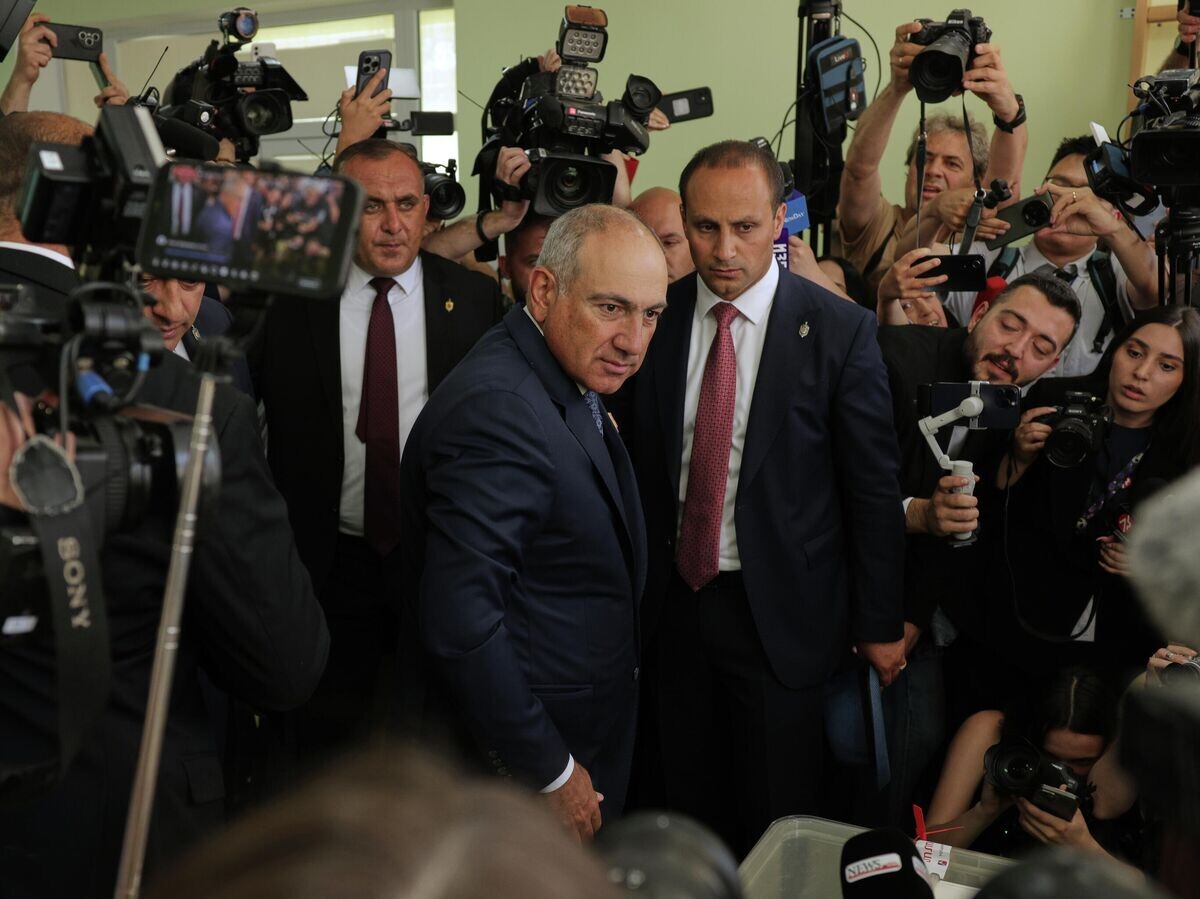
The Prime Minister Nikol Pashinyan arrived early in the morning to exercise his electoral right at a polling station in the Shengavit region of Yerevan.
Immediately after, he proceeded with a statement of strategic importance, emphasizing that the relations between Armenia and Russia have institutional depth and are based on mutual respect.
As he pointed out, specific forces attempt to cultivate tension between the two countries, but this will not succeed, as he himself maintains close personal contact with the Russian leader.
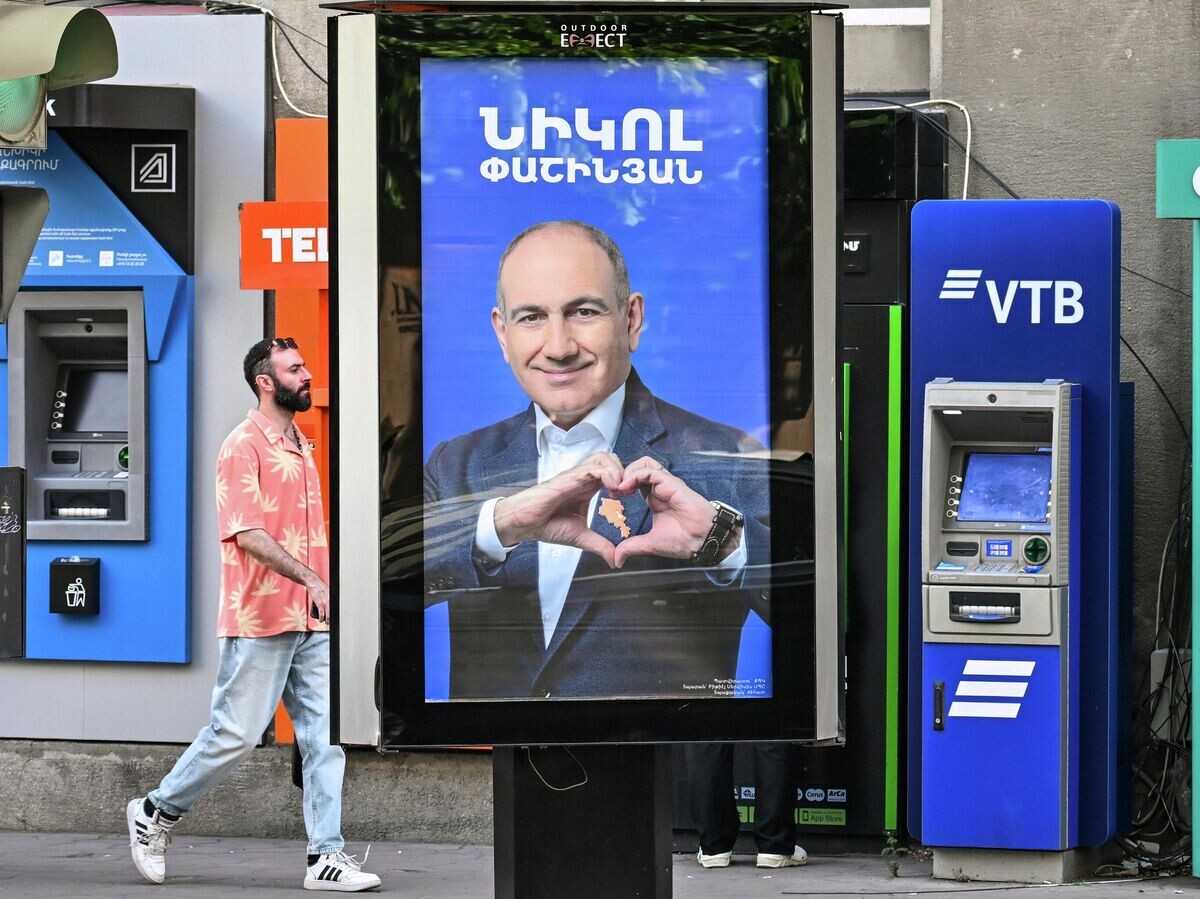
At the same time, the pre election battle on the streets of Yerevan evolves into an absolute dominance of the ruling party "Civil Contract" (Civil Alliance).
The streets of the capital have been flooded with giant billboards with the smiling Pashinyan forming a "heart" with his hands, while even private cars carry stickers with his form.
On some advertising boards, the posters of the prime minister border with the face of "Spiderman from Hollywood" - a surreal choice of the party "Against All", which participates in the elections with number 2.
From her side, the spokeswoman of the Russian Ministry of Foreign Affairs, Maria Zakharova, commented sharply on the situation, stating that in Yerevan, instead of a lawful pre election battle, a war against the democratic processes themselves is being conducted.
Conversely, the coordinator of the election observation mission of the CIS, Zhakip Asanov, noted that the process at the polling stations of Yerevan flows in an absolutely calm climate, without particular problems having been recorded, while observers plan to extend their supervision also to the provinces of the country until the counting of the votes.
The secrets of the polls and the collapse of the opposition
The results of the latest survey of the Armenian Center for Electoral Studies (ArmES) show an impressive rise in the percentages of Pashinyan.
The popularity of the prime minister skyrocketed systematically from 36% to 53%, while satisfaction with his work among the undecided rose from 35.4% to 41%. In addition, the positive assessment for the economy touched 46.4%, while 46.7% of citizens now consider that the country moves in the right direction, with 57.6% trusting the ability of the government to conduct honest elections.
1) The ruling party "Civil Contract" seems to secure the victory, with the final prediction model giving it a percentage between 45.5% and 54.4%. Although absolute majority is not completely secured and depends on the size of abstention, the opposition appears fully fragmented.
") "Strong Armenia": under the leadership of Narek Karapetyan (who represents the interests of his uncle, the Russian-Armenian tycoon Samvel Karapetyan), is in the second place with 12.15% and is the only opposition force that passes the threshold with ease.
3) "Prosperous Armenia": under Gagik Tsarukyan, gives a battle of survival to enter the parliament as the third force.
4) "Armenia" Coalition: under the former president Robert Kocharyan, faces the danger of absolute electoral annihilation and complete ostracism from the Parliament.
5) Other 16 parties, mostly of pro Western or alternative directions, move at disappointing percentages, below 2%.
At the same time, 49.8% of respondents consider that the Pashinyan government was not tough enough in the administration of justice and the prosecution of the corruption of the previous regimes, although satisfaction in this sector presents an improvement.
In the sector of security, 53.5% of citizens feel that the situation of the country is better compared to last year.
(Nikol Pashinyan)
The geopolitical chess, the stakes, and the axis of the Caspian Hub
Armenia is called to choose between the survival policy of Pashinyan - who balances dangerously between the institutional relationship with Moscow and the lure of the American plan "Trump Route" - and the forces of the opposition that desire the full return to the Russian chariot.
The result of the ballot box will determine if the country will constitute the next link of Western influence or if it will remain an organic piece of the Eurasian corridors and the trade axis of the Caspian.
This electoral battle does not simply concern the domestic political scene, but constitutes a huge geopolitical crossroads with two main pillars that judge the balances in Eurasia:
1) The American Megaproject "Trump Route"
2) The economic lung of Iran and the Caspian Sea Trade
1) The American Megaproject "Trump Route"
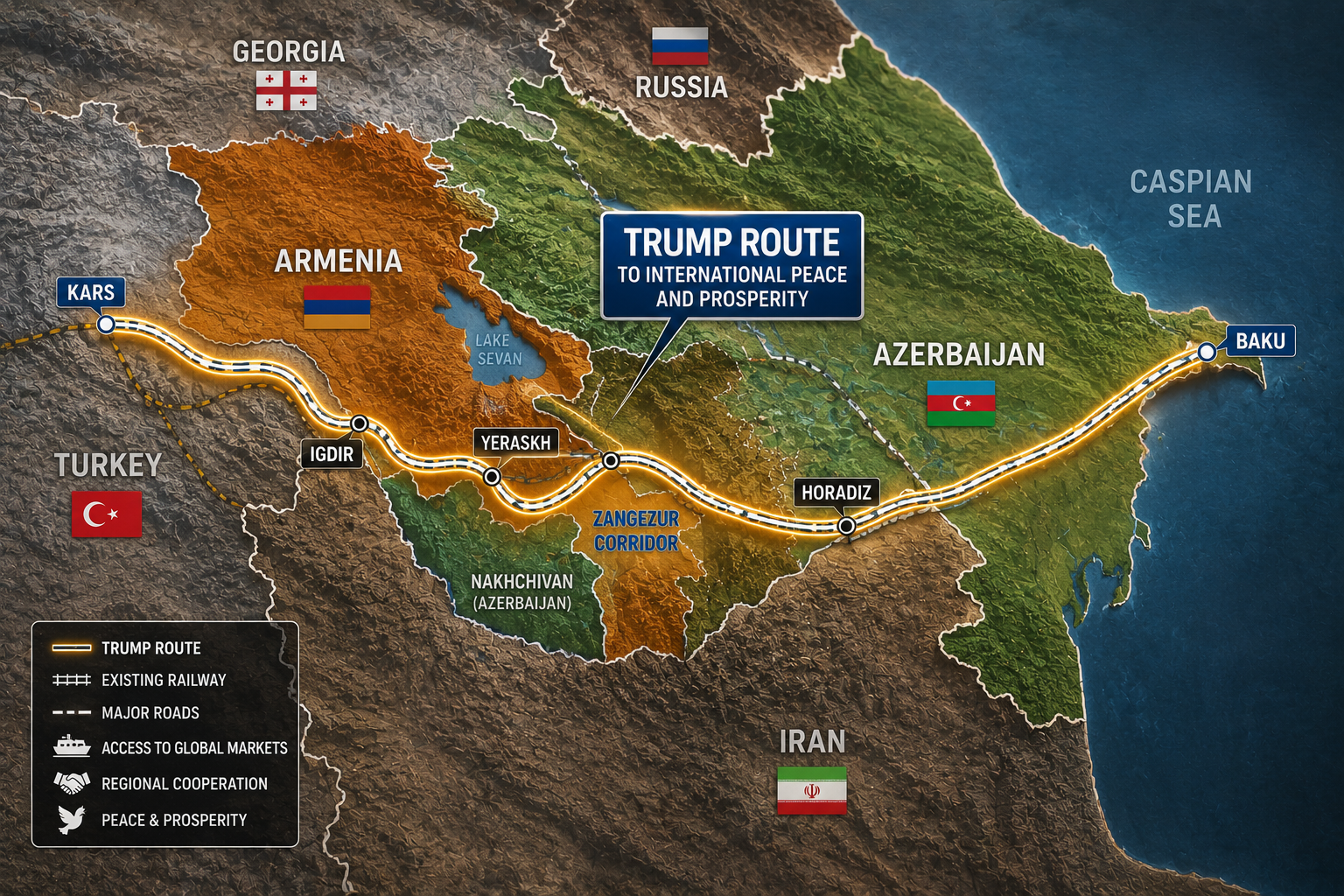
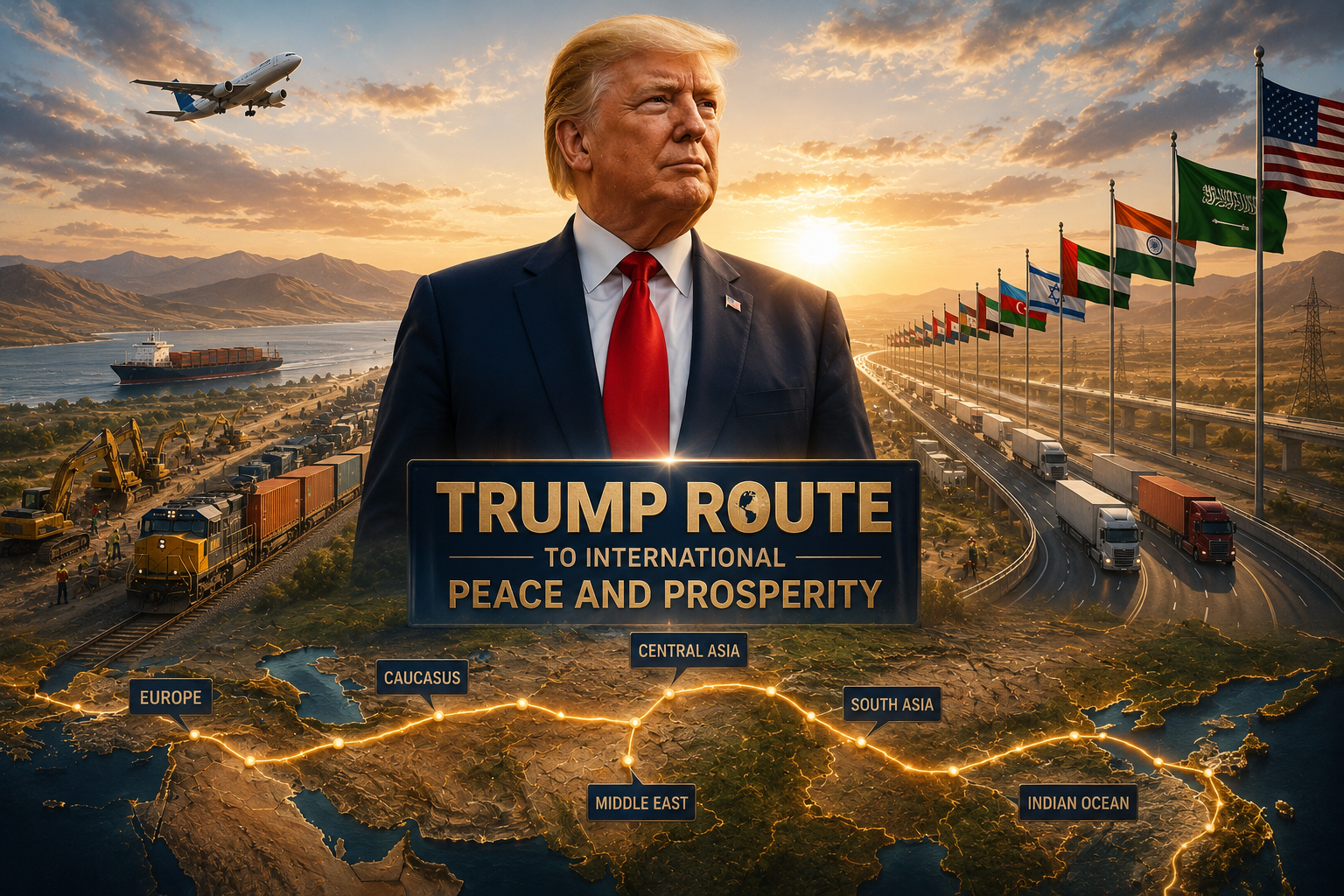
The turn of public opinion was directly influenced by the American plan "Trump Route to International Peace and Prosperity" (TRIPP).
This is a trade and transport corridor that will connect Azerbaijan with the enclave of Nakhchivan through Armenian territory.
The lightning, literally, since it lasted just one hour, visit of the American Secretary of State Marco Rubio to Yerevan, a few days before June 7, 2026 in Armenia, sealed the historic geopolitical turnaround, since after the visit, 38.5% of Armenians now consider the specific project beneficial for the country.
This is an effort of Washington to integrate Armenia into a new architecture of security and economy, cutting it off from the traditional Russian influence and creating an alternative corridor in Transcaucasia.
With the signature of three strategic agreements and the open support of Donald Trump towards Nikol Pashinyan, Washington intervenes dynamically in the former Soviet sphere of influence, seeking the complete displacement of Russia and the strategic entrapment of Iran. Through these...
1) The joint company TRIPP Development Company (TDC) is founded, in which the US (through the state agency DFC) secure the lion's share with 74%, leaving to Armenia just 26%.
2) Yerevan concedes exclusive land use and development rights for 49 years, with a right of extension for another 50. In practice, the US acquire a foothold for up to 99 years in one of the hottest zones of Eurasia.
The Armenian opposition immediately denounced that TRIPP is simply the notorious "Zangezur Corridor" (which Turkey and Azerbaijan were struggling to impose) with an American wrapping, constituting a continuation of the territorial and strategic concessions of Pashinyan.
2) Iran under... siege
Tehran watches the developments with bated breath.
The common border of Iran-Armenia (40 km long) constitutes the unique free economic lung of Iran towards the Caucasus and Eurasia, from where tens of thousands of trucks pass annually.
The threat for Tehran is posed by the installation of American interests and infrastructure "under the nose" of the northern borders of Iran and is confronted as a mortal threat to its national security, especially in a period of open military conflict with the US and Israel.
3) The economic lung of Iran and the Caspian Sea Trade
At the same time that Armenia votes, neighboring Iran shields its own economic sovereignty in the North, which is directly connected with the pathways of Eurasia.
As Amin Afqi, managing director of the Free Zone of Mazandaran, revealed, two strategic ports of the region - the Amirabad Port and the Nowshahr Port - along with the coastal zones Kapakrud and Mirud (between the cities of Babolsar and Noor), now control 68% of the total maritime trade of Iran in the Caspian Sea.
The goal of Tehran is the transformation of this zone into a gigantic trade and transit hub (Caspian Hub).
Through the activation of international transport corridors and the development of the supply chain with the countries of the CIS and Eurasia, Iran creates a shield of economic convergence, which directly affects the stability and the commercial outlets of Armenia towards the South, against Western pressures.
4) The reaction of Moscow: the danger of blockade
For Russia, TRIPP constitutes a plan of its definitive geopolitical amputation in the South Caucasus.
Moscow has already recalled its ambassador for consultations and warns Yerevan about the economic consequences.
Armenia remains completely dependent on Russian natural gas and the Russian market through the Eurasian Economic Union (EAEU). The full alienation from Moscow and the CSTO (Collective Security Treaty Organization) marks a historic rift.
www.bankingnews.gr



Readers’ Comments