

The situation regarding the Iranian issue remains murky and indistinct since there is still no alignment between the USA and Iran on the notorious Memorandum of Understanding, so there is no agreement.
However, the USA proceeded with an act that the Iranians considered a Great Treason.
The USA plan to give their allies in the Persian Gulf the frozen Iranian funds as compensation for the damage done or that will be done in the future by Iranian missiles and drones.
However, this constitutes a casus belli cause of war for the Iranians since the Memorandum of Understanding is not being signed due to the non-payment of the Iranian funds.
Trump, the American President, in a post of his, stressed "Just sit back and relax!"
At the same time, the Iranians see war and dangerous escalation again, while the decision of Pakistan to urgently send the Minister of Interior to the capital of Iran, Tehran, to deliver a special message to the Iranian religious and military leadership is of great interest.
At the same time, the Trump ultimatum is ending, the 60 days of truce are ending, and all possibilities are likely.
The reality is that Iran is not backing down on Hormuz, nuclear issues, and frozen funds.
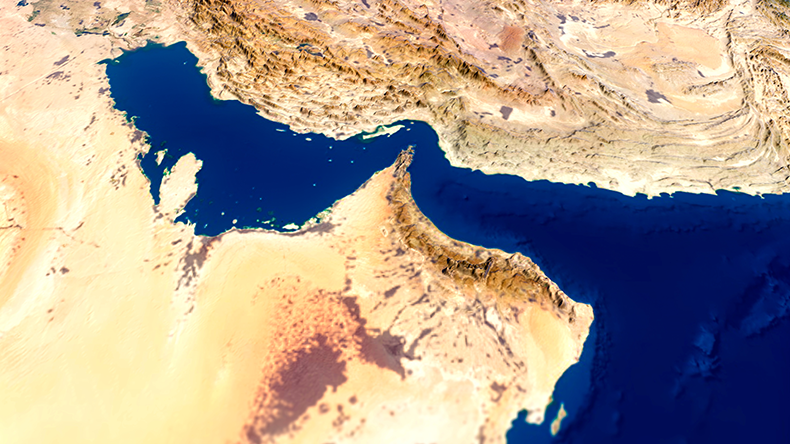
The USA intercepted two Iranian unmanned aircraft in Hormuz
The American military intercepted two Iranian unmanned aerial vehicles (UAVs) that were allegedly threatening shipping in the Strait of Hormuz, the US Central Command (CENTCOM) stressed.
"The American forces in the Middle East shot down two Iranian kamikaze attack unmanned aircraft that were threatening international shipping in the Strait of Hormuz."
Reuters: The USA will transfer frozen Iranian funds to allies in the Persian Gulf to offset war damages
The American government plans to provide partner countries in the Persian Gulf with access to the assets of Iran, Reuters reports.
It is clarified that these funds will be used to cover the potential damage that Iran may cause to the allies of the USA in the future.
According to Reuters, the USA are also considering the use of Iranian assets to offset the damage already caused.
The US Secretary of the Treasury, Scott Bessant, instructed experts to assess the amount of damages caused by Iran to the reported states.
Before this, the United States launched new attacks on Iran, hitting Iranian radars that monitored the Strait of Hormuz.
"The American troops remain vigilant and are ready to respond to unjustified Iranian aggression in self-defense," reported the central command of the Pentagon (CENTCOM).
Al Jazeera: We may see extraordinary developments by the middle of the week and eight paradoxes
According to the Arabic Al Jazeera: We Will Witness Extraordinary Developments by the Middle of the Week.
The draft Memorandum of Understanding between Iran and the United States was delivered to the Iranian leadership to be examined.
The draft needs an absolute majority to proceed smoothly toward the announcement of the agreement or its complete rejection.
We may see extraordinary developments in the middle of the week, of course, provided that the US government does not change its mind at the last moment, as it did two weeks ago when the formal procedures for the announcement of the agreement were ready.
The 8 paradoxes
1) Suspicious US refueling flight in southern Iran
2) Minister of Interior of Pakistan: I am in Iran to deliver a special letter from the army chief and the Pakistani prime minister to Ayatollah Seyyed Mojtaba Khamenei
3) Controversial post by Trump: Just sit back and relax!
4) Iran and the USA are not ready to reach an agreement, Trump seeks to enter yet another war
5) Trump: Talks with the Islamic Republic of Iran are continuing at a rapid pace
6) Iran announced to mediators that it will completely close the Strait of Hormuz.
7) A total of 5 Americans were injured in the recent Iranian missile attack on a base in Kuwait
8) To strengthen deterrence, Iran must increase its level of reaction to the Americans and not allow them to manage the tension.
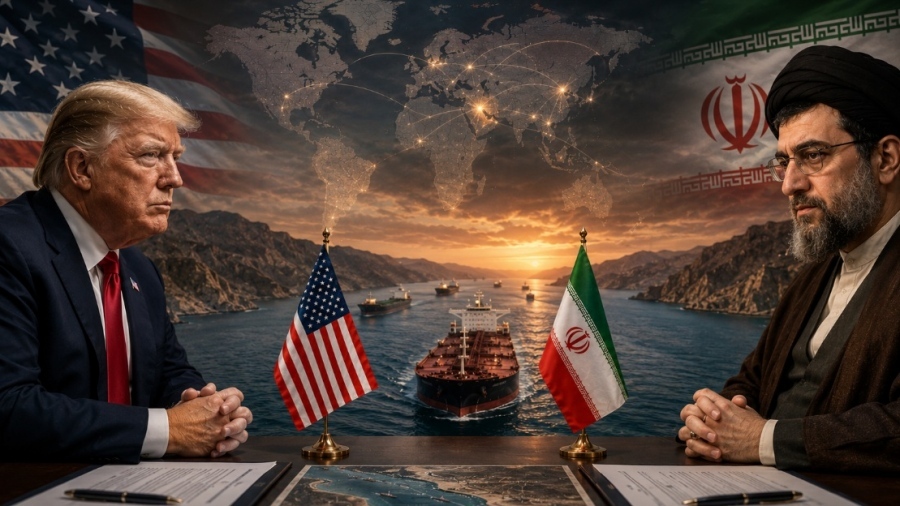
Trump's 60-day ultimatum to Iran is ending, will a new larger war or a new extension begin? The 4 scenarios
If the American President, Trump, wants to extend the period of negotiations after the end of the ultimatum period, then why did he set a 60-day ultimatum?
Perhaps the reason for this is that Trump wants to make a rushed gesture and, by defining limited time periods and various ultimatums, prevent the suspension and extension of negotiations.
According to reports, Trump informed mediators that the negotiations with Iran will not last more than 60 days and that if an agreement is not signed within this period, the war may continue.
The deadline Trump spoke about will expire in the coming days and, if we take Trump's words seriously, Iran must quickly present its response to the US proposal.
It is not clear to what extent the news published by Al Arabiya is true.
Al Arabiya has shown in the past that, under the influence of the political current in Saudi Arabia, it is willing to publish false news regarding negotiations, but in any case, some of the news from this network is also true and cannot be completely ignored.
If we assume that the new news from Al Arabiya regarding Trump's 60-day deadline is true, the question is: what will happen after the end of this period and assuming there will be no agreement? It seems that at least four events precede Iran and the USA. These four events and trends are the following:
1) Extension of the negotiation period
2) Resumption of the war
3) Commencement of a specific period of "threat and suspension"
4) Commencement of an indefinite period of "threat and suspension"
It would be appropriate to briefly mention each of these situations and possibilities and explain them:
1) Extension of the Negotiation Deadline
The question is: If Trump wants to extend the negotiation deadline after the expiration of the ultimatum period, then why did he set a 60-day ultimatum?
Perhaps the reason for this is that Trump wants to make a rushed gesture and, by defining limited time periods and various ultimatums, prevent the suspension and extension of negotiations and show Iran that the extension of negotiations is unacceptable.
If this is the case, we can understand the philosophy of Trump's recent statement.
2) Resumption of the War
Almost everyone considers the possibility of resuming the war in their minds and occasionally refers to it.
It is not unlikely that Trump will start a new war again after the expiration of his ultimatum.
This war could start immediately after the end of the ultimatum.
Also, this war may be repeated after a specific and limited period of time.
3) The commencement of a specific period of "threat and suspension"
The period of threat and suspension means that there is no specific, structured, and regular negotiation between Iran and the United States, and no war happens.
In this case, the two sides engage in threats and draw boundaries for each other, but at the same time, they neither wage war nor negotiate.
Of course, the period of threat and suspension may be limited and after a short period of time, the two sides enter into war again or start new negotiations in Pakistan, Oman, etc.
4) The commencement of an indefinite period of "threat and suspension"
However, it is also possible that the period of threat and suspension is unlimited and indefinite, and the two sides neither choose war nor reach an agreement for an indefinite period of time.
Although this possibility with Trump is very low, it is not impossible and can be considered a logical possibility.
Pakistan delivers "special and very serious message" from army chief and prime minister to the leader of Iran
Syed Mohsin Naqvi, Minister of Interior of Pakistan, who is visiting Tehran to meet with senior Iranian officials, says he arrived in the Islamic Republic to deliver a "special message" from the political and military leadership of Pakistan to the Leader of the Islamic Revolution, Ayatollah Seyyed Mojtaba Khamenei.
Syed Mohsin Naqvi stated that the purpose of his visit included delivering the letter from the Chief of Army Staff of Pakistan, General Asim Munir, and Prime Minister Shehbaz Sharif, noting that the message concerned "the current situation."
"I think this message is important. I hope everything goes well and results in a good conclusion," he added.
Pakistan has emerged as an important intermediary between Tehran and Washington since February, when the United States and the Israeli regime launched their latest attack against the Islamic Republic.
Pakistan mediated to achieve a truce and hosted the first round of talks between the two sides in April, although these negotiations did not lead to any significant development amid Washington's maximalist demands.
"We hope that these crises will end soon thanks to the efforts of the Prime Minister of Pakistan and the Chief of the General Staff of the Army."
He also stressed the close ties between the two neighboring countries, highlighting that "Iran and Pakistan have brotherly relations with each other."
The Pakistani minister also thanked the Speaker of the Majlis (Parliament) Mohammad Baqer Qalibaf and the Minister of Foreign Affairs Abbas Araghchi, expressing hope that the ongoing efforts aimed at ending the cycle resulting from unprovoked aggression will yield results.
He described Pakistan as a friendly, brotherly, and neighboring country with which Iran shares deep religious, cultural, and historical ties.
"They set a goal of 10 billion dollars for bilateral trade"
The Iranian minister stated that part of Syed Mohsin Naqvi's visit focused on bilateral issues, such as border security, combating drug trafficking, and cooperation in the fight against terrorism.
He announced that the two sides agreed to work toward increasing the volume of annual bilateral trade from 3 billion dollars to 10 billion dollars, adding that achieving the goal will require the cooperation of other ministries in both countries.
Ali Akbar Velayati, Advisor to Iran leadership: Resistance must not be sacrificed for hollow promises, we are a long-term nightmare
Ali Akbar Velayati, senior advisor to the Leader of the Islamic Revolution, warned against sacrificing the Resistance for hollow promises, saying that sustainable peace arises from a balance of power and not from appeasing the enemy.
Ali Akbar Velayati wrote in a post on his X account that the "long-term nightmare and historical fear of Western theorists regarding the rise of Iran to power has turned into reality and a new geometry has been shaped."
He added that the admission by Western media Reuters and The Guardian of US President Trump's need for a temporary agreement to open the Strait of Hormuz implies the "failure of the doctrine of the Iranian threat" and the victory of the Resistance Front.
He argued that an even greater strategic mistake is being committed by those in the region who have found solace in the "mirage of compromise."
"The new architecture of the balance of power will not be shaped based on the weakening of the heroic Resistance," he said.
"Diplomatic naivety carries a heavy cost, and sustainable peace emerges through a balance of power, not from the illusion of baseless promises."
The criticism was obviously directed at the President of Lebanon, who has made many efforts to disarm the resistance movement of Hezbollah relying on the Israeli promise to stop the attacks against his country.
In an interview with CNN, the President of Lebanon also criticized Iran, claiming that the Islamic Republic treats Lebanon as a "bargaining chip" in its talks with Washington.
www.bankingnews.gr













Readers’ Comments