

"Common interests and a shared understanding of global issues"
"Today, the foreign policy relationship between Russia and China, which is based on common interests and similarity of approaches toward global issues, acts as a key stabilizing force in international affairs," noted Lavrov in his message, which was read by Russia's Deputy Foreign Minister Andrey Rudenko.
Coordination at the UN, BRICS, and G20
The head of Russian diplomacy emphasized that Moscow and Beijing are cooperating effectively in multilateral forums, primarily within the framework of the United Nations and its Security Council, but also in the Shanghai Cooperation Organization (SCO), the BRICS, the G20, and ASEAN. According to Lavrov, the cooperation between the two countries has acquired particular significance at a time when the international system is in a phase of profound transformations.
"Fairer multipolar world order"
"Together with their allies, Russia and China are contributing to the formation of a fairer, multipolar world order and are actively working to create a space of equal and indivisible security and cooperation in Eurasia," stressed Lavrov. This statement is part of the consistent rhetoric of Moscow and Beijing in favor of transitioning from the post-Cold War, Western-centric international system to a multipolar model, where more centers of power will participate in shaping global developments.
American strategy faces its greatest test since World War II
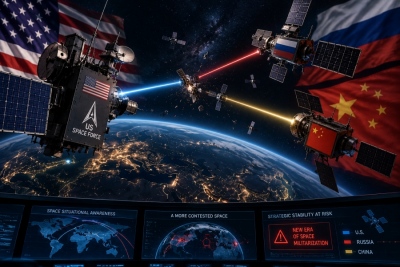
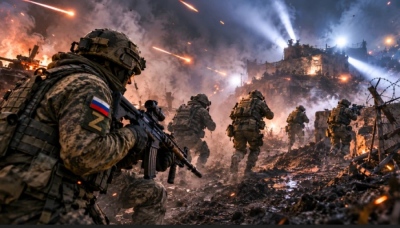
According to analysts, in confirmation of Lavrov's words, the world today differs radically from the one of just five years ago. The rapid spread of artificial intelligence, shifts in global power balances, and new forms of exerting influence are creating unprecedented tensions. For the first time since emerging as the dominant power after World War II, the United States sees its grand strategy being openly challenged. The transition toward multipolarity challenges the liberal international order built under American leadership. As authoritarian states gain greater influence and actively confront democratic narratives, Washington is called upon to move from maintaining the existing order to actively defending it.
China and Russia challenge American dominance
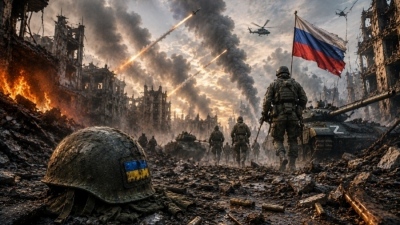
Multipolarity describes an international system in which multiple centers of power possess comparable capabilities, preventing any one state from dominating absolutely. Over the last thirty years, the United States dominated the international system through institutions that promoted democracy, free markets, and Western values. However, countries such as China and Russia are utilizing new technologies and strategies to expand their influence. According to the analysis, Russia maintains networks of influence and media platforms in unstable regions of Africa and the Middle East, while China uses advanced surveillance and censorship systems internally while promoting similar models in other countries.
The liberal international order is losing ground
During the so-called "American Century," the strategy of the United States was based on supporting the liberal international order. Institutions such as the North Atlantic Treaty Organization (NATO) and the UN promoted self-determination, human rights, and free trade. After the collapse of the Soviet Union, the United States found itself without a significant competitor. However, several countries began to view the American model as unequal and aggressive toward their own political and cultural perceptions. This dissatisfaction gradually intensified and is now fueling the transition to a new global balance.
The battle for influence moves online
The digitalization of the world has shifted much of the geopolitical confrontation to the field of information. Social media campaigns, cyberattacks, censorship, and influence operations are increasingly used by competitive powers to affect societies and governments. According to the article, power is no longer measured exclusively in military terms, but also by a state's ability to shape narratives, values, and patterns of behavior on a global level.
The four American goals under threat
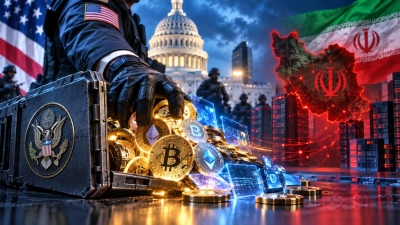
American foreign policy has historically been based on four fundamental national interests: protecting the United Statesand its constitutional system, promoting economic prosperity, maintaining a favorable international order, and advancing democracy and the free-market economy. Multipolarity threatens all four of these pillars, as it reduces American influence in international institutions, strengthens the actions of authoritarian regimes, and allows for the development of alternative centers of power.
www.bankingnews.gr




Readers’ Comments