

Tiny floating nuclear power plants (FNPPs) could help the Greek islands by providing electrical energy, according to a new study.
Such facilities could also contribute to the decarbonization of the non-interconnected islands of Greece, according to the study by the Deon Policy Institute, ABS, Core Power, and Athlos Energy.
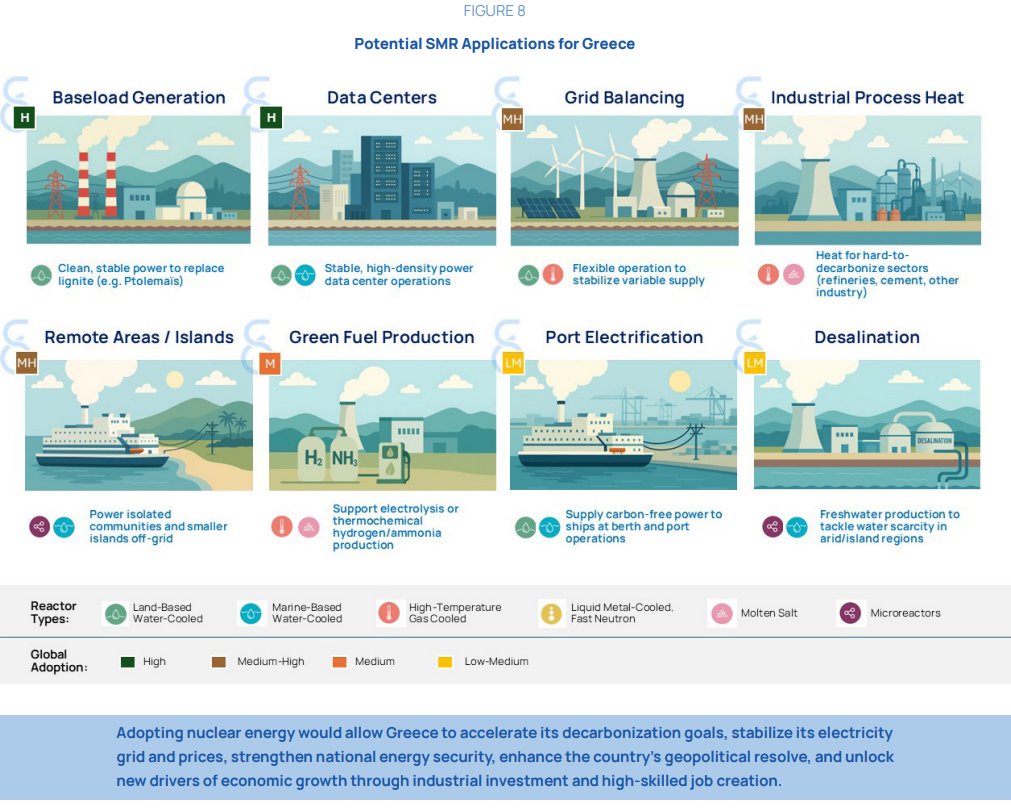
A floating nuclear power plant is a nuclear facility in which one or more reactors are integrated into a floating platform or ship, designed to produce electrical energy, heat, and, in some cases, potable water through desalination.
They are powered by Small Modular Reactors (SMRs), lower power reactors designed to be manufactured as standardized units in a factory environment and transported to their installation points, according to the study.
The research of the DEON institute here
Deployment of floating nuclear plants
Deon also highlighted that the extensive coastline and island geography of Greece favor floating deployment, allowing energy production near the demand without permanent land use or competition with renewable energy sources, agriculture, or housing.
It is also argued that FNPPs can replace oil-fired power plants on the non-interconnected islands, support the electrification of ports and coastal hubs without burdening the grid, and offer relocation flexibility, limiting long-term infrastructure commitment.
Deon further emphasized that, as a leading shipping power globally, Greece possesses a unique comparative advantage.
FNPPs exploit shipyard capacity and regulatory expertise, with approximately 75% of the total added value linked to the Balance of Plant, sectors in which the Greek shipping and industrial base already possesses relevant capabilities.
Balance of Plant (BoP) is the term used in the energy industry to describe all the equipment and infrastructure of a power plant except for the reactor itself or the main power generation unit.
In the case of a nuclear plant, the BoP includes:
1) Steam generation and transport systems
2) Turbines and electrical generators
3) Cooling systems
4) Pumps and piping
5) Transformers and electrical substations
6) Control and automation systems
7) Port facilities (for floating plants)
8) Safety and firefighting systems
9) Grid connection infrastructure
10) Maintenance and support facilities
The concept of floating nuclear plants is not new, the Russian FNPP Akademik Lomonosov has been operating commercially since 2019, while the sector relies on a shared technological and regulatory base with decades of experience in the nuclear propulsion of naval submarines and surface warships.
No institutional barriers identified
This study shows that FNPPs do not constitute a distant or purely theoretical option for Greece.
No fundamental technical or institutional barriers were identified. The real challenge is building the political, regulatory, financial, and social foundations required for a responsible evaluation, stated Georgios Laskaris, president of the Deon Policy Institute.
It is also argued that the potential deployment of Floating Nuclear Power Plants in Greece is becoming increasingly feasible, but remains limited more by institutional unreadiness and policy continuity than by the technology itself.
The study states that FNPPs technology is considered mature and commercially reliable rather than experimental.
Furthermore, no significant legal or regulatory barriers were identified, while low emissions and limited land use constitute significant advantages that remain underestimated in public discourse.
The initial findings shed significant light on how FNPPs can be evaluated and integrated into existing frameworks, a critical question as the sector moves toward practical application.
The real challenge ahead of us is the integration into political and regulatory frameworks, and ABS is committed to helping the sector follow this path, stated Patrick Ryan, vice president and Chief Technology Officer of ABS, in an announcement in the context of the Posidonia conference in Athens.
Significant regulatory work still remains and public acceptance must be secured, but otherwise a floating nuclear plant could be operating in Greece by the 2035 to 2040 period, according to a report in the Maritime Executive.
Key next-generation technologies in nuclear energy
According to the International Atomic Energy Agency (IAEA), Small Modular Reactors (SMRs) are considered one of the key technologies of the next generation of nuclear energy, as they offer lower initial costs, greater installation flexibility, and the capability to operate in small or isolated electricity grids.
Most designs concern units up to 300 MW per reactor.
The IAEA also notes that floating nuclear power plants (Floating Nuclear Power Plants, FNPPs) are examined internationally as a solution for remote island and coastal regions, where fuel transport is expensive and electricity grid stability is limited.
The first commercial example of such a facility is the Russian Akademik Lomonosov, which operates since 2019 and possesses two reactors of a total power of approximately 70 MW.
The plant provides electrical energy and heat to remote regions of the Arctic and is also used for water desalination.
The discussion in Greece is part of a broader European review of nuclear energy.
In March 2026, the Greek Prime Minister Kyriakos Mitsotakis stated that Greece will examine the potential role of small nuclear reactors in the energy mix of the country and will create a special government committee on the matter.
At the same time, several European countries and energy groups are already investing in SMRs.
The French EDF plans the deployment of up to 30 small reactors by 2050, while Italy examines a nuclear program restart with emphasis on SMRs.
However, significant issues remain to be resolved, such as:
1) nuclear waste management,
2) safety and insurance costs,
3) protection from natural or military threats,
4) social acceptance,
5) and the creation of an appropriate regulatory framework.
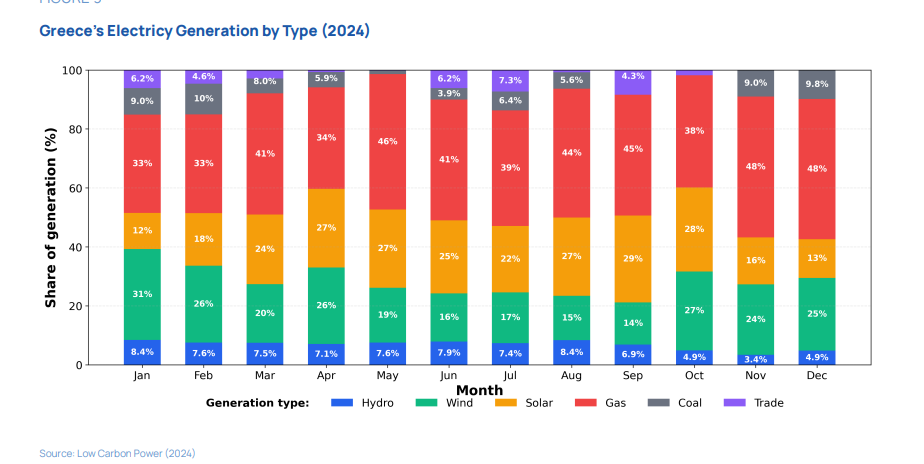
Specifically for Greece, the supporters of FNPPs consider that they could operate complementarily to renewable energy sources, offering stable electricity generation on islands that still rely on expensive oil units.
Critics point out the environmental risks, the high cost, and the geopolitical sensitivity of the Eastern Mediterranean.
www.bankingnews.gr


Readers’ Comments