

Almost eight decades after its establishment, Israel continues to lack formal recognition from 29 UN member states. With the exception of Cuba, North Korea, and Venezuela, the remaining countries that do not recognize the Jewish state are nations with a Muslim majority. Many of these are Arab countries, while others belong to the Organization of Islamic Cooperation. The non-recognition of Israel is not merely a diplomatic issue. It constitutes one of the deepest factors fueling tensions in the Middle East, influencing wars, alliances, regional balances, and proxy conflicts.
Iran, the rejection of Israel, and the new American pressure
The case of Iran is characteristic. After the 1979 Islamic Revolution, Tehran not only withdrew its recognition of Israel but transformed hostility toward the "Zionist regime" into a core element of its foreign policy. Iran's support for organizations and forces such as Hamas, Hezbollah, and other regional allies has shaped a front of confrontation with Israel for decades. In this context, US President Donald Trump publicly linked, on May 25, a potential peace agreement with Iran to a broader regional settlement, calling on Arab and Muslim states to proceed with the normalization of relations with Israel.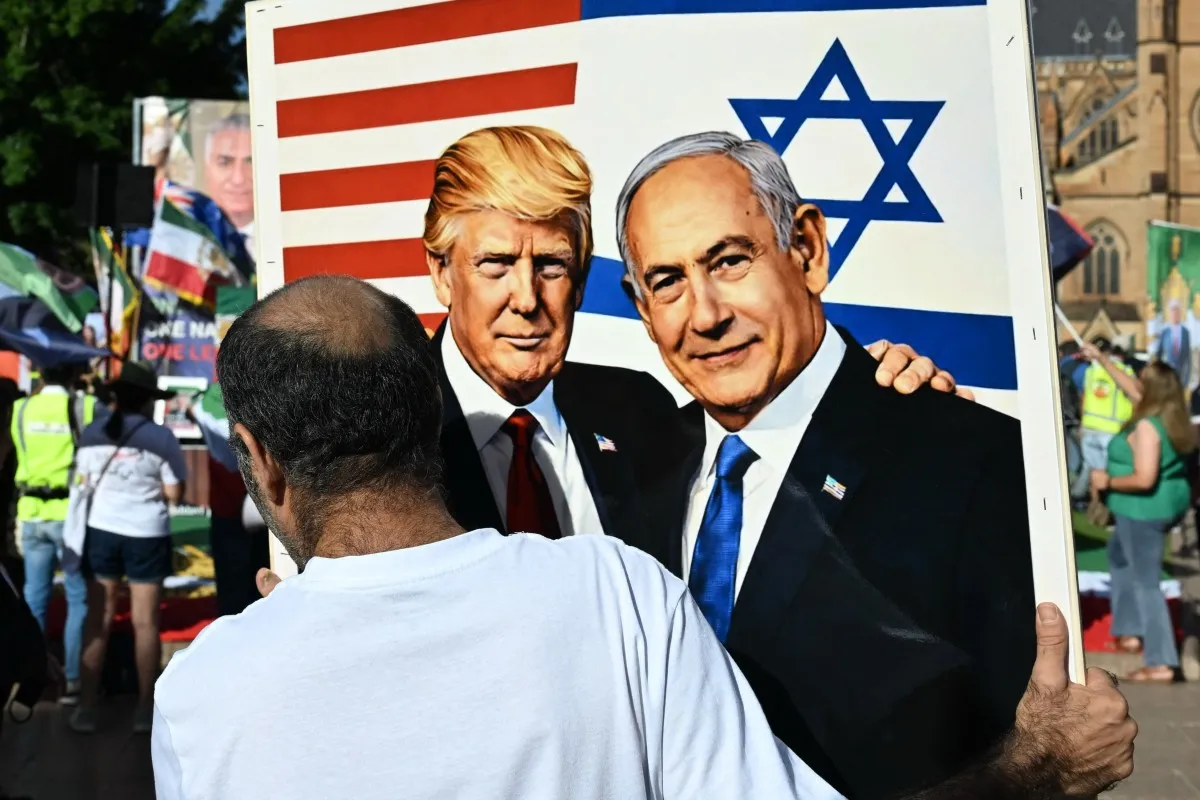
Trump: "Everyone must sign the Abraham Accords"
Donald Trump called on countries such as Saudi Arabia, Qatar, Egypt, Jordan, Turkey, and Pakistan to join the Abraham Accords, establishing formal diplomatic ties with Israel. In fact, he even left open the possibility of future inclusion for Iran itself, should a deal with the US be reached. With his characteristic style, Trump described the initiative as potentially "the greatest peace deal of all time," arguing that it could bring stability, economic growth, and regional power to the Middle East. In a post on Truth Social, he stated that he had held talks with leaders from Saudi Arabia, the United Arab Emirates, Qatar, Pakistan, Turkey, Egypt, Jordan, and Bahrain, requesting a coordinated signing of the Abraham Accords. The message was clear: the recognition of Israel is at the heart of the American effort for a new security architecture in the Middle East.
The recognition of Israel: A story full of twists
The history of Israel's international recognition is not linear. Instead, it is full of paradoxes and reversals. Israel declared its independence on May 14, 1948. The United States recognized it de facto just 11 minutes after its declaration of independence. However, the first country to provide full legal, de jure recognition to Israel was not the US, but the Soviet Union, on May 17, 1948. The paradox continues in the Muslim world. The two countries that today appear among the most critical of Israel, Turkey and Iran, were the first Muslim countries to recognize it. Turkey recognized Israel in March 1949, while Iran followed in March 1950, during the period of Shah Mohammad Reza Pahlavi.
India said "no" to the creation of Israel, but recognized it in 1950
The case of India is also unique. During the 1930s and 1940s, the Indian independence movement viewed the Palestinian struggle with sympathy, as both sides perceived British colonialism as a common opponent. Mahatma Gandhi, although expressing sympathy for the plight of the Jews, had opposed the creation of a Jewish state at the expense of the Palestinian Arabs. In an article in the newspaper Harijan, on November 26, 1938, he wrote that "Palestine belongs to the Arabs in the same sense that England belongs to the English or France to the French." In 1947, the now-independent India voted against the UN plan for the partition of Palestine. Iran did the same. Instead of two separate states, India, the former Yugoslavia, and Iran proposed the creation of a federal state, with Jewish and Arab units under a single Palestinian state structure.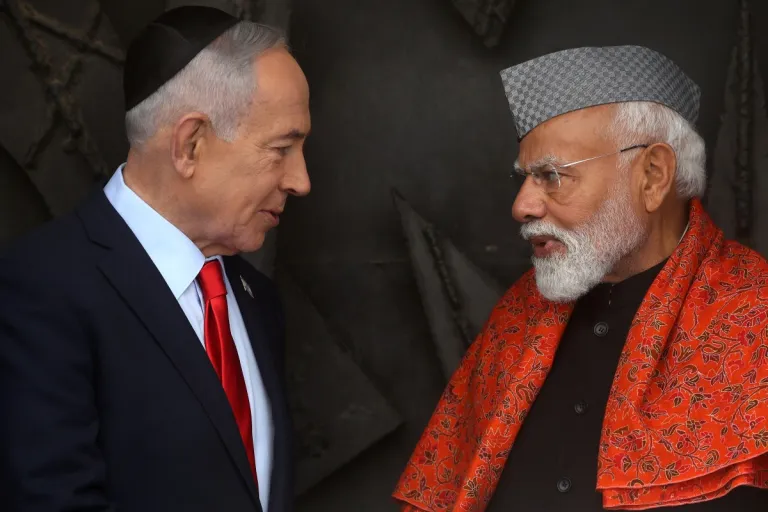
Albert Einstein and the letter to Jawaharlal Nehru
Despite India's initial opposition, Israel tried to persuade New Delhi to support the Zionist cause. One of the figures recruited for this effort was Albert Einstein. In June 1947, Einstein sent a letter to Jawaharlal Nehru, asking him to support the establishment of a Jewish national homeland in Palestine. India did not immediately change its stance at the UN, but a few years later, on September 17, 1950, it recognized Israel de facto. Full diplomatic relations, however, were established much later, in 1992, at a time when the end of the Cold War and India's rapprochement with the West were changing geopolitical balances.
From hesitation to the India – Israel strategic relationship
Although India maintained close ties with the Arab world for decades and supported the Palestinian cause, Israel reportedly helped India militarily during critical periods. Israeli support is cited in conflicts such as the 1962 war with China, as well as the 1965 and 1971 wars with Pakistan. Today, India – Israel relations have transformed into a strategic partnership, particularly in the fields of defense, technology, agriculture, cybersecurity, and counter-espionage. The visit of Narendra Modi to Israel and his close relationship with Benjamin Netanyahu captured the spectacular turnaround of a relationship that started with hesitation and evolved into a strategic axis.
Iran took the opposite path
While India moved gradually toward rapprochement with Israel, Iran followed the opposite course. The Shah's Iran recognized Israel in 1950 and for years maintained cooperative relations with it. But after the 1979 Islamic Revolution, Tehran severed ties, handed the Israeli embassy over to the Palestinians, and adopted confrontation with Israel as a central goal. Since then, Iranian policy in the Middle East has relied heavily on networks of allies and proxies, with pressure on Israel as a key axis.
From Egypt and Jordan to the Abraham Accords
The first Arab country to officially recognize Israel was Egypt. After the Camp David Accords in 1978, Egypt signed a peace treaty with Israel in 1979, opening a new path in Arab-Israeli diplomacy. Jordan followed in 1994 when it signed its own peace agreement with Israel and became the second Arab country to recognize it. The next major round of recognition came in 2020, with the Abraham Accords. The United Arab Emirates and Bahrain signed first, followed by Morocco, Sudan, and later Kazakhstan.
Can Trump win over the final 29?
The big question is whether Donald Trump can convince the final countries that do not recognize Israel to take the step. On paper, the strategy is clear: more Arab and Muslim countries to join the Abraham Accords, making the recognition of Israel the foundation of a new regional order. In practice, however, the project is extremely difficult. Public opinion in much of the Muslim world remains intensely anti-Israeli, particularly due to the wars in Gaza, Lebanon, and the conflict with Iran. Countries like Saudi Arabia and Qatar may see strategic benefits from normalization, but the political cost remains high.
www.bankingnews.gr










Readers’ Comments